Broad Coalition Calls for Passage of the One Fair Price Package to Ban Surveillance Pricing and Electronic Shelf Labels in New York
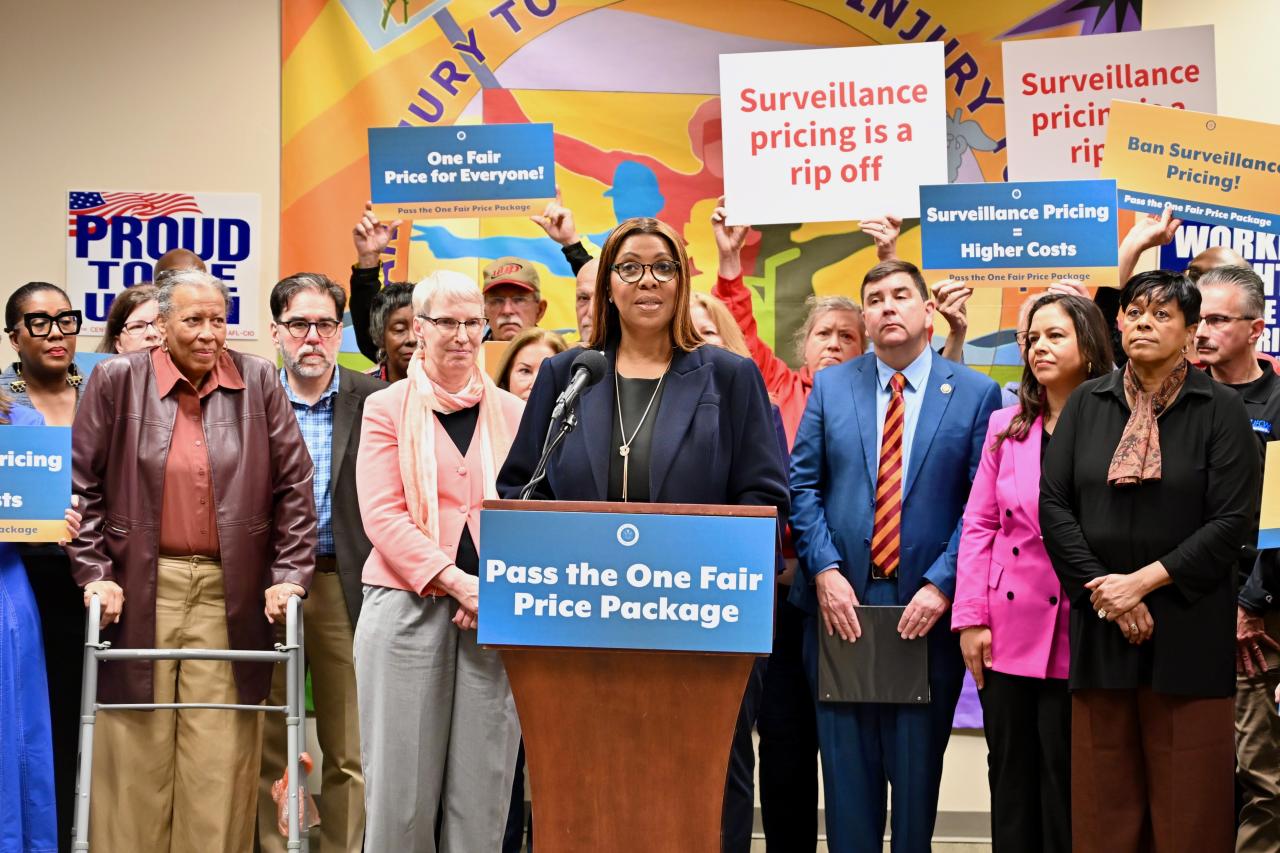
New York Attorney General Letitia James and Senator Rachel May today joined local elected officials, labor unions, advocates, and community members to rally in support of the One Fair Price Package. The One Fair Price Package consists of two bills that would protect New Yorkers from surveillance pricing, an unfair pricing scheme in which companies use shoppers’ personal data to set individualized prices for consumers. The One Fair Price Act, sponsored by Senator May and Assemblymember Emerita Torres, would ban surveillance pricing in New York. The Protecting Consumers and Jobs from Discriminatory Pricing Act, carried by Deputy Majority Leader Gianaris and Assemblymember Solages, would ban the use of electronic shelf labels and prohibit surveillance pricing in grocery stores and pharmacies.
“New Yorkers are already facing higher prices everywhere they look, and we must use every tool at our disposal to protect families from predatory pricing schemes,” said Attorney General James. “The One Fair Price Package bans surveillance pricing that unfairly uses shoppers’ personal data to raise prices while defending the fair discounts and promotions New Yorkers count on. We must pass this legislation to ensure one fair price for all.”
Surveillance pricing occurs when companies use individuals’ private data to set unique prices for different consumers and often results in consumers paying more for essential products. Online platforms collect thousands of data points about every consumer, from their usual purchases to when they receive their paycheck or benefits, to even how long they hover over a product online. Companies then use this information to inform pricing algorithms that continuously update to estimate the highest price a consumer is likely willing to pay at any given moment. As a result, two shoppers could visit the same website at the same time and see two different prices for the exact same product.
Surveillance pricing is not limited to shopping online. Electronic shelf labels (ESLs) allow companies to change prices in-store, so that one shopper could buy a gallon of milk at one price while another shopper would pay more for the same gallon later that same day. ESLs not only harm consumers trying to make ends meet while prices continue to rise, but they also threaten the livelihoods of grocery store workers, as they could eliminate the work of grocery clerks.
A recent survey of New Yorkers found that 66 percent support banning surveillance pricing and ESLs. Nearly seven in 10 New Yorkers believe surveillance pricing will increase grocery prices, and two-thirds do not trust companies to use these tools responsibly. New Yorkers also believe these technologies would lead to harmful outcomes, such as price increases during emergencies and charging higher prices based on perceived ability to pay.
The bills in the One Fair Price Package would protect New York consumers and their families by banning surveillance pricing that uses personal data to set individualized prices for consumers and ensure that it’s the products that have prices, not the people.
- The One Fair Price Act (8623/A.9349) will ban surveillance pricing and prohibit the use of consumers’ personal data to set individualized prices to ensure New Yorkers are charged the same price for the same product.
- The Protecting Consumers and Jobs from Discriminatory Pricing Act (8616/A.9396) will protect consumers and workers alike by prohibiting the use of ESLs and surveillance pricing in grocery stores and pharmacies.
The One Fair Price Package would ban surveillance pricing, but it does not threaten the discounts and loyalty programs that New Yorkers count on. The legislation explicitly allows discounts, including loyalty programs, coupons, subscription pricing, and standard promotions, including for veterans and seniors. The One Fair Price Package will also authorize OAG and impacted New Yorkers to bring civil cases for penalties and restitution against companies or retailers that use surveillance pricing.

No comments:
Post a Comment