Tuesday, December 30, 2025

MAYOR ADAMS, NYCEDC ANNOUNCE HISTORIC AGREEMENT TO ADVANCE REDEVELOPMENT OF HUNTS POINT PRODUCE MARKET


Transformation Will Create New, First-of-its-Kind, All-Electric  

Intermodal Food Distribution Center, Deliver Thousands of Jobs and Cleaner Air 


New Hunts Point Produce Market Delivers on Key Commitments in Mayor Adams’ ‘Hunts Point Forward Plan,’ PlaNYC: Getting Sustainability Done,’ and ‘Green Economy Action Plan’ 


New York City Mayor Eric Adams, New York City Economic Development Corporation (NYCEDC) President and CEO Andrew Kimball, and the Hunts Point Terminal Produce Cooperative Association (Hunts Point Produce Cooperative) today announced a historic agreement to advance the redevelopment of the Hunts Point Produce Market in the Bronx. Backed by $405 million in city, state, federal funding, and an anticipated federal loan, the project will create a new state-of-the-art, intermodal food distribution facility, improve air quality for nearly 13,000 Bronx residents who live on the Hunts Point Peninsula, and generate more than 2,000 new construction jobs, as well as preserve the good-paying jobs already at the current market. Following a competitive procurement process announced in March, NYCEDC has conditionally selected Aurora-Primus — a joint venture design-build firm with Aurora Contractors, LLC and Primus Builders, Inc. as principal entities — to execute the project. Over the next six months, the parties will work together to advance the project design and make sure the operational needs of the Hunts Point Produce Cooperative can be met at a financially sustainable cost. Construction is expected to begin in late 2026. Once constructed by NYCEDC, the new facility will be leased by the Hunts Point Produce Cooperative. The creation of a brand new Hunts Point Produce Market fulfills key commitments outlined in Mayor Adams’s “Hunts Point Forward Plan,” “PlaNYC: Getting Sustainability Done,” and the “Green Economy Action Plan.” 


“If you want to see the future of New York City, look to Hunts Point. With cleaner air, cutting-edge technology, and good-paying jobs for working-class New Yorkers, the new Hunts Point Produce Market represents the smart, forward-looking investments our administration has made every day in office,” said Mayor Adams. “This new facility will help transport food from farms upstate to tables all across our city — reducing emissions, creating jobs, and bolstering our supply chain. When we came into office, we promised to build the cleaner, more affordable future Hunts Point deserved, and, with today’s announcement, we are delivering on that promise once again.” 


“New York state is proud to invest $130 million in the complete transformation of the Hunts Point Produce Market — a facility that feeds millions of New Yorkers every day,” said New York Governor Kathy Hochul. “This redevelopment will deliver cleaner air and better health outcomes for Bronx families, create thousands of good-paying construction jobs, and build a first-of-its-kind all-electric food distribution hub that sets the standard for sustainable infrastructure nationwide.” 


“This transformation of Hunts Point will bring thousands of jobs, over $400 million in government investments, and massive economic opportunities to the Bronx. Hunts Point’s Food Distribution Center is responsible for 12 percent of NYC’s food, and today’s announcement is a commitment to the wellbeing of all New Yorkers,” said Deputy Mayor for Housing, Economic Development, and Workforce Adolfo Carrión, Jr. “As a proud son of the Bronx, this announcement is personal to me. For decades, the Bronx has seen devastating disinvestment. Today we take a critical step in securing the market’s future and ensuring the Bronx fulfills its promise as a place of opportunity and prosperity.” 


“Today is a historic day for Hunts Point, the Bronx, and all of New York City. Through a new agreement with the Hunts Point Terminal Produce Market Cooperative Association, NYCEDC is proud to advance a complete redevelopment of the Produce Market that will fully modernize the aging facility, preserve thousands of good-paying jobs for New Yorkers, and dramatically improve the quality of life for Hunts Point residents by reducing truck traffic and improving air quality,” said NYCEDC President and CEO Kimball. “With $405 million committed in city, state, and federal grants as well as an anticipated federal loan, a redeveloped Produce Market will bring huge benefits to New York City. NYCEDC looks forward to working with all of the elected officials who made this possible, alongside the Hunts Point Terminal Produce Cooperative Association and its businesses in transforming a vital link in New York City’s food supply chain.” 

HPPM1

The Hunts Point Produce Market will create a first-of-its-kind all-electric intermodal facility to help move food across the city. All designs are conceptual. Credit: Aurora Contractors, LLC. 


The Hunts Point Produce Cooperative — which consists of approximately 26 businesses — sources more than 2.5 billion pounds of produce each year; the cooperative then distributes that produce across New York City and beyond. The current market employs thousands of New Yorkers, supplies 25 percent of the city’s fresh produce, and occupies more than 100 acres in Hunts Point. It consists of four primary warehouse structures, two adjunct warehouses, and various administrative and maintenance structures all housing approximately 26 merchants. The businesses range from small firms with three employees to large firms with approximately 400 employees. 


The new food distribution facility will improve daily market operations while enhancing the long-term viability of the city’s produce businesses by meeting market needs. The redevelopment will also eliminate the stationary diesel-fueled Transport Refrigeration Units (TRU), delivering cleaner air for the nearly 13,000 New Yorkers that reside in the Hunts Point peninsula. 


 The goals and objectives for the project are as follows: 


  •   Deliver a state-of-the-art, intermodal food distribution facility that supports daily market operations for the city’s produce needs. 
  •   Enhance the long‐term viability of the produce businesses by meeting market needs. 
  •   Expand refrigerated warehouse space. 
  •   Improve air quality and quality of life for Bronx residents. 
  •   Eliminate stationary diesel TRUs, which currently serve as additional cold storage. 
  •   Optimize site-wide access and traffic circulation to alleviate congestion and reduce truck idling.  
  •   Minimize multi-modal conflicts between vehicular, truck, rail, and pedestrian traffic. 
  •   Increase rail efficiency and encourage rail usage.  
  •   Maximize energy efficiency and reduce operating costs. 
  •   Reduce waste and waste management expenses.  
  •   Prioritize safety and security of the facility. 

  •   Support quality jobs in the Bronx. 
Hppm3
The complete redevelopment of the market is expected to generate 2,000 construction jobs as well as preserve the good-paying jobs already on the location. All designs are conceptual. Credit: Aurora Contractors, LLC. 

In March, NYCEDC issued a request for qualifications (RFQ) seeking statements of qualifications from qualified firms interested in performing the design, construction, and other identified activities for the Hunts Point Produce Market Redevelopment; a request for proposals was issued to a shortlist of firms that responded to the RFQ and the city. NYCEDC has conditionally selected a design build firm to execute the project. 


The project is backed by $130 million in city funding, $130 million in state funding through Empire State Development, $145 million in funding through federal grants (including the Federal Highway Administration), and financing anticipated to be raised by NYCEDC through a railroad rehabilitation and an improvement financing loan from the U.S. Department of Transportation. 


Today’s announcement fulfills several key commitments in Mayor Adams’ PlaNYC: Getting Sustainability DoneGreen Economy Action Plan and Hunts Point Forward plan. Announced in 2022 by Mayor Adams and Hunts Point community leaders, Hunts Point Forward is a comprehensive plan to create economic opportunity and improve quality of life for New Yorkers in the Hunts Point neighborhood of the South Bronx. The plan is backed by a $40 million commitment from Mayor Adams and outlines a 15-year vision shared by the city and the community with more than 70 short- and long-term recommendations for creating family-sustaining jobs, improving public safety, enhancing community health and access to healthy food, promoting environmental justice, and delivering upgrades to open space, transportation, and other key community infrastructure. 


Hunts Point is also a critical node in the Adams administration’s “Blue Highways ” initiative to move more freight off city streets and onto waterways. A new Blue Highway facility, announced in partnership with Con Agg Global, will be located adjacent to the Fulton Fish Market in the Hunts Point Food Distribution Center and will greatly reduce the need for trucks for material and food and beverage transportation to and from the Bronx. A second Blue Highway facility, known as the Hunts Point Marine Terminal, was unveiled by the Adams administration earlier this year at the site of the decommissioned and now-removed Vernon C. Bain Correctional Center. This second facility will move cargo from shipping containers onto additional barges and ferries for last-mile deliveries throughout New York City. 


Van Cortlandt Park Alliance - Your 2025 Wrapped with Van Cortlandt Park


As the year winds down and we savor the quiet of winter, it’s the perfect time to reflect on the moments that made 2025 special and the places that made them possible. Van Cortlandt Park is one of those places: a refuge, a playground, and a classroom for thousands of neighbors and students each year.

If you’ve been thinking about supporting Van Cortlandt Park, there’s still time to make a gift this year. 

Your gift helps care for the park's natural areas, brings community programs to life, and elevates the next generation of Bronx stewards.

Even a small contribution ensures that Van Cortlandt Park continues to be a place of peace, play, and connection, today and for the years to come.

Give today and end 2025 on a note that matters.

With gratitude,
The VCPA Team

P.S. Take a moment in the park this week — a quiet walk or a sunny hilltop — and feel the difference your support makes.

Our Contact Information
Van Cortlandt Park Alliance
80 Van Cortlandt Park South, Ste. E1
Bronx, NY 10463
718-601-1460
http://vancortlandt.org

A SPEECH DELIVERED BY SHEIKH MUSA DRAMMEH AT THE INAUGURATION OF MUSLIMS AND JEWISH NEW YORKERS UNITE ON JANUARY 1, 2025


Muslims Israel Dialogue 

1. In the Name of God, the Most Merciful, the Most Compassionate.


2. Distinguished faith leaders, elected officials, community organizers, brothers and sisters, Muslim and Jewish New Yorkers, and fellow Americans, I stand before you today at a moment that is both solemn and hopeful. The inauguration of Muslim and Jewish New Yorkers Unite on this first day of a new year is not merely ceremonial; it is a moral declaration. It is a statement that we refuse to allow hatred, distortion, and fear to define our relationships or our future. It is a commitment to speak truth with courage and to defend human dignity without qualification.

3. Let me speak plainly, because moral clarity demands plain speech. Hatred of Israel fuels hatred of Jews. Hatred of Jews corrodes the ethical foundation of any society. And any ideology that normalizes antisemitism ultimately betrays Islam itself, whose core teachings demand justice, truthfulness, and the protection of innocent life. This is not a slogan; it is a moral reality that we must confront honestly if we are serious about peace.

4. Just days ago, I returned from the Holy Land as part of a week-long educational study tour made possible through partnership with the OHR Torah Interfaith Center of Israel and support from the Combat Antisemitism Movement. Alongside fellow Muslim leaders, women of faith, and interfaith advocates from across the United States, we traveled not as tourists, but as witnesses. We met Jewish and Arab citizens living under the same laws and the same democratic framework. We listened carefully, asked difficult questions, and heard responses that do not fit the simplistic narratives so often repeated from afar. More than once, Arab Israelis told us that even if a Palestinian state were established, they would choose to remain Israeli citizens because of the rights, stability, and dignity they experience. That truth does not erase Palestinian suffering, but it does dismantle the false claim that coexistence is impossible.

4. I speak today as a Muslim, as an African-born naturalized citizen of the United States, and as an interfaith leader. From that position, I must publicly acknowledge something too often ignored. Israel has quietly saved African lives. It has provided free, lifesaving medical treatment to Africans with severe illnesses, trained African doctors and medical students, and shared expertise in agriculture, technology, water treatment, and innovation. These actions were not demanded, and they were not transactional. Gratitude for such deeds is not weakness; it is moral honesty.

5. Much confusion has been created around the word Zionism, and that confusion has been exploited to justify hatred. At its most basic and accurate level, Zionism is the belief that the Jewish people, like all peoples, have the right to a homeland where they can live in safety and dignity. Islam itself teaches that love of one’s homeland is part of faith. The Qur’an recounts how God instructed Moses and his people to enter the Holy Land assigned to them. These are not political slogans; they are reminders that faith and attachment to land are not contradictions.

6. We must also confront a broader global reality that is too often ignored. After the Second World War, dozens of nations emerged through decolonization and the collapse of empires across Africa, Asia, and Europe. Israel is not an anomaly of history; it is part of that same global transformation. Yet Israel alone is relentlessly singled out. There are 193 countries in the United Nations, 57 in the Organization of Islamic Cooperation, and 22 in the Arab League, spanning millions of square miles and hundreds of millions of people. There are roughly sixteen million Jews worldwide, with Israel as their one homeland, a country smaller than many global cities, home to ten million people including two million Arab citizens. These facts demand serious questions, not shouted slogans: why perpetual rejection, and why the normalization of Palestinian statelessness rather than its resolution through constructive engagement?

7. For many years, Israel focused primarily on military defense while underestimating the power of public opinion, even as its enemies invested heavily in global misinformation and recruitment. The horrific terror attacks of October 7 were a brutal awakening, not only for Israel but for global Jewry, exposing how quickly moral clarity can collapse when hatred is disguised as activism. Since then, Israel has recognized that defending itself also requires defending truth, facts, and humanity. And we must ask honestly: where else in the Middle East do we find a democracy with free elections, an independent judiciary, free speech, and legislative representation for minorities?

8. While we were in Israel, yet another antisemitic massacre occurred, claiming innocent lives, including that of a Holocaust survivor. That tragedy underscores why silence is no longer an option. Today, I call upon people of conscience everywhere to reject antisemitism without excuses or euphemisms. Standing against Jew-hatred requires visibility as well as words. Raising the Israeli flag is not an act of provocation; it is an act of recognition—recognition of sovereignty, democracy, and the right of a people to exist in safety. What unites antisemites across borders is not theology but an obsessive hatred of Israel. That hatred must be confronted openly, courageously, and peacefully.

9. This moment is not about choosing sides in a conflict; it is about choosing truth over distortion, dignity over hatred, and courage over silence. Let us raise a generation of Muslims who are not taught to hate, and a generation of Jews who do not feel abandoned. Let us make New York a model of principled coexistence, where disagreement does not become dehumanization and solidarity does not require uniformity. May God guide us toward justice without vengeance, truth without fear, and peace grounded in reality.

10. Thank you, God bless you, God bless the United States of America, and may peace prevail in the Holy Land.

New York Forward,

Sheikh Musa Drammeh,
President,
Muslims-Israel Dialogue 
718-822-5555


NEW YORK DEPARTMENT OF STATE AWARDS OVER $19 MILLION FOR COMMUNITY PLANNING AND DEVELOPMENT EFFORTS THROUGH THE 2025 REGIONAL ECONOMIC DEVELOPMENT COUNCIL INITIATIVE


Logo

Funding Through Key Department of State Programs Will Help Redevelop Former Brownfield and Industrial Sites, Revitalize Community Waterfronts and Promote Smart Growth Planning, Zoning and Development 

The New York State Department of State today announced nearly $20 million has been awarded to support 62 community planning and development projects across the State through the 2025 Regional Economic Development Council (REDC) Initiative. The awards will help revitalize and reenergize community waterfronts, transform brownfield and vacant and abandoned industrial sites into viable community assets; and create county, municipal and area plans and zoning ordinances that embrace the principles of Smart Growth through three signature Department of State programs:

  • Local Waterfront Revitalization Program—$13.9 million to 36 projects
  • Brownfield Opportunity Area Program—$3.1 million to 12 projects
  • Smart Growth Community Planning Program—$2 million to 14 projects 

Of the 62 awards, 50% of the projects will serve communities that have faced historic inequities and meet the criteria for Disadvantaged Communities as identified by the NYS Climate Justice Working Group.

“The Department of State offers a comprehensive suite of community planning and development programs that are creating vibrant, equitable and resilient neighborhoods throughout the State,” said New York State Secretary of State Walter T. Mosley. “These programs, as well as our Downtown Revitalization Initiative and NY Forward, are creating a renaissance in community revitalization and economic development that is sweeping across the Empire State at an unprecedented rate.”

Empire State Development President, CEO and Commissioner Hope Knight said, "Under Governor Hochul's leadership, New York's regional approach to economic development continues to create jobs and leverage private investments. With more than hundreds of projects supported across the state through multiple programs and state agencies, we are promoting opportunities that will generate sustainable economic growth.”

New York State Department of Environmental Conservation Commissioner Amanda Lefton said, “Governor Hochul is making historic investments across State agencies to bolster the positive environmental and economic impacts happening in communities across the state. DEC applauds our partners at the Department of State for committing more than $19 million to dozens of projects that complement and further our ongoing efforts to protect waterways, clean up pollution, and promote sustainable development in disadvantaged communities.”    

New York State Parks, Recreation and Historic Preservation Acting Commissioner Kathy Moser said, “New York State Parks, Recreation and Historic Preservation has seen the benefits of revitalizing abandoned industrial sites and infrastructure to create vibrant outdoor spaces firsthand. With Governor Hochul’s foresight, New York communities that have faced historic inequities will continue to be transformed with projects like these that offer new opportunities to build meaningful connections to the outdoors and one another.”

Local Waterfront Revitalization Program: $13.9 Million Awarded to 36 Projects
The Local Waterfront Revitalization Program (LWRP) provides grants to communities to develop community-driven waterfront revitalization plans that cultivate a vision for their waterfront; identify projects to implement that vision; and provide coastal policies to guide future planning, development and infrastructure.  LWRP also funds Watershed Management Plans (WMPs), which protect and restore water quality and watersheds.  LWRP projects help communities expand public access to their waterfronts and protect the environment, while also boosting tourism, economic development and community resiliency. These awards cover a variety of planning, design and construction projects that focus on accessible economic, environmental and recreational improvements. Consistent with DOS’ “plan-then-act” strategy, project implementation funding is available to communities that complete or substantially complete their LWRP or WMP.

This year, a total of $13.9 million was awarded to 36 projects; 13 of those awards (36%) will serve communities that have faced historic inequities and meet the criteria for Disadvantaged Communities as identified by the NYS Climate Justice Working Group.

A list of communities receiving awards is available here.

Brownfield Opportunity Area Program: $3.1 Million Awarded to 12 Projects 
The Brownfield Opportunity Area (BOA) Program transforms brownfield sites—neighborhoods or areas within a community negatively affected by real or perceived environmental conditions—from blighted liabilities to vibrant community assets. The program provides planning grants for the development of BOA plans which are submitted to the New York State Secretary of State for approval, or "designation." Designated BOA areas receive priority for certain State funding. The BOA program also provides grants for pre-development activities in State-designated BOAs—such as environmental, housing and economic studies; infrastructure analyses; marketing strategies; Phase II Environmental Site Assessments—and countywide/area-wide pre-planning brownfield inventories and assessments. 

This year, a total of $3.1 million was awarded to 12 projects; 9 of the awards (75%) will serve communities that have faced historic inequities and meet the criteria for Disadvantaged Communities as identified by the NYS Climate Justice Working Group.

A list of communities receiving awards is available here.

Smart Growth Planning and Zoning Grant Program: $2 Million Awarded to 14 Projects
The most effective tool for a community to achieve sustainable development and revitalization is an updated comprehensive plan and zoning ordinance.  The Smart Growth Community Planning Program provides grants to communities to develop municipal and county-wide comprehensive plans, targeted area plans and zoning ordinances. Awarded communities must commit to incorporating the principles of Smart Growth into their planning and zoning. Smart Growth principles include walkable, bikeable, transit-friendly streetscapes; compact, mixed-use community design; vibrant downtowns and other municipal centers; a diversity of housing options for all incomes, ages and abilities; safe, accessible public spaces; ample parks and outdoor recreational opportunities; and clean energy.

This year, a total of $2 million was awarded to 14 projects; nine of those awards (64%) will serve communities that have faced historic inequities and meet the criteria for Disadvantaged Communities as identified by the NYS Climate Justice Working Group.

A list of communities receiving awards is available here.

Funding for these programs was included in the 2025 Regional Economic Development Council Initiative. The REDC process continues to support and empower regional stakeholders in developing strategic plans and funding priorities that meet local economic needs. Regional Councils reviewed projects from this program and provided scores that reflect how well a project aligns with a region’s goals and strategies. Applicants utilized the New York’s Consolidated Funding Application, the state’s single application for state resources, which includes programs for numerous agencies. It is designed to provide expedited and streamlined access to a combined pool of grant funds and tax credits from dozens of existing programs. A full list of 2025 REDC awards that have been made can be found here.

All the awards are funded through the State's Environmental Protection Fund, which Governor Kathy Hochul increased to a record $425 million in the 2025-25 State Budget. The Department of State, through the Environmental Protection Fund, provides matching grants on a competitive basis to eligible entities.

About the Consolidated Funding Application
The Consolidated Funding Application was created to streamline and expedite the grant application process. The CFA process marks a fundamental shift in the way state resources are allocated, ensuring less bureaucracy and greater efficiency to fulfill local economic development needs. The CFA serves as the single-entry point for access to economic development funding, ensuring applicants no longer have to slowly navigate multiple agencies and sources without any mechanism for coordination. Now, economic development projects use the CFA as a support mechanism to access multiple state funding sources through one application, making the process quicker, easier, and more productive. Learn more about the CFA here.

About the Regional Economic Development Councils   
The Regional Economic Development Council initiative is a key component of the State’s approach to State investment and economic development. In 2011, 10 Regional Councils were established to develop long-term strategic plans for economic growth for their regions. The Councils are public-private partnerships made up of local experts and stakeholders from business, academia, local government, and non-governmental organizations. The Regional Councils have redefined the way New York invests in jobs and economic growth by putting in place a community-based, bottom-up approach and establishing a competitive process for State resources. Learn more at regionalcouncils.ny.gov.

MAYOR ADAMS ANNOUNCES $2 MILLION EMERGENCY FUND TO FURTHER SUPPORT TRANSGENDER, GENDER NONCONFORMING, AND NONBINARY NEW YORKERS


Funds Will Support 20 Nonprofit Organizations Delivering Care to LGBTQ+ Community

New York City Mayor Eric Adams today announced a $2 million emergency fund to support organizations serving transgender, gender nonconforming, or nonbinary (TGNCNB) New Yorkers. The funding, which is the first of its kind in the nation, will be administered by the New York City Department of Health and Mental Hygiene (DOHMH), and is intended to support community-based organizations that offer an array of inclusive, responsive, and affirming services to TGNCNB New Yorkers that meet urgent community needs, including services related to health and wellness, legal advocacy, youth and family support, safety and crisis response, community building, and economic empowerment. Up to $92,000 will be made available to approximately 20 experienced organizations that are positioned to continue delivering these services in 2026. The funds may be used for program purposes — including personnel, travel, supplies, and services — and the majority of clients served with these funds should be TGNCNB individuals. The application period is now open through January 5, 2026.  


“Our administration will always ensure that members of the LGBTQ+ community are protected and have access to the care they need and deserve,” said Mayor Adams. “With this announcement of $2 million in emergency relief to providers who serve transgender, gender nonconforming and gender nonbinary New Yorkers, we are putting our money where our values are and stepping up to serve those who need our care.”

“We saw a need after federal budget cuts, and we are responding to it,” said First Deputy Mayor Randy Mastro. “There are essential services at stake for this community. Therefore, it was an imperative for us to take action and fill that need.”

“Actions by the federal government to reduce access to critical, evidence-based health care for transgender and gender-nonconforming people is unconscionable,” said DOHMH Acting Commissioner Dr. Michelle Morse. “Supporting New York's community organizations that provide lifesaving services and are eligible for the emergency funds is a key part of the Health Department's commitment to supporting the health and well-being of all New Yorkers.”

Globally and locally, TGNCNB individuals experience significant barriers to accessing affirming health care and social services, including structural inequities and stigma enacted through personal, institutional, and societal practices. These barriers may be amplified for individuals who are Black, Latino, adolescents, have disabilities, or have other identities that result in social marginalization.  


Many community-based organizations that offer affirming services to transgender, gender nonconforming, and nonbinary New Yorkers are under significant strain as they grapple with growing demand, funding uncertainty, shifting policies, and threats to the rights and safety of their staff and clients. Supporting and sustaining the impactful work of TGNCNB-serving organizations is critical to ensuring that TGNCNB individuals can continue to access affirming spaces, safety, and life-sustaining care. 


The goals of this program are to promote the health, safety, and well-being of transgender, gender nonconforming, and nonbinary New Yorkers through maintaining and expanding access to health care, housing, legal, safety, and economic services, as well as to opportunities to foster and sustain community and social support; to protect the capacity and sustainability of organizations serving TGNCNB New Yorkers, including those led and staffed by TGNCNB individuals; and to maintain the availability of services tailored to the needs of TGNCNB individuals across all five boroughs. 


The New York City Department of Health and Mental Hygiene maintains the NYC Health Map, which includes an online directory of LGBTQ+ knowledgeable mental health providers, as well as LGBTQ+ Health and Transgender Health resources. Through the NYC Health Map, New Yorkers can also find LGBTQ-knowledgeable providers who can offer services in primary care, sexual health care, and gender affirming care.


The Adams administration is committed to affirming and protecting individuals who identify as transgender, gender nonconforming, or gender nonbinary. In 2022, together with the NYC Unity Project, the Mayor’s Office of Equity & Racial Justice and the New York City Department for Youth and Community Development, Mayor Adams announced investments in The Pride Health Center at NYC Health + Hospitals/Gotham Health, Judson — one of seven centers in the city’s public health system providing culturally-sensitive, gender-affirming care to LGBTQ+ patients. These investments enhanced community and mental health programming, provided staff training, renovated the clinic’s second floor to create community spaces, and expanded access to confidential HIV prevention services.


In June 2023, Mayor Adams signed a groundbreaking executive order for a transgender safe haven policy to protect people who seek or provide gender affirming care. The executive order prevents the use of city resources to detain any individual who is providing or receiving gender-affirming health care services in the five boroughs. Additionally, the executive order denies the City of New York from using its resources to cooperate with any prosecution or investigation by another state related toan individual for providing or receiving gender-affirming care.


Also, in June 2023, Mayor Adams announced a new mechanism and process to reexamine homicide cases with LGBTQIA+ victims through a partnership between the New York City Police Department and the Office for the Prevention of Hate Crimes.


In May 2025, all five long-term care facilities earned the “LGBTQ+ Long-Term Care Equality Leader” designation in the Human Rights Campaign Foundation and SAGE’s Long-Term Care Equality Index (LEI). The LEI is the nation’s foremost benchmarking survey of residential long-term care and senior housing communities on policies and practices dedicated to the equitable treatment and inclusion of LGBTQ+ residents, visitors, and employees.


In October 2025, the City of New York announced a lawsuit filed against the U.S. Department of Education (U.S. DOE) to protect $47 million in federal grant funding to New York City Public Schools after the U.S. DOE directed New York City Public Schools to violate both state and local law by overhauling its position on bathroom and locker room policies for transgender students.


Finally, NYC Health + Hospitals was the first municipal health care system to mandate LGBTQ+ training for all staff members in 2011. In 2014, NYC Health + Hospitals/Metropolitan became the first municipal hospital to open a health care center dedicated to the needs of LGBTQ+ patients. Today, all 18 eligible facilities have earned the “LGBTQ+ Healthcare Equality Leader” designation in the Human Rights Campaign Foundation’s Healthcare Equality Index (HEI) — a recognition these facilities have received every year since 2015. The HEI is the leading national benchmarking tool for LGBTQ+ inclusive policies and best practices in health care facilities.


New Yorkers experiencing discrimination based on sexual orientation or gender identity can file a complaint with the New York City Commission on Human Rights. For immediate mental health support, call or text 988 or visit nyc.gov/988. Trained counselors are available 24/7 by phone in over 200 languages and by text and chat services are available in English and Spanish.


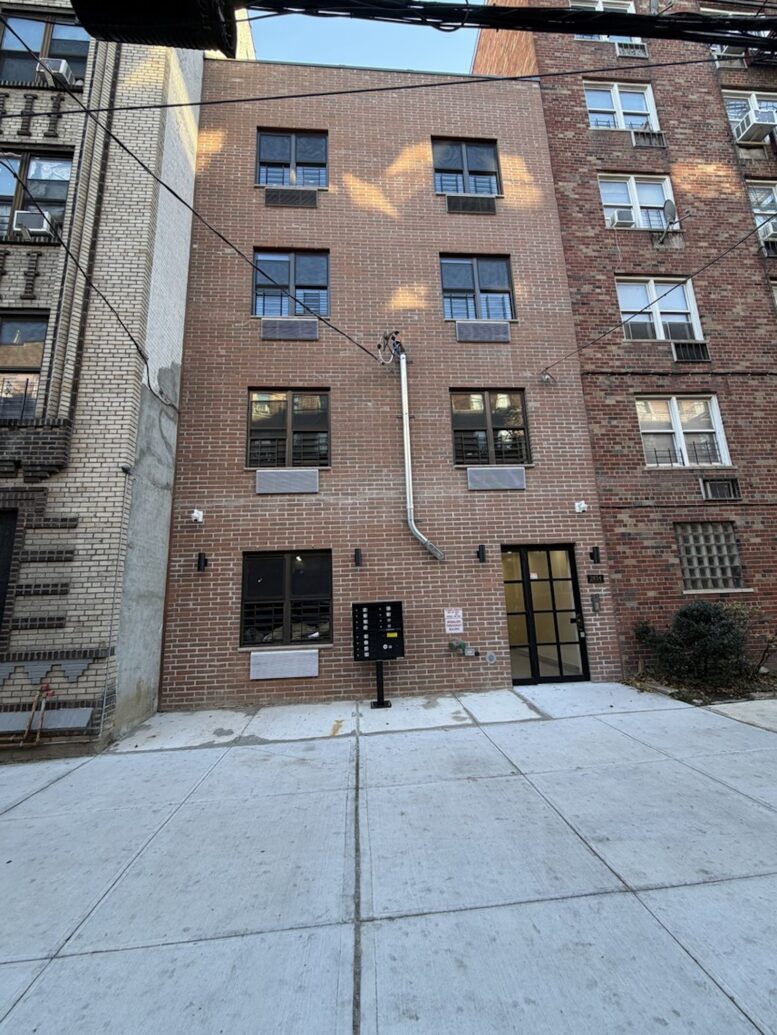
Affordable Housing Lottery Launches for 2854 Webb Avenue in Kingsbridge, The Bronx


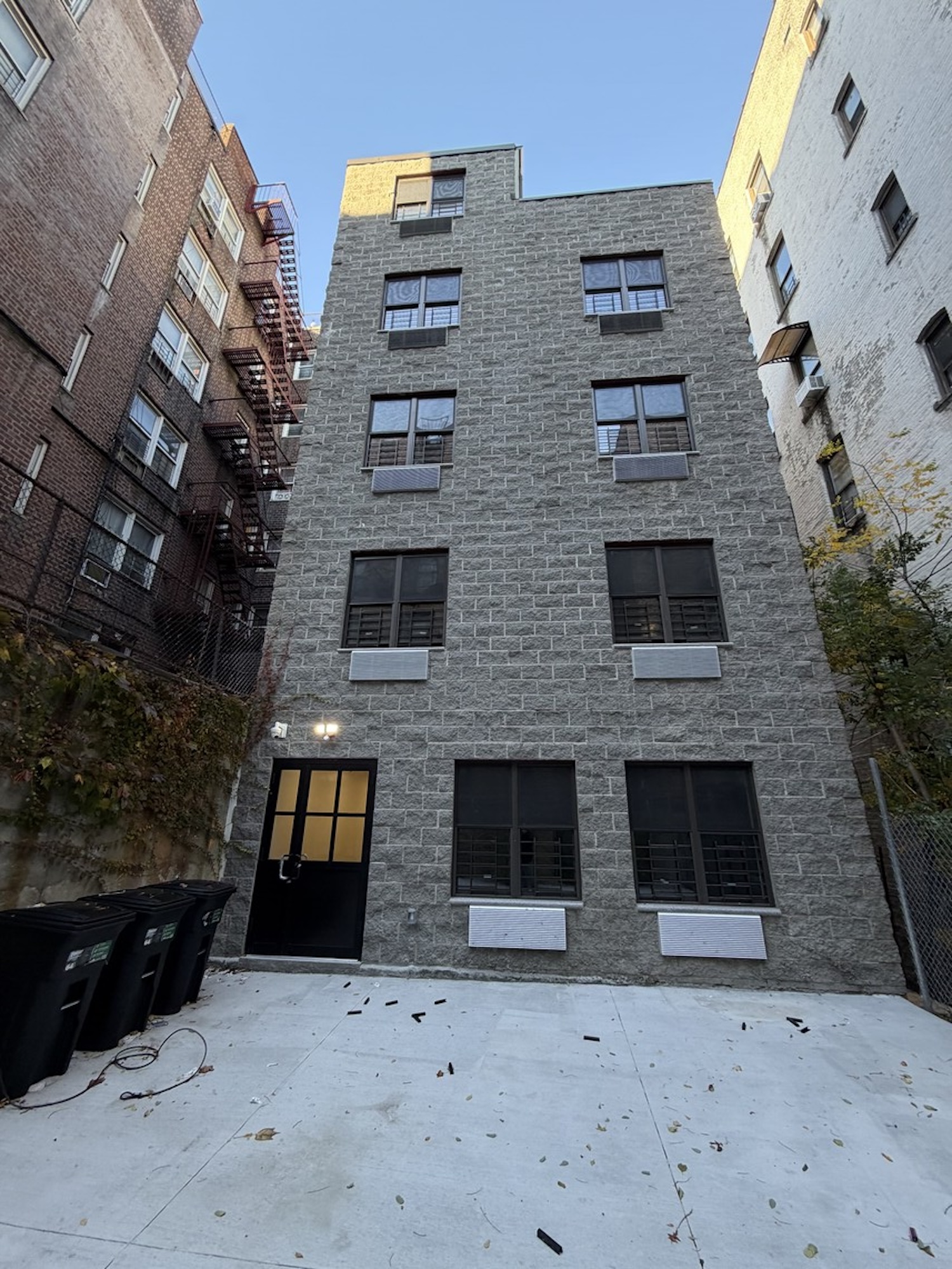
The affordable housing lottery has launched for 2854 Webb Avenue, a four-story residential building in Kingsbridge, The Bronx. Designed by Li Architect Associate PLLC and developed by Redsky Jz Fulton Spe LLC, the structure yields eight residences. Available on NYC Housing Connect are two units for residents at 80 percent of the area median income (AMI), ranging in eligible income from $81,909 to $116,640. 

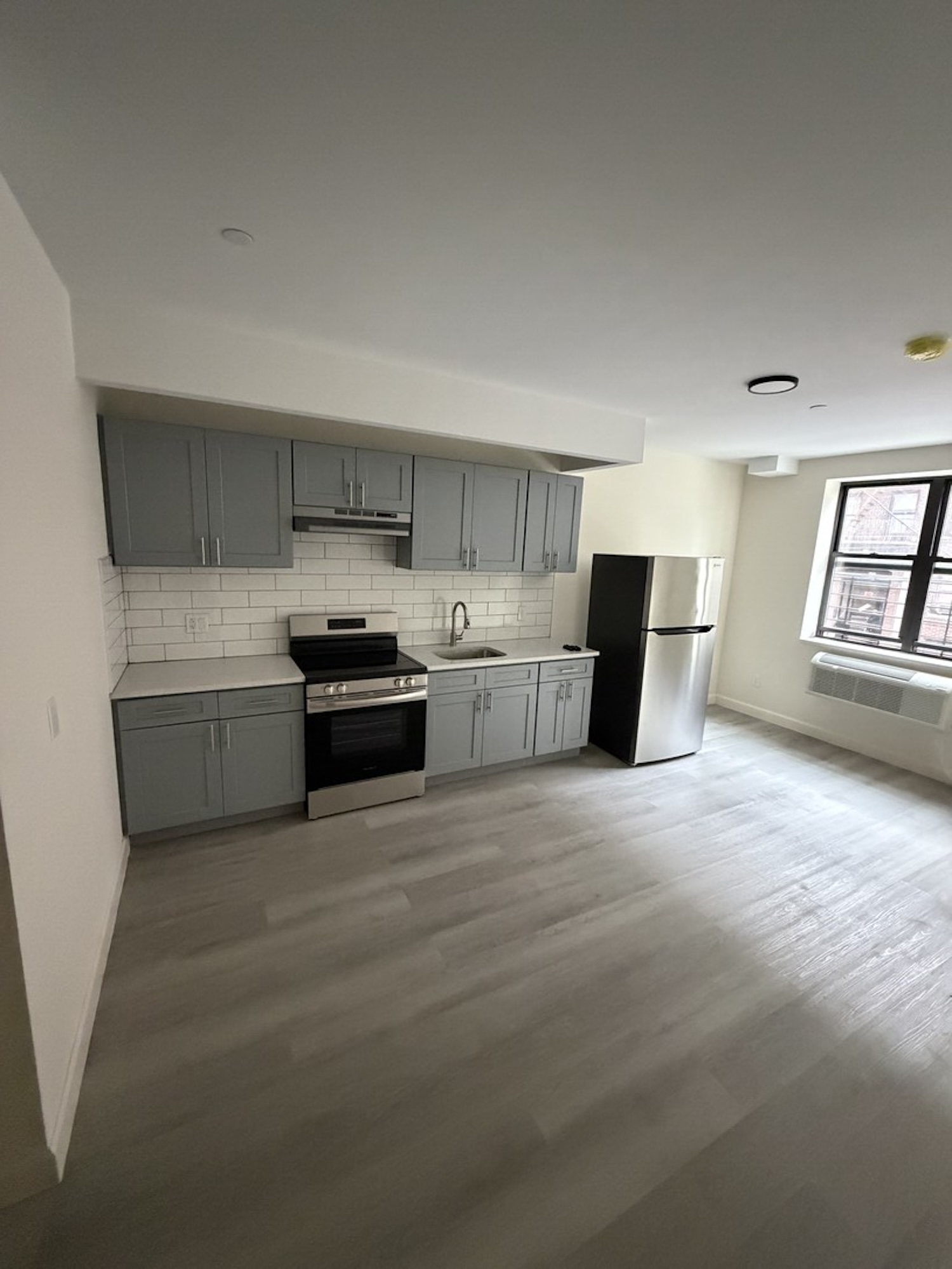
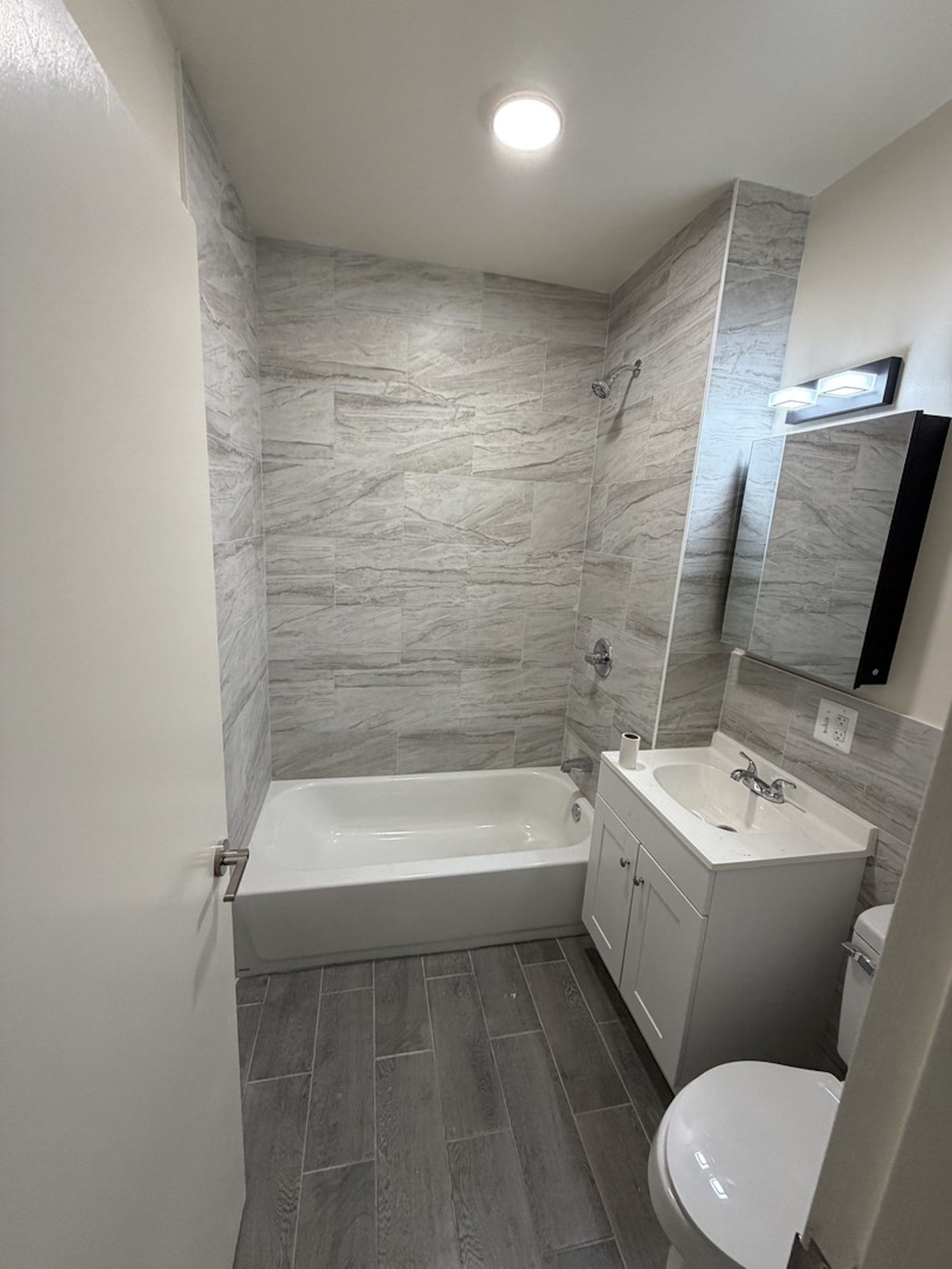
Residences are equipped with split unit heating and cooling, intercoms, and smart control for heating and cooling. Tenants are responsible for electricity including stove, heat, and hot water.

At 80 percent of the AMI, there are two one-bedrooms with a monthly rent of $2,092 for incomes ranging from $81,909 to $116,640.

Prospective renters must meet income and household size requirements to apply for these apartments. Applications must be postmarked or submitted online no later than January 13, 2026.