Saturday, January 3, 2026

ASSEMBLYWOMAN RAJKUMAR'S STATEMENT ON NYSNA NOTICE OF STRIKE


As the daughter of health care professionals, I stand in unwavering solidarity with NYSNA nurses who are preparing to take this historic stand across New York City. These nurses are the frontline of our healthcare system. They are the ones who stay at the bedside, catch emergencies before they escalate, and advocate for patients when no one else will. Their demands are simple and just: safe staffing, real protections from workplace violence, and guaranteed healthcare benefits for the caregivers who give everything to care for others.

Several of the hospitals involved — particularly Wyckoff Heights Medical Center — provide critical care to residents of my district and communities across Queens and Brooklyn. When nurses speak up about staffing and safety, they are doing so to strengthen patient care and ensure our neighborhoods receive the quality healthcare they deserve.

It is especially troubling that some of the wealthiest hospital systems in New York City claim they cannot afford fair contracts, while holding billions in cash reserves and preparing to spend enormous sums on temporary traveler nurses. Instead of investing those resources into the experienced nurses who know their patients, neighborhoods, and hospitals, executives are choosing confrontation over collaboration. That decision puts profits ahead of patient care and undermines the stability of our healthcare system.

Our nurses are the backbone of New York City’s healthcare system. Supporting them means supporting safer hospitals, stronger communities, and better outcomes for patients. I urge hospital leadership to listen to nurses and settle fair contracts immediately. The best way to protect patients is not through strikebreaking tactics, but by respecting nurses, valuing their expertise, and ensuring that there are always enough trained professionals at the bedside. Our City’s health depends on it.

Governor Hochul Announces Special Elections in Senate Districts 47 and 61, and in Assembly District 36

Governor Kathy Hochul New York State Seal

Governor Kathy Hochul announced that a special election to fill the vacancies in the 47th and 61st Senate Districts, and the 36th Assembly District will be held on Tuesday, February 3, 2026. The vacancies were created by the resignations of former State Senator Brad Hoylman-Sigal, former State Senator Sean Ryan and former Assemblymember Zohran Mamdani, respectively. Governor Hochul issued the proclamation on January 2 pursuant to the Public Officers Law.

“These State Legislators represented their communities with distinction in Albany, and we wish them well in their next chapters,” Governor Hochul said. “To ensure constituents of these districts are represented in the State Legislature, there will be a special election on February 3, 2026 to fill the vacancies. I look forward to working with their successors and working on the issues that matter to New Yorkers.”


Friday, January 2, 2026

Mayor Mamdani Establishes Office of Mass Engagement to Transform How New Yorkers Participate in City Government


Tascha Van Auken to lead new office, bringing unprecedented mass-organizing success to City Hall 

Mayor Zohran Kwame Mamdani today signed an Executive Order establishing the Mayor’s Office of Mass Engagement (OME), a new City Hall office designed to transform how New Yorkers engage with their government. The office will work within City Hall and across City agencies to strategize, coordinate, and execute on engagement that reaches the masses of everyday New Yorkers. 


The Mayor announced that Tascha Van Auken will lead the Office of Mass Engagement as CommissionerOn Mayor Mamdani’s campaign, Tascha spearheaded a historic field operation — mobilizing more than 100,000 volunteers, knocking on over 3 million doors, and making more than 4.5 million calls to New York City voters. Now she will bring this experience and approach to City government. 


“For too long, city government has only listened to the wealthy and well-connected while working New Yorkers remain further and further disconnected from those elected to serve them. The Office of Mass Engagement will fundamentally change this, creating a deeper connection between City Hall and community organizations, faith-based groups, and everyday New Yorkers looking to make their voices heard. Tascha Van Auken has been instrumental in creating the mass movement that delivered us to City Hall, and she will bring the same urgency, discipline, and principles to her work as Director of the Office of Mass Engagement,” said Mayor Zohran Mamdani.  


The Office of Mass Engagement will revolutionize how City government conducts community engagement. City government functions best when there is a direct line of communication between the Mayor, his team and the people who built this city and keep it running. The Office will transform community engagement to ensure that it reaches New Yorkers where they are, organizes them, and builds long-term participation. It will also serve as a constant drumbeat within City government to ensure that New Yorkers’ needs and perspectives are integrated into all elements of New York City government. 


“We are all too familiar with wanting to participate in City government and not knowing where to go. On a daily basis, this limits the capacity of our government,” said incoming Commissioner Tascha Van Auken. “At worst, when New Yorkers need support — when they are facing eviction, when they are denied unemployment, when they need to find care for a loved one — they do not know where to go. We will demystify government so all New Yorkers can be active participants and have the resources they need to thrive.”


Our current systems of governance do not work because power is concentrated at the top of government, and access is freely open to the powerful, but not to the vast majority of people. To achieve functioning transformative governance, we need practices of participatory democracy between the government and communities, and for collaborative strategizing between the government and movements. We look forward to working with the Office of Mass Engagement towards deep meaningful democracy,” said Fahd Ahmed, Executive Director at DRUM. 


Van Auken is a veteran grassroots organizer who previously served as campaign manager for State Senator Julia Salazar and Assemblymember Phara Souffrant Forrest, and as Deputy Campaigns Director for the Working Families Party. On the Mamdani campaign, she led the highest voter turnout in a New York City mayoral race since 1969, with more than 2 million New Yorkers casting ballots — nearly double the turnout of the previous mayoral election and approaching presidential-level participation across neighborhoods in Brooklyn, Queens, and Manhattan. Earlier in her career, she served as Artistic Direction Manager for the Blue Man Group, bringing a creative, people-centered approach to large-scale public engagement.  


The Office of Mass Engagement will: 

  •   Lead mass engagement campaigns that organize New Yorkers to participate in City decision-making; 
  •    Create and maintain accessible, inspiring channels and events for residents to share feedback with government; 
  •    Proactively reach communities that have historically been excluded from policymaking; 
  •   Embed public feedback directly into City policies, programs, and services through strong, transparent feedback loops; 
    • Support agencies in delivering high-quality engagement and more effective public services. 


Under the Executive Order, the Office of Mass Engagement will oversee and coordinate the City’s key engagement entities, including: 

  •    The Public Engagement Unit (PEU) 
  •    The Mayor’s Office of Faith-Based and Community Partnerships 
  •    NYC Service 


The Executive Order takes effect immediately. 


FBI Disrupts Alleged New Year’s Eve Attack, Man Charged with Attempting to Provide Material Support to ISIS


Today, the Justice Department and the U.S. Attorney's Office for the Western District of North Carolina announced that a Mint Hill, North Carolina man that allegedly planned to use knives and hammers to execute a deadly New Year’s Eve attack at a grocery store and a fast food restaurant in support of the Islamic State in Iraq and al-Sham (ISIS) has been arrested and charged with attempting to provide material support to a foreign terrorist organization. The criminal complaint was filed on Dec. 31, 2025, and was unsealed today after Christian Sturdivant, 18, appeared in federal court in Charlotte.

“This successful collaboration between federal and local law enforcement saved American lives from a horrific terrorist attack on New Year’s Eve,” said Attorney General Pamela Bondi. “The Department of Justice remains vigilant in our pursuit of evil ISIS sympathizers — anyone plotting to commit such depraved attacks will face the full force of the law.”

“The accused allegedly wanted to be a soldier for ISIS and made plans to commit a violent attack on New Year’s Eve in support of that terrorist group, but the FBI and our partners put a stop to that,” said FBI Director Kash Patel. “It is essential to work closely with our law enforcement partners and to quickly share information about potential threats, as demonstrated in this case. The message from the FBI is clear — anyone who supports ISIS or other terrorist groups cannot hide and will be held accountable in our justice system.”

“As alleged, Sturdivant aspired to become a ‘martyr’ for ISIS and was in the final stages of planning a mass-casualty attack on New Year’s Eve. Notes recovered from his home appear to reflect intent to harm as many people as possible and terrorize the Nation,” said Assistant Attorney General John A. Eisenberg of the Justice Department's National Security Division. “We commend the extraordinary work of our partners in neutralizing this threat.”

“Americans deserve to celebrate New Year’s Eve without worrying about their personal safety,” said U.S. Attorney Russ Ferguson for the Western District of North Carolina. “That is why we worked non-stop to thwart this alleged violent terrorist attack. I am proud of the work done here and thankful for the time spent by law enforcement away from their families during the holidays to ensure public safety.”

“The FBI’s mission is to protect the American people, and this case demonstrates our dedication to do everything we can to protect the residents of North Carolina,” said Special Agent in Charge James C. Barnacle Jr. of the FBI Charlotte Field Office. “We worked closely with the Department of Justice, NYPD, Mint Hill Police Department, and our FBI Joint Terrorism Task Force partners to investigate and disrupt this serious threat of a violent attack. We will never stop working to hold people accountable who seek to harm and terrorize our community.”

“Christian Sturdivant allegedly swore allegiance to an international terrorist organization and plotted deadly attacks in its name,” said NYPD Commissioner Jessica S. Tisch. “But the New York City Police Department has a long reach, and our undercover cybersecurity investigators once again identified threats of extremist behavior and thwarted them before they could be carried out. Public safety knows no borders, and we will continue to work with all our law enforcement partners and the U.S. Attorney’s Office to pursue and hold accountable anyone who seeks to spread fear and violence.”

“Now more than ever, partnerships between law enforcement agencies are paramount,” said Chief Joseph Hatley of the Mint Hill Police Department. “This disruption is a testament to all involved, working as one to thwart an attack and hold accountable anyone planning such a horrific act of violence against our community.”

According to allegations in the arrest affidavit, on Dec. 18, 2025, the FBI in Charlotte received information that an individual later identified as Sturdivant was making multiple social media posts in support of ISIS, a designated foreign terrorist organization. In early December 2025, Sturdivant posted an image depicting two miniature figurines of Jesus with the on-screen text that read, “May Allah curse the cross worshipers.” The post is allegedly consistent with ISIS’s rhetoric calling for the extermination of all non-believers, including Christians, Jews, and Muslims who do not agree with ISIS’s extreme ideology.

Sturdivant’s social media post in early December 2025

Sturdivant’s social media post in early December 2025

The criminal complaint alleges that on or about Dec. 12, 2025, Sturdivant began communicating with an online covert employee, or “OC,” whom Sturdivant thought was an ISIS member. Sturdivant told the OC, “I will do jihad soon,” and proclaimed he was “a soldier of the state,” meaning ISIS. On Dec. 14, 2025, Sturdivant allegedly sent an online message to the OC with an image of two hammers and a knife. This is significant because an article in the 2016 issue of ISIS’s propaganda magazine promoted the use of knives to conduct terror attacks in western countries. The same article inspired actual attacks in other countries. Later, Sturdivant told the OC that he planned to attack a specific grocery store in North Carolina. Sturdivant also told the OC about his plans to purchase a firearm to use along with the knives during the attack, according to the arrest affidavit.

Dec. 14, 2025, Sturdivant’s online message to undercover law enforcement with image of two hammers and a knife

Dec. 14, 2025, Sturdivant’s online message to undercover law enforcement with image of two hammers and a knife

In addition, on Dec. 19, 2025, Sturdivant allegedly sent the OC a voice recording of Sturdivant pledging “Bayat,” a loyalty oath to ISIS.

On Dec. 29, 2025, law enforcement conducted a search warrant at Sturdivant’s residence, where they discovered handwritten documents, one of which was titled “New Years Attack 2026.” The document listed items such as a vest, mask, tactical gloves, and two knives allegedly to be used in the attack. It also described a goal of stabbing as many civilians as possible, with the total number of victims to be as high as 20 to 21. The note also included a section labeled as “martyrdom op,” that described a plan to attack police responding to the site of the attack so Sturdivant would die a martyr.

Handwritten document titled “New Years Attack 2026”

Handwritten document titled “New Years Attack 2026”

The complaint alleges that Sturdivant lived with a relative, who secured knives and hammers away so Sturdivant could not use them for harm. Yet, law enforcement seized from Sturdivant’s bedroom a blue hammer, a wooden handled hammer, and two butcher knives which appeared hidden underneath the defendant’s bed. These items appear to be the same as the ones depicted in the online message Sturdivant previously sent to the OC.

Items seized from Sturdivant’s bedroom on Dec. 29, 2025, pursuant to a federal search warrant

Items seized from Sturdivant’s bedroom on Dec. 29, 2025, pursuant to a federal search warrant

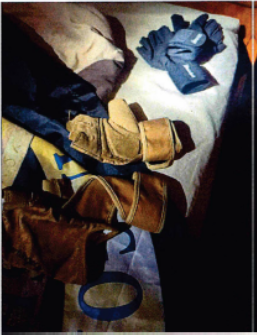
Law enforcement also seized from Sturdivant’s bedroom a list of targets, as well as tactical gloves and a vest, acquired as part of the defendant’s planned attack.

Additional items seized from Sturdivant’s bedroom acquired for the alleged planned attack

Additional items seized from Sturdivant’s bedroom acquired for the alleged planned attack

Additional items seized from Sturdivant’s bedroom acquired for the alleged planned attack.

Sturdivant remains in federal custody. If convicted, Sturdivant faces a statutory maximum penalty of 20 years in federal prison. A federal district court judge will determine the ultimate sentence after considering the U.S. Sentencing Guidelines and other statutory factors.

The investigation was conducted by the FBI Charlotte Joint Terrorism Task Force, which includes the Charlotte-Mecklenburg Police Department, the Matthews Police Department, the Monroe Police Department, the Bureau of Alcohol, Tobacco, Firearms and Explosives, the U.S. Customs and Border Protection, the Federal Air Marshal Service, the Homeland Security Investigations, the Internal Revenue Service, the U.S. Postal Inspection Service, and the U.S. Citizenship and Immigration Services, with the assistance of the NYPD, additional FBI Field Offices, and the Mint Hill Police Department.

The case is being prosecuted by Assistant U.S. Attorney Robert Gleason for the Western District of North Carolina and DOJ Trial Attorney Elisa Poteat with the National Security Division’s Counterterrorism Section.

The charges against the defendant are merely allegations and the defendant is presumed innocent unless proven guilty beyond a reasonable doubt in a court of law.

Governor Hochul Highlights Record-Breaking Year of Performance and Ridership for the MTA in 2025

MTA NYC Subway

Nearly 1.9 Billion Trips Taken on MTA System in 2025, Most Since 2019; Ridership up Roughly 7 Percent Systemwide

Subway, LIRR and Metro-North Each Broke On-Time Performance Records in 2025

Governor Kathy Hochul today announced that the Metropolitan Transportation Authority (MTA) had a record-breaking year in 2025, with significant milestones reached for performance, reliability and ridership. The subway, Long Island Rail Road and Metro-North Railroad all recorded record-highs for On-Time Performance in 2025. Ridership also experienced strong growth in 2025: nearly 1.9 billion trips were taken on New York City Transit’s subway, bus and paratransit services, up roughly seven percent from 2024.

“This is what happens when you invest in mass transit: better service, faster trips and increasing ridership, benefitting the entire region,” Governor Hochul said. “2025 was a record-breaking year for the MTA and a great year for riders, who took almost two billion trips from Poughkeepsie to Patchogue and the Rockaways to Riverdale, powering the entire region. Transit is the lifeblood of New York, and in 2026, we will build on these results to continue improving service, saving New Yorkers precious time and powering our economy.”

MTA Chair and CEO Janno Lieber said, “Four years ago, under Governor Hochul’s leadership, the MTA set out ambitious goals to bring transit – and New Yorkers -- back from the pandemic by increasing and improving service and investing in our infrastructure. Thanks to the amazing MTA workforce and historic capital funding from Albany, we’ve been able to accomplish those goals—ridership, service, safety and modernizing and expanding our great but aging system. Promises made, promises kept. That’s good government in action.”

New York City Transit

2025 was a historic year for the subway system. Weekday and weekend On-Time Performance (OTP) reached the highest levels since electronic record-keeping was launched, excluding the pandemic period when 24/7 service was suspended. Weekday OTP in 2025 was 83.7 percent, a 2.1 percentage point improvement from 2024 and weekend OTP was 86.6 percent, 2.4 points better than 2024. In August, subway weekday OTP reached 85.2 percent, the best single month for performance in history.

This improvement in subway service was driven through increased focus on data-driven schedule and service management improvements; a drop in delays related to public conduct incidents; and improved schedules helping to mitigate the impacts of scheduled maintenance and capital work. The subway system experienced about 13,000 fewer delays in 2025 compared to the previous year, even with increases in regularly scheduled service. In 2025, the Department of Subways also increased service on several lines, including the A and L in November, and the M in December in conjunction with the F/M swap.

Subway ridership grew substantially in 2025, with nearly 1.3 billion total trips, up seven percent from 2024. Subway ridership continued its post-pandemic recovery, with total trips in 2025 up nearly 30 percent from 2022 and at 85 percent of pre-pandemic levels. The subway broke its post-pandemic single-day weekday and weekend ridership records on numerous occasions in 2025, with the most-recent single day high reached on December 11 with 4.65 million customers.

On buses, the MTA has added additional service across the city in 2025. Following the launch of congestion pricing, the MTA and Governor Hochul committed $8 million from the Outer Borough Transportation Account to increase frequencies on 22 high-ridership bus routes, including 8 Express Bus routes connecting riders to Manhattan and 14 critical Local Bus routes, reducing wait times for riders. In June and September, the MTA phased in the Queens Bus Network Redesign, which included a $35 million annual investment in increased all-day frequency, 11 brand new bus routes and 25 new Rush Routes, which have sped up trips by seven percent.

Systemwide, bus speeds, customer journey time performance, and service delivered were all improved in 2025. Bus ridership also grew by roughly eight percent in 2025, with nearly 440 million total trips.

Paratransit continued to break records in 2025. October was the first month in history with more than one million riders on the service. Overall ridership is at 161 percent of pre-pandemic levels, reflective of improved service and heightened customer satisfaction.
Customer survey data also reached record highs in 2025: November satisfaction was at 67 percent for subway riders and 62 percent for bus riders, while paratransit satisfaction has consistently been in the high 70s all year. This increase in satisfaction was driven primarily by improved customer safety, with 71 percent of subway customers reporting they felt safe on the system in November, the highest rate since the MTA began monthly surveys in 2022.

Long Island Rail Road and Metro-North

The MTA’s railroads also clocked strong performance and ridership results in 2025. The Long Island Rail Road (LIRR) saw the greatest increase of ridership of all MTA modes in 2025, with 81 million customers, a 9 percent increase from 2024. The LIRR also broke several post-pandemic records in December, with 183,250 people taking the train on Saturday, December 13, the highest post-pandemic Saturday, and 152,661 customers on Sunday, December 21, the highest post-pandemic Sunday. On September 24, the LIRR carried more than 300,000 riders for the first time since the pandemic. Overall, LIRR ridership is at 92 percent of pre-pandemic levels.

Performance on the LIRR was also at or above record levels in 2025. OTP for the year exceeded 96 percent, an increase of one point from 2024 and the best non-pandemic year in at least a decade. And customer satisfaction reached new heights, with 81 percent of riders feeling satisfied, an 11 point increase from 2024.

Metro-North continued to deliver excellent service in 2025, with an OTP for the year of 97.8 percent. This strong performance was matched by improvements to service, including the ahead-of-schedule launch of new “Super-Express” service on the Hudson Line on October 5, slashing travel times between Poughkeepsie and Grand Central to less than 90 minutes.

Metro-North carried 69 million riders in 2025, an increase of 6 percent from 2024. The week of December 15 saw the highest post-pandemic ridership recovery week for Metro-North, with 827,015 total customers. The weekend of December 20-21 was Metro-North's strongest weekend ridership performance of the post-pandemic era, with 245,638 customers. Metro-North ridership is now at 88 percent of pre-pandemic levels.

2025 Milestones

  • Additional milestones in the transit system in 2025 include:
  • Highest ridership subway station: 42 St Complex (Times Sq-42 St N,Q,R,S,W,1,2,3,7/42 St-PABT A,C,E/Bryant Pk B,D,F,M/5 Av 7) - total: 58,848,238
  • Highest ridership subway route: 6 line with an average of 560,000 daily riders
  • Highest ridership bus route: M15-SBS carried 7,004,769 riders
  • Busiest turnstile in the subway: Grand Central - 42 St, Booth R238 Position 16 – total of 1,853,615 entries


DEC ANNOUNCES MORE THAN $22 MILLION FOR CLIMATE SMART COMMUNITIES GRANT AWARDS


Logo

Grants to Communities Support Local Climate Action to Reduce Emissions and Increase Resilience

Largest-Ever Grant Awards Bolstered by Clean Water, Clean Air and Green Jobs Environmental Bond Act Funding 

New York State Department of Environmental Conservation (DEC) Commissioner Amanda Lefton today announced $22.7 million in Climate Smart Communities Grant awards for 43 projects to help municipalities take action to address climate change. This year’s funded projects reduce flood risk by retrofitting or relocating critical infrastructure, support decreasing transportation emissions through cycling and walkability projects, reduce emissions from food waste and landfills, and undertake engineering feasibility studies to advance future climate projects, among many other actions.

“DEC’s Climate Smart Communities grants support municipal investments to reduce pollution, protect the environment, and increase community resilience to climate impacts and severe weather,” Commissioner Lefton said. “Governor Kathy Hochul recognizes reducing harmful emissions and advancing climate equity is critical to improving New Yorkers’ health and quality of life, while also helping save money on energy costs. DEC is proud of our partnerships with local governments taking the lead on climate adaptation and resilience statewide.”   

Funding for the Climate Smart Communities (CSC) Grant Program is supported by the $4.2 billion Clean Water, Clean Air, and Green Jobs Environmental Bond Act and the State's Environmental Protection Fund, which was increased to a record $425 million in the 2025-26 State Budget. Since the program's inception in 2016, DEC awarded more than $109 million to municipalities through the CSC Grant program in support of local climate mitigation and adaptation projects.

As part of the CSC Grant Program, municipalities are required to provide a local match of 50 percent of the total costs for most projects. Last year’s New York State budget made grants more accessible to more communities by authorizing DEC to provide up to 80 percent of the cost for municipal projects that meet criteria for financial hardship and for projects located in disadvantaged communities.

The full list of grant awards include:  

CAPITAL DISTRICT 

Town of Niskayuna - $500,000 - Sidewalks to School - Birchwood and Hillside 

The town of Niskayuna will install five-foot-wide sidewalks near Birchwood and Hillside Elementary Schools to provide a safe option for students to walk to school, decreasing the number of vehicle miles traveled and lowering greenhouse gas emissions. Both schools lack sidewalk infrastructure in the areas surrounding their campuses, which discourages walking to school from the surrounding residential neighborhoods.  

Village of Philmont - $33,600 - Natural Resources Inventory 

The village of Philmont will complete a natural resource inventory for the entire town of Claverack. The village will coalesce all the natural resources data into one source that is easily accessible for the town, village, and county.  

CENTRAL NEW YORK 

City of Fulton - $527,080 - 4th, 5th, 7th, and Fay Street Sidewalks 

The city of Fulton will repair 1,522 linear feet of sidewalk along 7th, and Fay Streets and build new sidewalks on Fay, 4th, and 5th streets. The new sidewalks will connect to a series of existing sidewalks and a trail that lead to the downtown center and Kiwanis Park, allowing people to avoid driving a distance that is easily walkable.  

Oswego County - $171,060 - Climate Emergency Response Resource Enhancement  

Oswego County will implement a multi-agency project to strengthen emergency preparedness and response capabilities for climate-related hazards such as flooding, extreme temperatures, and prolonged power outages. The project will provide deployable emergency response and mass care equipment to support residents across the county, with a focus on reaching disadvantaged communities.   

Town of Tully - $72,578 - Route 80 Sidewalk Project 

Tully will construct 2,230 feet of new sidewalk along County Route 80, ending at Route 281. This new stretch of sidewalk will connect to an existing system of sidewalks in the village center that currently end at the Tully High School, allowing pedestrians a safe walking route from the village center to several commercial outlets in the town.  

City of Syracuse - $52,000 - Natural Resources Inventory 

Syracuse will create a natural resource inventory to inform effective land use planning, environmental preservation projects, natural area protection, advance climate resiliency goals, and inform the public about leveraging the benefits of natural environmental resources.  

FINGER LAKES  

City of Rochester - $780,000 - Dewey Avenue Cycle Track Implementation 

Rochester will construct continuous off-street cycle tracks during the larger Dewey Avenue and Emerson Street Reconstruction and Realignment Project. The proposed sidewalk-level cycle tracks will improve non-motorized transportation in a busy area lacking multi-modal facilities. The cycle tracks are part of Rochester's goal to construct a 63-mile bicycle spine network helping achieve a reduction in vehicle miles traveled and reducing greenhouse gas emissions.   

City of Geneva - $60,000 - Daylighting Castle Creek Feasibility Study 

Geneva will complete an engineering feasibility study and preliminary engineering report evaluating the daylighting of Castle Creek between Main Street and Bicentennial Park. The study will assess climate change impacts on the creek and compare the cost, feasibility, and long-term resilience of daylighting the creek versus upgrading existing underground culverts, prioritizing nature-based solutions where practicable.  

Ontario County - $60,000 - Organics Management Plan  

Ontario County will develop an organics management plan. The plan is urgently needed as the county has committed to ceasing operation of the Ontario County landfill by the end of 2028, requiring increased waste diversion and advancing sustainability. The plan will provide critical baseline information such as organic waste volumes, gaps in infrastructure, existing programs, and opportunities to increase diversion of organic waste, reduce emissions, and decrease the total volume of waste needing to be landfilled post-closure.  

LONG ISLAND  

Town of Brookhaven - $500,000 - Land Acquisition - East Patchogue 

The town of Brookhaven will acquire a parcel of land for open space preservation and flood risk reduction.    

Town of East Hampton - $200,000 - Natural Resources Inventory 

The town of East Hampton will develop a natural resource inventory that will be a centralized data repository for the development of conservation and land management strategies and serve as a foundation for good land use planning.  

Village of Garden City - $40,000 - Government Operations Greenhouse Gas Emissions Inventory, Fleet Inventory, and Fleet Efficiency Policy 

This project addresses Garden City's lack of baseline emissions data and fleet management framework. These foundational assessments will identify emission sources and establish procurement standards, enabling the village to prioritize cost-effective reduction strategies.  

MID-HUDSON   

City of Beacon - $2,000,000 - Melzingah Reservoir Dam Rehabilitation 

Beacon will rehabilitate the Melzingah Reservoir Dam, a Class C High Hazard structure. The remediation meets requirements to safely pass 50% of the probable maximum precipitation adjusted for climate scenarios over 10-, 20-, and 30-year horizons. The design specifically addresses the increasing intensity and frequency of 100-year storms by raising the dam’s crest and increasing spillway capacity to handle more runoff and peak flows.  

Village of Briarcliff Manor - $1,972,903 - Law Park Drainage Basin Phase 3 

Briarcliff Manor will right-size stormwater conveyance piping as part of the third and final phase of the Law Park Drainage project. This project will alleviate flooding caused by undersized drainage infrastructure. This project delivers a right-sized stormwater management system designed to convey the flows of the 25-year storm plus an additional 20% increase in peak flow to account for the increase in storm intensity due to climate change.  

City of Peekskill - $1,775,436 - Paramount Theatre Cooling Center 

Peekskill will upgrade the HVAC system at the historic Paramount Theatre, centrally located in downtown Peekskill, and designate it as a cooling center to offer the community a reliable refuge from the health and safety risks associated with increasingly severe heat waves. Additionally, the improved HVAC will reduce greenhouse gas emissions and energy use.  

Town of Clarkstown - $1,590,933 - Prospect and Church Street Sidewalks 

Clarkstown will install approximately 4,000 linear feet of sidewalks on Prospect and Church streets connecting the residential neighborhoods on either side of the Main Street corridor with the downtown Nanuet business district and the commuter rail station. This project is a key component of the town's new Transit Oriented Development zoning district, which allows for the construction of 750 residential units within walking distance from the commuter train station and downtown hamlet center.  

Village of Tannersville - $1,166,400 - DPW Relocation Project 

Tannersville will relocate the Department of Public Works garage out of the 100-year floodplain of the Gooseberry Creek. The new facility will be a shared with the town of Hunter and the Hunter-Tannersville Central School District and be built on a Town parcel outside of the floodplain. During Tropical Storm Irene in 2011, floodwaters reached approximately 36 feet within the building.  

Village of Hastings-on-Hudson - $1,156,894 - Ravensdale Pedestrian and Bike Improvements

Hastings-on-Hudson will install a five-foot-wide sidewalk and two four-foot-wide bicycle lanes along Ravensdale Road and a five-foot-wide sidewalk along Saw Mill River Road. The new infrastructure creates a continuous system connecting schools, the train station, bus stops, downtown, and recreation facilities. The project also fills a gap in connection to the South County Trail (Empire State Trail) enabling cyclists and runners to access the trail without driving. This connection may facilitate alternative forms of transportation between Westchester County communities, including supporting residents who commute to work by bicycle.  

Village of Irvington - $550,000 - Train Station Connectivity Project 

Irvington will install 5-foot-wide sidewalks on South Buckhout Street, connecting the residential neighborhoods of Half Moon and Spiro Park with the Metro North train station. This project is critical due to the residential development of three large parcels on South Buckhout Street and a planned transit-oriented design zoning district in the area. The project will address a large gap in pedestrian infrastructure that exists along a busy vehicular route that deters walking, helping reduce vehicle travel to the train station and related greenhouse gas emissions.  

Town of Ramapo - $418,864 - Climate Smart Parks 

Ramapo will install permanent shade structures over existing playground and recreational areas in the town’s parks. These recreational areas currently see significantly reduced usage during summer months due to high temperatures and lack of sun protection, creating accessibility and safety concerns especially for young children and families.  

City of Kingston - $400,000 - Early Flood Warning System 

Kingston will develop an early flood warning and alert system for a neighborhood along the Rondout Creek that experiences repetitive flooding. The system will send notifications to residents and city emergency departments. The city will also develop a flood response plan for government activities that will be activated when flooding is expected.  

Village of Mamaroneck - $115,304 - Emergency Operations Preparedness, Planning, and Training Project

Mamaroneck will install flood gauges and cameras at key points along the Mamaroneck, Sheldrake, and Beaver Swamp Rivers; develop a comprehensive emergency operations plan; and coordinate training for local response teams. Mamaroneck is situated in a densely developed floodplain that has repeatedly faced severe storms and coastal surges. These tools are crucial for issuing timely alerts, coordinating evacuations, and reducing risks to lives, property, and infrastructure during more frequent and intense weather events resulting from climate change.  

and - $52,000 - Municipal Fleet Inventory and Efficiency Planning Project 

Mamaroneck will conduct a comprehensive fleet inventory and develop a municipal fleet efficiency policy to support the transition to a low-emission municipal fleet. Once the fleet inventory is completed, the village will conduct a rightsizing analysis to evaluate vehicle utilization with operational needs.  

City of New Rochelle - $112,500 - Citywide Tree Plantings 

New Rochelle will implement a citywide tree planting initiative to enhance climate resilience by planting approximately 400 climate-adapted street and park trees in disadvantaged community neighborhoods, with a focus on public rights-of-way, sidewalks, and parks. The project addresses urban heat, stormwater runoff, and public health disparities while advancing long-term climate adaptation benefits.  

Town of Poughkeepsie - $80,000 - New Hamburg Flooding Engineering Study 

Poughkeepsie will complete an engineering study to evaluate flood control options in the hamlet of New Hamburg. This study will evaluate alternatives, provide scoping and cost details, technical and regulatory considerations, and develop 30% design plans for five projects recommended in the more general New Hamburg Flood Study Report.  

Town of Woodstock - $46,567 - Bike and Pedestrian Master Plan 

Woodstock will develop a comprehensive bike and pedestrian master plan covering the hamlet center and extending westward toward the hamlet of Bearsville. The study will assess current infrastructure conditions, identify barriers to safe and accessible non-motorized travel, and develop a strategic plan to improve walkability, bikeability, and multimodal circulation.  

Town of Pine Plains - $15,000 - Government Operations Greenhouse Gas Inventory

Pine Plains will complete a government operations greenhouse gas inventory, which will fill critical data gaps and provide the emissions baselines necessary to guide future climate mitigation and adaptation strategies.

NEW YORK CITY  

New York City Department of Small Business Services - $1,995,638 - Hunts Point Food Distribution Center Floodproofing 

New York City Department of Small Business Services will floodproof a critical food distribution facility building in the Bronx. Meat Market Building D houses the electrical infrastructure that provides the entire market with power and is highly vulnerable to coastal flooding. This project will dry-floodproof Building D through structural reinforcement, waterproofing, and flood barriers that provide 100-year level flood protection and account for 90th percentile of sea level rise through the 2050s.  

New York City Department of Transportation (DOT) - $1,614,012 - Heat Adaptation in the Public Realm 

New York City DOT will implement shade structures, misting features, and/or drinking water features at 19 different pedestrian areas in various heat vulnerable neighborhoods. The project will help residents of disadvantaged communities reduce heat exposure in the summer and enhance neighborhood livability year-round.  

New York City Department of Health and Mental Hygiene - $869,354 - Air Conditioner Recycling Program 

The Air Conditioner (AC) Recycling Program will safely reclaim refrigerant from AC's made redundant by installation of heat pumps for heating and cooling as part of “Clean Heat for All,” a comprehensive building electrification effort at New York City Housing Authority communities located in disadvantaged communities. Over five years, an estimated 4,000 AC units will be recovered and refrigerant will be removed, reducing the emission of greenhouse gases.  

NORTH COUNTRY  

Lewis County - $129,048 - East Martinsburg Road Flood Study 

Lewis County will complete an engineering study for a repetitive flood area along East Martinsburg Road. The study will evaluate options to reduce the risks of flooding, enhance community safety for residents, first responders, and the surrounding sensitive wetland area, as well as improve water quality and habitat along the Black River.

and - $60,028 - Dam Analysis for Flood Resilience 

Lewis County will conduct an engineering study on two small local dams to determine the existing conditions and viable alternatives for reuse and rehabilitation. Flooding in summer 2024 renewed community concerns about the longevity of these dams. The feasibility study will assess the possibility for rehabilitating the structures for mechanical or hydroelectric power generation and fire suppression water supply.   

Town of Plattsburgh - $100,000 - Comprehensive Plan with Sustainability Elements; Evaluate Policies for Climate Resilience; Plan for Biking and Walking

Plattsburgh will develop a comprehensive plan with sustainability elements. As part of this effort, the town will also evaluate policies for climate resilience and prepare a plan for biking and walking.  The plan will provide a foundation for updating zoning, implementing policies to expand housing availability, multi-modal transportation and address community health and equity issues.  

Warren County - $74,927 - Climate Resilient Rural Stormwater Management 

Warren County will conduct a culvert assessment and inventory for its local municipalities. The assessment will focus on high-priority flood-prone areas, identified using federal, state, and county flood data with input from municipal Highway Superintendents. The result will be a centrally managed GIS database housed and maintained by the Warren County GIS program. This shared platform will enable strategic, data-driven decision-making across jurisdictions, helping municipalities prioritize rural stormwater projects through the lens of resiliency.  

Village of Saranac Lake - $72,000 - Climate Vulnerability Assessment and Climate Adaptation Plan 

Saranac Lake will create a climate vulnerability assessment and climate adaptation plan. Climate change threatens the town’s outdoor-focused tourism economy, economic wellbeing, public health, and long-term sustainability. These plans will be created to bolster climate preparedness, social cohesion, and economic longevity.  

Village of Canton - $50,000 - Climate Adaptive Stormwater Conveyance System Upgrade Study 

Canton will complete an engineering feasibility study to assess and plan upgrades to its stormwater infrastructure. The village’s stormwater system is aging, fragmented, and undersized for today’s more frequent, intense storms. The study will use hydrologic and hydraulic modeling to analyze sub-catchments, identify capacity issues, and estimate pollutant loads.  

Town of Colton - $50,000 - Wastewater Infrastructure Resiliency Upgrades 

Colton will line all sewer system manholes located along Gulf Road in the Raquette River floodplain. This will prevent stormwater intrusion into the sewer system and the amount of water flowing to the wastewater treatment plant. The project helps reduce or prevent sewer overflows, the risk of water quality violations, and damage to the Raquette River ecosystem.  

Town of Jay - $30,000 - Complete Streets Policy and Planning for Biking and Walking 

Jay will develop a complete streets policy and a biking and walking plan to improve transportation safety, accessibility, and sustainability. The project will be conducted townwide.  

SOUTHERN TIER  

Village of Lansing - $572,139 - Uptown and Craft Roads Sidewalk Connectivity Project

Lansing will construct approximately 3,335 linear feet of sidewalk along Uptown and Craft roads. The new sidewalks will connect two apartment complexes, two public bus stops, the Triphammer Marketplace, three municipal parks, the Lansing trails neighborhood, and several health and medical care facilities. Filling in these gaps will create a more complete pedestrian system allowing for the reduction in vehicle miles traveled and associated greenhouse gas emissions.  

Town of Chenango - $90,000 - 2025-2035 Comprehensive Plan with Sustainability Elements Update

Chenango will update its 2015 comprehensive plan to incorporate concepts related to sustainability, climate change adaptation, and smart growth for the community over the next 10- to 20-year planning cycle.  

WESTERN NEW YORK  

Erie County - $1,885,231 - Refrigerant Collection and Disposal Program 

Erie County will partner with local municipalities and several local scrap metal recyclers to develop a refrigerant collection and disposal program. The program will include in-home pickups for individuals with limited mobility, collection at municipal events, a collection program for schools and local governments, and two drop-off events per year in disadvantaged communities. The city will also work with recyclers to promote incentives for the collection of appliances to avoid accidental or purposeful release of greenhouse gases.  

Town of Lancaster - $375,000 - Cool Down Lancaster 

The Town of Lancaster will install a safe, accessible, and engaging splash pad at Westwood Park. The proposed facility will provide a cool-down recreational opportunity during extreme heat events for residents of all ages and abilities. The project will offer active water features for children and a mist tent for seniors and adults that will allow cooling without becoming soaked by water. The project area is located near populations vulnerable to extreme heat including low-income neighborhoods, senior citizens, and people with disabilities.  

Village of Lancaster - $310,492 - Renewable Energy Resilience Initiative 

The Village of Lancaster will install solar panels on the roof of the public works building to generate clean energy and reduce operational costs. As part of the solar panel installation, the village will install battery storage. This project is one component of the village’s larger goal to increase renewable energy adoption and achieve climate change mitigation goals.  

The Climate Smart Communities Grant Program is one component of the larger, interagency CSC Program that was established in 2009. To date, more than 465 local governments representing more than 17.9 million New Yorkers, or 92% of the population, have committed to mitigating and adapting to climate change by adopting the CSC pledge. This interagency effort is jointly sponsored by DEC, New York State Energy Research and Development Authority, New York Power Authority, Department of State, Department of Health, Department of Transportation, Department of Public Service, and Division of Homes and Community Renewal.   

Since 2014, DEC has managed the CSC Certification Program with the support of these partner agencies. Starting in 2016, the CSC Grant Program has funded projects that help municipalities earn points under the CSC Certification Program. At present there are more than 165 local governments that have gone above and beyond the CSC pledge to achieve certification. DEC also provides free technical assistance to local governments through the regional CSC coordinators. Find out more online: https://climatesmart.ny.gov/support/csc-coordinators/

About the Consolidated Funding Application

The Consolidated Funding Application was created to streamline and expedite the grant application process. The CFA process marks a fundamental shift in the way state resources are allocated, ensuring less bureaucracy and greater efficiency to fulfill local economic development needs. The CFA serves as the single-entry point for access to economic development funding, ensuring applicants no longer have to slowly navigate multiple agencies and sources without any mechanism for coordination. Now, economic development projects use the CFA as a support mechanism to access multiple state funding sources through one application, making the process quicker, easier, and more productive. Learn more about the CFA here.  

About the Regional Economic Development Councils

The Regional Economic Development Council initiative is a key component of the State’s approach to State investment and economic development. In 2011, 10 Regional Councils were established to develop long-term strategic plans for economic growth for their regions. The Councils are public-private partnerships made up of local experts and stakeholders from business, academia, local government, and non-governmental organizations. The Regional Councils have redefined the way New York invests in jobs and economic growth by putting in place a community-based, bottom-up approach and establishing a competitive process for State resources. Learn more at regionalcouncils.ny.gov