Thursday, January 29, 2026

Governor Hochul Hosts Roundtable on Nation-Leading Proposal to Keep Kids Safe Online

Governor Hochul chatting with parents and children at a roundtable.

Proposal Will Help Protect Kids from Predators, Scammers and Harmful AI Chatbots on Online Platforms

Builds on Governor’s Nation-Leading Work To Enact Social Media Warning Labels, Restrict Addictive Feeds, Create Safeguards Against Harmful AI Companions and Restrict Smartphones in Schools

Governor Kathy Hochul today hosted a roundtable with parents from Common Sense Media to discuss her nation-leading proposal to protect children and teens online. The Governor’s proposal will help protect kids from predators, scammers and harmful AI chatbots on online platforms. This proposal builds on Governor Hochul’s nation-leading work to enact social media warning labels, restrict addictive feeds, create safeguards against harmful AI companions and restrict smartphones in schools.

“With evolving technology and online platforms allowing people to connect from anywhere in the world, it is important now more than ever to keep our kids safe online from any and all potential harms,” Governor Hochul said. “This common-sense proposal will not only protect our children online, but also offer parents a peace of mind while their kids are gaming and scrolling on social media.”


Common Sense Media Senior Director of Advocacy Campaigns Liz Foley said, “Common Sense Media thanks Governor Hochul for her commitment to strengthening protections for kids online in New York. Headline after headline has shown us that our children’s favorite online games and social media sites have become prowling grounds for predators. Expanding age assurance, ensuring privacy by default, protecting kids from unsafe AI chatbots and giving parents more power to keep their kids safe are the safeguards families need and deserve. The governor is continuing to lead New York in the right direction for our kids.”

The Governor’s proposed legislative package to keep kids safe from emerging threats on social media and online gaming platforms includes:

  • Expanding Age Verification: Expanding requirements for platforms to conduct age verification, including online gaming platforms.
  • Privacy by Default: Kids will be set to the highest privacy settings on covered platforms by default, meaning non-connections cannot message kids, view their profile, or tag them in content. Location settings will be turned off by default, and children younger than 13 must receive parental approval for new connections.
  • Disabling AI Chatbot Features: Disabling certain AI chatbot features on social media platforms for kids.
  • Financial Oversight: Parents must be able to set limits on children’s financial transactions, and view transaction history

This State of the State proposal builds on Governor Hochul’s ongoing efforts to address the youth mental health crisis statewide, which has established New York as a global leader in securing a safer online world for children. Initiatives include:

  • The SAFE for Kids Act, which restricts addictive features of social media for kids, and establishes important national precedent about age verification.
  • The Child Data Protection Act that prevents online operators from collecting and monetizing children’s data without informed consent.
  • AI Companion legislation which set first-in-the-nation safeguards, diverting user conversations about self-harm to mental health resources and interrupting unhealthy addictive behaviors. The Governor also outlawed AI-Generated or Manipulated Child Sexual Abuse Material.
  • The Unplug and Play Agenda which helps encourage the healthy socialization and child development by funding social infrastructure, physical sites like playgrounds, community centers and pools, and expanded youth programming.
  • New York’s Distraction Free Learning Policy which is already resulting in greater academic achievement, improved student wellbeing and safer school environments for students.
  • The Warning Labels bill that will require social media companies post warnings about the platform's potential impact on mental health.


Former NYPD Officer Pleads Guilty To Bribery, Narcotics, And Firearms Offenses


United States Attorney for the Southern District of New York, Jay Clayton, announced that ANDREW NGUYEN, a former officer in the New York City Police Department (“NYPD”), pled guilty today before U.S. District Judge Analisa Torres to conspiring to solicit and receive bribes, conspiring to distribute narcotics, and possessing a firearm in connection with the conspiracy to distribute narcotics.  NGUYEN is scheduled to be sentenced on June 22, 2026.  

“Andrew Nguyen betrayed the community he swore to protect,” said U.S. Attorney Jay Clayton.  “In exchange for bribes, Nguyen used his power as a police officer to distribute deadly drugs in New York City.  New Yorkers have the most effective and most respected police department in the world because the NYPD and the people of New York will not tolerate bad cops.  Today’s guilty plea reinforces that message.” 

According to the Indictment, plea agreement, and statements made in court:

For approximately three years, between at least in or about 2020 and November 2023, NGUYEN used his position as a police officer in the NYPD to solicit and accept tens of thousands of dollars in bribe payments in exchange for assisting another individual (“CC-1”) with the operation of CC-1’s drug trafficking enterprise.  For example, NGUYEN transported drugs, including approximately eight kilograms of cocaine, for CC-1 while NGUYEN was armed with a firearm, including NGUYEN’s NYPD-authorized off-duty firearm, which NGUYEN planned to use to protect CC-1 if violence occurred.  While transporting those drugs, NGUYEN also carried his NYPD credentials and an NYPD parking placard, which NGUYEN planned to use to evade arrest in the event he was pulled over by other members of the NYPD.  Overall, NGUYEN, who was at all relevant times an officer in the NYPD, accepted more than $30,000 in bribe payments from CC-1 (and solicited tens of thousands of dollars in additional bribes) in connection with NGUYEN’s participation in CC-1’s drug trafficking enterprise.

NGUYEN, 41, of Harriman, New York, pled guilty to one count of conspiracy to solicit and receive a bribe, which carries a maximum sentence of five years in prison; one count of conspiracy to distribute and possess with intent to distribute mixtures and substances containing a detectable amount of cocaine, which carries a maximum sentence of 20 years in prison; and one count of possession of a firearm in furtherance of a drug trafficking offense, which carries a mandatory minimum sentence of five years in prison, which must be served consecutively to any other term of prison, and a maximum sentence of life in prison.

The statutory minimum and maximum penalties are prescribed by Congress and provided here for informational purposes only, as any sentencing of the defendant will be determined by the judge.

Mr. Clayton praised the outstanding investigative work of the Federal Bureau of Investigation and the NYPD’s Internal Affairs Bureau.

The case is being handled by the Office’s Public Corruption Unit and Narcotics Unit.  Assistant U.S. Attorneys Matthew J. King and Jonathan Rebold are in charge of the prosecution.

NYC Council Votes to Override Vetoes from Former Mayor Adams of Legislation to Strengthen Worker Protections and Increase Housing Affordability


Council also overrode veto of legislation to create a legal framework for city’s gender-motivated violence survivors to seek accountability  

Today, the New York City Council voted to override 17 mayoral vetoes by former Mayor Eric Adams of bills that strengthen worker protections, increase housing affordability and opportunities for homeownership, and create a legal framework for survivors to seek accountability for gender-motivated violence. The legislation was passed by the Council in late 2025.

Expanding Licensing and Resources for Street Vendors

Since 1979, general vending licenses to sell non-food goods or services have been capped at 853 total licenses, while over 10,000 applicants remain on a waitlist. For mobile food vending (MFV) before 2021, only several thousand licenses were made available. Due to these limits, an underground market for legacy permit holders to illegally rent their permits to new vendors for thousands of dollars per year developed. The following legislative package reforms the street vending system to bring more vendors into compliance and provides support for the community.

Introduction 431-B, would expand business licensing for food and general vendors by making 2,200 additional supervisory license applications available to prospective mobile food vendors annually from 2026 until 2031, and 10,500 new general vending licenses in 2027. It would also expand street vendor training and increase inspections of street vendor set-ups to ensure compliance with new requirements.

Introduction 1251-A, would authorize the Department of Health and Mental Hygiene (DOHMH) and the Department of Consumer and Worker Protection (DCWP) to issue license applications to mobile food and general vendors until the licenses issued reaches the capped amount specified in Introduction 431-B, as not every license application results in a license issued.

Introduction 408-A, would create a Division of Street Vendor Assistance within the Department of Small Business Services (SBS) to assist street vendors. The Division would provide resources and connect services and resources to entrepreneurs interested in street vending opportunities, and report annually on assistance efforts.

Preventing Wrongful Deactivations for Drivers and Delivery Workers

Introduction 276-A, would prohibit high-volume for-hire vehicle services from deactivating drivers, unless due to just cause, a bona fide economic reason, or if required to by law.

Prioritizing Greater Affordability for Housing and Homeownership

Affordable housing that is subsidized by the City has become increasingly less affordable to New Yorkers. Opportunities for affordable homeownership have dwindled, with only about 2% of HPD’s new construction during the past five years being homeownership units, as the City has lost tens of thousands of Black homeowners. The Council’s bills address these gaps in housing affordability for New Yorkers within the City’s current policies and programs.

Introduction 958-A, would approximately double the production of affordable homeownership opportunities financed by the City by requiring that at least 4 percent of all newly constructed affordable units be for homeownership.

Introduction 1443-A, would require that, starting July 1, 2027, 50% of newly constructed rental units financed by the City be affordable for very low-income households, and at least 30% for extremely low-income households.

Aland Etienne Safety & Security Act

Inspired by the heroic efforts of Aland Etienne, who was guarding the lobby of 345 Park Avenue when he was fatally shot by a gunman, the following legislation would enhance benefits and support for security guards in the city.

Introduction 1391-A, would direct security guard employers to provide their security guard employees with minimum wage, paid vacation time, and supplemental benefits that meet or exceed required compensation for private sector security guards engaged on New York City public building service contracts in excess of $1,500.

Creating Legal Framework for Survivors to Seek Accountability for Gender-Motivated Violence

In 2000, the Council passed the Gender Motivated Violence Act to give survivors the right to bring a civil suit against individuals who committed acts of gender-motivated violence. The law was updated in 2022 to, among other things, include liability for parties that participated in the crime. Last summer, certain survivors’ claims were determined by a court to not be covered by the existing law. The following legislation creates a new cause of action, laying out a legal framework to give survivors an avenue to accountability and resolution of their lawsuits.

Introduction 1297-A, would create a civil cause of action for crimes of violence motivated by gender that occurred prior to January 9, 2022. Any person claiming to be injured by a party who commits, directs, enables, participates, or conspires in the commission of a crime of violence motivated by gender may bring a civil claim against that party. The claims brought under this law must commence within 18 months of the effective date of the local law. Any person who brought a claim between March 1, 2023, and March 1, 2025, that meets the requirements of a cause of action under this law may amend or refile their claim to add a cause of action under this section.

Reducing Inequities from Lack of Transparency in the Sale of Co-Ops

Introduction 1120-B, would set timelines for decisions regarding the sale of co-op apartments, requiring the co-op to acknowledge receipt of application materials within 15 days and provide notice of whether it has consented to the sale within 45 days after the application is complete.

Establishing Lien Sale Reforms to Prioritize Community and Housing Stability with Debt Collection

The following bills seek to shift the City from the current practice of selling liens to a Delaware-based trust to instead use a New York City-established land bank. The City-established land bank would prioritize community needs, avoid unnecessary displacement of homeowners, and ensure tax delinquent properties are returned to productive use, while allowing the City to efficiently collect outstanding municipal debts. These bills were based on the work of the Temporary Task Force on Tax Liens, which was the product of the Council’s previous reforms.

Introduction 570-B, would create a New York City land bank, pending state approval, to acquire and manage vacant, abandoned, tax-delinquent, and foreclosed properties. The land bank would be able to purchase and enforce tax liens bought from the City in a way that promotes the preservation of homeownership and home equity, prevention of displacement, and putting properties to productive community use.

Introduction 1407-A, would authorize the City to sell tax liens to a City land bank. The bill also requires the Department of Finance to condition that no purchaser of a tax lien may foreclose on a lien for class one residential property (typically one- to three-family homes) until one year after the date of the sale. Lien purchasers would also be required to regularly notify property owners of amounts owed.

Introduction 1419-A, would require the Commissioner of Finance to report annually on properties encumbered by chronically unresolved tax liens that remain unsatisfied for 36 months or more after being sold, and provide annually a list of these properties to heads of agencies charged with property-related enforcement.

Introduction 1420-A, would require the Commissioner of Finance to require purchasers of tax liens to make best efforts to transfer the liens to the City land bank upon certain triggering events.

Improving Public Safety by Strengthening Accountability and Transparency

Introduction 125-A, would require that in most circumstances, the NYPD must obtain the consent of a parent, legal guardian, or attorney before collecting a DNA sample from a minor.

Introduction 1412-A, also known as the Safer Sanctuary Act, would bar federal immigration authorities from maintaining offices on land under the New York City Department of Correction’s (DOC) jurisdiction. It would also amend the City’s sanctuary laws to account for current federal immigration enforcement practices.

Establishing a Grace Period for Certain Supplemental Sanitation Service Providers

Introduction 1279-B, would establish a grace period before the full enforcement of rules issued by the Department of Sanitation (DSNY) prohibiting supplemental sanitation service providers from placing refuse or recycling by public litter baskets.

Strengthening Rules to Address Conflicts of Interest and Misconduct in City Contracting

Introduction 479-A, would require the City Chief Procurement Officer to establish standards and procedures for contractors to determine the existence of conflicts of interest and misconduct concerning city contracts valued over $100,000.

Antitrust Division and U.S. Postal Service Make First-Ever Whistleblower Payment: $1M Awarded for Reporting Antitrust Crime


Whistleblower Report Led to Charges, a Deferred Prosecution Agreement, and $3.28 million fine against an International Corporation

The Antitrust Division today announced its first-ever whistleblower reward: a $1 million reward to a whistleblower who provided information that led to EBLOCK Corporation resolving criminal antitrust and fraud charges through a deferred prosecution agreement, under which it has agreed to pay a $3.28 million criminal fine.

EBLOCK Corporation offers an online auction platform for used vehicles. In November 2020, EBLOCK acquired Company A, another online auction platform for used vehicles. According to the Criminal Information and Deferred Prosecution Agreement filed today in the U.S. District Court for the Central District of California, EBLOCK did not take immediate action after the acquisition to end the bid-rigging conspiracy and fraud at Company A. From November 2020 to February 2022, individuals at Company A conspired with individuals at Company B to suppress and eliminate competition for used vehicles sold on Company A’s online auction platform, in violation of the Sherman Act, 15 U.S.C. § 1. EBLOCK also did not take immediate action to end “shill bidding” on Company A’s platform, resulting in the placement of fake bids intended to artificially increase the sales prices for used vehicles, in violation of 18 U.S.C. § 1343.

“Whistleblowers serve as the Justice System’s greatest disinfectant against criminal antitrust conspiracies,” said Deputy Assistant Attorney General Omeed A. Assefi of the Justice Department’s Antitrust Division. “A car is the second largest purchase most Americans will make in their lifetimes. This whistleblower helped expose a brazen $16 million scheme that made it more expensive for hardworking Americans to afford second-hand cars across the country. This $1 million reward not only recognizes a whistleblower for bravely stepping forward to report crimes to the Antitrust Division, but also underscores the indispensable role whistleblowers will continue to play in the Division’s criminal enforcement program. Remember, the first company in an antitrust cartel that reports its collusion to the Antitrust Division might receive Leniency — but the race is faster now, because employees and their attorneys are incentivized to blow the whistle and beat their companies to the Division’s doorstep.”

“Today’s reward shows that the Antitrust Division leverages whistleblower reports to drive forward our investigations,” said Acting Director of Criminal Enforcement Daniel Glad of the Justice Department’s Antitrust Division. “If a whistleblower provides new information that ultimately assists the Antitrust Division in bringing charges, the whistleblower might receive a significant award — even if the criminal activity has already ended.”

“Whistleblowers play a critical role in helping law enforcement to identify and investigate a wide variety of criminal activities,” said Acting Assistant Director Mark Remily of the FBI’s Criminal Division. “In this case, information from a whistleblower led to the identification and dismantlement of a criminal antitrust conspiracy, that if unreported, would have continued to harm American consumers who were unknowingly overpaying for automobiles.”

“In this case, the defendant used the U.S. Mail to send documentation related to the scheme; a scheme that valued illegal profits over protecting unsuspecting car buyers. The Postal Inspection Service does not tolerate this abuse of the U.S. Mail or its customers and will pursue these types of criminals wherever they are,” said Chief Postal Inspector Gary Barksdale. “This $1 million dollar award comes only six months after the Whistleblower Rewards Program first started. This award shows the commitment the U.S. Postal Service and the Antitrust Division to support those who provide accurate, actionable intelligence about antitrust and related competition crimes with a connection to the U.S. Mail.”

As described in the court documents, legacy employees at Company A conspired with employees at Company B to share bidding information and agree on the maximum amount Company A or Company B would bid on certain vehicles. Company A employees provided special access and user permissions to Company B that enabled it to view the confidential bidding information of other buyers and sellers on its auction site. The co-conspirators maintained a shared inventory of vehicles purchased pursuant to the bid rigging scheme, and they coordinated to relist those vehicles and place shill bids with the intention of artificially increasing the prices paid by legitimate buyers. They also misrepresented the numbers and identities of these fake bidders during the online auctions by commissioning the development of software that would automatically place shill bids under the names of actual auto dealerships without those dealerships’ consent. The co-conspirators pooled and split the profits from the scheme. During the course of these actions, various documents in support of the scheme were sent via U.S. Mail.

In addition to the $3.28 million fine, the deferred prosecution agreement requires EBLOCK to undertake remedial measures, including implementing an appropriate compliance program and cooperating with the Justice Department’s ongoing criminal investigation and any resulting prosecutions.

Federal law protects employees who report criminal antitrust violations from retaliation by their employers. At all times, the Antitrust Division will take reasonable steps to protect whistleblowers and minimize risks that use of the information will lead to public identification. More information on confidentiality and anti-retaliation protections is on the Confidentiality page.

The Antitrust Division works with its law enforcement partners the U.S. Postal Inspection Service and the U.S. Postal Service Office of Inspector General to pay rewards to whistleblowers. Whistleblowers who voluntarily report original information about antitrust and related offenses that result in criminal fines or other recoveries of at least $1 million may be eligible to receive a whistleblower reward. Whistleblower awards can range from 15 to 30 percent of the money collected. For more information on the Antitrust Whistleblower Rewards Program, including a link to submit reports, visit www.justice.gov/atr/whistleblower-rewards.

Attorney General James Leads Multistate Coalition Condemning DOJ Threats Against Minnesota


In Letter to Attorney General Bondi and Secretary Noem, 22 AGs Call DOJ’s Demand Letter an “After-The-Fact Attempt to Justify a Highly Concerning Federal Operation”

New York Attorney General Letitia James today led a coalition of 21 other attorneys general in denouncing the Department of Justice’s (DOJ) latest attempt to coerce the state of Minnesota. In a letter to U.S. Attorney General Pam Bondi and Secretary of Homeland Security Kristi Noem, Attorney General James and the coalition condemn the Trump administration’s effort to exploit recent chaos in Minnesota to pressure state leaders into turning over sensitive resident data and dismantling longstanding public safety policies. The attorneys general warn that these thinly veiled federal threats are likely to conflict with ongoing litigation and court-ordered protections. 

“The federal government is asking us to accept a belated justification for its unlawful actions in Minnesota,” said Attorney General James. “We refuse to be intimidated by these threats, and we reject their unlawful demands that infringe on Minnesota’s fundamental sovereignty. My fellow attorneys general and I will continue to stand firm in defense of the rule of law and Americans’ rights.” 

Attorney General James and the coalition sent today's letter in response to Attorney General Bondi’s January 24 letter to Minnesota Governor Tim Walz, which accused the state – without any concrete evidence – of enabling widespread fraud. The Bondi letter, sent the same day federal immigration agents fatally shot a Minneapolis resident for the second time in as many weeks, demanded a series of drastic actions in exchange for the withdrawal of federal agents from Minnesota.  

In today’s letter, the attorneys general write that Attorney General Bondi’s demands are “inconsistent with fundamental principles of our federal system,” including the request that Minnesota turn over sensitive Medicaid and Supplemental Nutrition Assistance Program (SNAP) data, dismantle critical local public safety policies, and grant the federal government access to Minnesota voter information. 

The attorneys general warn that Attorney General Bondi’s actions toward Minnesota represent a dangerous escalation that threatens the constitutional balance of power between states and the federal government. They assert that the demands amount to a profound intrusion on state sovereignty and conclude that DOJ’s letter is an unlawful and unsupported attempt to “terrify the people of Minnesota and coerce the state into abandoning” the residents it is sworn to protect. With so many of DOJ’s actions already blocked by courts across the country, the attorneys general decry the administration for “attempting through force what it cannot achieve through the courts.”   

Attorney General James and the coalition unequivocally condemn the administration’s dangerous and escalating assault on Minnesota. They express their unwavering support for the people of Minnesota and reject the Trump administration’s “demand[s] that we ignore the unlawful acts that our eyes clearly see and accept pretextual justifications or outright fabrications instead.” As the attorneys general emphasize, “states and their residents should not be subjected to violence and terror at the hands of federal law enforcement.” In New York and nationwide, state governments remain focused on protecting the safety and well-being of their residents. In contrast, the attorneys general write, the unleashing of rogue federal agents into the neighborhoods of Minnesota has brought only fear, chaos, and violence. 

Attorney General James and the coalition make clear that their states will continue to stand firm against unlawful federal interference and will defend both state sovereignty and the rights of their residents. The coalition respectfully urges the administration to end its dangerous and unlawful campaign against Minnesota immediately, before anyone else gets hurt. 

Joining Attorney General James in sending this letter are the attorneys general of Arizona, California, Colorado, Connecticut, Delaware, Hawaii, Illinois, Maine, Massachusetts, Maryland, Michigan, New Jersey, New Mexico, Nevada, Oregon, Rhode Island, Vermont, Virginia, Washington, Wisconsin, and the District of Columbia.  

MAYOR MAMDANI SIGNS EXECUTIVE ORDER TO REQUIRE CHIEF SAVINGS OFFICERS ACROSS CITY AGENCIES, BOLSTER CITY PERFORMANCE


Each agency to designate Chief Savings Officer to review performance, eliminate waste and streamline service delivery


Officers will identify programs that provide highest returns for New Yorkers and improve long-term quality and efficiency of City government


Mayor Zohran Mamdani today signed Executive Order 12 to designate an existing senior employee as “Chief Savings Officer” at every city agency and strengthen the long-term performance of city government. The Chief Savings Officers will report directly to the head of the agency and will have 45 days to review agency operations, determine services that deliver the strongest results for New Yorkers, and locate opportunities to streamline processes and eliminate waste. Chief Savings Officers will help protect the city services that New Yorkers rely upon and improve the efficiency of city government for years to come.      


“Delivering public goods requires public excellence. That means a government that respects New Yorkers by using every dollar wisely. By designating a Chief Savings Officer at every agency, we’re taking direct aim at waste, cutting through bureaucracy, and making city services work. These Chief Savings Officers will help ensure that every dollar we spend is in service of a safer, cleaner, and more affordable city — and that our government meets the standard New Yorkers deserve,” said Mayor Zohran Kwame Mamdani.   


Under Executive Order 12, each city agency will have five days to appoint a Chief Savings Officer and ensure they are empowered with the relevant staff and data to meet Mayor Mamdani’s mandate. Chief Savings Officers will have 45 days to complete a comprehensive assessment of their agency’s spending — analyzing the most expensive programs to understand major drivers of cost as well as the highest-performing programs to register services with clear and meaningful results. Additionally, they will determine opportunities to consolidate services, insource programs, and reduce wasteful expenses such as duplicative programs.    


Chief Savings Officers will present their findings to the Offices of the First Deputy Mayor and Budget Director. In order to meaningfully stabilize the City’s finances and lay the foundation for lasting government excellence, Chief Savings Officers will not focus on one-time accounting measures but rather on recurring savings and sustainable efficiencies. Additionally, Chief Savings Officers will complete updated assessments every six months, evaluating progress and identifying new opportunities for savings and efficiency.   


Executive Order 12 follows yesterday’s announcement that severe fiscal mismanagement by the Adams administration left New York City with a $12 billion budget shortfall over fiscal years 2026 and 2027.


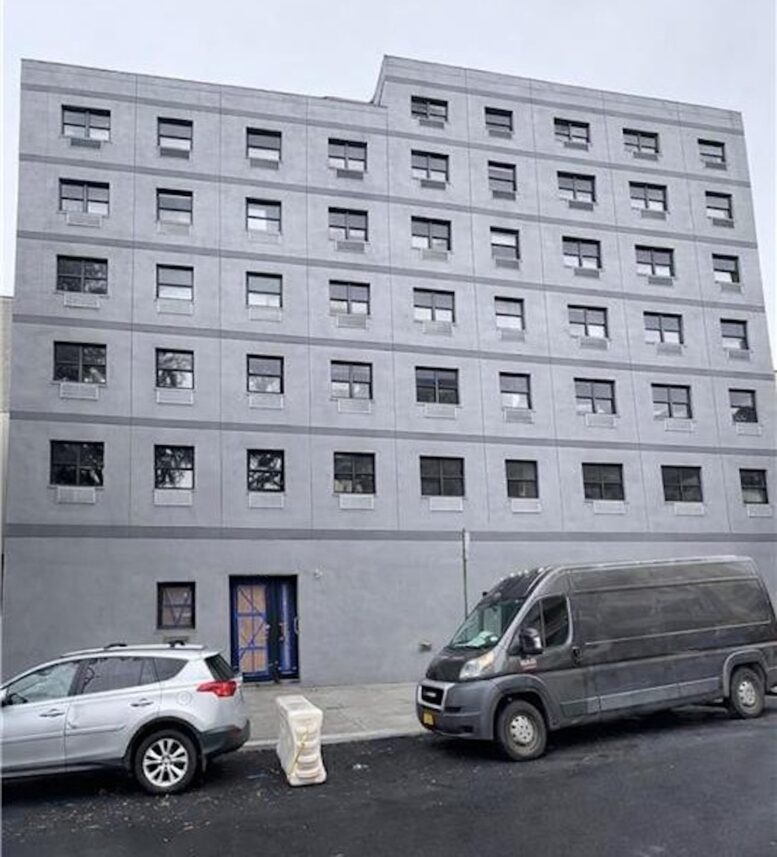
Housing Lottery Launches for 599 Tinton Avenue in Woodstock, The Bronx


The affordable housing lottery has launched for 599 Tinton Avenue, a seven-story mixed-use building in Woodstock, The Bronx. Designed by Badaly Architects and developed by Steve Zervoudis, the structure yields 35 residences. Available on NYC Housing Connect are 11 units for residents at 80 percent of the area median income (AMI), ranging in eligible income from $76,080 to $140,000.

Residences are equipped with hardwood floors, intercoms, smart controls for heating and cooling, charging outlets with USB ports, energy-efficient appliances, and name-brand kitchen countertops and finishes. Amenities include an elevator, recycling center, and pet-friendly policies. Tenants are responsible for electricity including stove, hot water, and heat.

At 80 percent of the AMI, there are ten one-bedrooms with a monthly rent of $2,092 for incomes ranging from $76,149 to $139,620, and one two-bedroom with a monthly rent of $2,419 for incomes ranging from $92,743 to $167,570.

Prospective renters must meet income and household size requirements to apply for these apartments. Applications must be postmarked or submitted online no later than February 23, 2026.

Governor Hochul Announces MTA Sets Record With $15.8 Billion in Capital Commitments in 2025

MTA NYC Subway

Investments Drive Accessibility, Bring Transit System to State of Good Repair, and Advance Expansion Projects

$5 Billion in Project Commitments Funded by Congestion Pricing

Governor Kathy Hochul announced that the Metropolitan Transportation Authority (MTA) made a record $15.8 billion in capital commitments in 2025, marking the largest single-year investment in transit infrastructure in the agency’s history. The commitments advance critical accessibility upgrades, state-of-good-repair work, and major megaprojects across the system, including more than $5 billion made possible through Congestion Relief funding. Projects advanced also included the first round of investments made possible by the MTA’s historic 2025-2029 Capital Plan, which was fully funded by Governor Hochul and the state legislature in the FY26 Enacted State Budget.

“New York is investing in transit like never before, with record levels of investment being made to upgrade our existing system and to bring better transit to more communities,” Governor Hochul said. “The historic year for capital investments at the MTA — including $5 billion in projects made possible by congestion pricing — will improve the commutes of millions of New Yorkers and will ensure that this lifeblood of the entire region is able to deliver for riders for years to come.”

MTA Chair and CEO Janno Lieber said, “This record year of commitments cements C&D’s status as a top-tier infrastructure developer. New Yorkers want to know where congestion relief revenues are going — the answer is right back into the transit system with new train cars, modern signals and more ADA elevators. Thank you, Governor Hochul!”

This historic year for capital awards includes investments across the transit system to improve reliability and accessibility, along with targeted investments in system expansion.

  • Signal improvements: $2 billion
  • Rolling Stock: $6.6 billion
  • Expansion: $2.7 billion
  • Accessibility: $500 million
  • Bus upgrades: $500 million
  • State-Of-Good-Repair & other program support: $3.4 billion

The MTA also awarded a significant $166 million contract for engineering and design of the Interborough Express last August, which advanced the project from planning to active phase. The MTA’s 2025-2029 Capital Plan includes $2.75 billion for this transformative transit expansion project between Brooklyn and Queens.

Thanks to funding from congestion pricing, major projects are advancing, including:

  • Second Avenue Subway Phase 2 Contract 2 for tunneling. This major expansion is advancing on time and on budget.
  • Signal Modernization on the Fulton & Liberty AC lines in Brooklyn and Queens. Thanks to a new delivery approach, this project is 33 percent cheaper on a per-mile basis than prior signal modernization projects.
  • Accessibility upgrades at 7 stations, including the Bryant Park Complex on the BDFM7 trains. These accessibility projects came in 6 percent below engineering estimates.

In addition, 2025 saw progress on the MTA’s new 2025-2029 Capital Plan. This includes new contracts for over 300 new train cars on the Long Island Rail Road and the exercise of an option to purchase 270 additional electric buses for the NYC Transit bus fleet.

The record-breaking year surpasses the previous mark set in 2022, when $11.4 billion in contracts were awarded.

MTA Construction & Development President Jamie Torres-Springer said, “This year’s record-setting numbers are the latest proof that the new MTA is delivering the capital program better, faster, and cheaper. From state of good repair and accessibility upgrades to signal modernization and major expansion projects, we are advancing projects all across the region that will improve the lives of New Yorkers for a generation.”

In addition to the record-setting commitments, the MTA completed $6.7 billion in projects in 2025, trailing only 2023’s $7.1 billion as the strongest year for capital project completions.

Customers saw major benefits throughout the system in 2025, with 41 elevator replacements and 10 new accessible stations across the subways and railroads. That record setting number of replacements saw the average project duration drop by more than 2 months.

Other major projects completed included circulation improvements at Grand Central as part of the 42 St Connection program, which saved $46.5M, the opening of New York City’s new Rail Car Acceptance Facility in Brooklyn, and the rehabilitation of the lower level main span deck of the Verazzano-Narrows Bridge. In addition, the MTA awarded a contract to Kawasaki last fall to construct 378 new R268 subway cars, which will ultimately replace nearly 50 year-old cars and improve reliability and performance.

Megaprojects also made major advances. The first phase of the full replacement of the Park Avenue Viaduct — the elevated steel structure that carries four Metro-North Railroad tracks and serves all Metro-North trains traveling into and out of Grand Central Terminal — saw bridge replacement completed 21 months ahead of schedule and $93 million under budget. Further south, additional savings were achieved during the rebuilding of the Grand Central Train Shed that holds up Park Avenue and the surrounding skyscrapers above Metro-North tracks near Grand Central, which came in $20 million under budget in its first phase and has secured $75 million in private funding for the second phase.