Thursday, March 26, 2026

Arizona Cocaine Trafficker Sentenced to Five Years


On March 26, 2026, Ismael Alejandro Ortiz was sentenced to five years in prison by the Pima County Superior Court.

On July 29, 2025, in Pima County, Arizona, Ortiz attempted to knowingly transport approximately 12.9 pounds of cocaine for sale, using a mobile barbershop bus as cover to arrive at the drug deal location.

He was also ordered to pay $4,500 to the State Anti-Racketeering Revolving Fund. Ortiz pled guilty to Attempt to Transport a Narcotic Drug for Sale, a class 3 felony.

The drug deal was facilitated on WhatsApp, a platform owned by Meta.

“My office will keep prosecuting those who transport dangerous drugs into Arizona communities,” said Attorney General Mayes. “I am grateful for the work of our law enforcement partners and our attorneys in my office who work every day to keep Arizonans safe.”

Justice Department Secures the Denaturalization of Convicted Gun Trafficker and Health Care Fraudster, and Files Complaint Against Marriage Scammer


Trump Administration Ramps Up Efforts to Denaturalize Those Who Gained U.S. Citizenship by Concealing Crimes and Committing Fraud

The Department of Justice announced today that it has secured the denaturalization of two individuals who obtained U.S. citizenship through fraud and sued to revoke the citizenship of a third person that secured naturalization by marriage fraud.

“American citizenship is a sacred privilege — not a cheap status that can be obtained dishonestly,” said Attorney General Pamela Bondi. “These actions reflect this Department of Justice's ongoing efforts to strip citizenship from people who conceal crimes or defraud the American people during the immigration process.”

Ukrainian Arms Smuggler Concealed Conspiracy to Smuggle Firearms Parts Abroad

On March 23, the Justice Department secured the denaturalization of Vladimir Volgaev, a native of Ukraine who concealed and misrepresented his involvement in a conspiracy to smuggle over a thousand firearms components out of the United States and ship them to foreign markets.

“This case sends a clear message,” said Assistant Attorney General Brett A. Shumate of the Justice Department's Civil Division. “The United States provided Volgaev with safety, housing, and citizenship, and he returned those gains with malice, including by defrauding one of the federal agencies that provided him benefits. We will not reward this kind of behavior by allowing such an individual to retain U.S. citizenship that should not have been granted in the first place.”

Starting in 2011, Volgaev engaged in the clandestine purchase, packaging and smuggling of firearm components to individuals in Ukraine and Italy. Also, beginning in 2013, Volgaev engaged in federal housing benefits fraud by underreporting his assets and income on applications for federal housing benefits. A federal court convicted him of Smuggling Goods from the United States and Theft of Government Money or Property in 2020, after he had naturalized as a U.S. citizen on January 11, 2016.

On Sept. 30, 2025, the Justice Department filed a complaint in the United States District Court for the Middle District of Florida seeking Volgaev’s denaturalization based on his crimes and his failure to disclose them during his naturalization process.

On March 23, the court entered an order revoking Volgaev’s U.S. citizenship. The court held that Volgaev committed unlawful acts during the period prior to his naturalization in which he was required to show good moral character, thus making him ineligible for naturalization. Also, the court found that Volgaev provided false testimony regarding his criminal background and procured his U.S. citizenship by willfully misrepresenting these facts.

This case was prosecuted by Trial Attorney Christopher Lyerla of the Justice Department’s Office of Immigration Litigation, Affirmative Litigation Unit, with assistance from Homeland Security Investigations (HSI) Special Agent Felix Romero and U.S. Immigration and Customs Enforcement (ICE)’s Office of the Principal Legal Advisor.

Miami-Dade Resident Was Convicted of Swindling Over $6 Million In Medicare Claims

The U.S. District Court for the Southern District of Florida issued an order on March 24 revoking the 2017 naturalization of Mirelys Cabrera Diaz, a native of Cuba and resident of Hialeah, Florida. Cabrera Diaz illegally procured her citizenship because she committed unlawful acts — namely a health care fraud conspiracy — before she naturalized that disqualified her from United States citizenship.  

In 2019, Cabrera Diaz, then 42, was convicted in the United States District Court for the Southern District of Florida of conspiring to commit health care fraud. She pleaded guilty and was sentenced to 29 months in prison and ordered to pay restitution of over $6 million. When she pleaded guilty, she admitted that she willfully conspired to commit health care fraud in the years before she became a United States citizen. She specifically admitted that, between August 2011 and March 2014, she and her co-conspirators paid kickbacks to patient recruiters for referring fraudulent prescriptions to the pharmacy where she worked. She admitted to maintaining a log of how much money was owed to each recruiter for fraudulent prescriptions. She also admitted that she was aware that the pharmacy was submitting reimbursement claims for the fraudulent prescriptions to the Medicare Part D program, for which the government paid over $6 million in reimbursements for prescription drugs that were not dispensed.

The U.S. district court held that Cabrera Diaz illegally procured her naturalization. Among the requirements for naturalization, Cabrera Diaz was required to show that she was a person of good moral character during the “statutory period” from five years before she applied for naturalization until she took the oath of citizenship.  The court concluded that she could not establish the required good moral character for naturalization because she conspired to commit health care fraud, which reflected adversely on her moral character, and there were no extenuating circumstances to excuse her actions.

The case was investigated by ICE and litigated by the Affirmative Litigation Unit of the Civil Division’s Office of Immigration Litigation.

Justice Department Sues to Revoke U.S. Citizenship Because Of Immigration Fraud

In U.S. District Court for the Southern District of Florida, the Justice Department filed a civil denaturalization complaint on March 17 against Alec Nasreddine Kassir, also known as Alec Kassir and Ali Nasreddine Kassir. Kassir is a native of Lebanon and resident of Miami.

The United States seeks an order revoking Kassir’s naturalization based on his false statements made under penalty of perjury on his naturalization application and under oath in his naturalization interview. Kassir falsely represented that he had been living with a U.S. citizen spouse, during the three years immediately preceding the filing of his naturalization application in March 2010.

On Nov. 14, 2018, he pleaded guilty to passport fraud  in the Southern District of Florida. In his criminal proceedings, Kassir admitted that he obtained his U.S. passport through the fraudulent procurement of his naturalization. Specifically, he admitted that he was not living in martial union — or even in the same state — with his purported U.S. citizen spouse; rather, but they separated in 2009 and Kassir moved to Florida. Kassir’s immigration fraud was uncovered during an investigation into his trafficking of counterfeit goods after he naturalized, for which he was convicted of conspiring to commit money laundering.

The complaint alleges that Kassir should be denaturalized for three reasons. First, he illegally procured U.S. citizenship because he was not living in marital union with his U.S. citizen spouse for the three years before he applied for naturalization as required by statute. Second, he illegally procured naturalization because he was statutorily barred from showing that he was a person of good moral character during the statutory period of his naturalization. He was unable to demonstrate good moral character because he falsely testified under oath at his naturalization interview that he was living in Michigan, when, in fact, he had moved to Florida.  Third, he procured his naturalization by concealing his separation from his U.S. citizen spouse and his move to Florida.

The case was investigated by ICE-HSI and will be litigated by the Affirmative Litigation Unit of the Civil Division’s Office of Immigration Litigation and the U.S. Attorney’s Office for the Southern District of Florida.

The claims made in the complaint are allegations only, and there has been no determination of liability.

Mississippi Man Pleads Guilty To Insider Trading


As Admitted in Court, Gerard Ryan Traded on Confidential, Market-Moving Information in Breach of His Duty of Trust

United States Attorney for the Southern District of New York, Jay Clayton, and Assistant Director in Charge of the New York Field Office of the Federal Bureau of Investigation (“FBI”), James C. Barnacle, Jr., announced today the filing of charges against, and the guilty plea of, GERARD RYAN in connection with his participation in a scheme to commit insider trading securities fraud based on material nonpublic information that RYAN obtained from a family member who worked at a Manhattan-based pharmaceutical company.  RYAN pled guilty today before U.S. District John P. Cronan.

“As he admitted today, Gerard Ryan transformed confidential drug approval information into profits for himself and others,” said U.S. Attorney Jay Clayton.  “Trading on stolen information harms both other market participants and the marketplace itself.  SDNY’s Securities and Commodities Fraud Task Force will continue to work with our law enforcement partners to protect American markets and investors.”

According to the allegations contained in the Information, other public court documents, and statements made during court proceedings:

Kadmon Pharmaceuticals was a biopharmaceutical company based in New York, New York that developed treatments for rare diseases and conditions, specifically therapies for autoimmune diseases, fibrotic conditions, and oncology.  Rezurock was Kadmon’s flagship drug and was intended to treat chronic graft-versus-host disease, a serious complication that can occur after bone marrow or stem cell transplants.  In or around 2021, Kadmon was seeking FDA approval for the drug.  On July 16, 2021, Kadmon announced that the FDA had approved Rezurock.

Kadmon maintained the confidentiality of information around Rezurock and its FDA approval, and prohibited its employees from, among other things, disclosing confidential business information to third parties.  A family member of RYAN, who worked at Kadmon in the summer of 2021 and was subject to these confidentiality policies, was warned that Kadmon’s ongoing engagement with the FDA was “HIGHLY CONFIDENTIAL” and that discussions about those activities should be limited only to within Kadmon.

Notwithstanding Kadmon’s confidentiality policies, in advance of the public announcement that the FDA had approved Rezurock, RYAN’s family member told RYAN material nonpublic information regarding Kadmon’s interactions with the FDA.  RYAN used that information, which he knew had been improperly shared with him, to execute securities transactions.  For example, on or about July 15, 2021, at approximately 5:58 p.m.—after the FDA had informed Kadmon that it had approved Rezurock, but before it had been publicly announced—RYAN spoke with his family member who worked at Kadmon.  After the call, RYAN purchased thousands of shares of Kadmon.

RYAN also shared the material nonpublic information about the FDA announcement with an associate who traded on the basis of that information.  On or about July 16, 2021—before the public announcement of the FDA approval—the individual that RYAN tipped purchased 2,250 shares of Kadmon.  RYAN texted that individual the ticker symbol for Kadmon and RYAN’s “prediction” that Kadmon’s stock price would rise approximately 355%, to “$16.99” upon the FDA announcement.  RYAN’s associate then sent a text message to RYAN, “What time is the news,” a reference to the non-public FDA approval, and RYAN responded with a shush emoji, “🤫” a reference to the nonpublic information he had shared.

RYAN, 62, of Oxford, Mississippi, pled guilty to one count of securities fraud, which carries a maximum sentence of 20 years in prison.

Mr. Clayton praised the outstanding investigative work of the FBI. 

Attorney General James Announces Takedown of Brooklyn Fentanyl and Cocaine Trafficker


AG’s Investigation Seized More Than 8,887 Oxycodone Pills Containing Fentanyl and Over 891 Grams of Cocaine

New York Attorney General Letitia James today announced the arrest and indictment of Azer Arslanouk, 36, of Ocean Township, New Jersey, for illegally selling fentanyl and cocaine in Brooklyn, New York. An investigation led by the Office of the Attorney General’s (OAG) Organized Crime Task Force (OCTF) seized more than 8,887 counterfeit oxycodone pills containing fentanyl and over 891 grams of cocaine, worth approximately $100,000. The indictment was unsealed today in Kings County Court and charges Arslanouk with 31 crimes for trafficking narcotics. If convicted, he faces a maximum sentence of up to 20 years in prison.

“Drug traffickers who hide fentanyl in counterfeit prescription drugs are putting New Yorkers suffering from opioid addiction in grave danger,” said Attorney General James. “This investigation took thousands of deadly pills off the street, and my office will continue fighting to stop the opioid crisis in our communities. I thank our law enforcement partners for their collaboration as we work to keep New Yorkers safe from dangerous narcotics.”

“The sale of these illegal drugs perpetuates a cycle of substance abuse and poses a significant threat to safety and quality of life in our neighborhoods,” said New York State Police Superintendent Steven G. James. “This arrest speaks volumes of the tremendous coordination between law enforcement partners to stop the individuals that fuel these dangerous acts. We will remain diligent in our collaborative efforts with Attorney General James and our law enforcement partners to stem the flow of illegal drugs from infiltrating our communities.”

“Counterfeit pills laced with fentanyl continue to be a lethal threat to those unsuspecting users who think they are taking a legitimate pharmaceutical pill,” said Drug Enforcement Administration (DEA) New York Enforcement Division Special Agent in Charge Farhana Islam. “This operation, which included the removal of over 8,500 fentanyl pills off our streets, undoubtedly saved lives. We will continue to work with Attorney General James and our law enforcement partners across New York state, as we push toward our goal for a fentanyl free America.”

The investigation spanned 30 months and included hundreds of hours of physical surveillance, court-authorized cellphone GPS information, covert cameras, and undercover operations. The OAG’s investigation revealed that from December 2024 to January 2025, Arslanouk engaged in four separate drug sales, including cocaine and counterfeit oxycodone pills containing fentanyl. Arslanouk was storing and selling the cocaine and fentanyl pills out of a storefront at 9 Lake Street in Gravesend, Brooklyn. He used encrypted messaging apps to communicate with buyers about his narcotics sales.

A search of the Lake Street storefront resulted in the seizure of more than 8,887 counterfeit oxycodone pills containing fentanyl and over 891 grams of cocaine, of which the street resale value is approximately $100,000. 

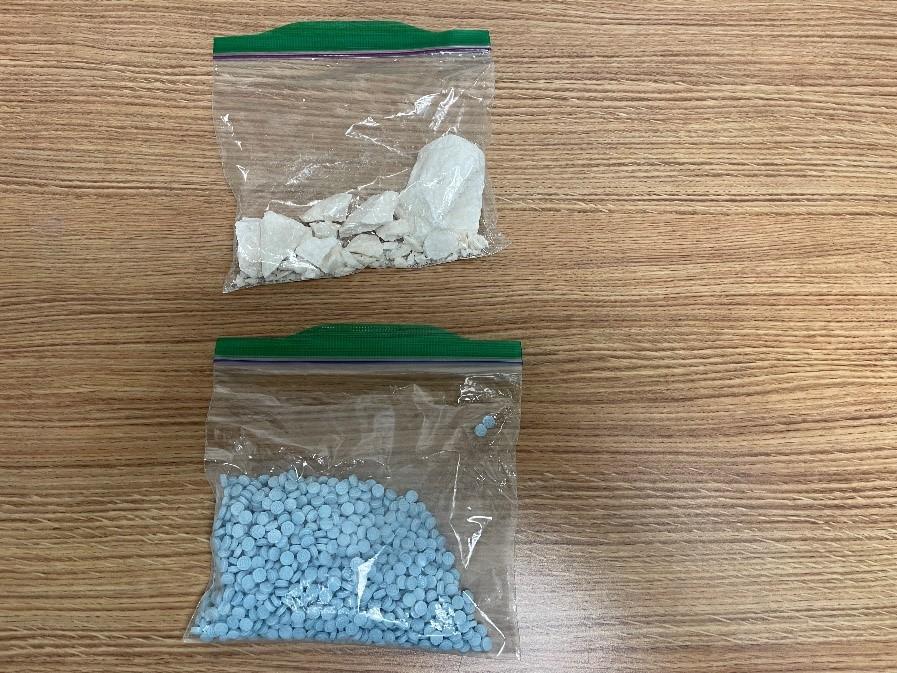
2026.03.26 OCTF (1).jpg

422 counterfeit oxycodone pills containing fentanyl seized by the investigation

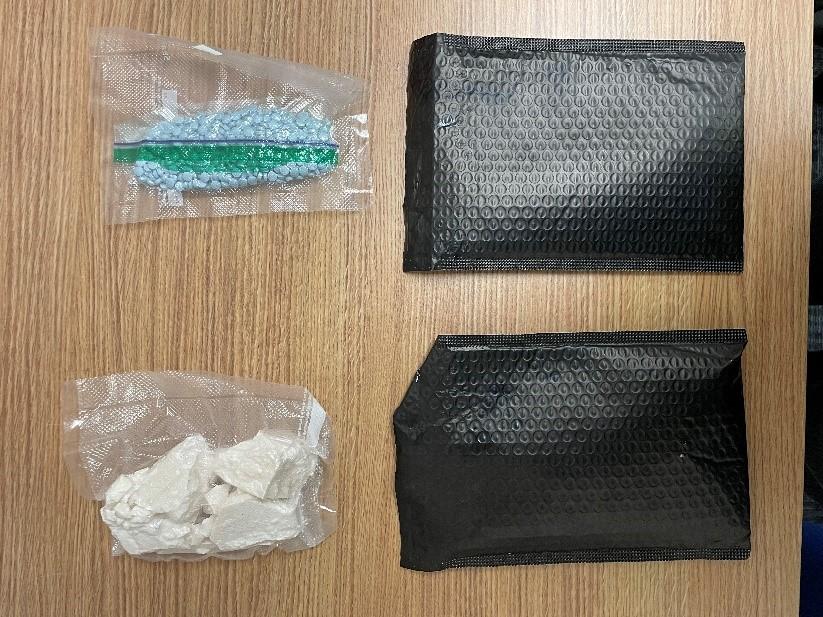
2026.03.26 OCTF (2)

1,027 counterfeit oxycodone pills containing fentanyl and 97.6 grams of cocaine seized by the investigation
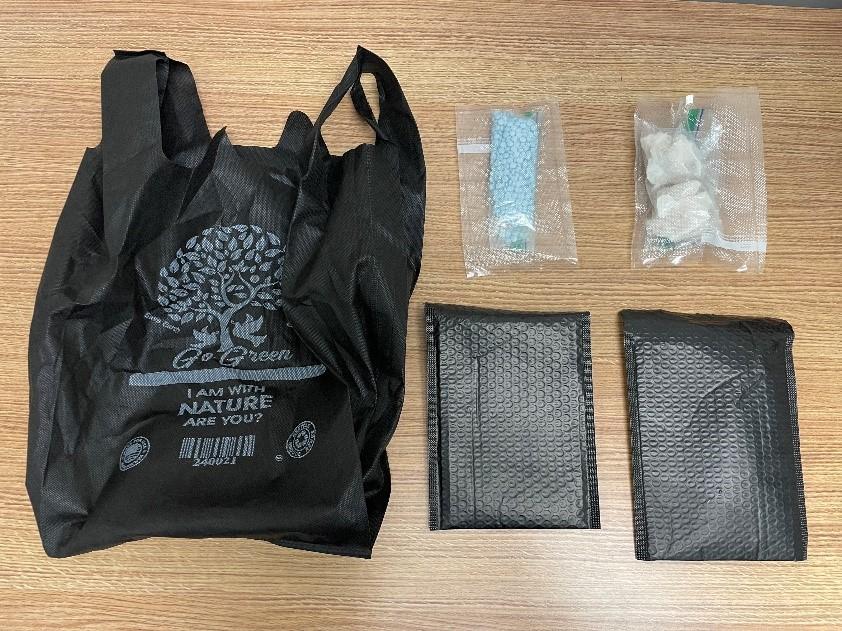
2026.03.26 OCTF (3)
524 counterfeit oxycodone pills containing fentanyl and 247.8 grams of cocaine seized by the investigation
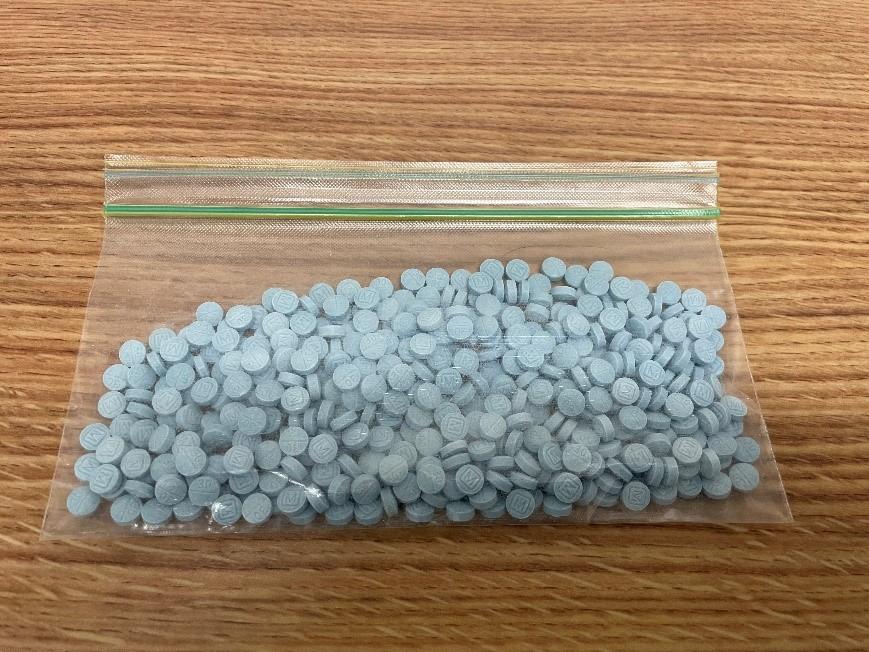
2026.03.26 OCTF (4)
499 counterfeit oxycodone pills containing fentanyl and 148.1 grams of cocaine seized by the investigation

The indictment, unsealed today before Kings County Supreme Court Judge Danny Chun, charges Arslanouk with 31 crimes, including various counts of Criminal Sale and Criminal Possession of a Controlled Substance (class A and B felonies), and Conspiracy to commit those crimes. If convicted, Arslanouk faces a maximum sentence of up to 20 years in prison. The charges against the defendant are merely accusations, and the defendant is presumed innocent unless and until proven guilty at trial or by plea.

Attorney General James would like to thank the Special Investigations Unit and the Social Investigations Unit of the New York State Police, as well as the U.S. Drug Enforcement Agency, and the Kings County District Attorney’s office for their assistance in this investigation.

Governor Hochul Requests Major Disaster Declaration to Secure Federal Assistance for Communities Impacted by February 22-23 Blizzard

snow covered highway

If Granted, Declaration Would Provide Federal Assistance for Eligible Counties Within New York State


Governor Kathy Hochul has requested a Major Disaster Declaration from President Trump to support the recovery efforts of communities impacted by the February 22-23 blizzard. If granted by the federal government, this declaration would provide federal recovery funding for eligible counties as they continue to recover from the storm.

“New York’s communities deserve to have access to every resource available to recover and rebuild following the historic blizzard that hit our state late last month — that’s why I’m requesting a Major Disaster Declaration and calling on the federal government to support our ongoing efforts to help New Yorkers fully recover,” Governor Hochul said. “Many areas of our state endured dangerously cold temperatures, high winds and record snowfall throughout the duration of the storm, and I’m incredibly grateful to our first responders, plow drivers, emergency management staff and local government partners for their tireless dedication and work throughout the storm to keep New Yorkers safe.”

A Major Disaster Declaration secures financial assistance from the federal government, primarily through FEMA's Public Assistance Program, to provide funding to eligible local governments and eligible non-profits for debris removal, protective measures, and repairs to public buildings and infrastructure, including roads, bridges, water and wastewater treatment facilities, critical infrastructure sites, schools, parks and other facilities. Counties that had record snowfall amounts would also be eligible for snow removal costs.

Following a disaster, the Division of Homeland Security and Emergency Services' (DHSES) Office of Disaster Recovery Programs works directly with counterparts at the Federal Emergency Management Agency (FEMA) and impacted local governments to assess damages caused by, and costs related to, the disaster. Once these assessments are complete, FEMA validates whether the State and impacted counties have reached the required federal damage thresholds for a Major Disaster Declaration. FEMA is currently in the final stages of its validation process to determine county eligibility.

The February blizzard produced record-breaking snowfall amounts in the Bronx, Staten Island, Nassau and Suffolk counties along with tropical storm force winds, snowfall rates up to four inches per hour, whiteout conditions and minor coastal flooding throughout downstate New York. The National Weather Service confirmed blizzard conditions — defined as having winds over 35 miles per hour and snow creating visibility under .25 miles for at least 3 consecutive hours or more — across at least eight counties, including all of New York City. At the peak of the storm, snowfall rates were averaging 2 to 3 inches per hour, with rates as high as 4 inches per hour across eastern Long Island.

During the storm, warming shelters were set up throughout the Hudson Valley, New York City and Long Island, including at SUNY Downstate, and MTA provided warming buses in New York City as more than 40,000 households throughout the region lost power as a result of the storm. Due to the severe weather conditions, more than 175 school districts on Long Island and in the Hudson Valley were closed on Monday February 23, 2026. The blizzard conditions were so severe, New York City closed all public schools. All non-essential State employees in blizzard warning areas were directed to stay home and work remotely and airports throughout the region cancelled most flights during the storm. Mass transit agencies also modified schedules and/or cancelled trips due to the severe weather, and the Long Island Rail Road suspended service for Sunday night throughout Monday. Additionally, travel bans were implemented across eight counties and all of New York City, and commercial vehicle restrictions were implemented on state roads downstate as well as parts of the New York State Thruway.

Ahead of the storm, Governor Hochul declared a State of Emergency for Albany, Bronx, Columbia, Greene, Delaware, Dutchess, Kings, Nassau, New York, Orange, Otsego, Putnam, Queens, Rensselaer, Richmond, Rockland, Suffolk, Schenectady, Schoharie, Sullivan, Ulster and Westchester counties. Governor Hochul also activated the National Guard and deployed 100 members to support response operations across New York City, Long Island and the Lower Hudson Valley.

About the State Division of Homeland Security and Emergency Services

The Division of Homeland Security and Emergency Services provides leadership, coordination and support for efforts to prevent, protect against, prepare for, respond to, and recover from terrorism, natural disasters, threats, fires and other emergencies. For more information, visit the DHSES Facebook page, follow @NYSDHSES on X, or visit dhses.ny.gov.

Get real time emergency and weather alert texts delivered directly to your phone. Text your county or borough of residence to 333111 to enroll now. Learn more at dhses.ny.gov/emergency-alerts.

Senator Gustavo Rivera Introduces Bill to Address Healthcare Coverage Loss for New Yorkers


GOVERNMENT HEADER

Today, State Senator Gustavo Rivera (NY-33) introduced a bill (S.9589) that aims to preserve access to health insurance for New Yorkers who will lose eligibility for reduced cost health coverage and publicly subsidized financial assistance for purchasing health insurance coverage due to the implementation of H.R.1 and the loss of health insurance premium tax credits.


As a result of H.R.1 cuts and federal inaction on the premium assistance, New York State is set to lose billions of dollars in funding for its Essential Plan, a low cost health insurance program that serves approximately 1.7 million New Yorkers. This funding was intentionally eliminated by the Trump administration and Congressional Republicans in order to give tax cuts to the wealthiest individuals in our country.


In response to these devastating cuts, Governor Hochul’s administration was forced to seek approval to scale back the expanded 1332 waiver version of the Essential Plan in order to protect the viability of the program. Unfortunately, while providing fiscal stability to the program's continued operation, this action will leave approximately 450,000 New Yorkers facing healthcare coverage loss beginning July 1, 2026.


“The devastating cuts from Washington leave millions of New Yorkers on the brink of losing healthcare coverage, threatening our entire healthcare ecosystem. These are the people who go to work every day and generate billions in economic activity,” said State Senator Gustavo Rivera. “In the midst of an unprecedented affordability crisis, our federal government chose tax cuts to enrich the wealthiest among us. This bill will protect basic healthcare access and mitigate the harm of these cruel policy choices”


This bill will:


  •   Authorize the state to continue to provide Essential Plan coverage to individuals with incomes between 200% and 250% of FPL.


  •   Authorize New York State to provide state-only funded Essential Plan coverage to lawfully present individuals who are not eligible to participate in the program due to their immigration status.


  •   Authorize the Marketplace to establish and administer a state-only funded premium assistance program for lawfully present immigrants who will be rendered ineligible under HR 1, and cost-sharing reductions to assist with the purchase of health insurance coverage.


With healthcare being one of the single largest drivers of unaffordability in our State, this bill would provide affordable healthcare coverage options to working families including eligible immigrant working families whose hard work continues to contribute to strengthening our State’s economy.


Parks Department - New Emergency Rule for Special Event Permitting


Greetings, community partners and happy spring!

As many of you begin planning for the busy summer season, we wanted to make sure that you saw the information below about a recent emergency rule change related to special event permitting for large events (see below press announcement from NYC Parks). Please feel free to pass it along to the person in your group who handles permits and event planning.

The rules will also be posted on NYC Parks’ public website at Rules & Regulations : NYC Parks.  If you have any questions, please don't hesitate to reach out to the NYC Parks permit office that handles your permit applications or your community engagement coordinator.

Thanks, and we look forward to seeing you in the parks! 


Tricia Shimamura
Commissioner, NYC Parks

NYC PARKS ANNOUNCES NEW EMERGENCY RULE FOR SPECIAL EVENT PERMITTING DURING SUMMER 2026

Due to volume of events associated with FIFA World Cup and the U.S. 250th anniversary, certain new Parks permit applications may be denied between June 11 and July 19, 2026. 

NYC Parks today announced that it has enacted an emergency rule related to special event permitting, to ensure efficient deployment of police resources and public safety during the busy summer 2026 season. 


Each year, Parks issues permits for large-scale special events occurring in parks and other properties that may include the continued use of a particular site over several days; the construction of stages and other structures; the vending of food, apparel, and other goods; the use of amplified sound; and the performance of music. To ensure public safety for many of these events, particularly those that anticipate large crowds, members of the NYPD must be on site. 


This year, New York City will be hosting events associated with the FIFA World Cup from June 11 through July 19, which also overlaps with planned celebrations for the United States' 250th anniversary from July 1 through July 9. The events associated with the FIFA World Cup and the United States' 250th anniversary will require significant realignment and deployment of city personnel. To more effectively deploy city resources and control overtime costs, the Parks Department may deny certain permit applications for new events between June 11, 2026, and July 19, 2026.


Parks has adopted an emergency rule to authorize the denial of permit applications for special events on property under Parks jurisdiction during this period if: 
  • (i) the event was not held in the 2025 calendar year;  
  • (ii) the event is not a demonstration; and  
  • (iii) the Commissioner determines, in consultation with NYPD, that the agencies do not have sufficient resources to ensure public safety and welfare at and around such events. 

Events that previously received permits in calendar year 2025, demonstrations, smaller events that do not require a police presence, and events proposed on dates prior to June 11, 2026 or after July 19, 2026 are not affected by this rule. 


Parks' authority for these rules is found in Sections 389, 533(a)(9), and I 043 of the New York City Charter. 


The emergency rule will be available for review at rules.cityofnewyork.us and can be downloaded here

DEC Lifts Drought Watch for Upstate Drought Regions


Logo

Nassau and Suffolk Counties Remain in Drought Watch 

The New York State Department of Environmental Conservation (DEC) today announced that all upstate drought regions have returned to “Normal” status. In cooperation with the State's Drought Management Task Force, DEC updated the drought status from “Drought Watch” to “Normal” in State Drought Regions II through VIII after assessing recent precipitation and elevated levels of ground and surface water. The Long Island counties of Nassau and Suffolk (State Drought Region I) remain in a Drought Watch. 

“Precipitation and recent snowmelt have improved stream flows and groundwater levels, resulting in upstate drought regions returning to normal status,” said Commissioner Amanda Lefton. “DEC experts will continue to monitor conditions in coordination with the State Drought Management Task Force and update the public of any changes. DEC encourages communities and individuals to always be mindful of their water use and practice water conservation measures all year long.”

While regional hydrological conditions have notably improved, localized dry conditions may persist and despite encouraging hydrological conditions, New Yorkers are urged to continue reducing unnecessary water use and waste, fixing leaks, and choosing efficient water fixtures. 

New York State drought Region IIA, which includes New York City and Westchester County, remains in normal status due to the satisfactory storage levels and refill probability of the New York City reservoirs. According to the New York City Department of Environmental Protection (DEP), the city's reservoirs are at more than 95% capacity. DEC continues to work closely with DEP to monitor reservoir conditions and encourage responsible water use, especially outdoors, regardless of the hydrological conditions or season. 

Following the declaration, DEC briefed the State Drought Management Task Force and federal partner agencies. A map of New York State drought conditionsis available on the DEC website. 

New York State encourages ongoing water conservation to ensure adequate supply for all emergency use. To protect water resources, homeowners are encouraged to voluntarily reduce water use and follow these tips: 

  • Reuse water collected in rain barrels, dehumidifiers or air conditioners to water plants. 
  • Use a broom, not a hose, to clean driveways and sidewalks. 
  • Fix leaking pipes, fixtures, toilets, hoses and faucets. 
  • Wash only full loads of dishes and laundry. 
  • Take shorter showers or fill the bathtub partly. 
  • Install water saving plumbing fixtures. 
  • Don’t run the tap to make water hot or cold. 
  • Wash cars less frequently. 

Visit the U.S. Environmental Protection Agency’s WaterSense for more tips on saving water indoors and outdoors. DEC has been a WaterSense partner since 2014. 

Private Water Wells 

For water wells that may be affected by drought, see the information and links below. Contact a registered water well contractor to discuss appropriate options for your individual situation.

  • Report a dry water well using the Dry Water Well Reporting Form.
  • Check that the well is dry due to drought and no other issues. Sometimes the solution is quite simple, like a broken valve or electrical issue. The only way to definitively tell if a well is dry is to measure the water level in the well.
  • Conserve water year-round to help prevent the effects of drought on water wells.
  • Consider adding a water storage tank to help get through dry periods.
  • Clean or redevelop existing wells.
  • Deepen existing wells or drill a new well. If drilling a new well, properly decommission the old well to protect groundwater quality.

State Drought Index

Drought stages are calculated using the State Drought Index, which evaluates whether several drought indicators have reached critical thresholds. DEC experts track and evaluate drought conditions based on stream flows, lake and reservoir storage levels, and groundwater levels. These factors, and the duration of the dry period, season, and other information such as past and forecasted precipitation, weather patterns, and local conditions, are used by DEC to evaluate drought conditions across the state. The State Drought Index is attuned to the specific attributes of New York and may differ moderately from some national technical drought assessments. 

DEC and the U.S. Geological Survey are partners in evaluating hydrologic conditions across New York State. In addition, DEC supports efforts by local governments and stakeholders to undertake water conservation measures based on specific local circumstances.

For more water-saving tips, visit DEC's webpage. For more information about drought in New York, visit the Water Use and Conservation webpage.