Monday, May 18, 2026

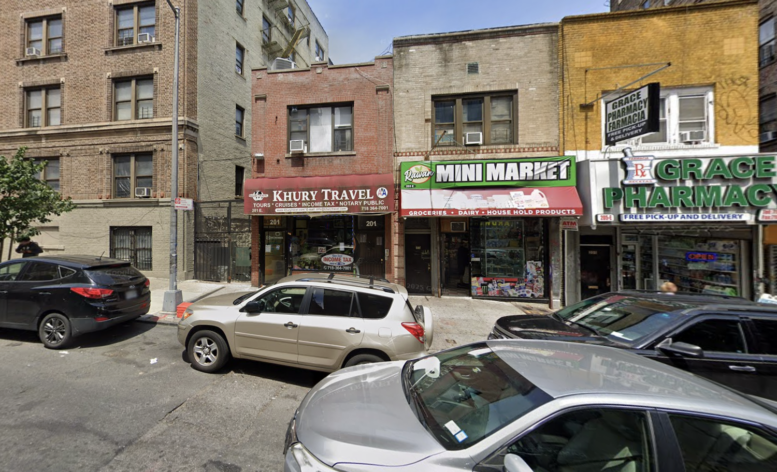
Permits Filed for 201 East 198th Street in Bedford Park, The Bronx


Permits have been filed for a 13-story residential building at 201 East 198th Street in Bedford Park, The Bronx. Located between Valentine Avenue and Grand Concourse, the lot is near the Bedford Park Boulevard subway station, served by the B and D trains. Yanky Indigo of Indigo Developers is listed as the owner behind the applications.

The proposed 123-foot-tall development will yield 60,884 square feet designated for residential space. The building will have 69 residences, most likely rentals based on the average unit scope of 882 square feet. The concrete-based structure will also have a 50-foot-long rear yard.

Nikolai Katz is listed as the architect of record.

Demolition permits have not been filed yet. An estimated completion date has not been announced.

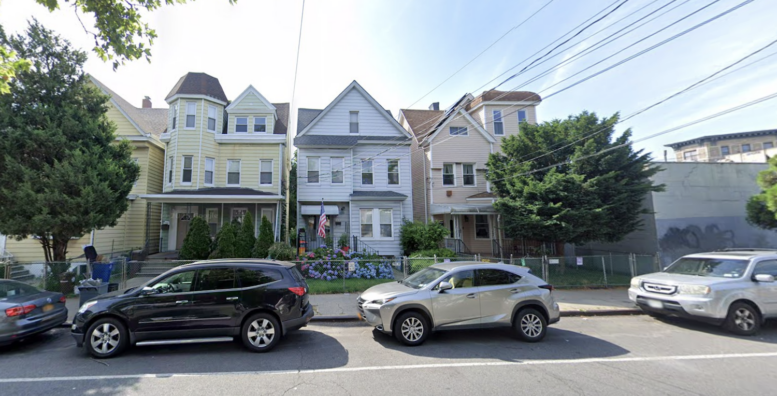
Permits Filed for 1538 Silver Street in Westchester Square, The Bronx


Permits have been filed for a four-story residential building at 1538 Silver Street in Westchester Square, The Bronx. Located between Williamsbridge Road and East Tremont Avenue, the lot is near the Westchester Square–East Tremont Avenue subway station, served by the 6 train. Aleksander Vilajeti of AV Group Corp. is listed as the owner behind the applications.

The proposed 37-foot-tall development will yield 7,408 square feet designated for residential space. The building will have 14 residences, most likely rentals based on the average unit scope of 529 square feet. The masonry-based structure will also have a penthouse, cellar, and a 30-foot-long rear yard.

Mohammad Badaly of Badaly Architects is listed as the architect of record.

Demolition permits were filed this month for the 2.5-story building on the site. An estimated completion date has not been announced.

PPNA June Guests


AIR QUALITY HEALTH ADVISORY EXTENDED FOR NEW YORK CITY METRO REGION


Logo

In Effect through Monday, May 18, 2026 

New York State Department of Environmental Conservation (DEC) Commissioner Amanda Lefton and State Department of Health (DOH) Commissioner Dr. James McDonald extended an Air Quality Health Advisory through Monday, May 18, 2026, for ozone for the New York City Metro region.

The pollutant of concern is: Ozone 

The advisory will be in effect: 11 a.m. through 11 p.m. 

The Quality Health Advisory regions consist of:New York City Metro, which includes New York City and Rockland and Westchester counties.

DEC and DOH issue Air Quality Health Advisories when DEC meteorologists predict levels of pollution, either ozone or fine particulate matter (PM2.5), are expected to exceed an Air Quality Index (AQI) value of 100. The AQI was created as an easy way to correlate levels of different pollutants to one scale, with a higher AQI value indicating a greater health concern.

OZONE 

Summer heat can lead to the formation of ground-level ozone, a major component of photochemical smog. Automobile exhaust and out-of-state emission sources are the primary sources of ground-level ozone and the most serious air pollution problems in the northeast. This surface pollutant should not be confused with the protective layer of ozone in the upper atmosphere. 

Ozone is not a direct emission, and is produced indirectly when sunlight chemically reacts with nitrogen oxides (NOx) and volatile organic compounds (VOCs) from automobile exhaust and industrial emissions. High ozone is not as visible as PM2.5 because it is a colorless gas, but will produce hazy skies and reduce visibility in high concentrations. 

People, especially those with cardiovascular disease and those who have respiratory disease (such as asthma), young children, the elderly, those who exercise outdoors, and those involved in vigorous outdoor work should consider limiting strenuous outdoor physical activity when ozone levels are the highest (generally afternoon to early evening). When outdoor levels of ozone are elevated, going indoors will usually reduce exposure. Individuals experiencing symptoms such as shortness of breath, chest pain, or coughing should consider consulting their personal physician. 

Ozone levels generally decrease at night and can be minimized during daylight hours by curtailment of automobile travel and the use of public transportation where available. 

New Yorkers also are urged to take the following energy-saving and pollution-reducing steps: 

  • use mass transit or carpool instead of driving, if possible, as automobile emissions account for about 60 percent of pollution in our cities; 
  • conserve fuel and reduce exhaust emissions by combining necessary motor vehicle trips; 
  • turn off all lights and electrical appliances in unoccupied areas; 
  • use fans to circulate air. If air conditioning is necessary, set thermostats at 78 degrees; 
  • close the blinds and shades to limit heat build-up and to preserve cooled air; 
  • limit use of household appliances. If necessary, run the appliances at off-peak (after 7 p.m.) hours. These would include dishwashers, dryers, pool pumps and water heaters; 
  • set refrigerators and freezers at more efficient temperatures; 
  • purchase and install energy efficient lighting and appliances with the Energy Star label; and 
  • reduce or eliminate outdoor burning and attempt to minimize indoor sources of PM 2.5 such as smoking.

Additional information on ozone and PM 2.5 is available on DEC's website and on DOH's website (PM 2.5) / DOH's website (ozone). A new DEC fact sheet about the Air Quality Index is available on DEC’s website or by PDF download https://dec.ny.gov/sites/default/files/2024-05/aqiweb.pdf.  

To stay up-to-date with announcements from DEC, sign up to receive Air Quality Alerts through DEC Delivers: DEC's Premier Email Service. A toll-free Air Quality Hotline (1-800-535-1345) was also established by DEC to keep New Yorkers informed of the latest air quality situation. 

Sunday, May 17, 2026

Bronx Week Parade


Sunday May 17th was a beautiful day for the Bronx Week Parade, Food Festival, and Concert. The temperature was in the mid 80's and the day began with the Bronx Community Board 7 Memorial Day Commemoration before the rest of the day's events. Mosholu Parkway was closed on both sides with the Bronx Week Parade going on in the North Side, and the Food Festival and Concert going on in the South side of the parkway.


The Bronx Week Parade went off right after the Memorial Day Commemoration ended. The Police and Fire Departments opened the Bronx Week Parade, and they were followed by hundreds of marchers from community groups and organizations, and performers from the many schools in the Bronx. Bronx Borough President Vanessa Gibson was joined onstage by Councilman Kevin Riley, Bronx District Attorney Darcel Clark, and Assemblywoman Yudelka Tappia. 


The Bronx Week Parade was opened by the Police and Fire Departments


Councilman Kevin Riley and Assemblywoman are on stage with Bronx Borough President Vanessa Gibson.


Bronx Community Board 7 had a good showing of members marching.


Community groups Bronx Community Justice and Save Our Streets march together.


PS/MS 95 students perform in front of the reviewing stand, as did many other schools or groups of children.


MS/HS 368 students perform in front of the reviewing stand.


Bronx Community Board 7 Memorial Day Commemoration


As part of Bronx Week and the Bronx Week Parade, Food Festival, and Concert Bronx Community Board 7 held a Memorial Day Commemoration before the Bronx Week Parade Sunday. The event was held at the Bronx Victory Memorial on Mosholu Parkway between Marion and Hull Avenues. 


Chad Royer, Chair of Bronx Community Board 7's Veteran Affairs and Human Services Committee was the emcee of the event. Bronx Borough President Vanesa Gibson spoke as did CB 7's First Vice Chair Barbara Stronzer. The Gray Cadets band performed, and Sirio Guerino of Guerinos against Graffiti and Veterans Advocate Joe Bello also spoke. Taps played to end the event to remember those  served in the armed services who are no longer with us. 


Veterans and Bronx Community Board 7 members stand in front of the Bronx Victory Memorial on  Mosholu Parkway.


Bronx Borough President Vanessa Gibson speaks about Memorial Day and the Bronx Victory Memorial. 

Governor Hochul Holds Briefing on Long Island Rail Road Strike

Governor Hochul: “Now, New York, everyone knows, is a pro-labor state. We believe in working men and women receiving a fair wage and benefits. But the MTA cannot agree to a contract that would raise fares as much as eight percent and risk hiking taxes for Long Islanders. I have worked too long and hard to reduce costs for our residents, and I will not allow that to be undone. As Governor, my priority is to fight for affordability for all New Yorkers, and this strike puts that affordability at risk.”

Hochul: “Now, starting at 4:00 a.m. tomorrow, the MTA will deploy shuttle buses to bring essential workers from across Long Island to subway stations in Queens, and those shuttle buses will be standing by to bring those essential workers back home to Long Island at the end of the day, to Long Island and Queens. For those in Nassau County who absolutely cannot work from home, there continues to be the option of taking a Nassau Inter-County Express bus directly to the subway connections in Queens. They'll run extra bus service weekdays during the strike, and we've encouraged the county to add additional capacity.”


I want to give Long Island Rail Road riders the latest updates on the strike. Let me be clear, I did not want a strike. The MTA did not want a strike. The MTA has put fair offers on the table, in fact, many of them. And so despite that, for the first time in 30 years, the hundreds of thousands of people who rely on the LIRR are without service because of a strike. We all know that the railroad is the lifeblood of Long Island. Without it, life as we know it is simply not possible. The bottom line is: No one wins in a strike. Everyone is hurt — the hundreds of thousands of people who rely on the railroad, and the thousands of unionized workers who are losing out on wages.

I want to speak directly to the men and women of labor at the LIRR: The work you do is absolutely vital. Absolutely. I value your labor, and I believe that you deserve fair wages and benefits. But this strike has put all that at risk. Just three days of a strike would erase every dollar of additional salary that workers would receive under a new contract. We don't need to be here. Workers deserve better, but also New Yorkers deserve better. That's why today I'm urging all parties once again to bargain at the table, and to get a deal done.

I also want to give an update to the Long Island Rail Road riders who are wondering about work tomorrow. Now, I've been in close communication, I've been touring the sites. I'm here at the Operations Control Center to talk to the individuals overseeing the lines that we anticipate the highest volume on tomorrow — you'll hear more about that from our MTA leadership team — and we have a plan to ensure that essential workers can get into the city during the workday commute. Now, starting at 4:00 a.m. tomorrow, the MTA will deploy shuttle buses to bring essential workers from across Long Island to subway stations in Queens, and those shuttle buses will be standing by to bring those essential workers back home to Long Island at the end of the day, to Long Island and Queens. For those in Nassau County who absolutely cannot work from home, there continues to be the option of taking a Nassau Inter-County Express bus directly to the subway connections in Queens. They'll run extra bus service weekdays during the strike, and we've encouraged the county to add additional capacity.

Another option is Citi Field. With the Mets hitting the road tomorrow, you can park there and transfer to the 7 train. So right here, as I said, in the nerve center of the subway, every day four million New Yorkers rely on this system to get around. This subway system is absolutely vital, even more so tomorrow. And the MTA, as I've listened and asked questions, they're ready to meet the challenge. Extra trains are on standby, and the MTA stands ready to run additional New York City subway service to meet the demand. And for the residents of Eastern Queens, who typically rely on the speed and convenience of the LIRR, the E and A trains are there for you as a great option to get to and from the city at this time.

But let's face the facts. It's impossible to fully replace LIRR service. So effective Monday, I'm asking that regular commuters who can work from home should. Please do so. And employers should make every accommodation necessary to allow for remote work. Now, I've already directed all state agencies affected to implement telecommuting plans for the state employees who typically commute in from Long Island. But also, we have to maintain essential government services. Now, everyone knows these alternatives are not business as usual. But unfortunately, they're the direct result of this strike.

Let me be clear: This strike would not have been possible if the Trump Administration had not taken the highly unusual step last fall of releasing labor unions from mediation. Unfortunately for our commuters, the direct consequence of this action is the strike we have today. Now, New York, everyone knows, is a pro-labor state. We believe in working men and women receiving a fair wage and benefits. But the MTA cannot agree to a contract that would raise fares as much as eight percent and risk hiking taxes for Long Islanders. I have worked too long and hard to reduce costs for our residents, and I will not allow that to be undone. As Governor, my priority is to fight for affordability for all New Yorkers, and this strike puts that affordability at risk.

Long Islanders deserve a break, as do all the residents who commute on our lines from Queens and elsewhere. They face tariff prices, price hikes on everything from food to school supplies, and skyrocketing gas prices after Trump's war in Iran. I will not let this dispute lead to higher prices and less money in the pockets of our residents. So we're looking at ways to defray the costs caused by this strike, costs that fly in the face of affordability, and I'll have more to say about that in the coming days if necessary. Now, remember this — not long ago when I became Governor, the MTA was barreling off a fiscal cliff. Rider post-pandemic was down, and there were calls to reduce service and slash costs. I took a different approach. I said, "Let's invest more. Let's create more reliability. Let's have a higher level of service." And those results have borne out. We've invested billions of dollars, and I need those investments to hold and not be diminished. And as a result, ridership has surged back, nearly all the way back to the pre-pandemic levels, which is an extraordinary result, and I want to thank all the workers across the lines and at the MTA who've been responsible for that success.

Like I said, I put the MTA on stable financial grounds. I worked hard to do that, and I don't want that undone. I will not let that be undone. But I believe, I know a deal can be reached to end this strike and end it soon. But to reach the deal, as I've said before, the MTA needs a partner. The MTA has made multiple generous offers with real wage increases. I urge both sides to come together as soon as possible and resolve this to avoid a prolonged strike that'll disrupt the lives of hardworking New Yorkers and affect the pocketbooks of the union members that their leaders are representing. So getting everyone back to the table is the surest way to resolve this strike, also achieving all of our goals, and getting the trains running once again. Thank you. 
 

AIR QUALITY HEALTH ADVISORY FOR LONG ISLAND AND NEW YORK CITY METRO REGIONS In Effect through Sunday, May 17, 2026


Logo

In Effect through Sunday, May 17, 2026

New York State Department of Environmental Conservation (DEC) Commissioner Amanda Lefton and State Department of Health (DOH) Commissioner Dr. James McDonald issued an Air Quality Health Advisory through Sunday, May 17, 2026, for ozone for the Long Island and New York City Metro regions. 


The pollutant of concern is: Ozone 


The advisory will be in effect: 11 a.m. through 11 p.m.


The Quality Health Advisory regions consist of: Long Island, which includes Nassau and Suffolk counties; and New York City Metro, which includes New York City and Rockland and Westchester counties.


DEC and DOH issue Air Quality Health Advisories when DEC meteorologists predict levels of pollution, either ozone or fine particulate matter (PM2.5), are expected to exceed an Air Quality Index (AQI) value of 100. The AQI was created as an easy way to correlate levels of different pollutants to one scale, with a higher AQI value indicating a greater health concern.


OZONE 


Increased heat can lead to the formation of ground-level ozone, a major component of photochemical smog. Automobile exhaust and out-of-state emission sources are the primary sources of ground-level ozone and the most serious air pollution problems in the northeast. This surface pollutant should not be confused with the protective layer of ozone in the upper atmosphere. 


Ozone is not a direct emission, and is produced indirectly when sunlight chemically reacts with nitrogen oxides (NOx) and volatile organic compounds (VOCs) from automobile exhaust and industrial emissions. High ozone is not as visible as PM2.5 because it is a colorless gas, but will produce hazy skies and reduce visibility in high concentrations. 


People, especially those with cardiovascular disease and those who have respiratory disease (such as asthma), young children, the elderly, those who exercise outdoors, and those involved in vigorous outdoor work should consider limiting strenuous outdoor physical activity when ozone levels are the highest (generally afternoon to early evening). When outdoor levels of ozone are elevated, going indoors will usually reduce exposure. Individuals experiencing symptoms such as shortness of breath, chest pain, or coughing should consider consulting their personal physician. 


Ozone levels generally decrease at night and can be minimized during daylight hours by curtailment of automobile travel and the use of public transportation where available. 


New Yorkers also are urged to take the following energy-saving and pollution-reducing steps: 

  • use mass transit or carpool instead of driving, as automobile emissions account for about 60 percent of pollution in our cities; 
  • conserve fuel and reduce exhaust emissions by combining necessary motor vehicle trips; 
  • turn off all lights and electrical appliances in unoccupied areas; 
  • use fans to circulate air. If air conditioning is necessary, set thermostats at 78 degrees; 
  • close the blinds and shades to limit heat build-up and to preserve cooled air; 
  • limit use of household appliances. If necessary, run the appliances at off-peak (after 7 p.m.) hours. These would include dishwashers, dryers, pool pumps and water heaters; 
  • set refrigerators and freezers at more efficient temperatures; 
  • purchase and install energy efficient lighting and appliances with the Energy Star label; and 
  • reduce or eliminate outdoor burning and attempt to minimize indoor sources of PM 2.5 such as smoking.

Additional information on ozone and PM 2.5 is available on DEC's website and on DOH's website (PM 2.5) / DOH's website (ozone). A DEC fact sheet about the Air Quality Index is available on DEC’s website or by PDF download https://dec.ny.gov/sites/default/files/2024-05/aqiweb.pdf.  


To stay up-to-date with announcements from DEC, sign up to receive Air Quality Alerts through DEC Delivers: DEC's Premier Email Service. A toll-free Air Quality Hotline (1-800-535-1345) was also established by DEC to keep New Yorkers informed of the latest air quality situation.