Tuesday, May 19, 2026

Four of the World’s Largest Container Manufacturing Companies and Seven of Their Executives Indicted for a Global Conspiracy Affecting Billions of Dollars of Commerce


Seven Chinese executives and four of the world’s largest shipping container manufacturing companies were indicted for conspiring to restrict the output of — and fix the prices of — nearly all of the world’s standard unrefrigerated shipping containers for over four years, spanning as early as November 2019 to at least January 2024, in violation of Section 1 of the Sherman Antitrust Act. The multi-year conspiracy roughly doubled the prices of standard shipping containers between 2019 and 2021, increasing the container manufacturers’ profits approximately one hundredfold during the COVID-19 pandemic and global supply chain crisis. One executive, Vick Nam Hing Ma, was arrested and his extradition to the United States is pending. Six executive co-defendants remain at large.

Defendant Vick Nam Hing Ma, also known as “Vick Ma”, “馬南慶” and “马南庆” in Chinese, 54, of the People’s Republic of China, was employed by Singamas Container Holdings Ltd. as Marketing Director. He was arrested on April 14, 2026, in France and his extradition to the United States is pending. Following Ma’s arrest, the U.S. District Court for the Northern District of California unsealed today a superseding indictment charging Ma and 10 of his co-conspirators for conspiring to restrict the output of—and fix the price of — nearly all the world’s standard unrefrigerated shipping containers (also known as standard dry containers), the intermodal containers which carry billions of dollars of goods across the oceans to American households each year. In total, the superseding indictment charges 11 defendants, including 10 of Ma’s co-conspirators:

  • Singamas Container Holdings Ltd. (Singamas) also known as “胜狮货柜企业有限公司” in Chinese, was a publicly traded company, organized and existing under the laws of Hong Kong in the People’s Republic of China. Singamas was engaged in the business of manufacturing dry shipping containers and selling them to customers in the United States and elsewhere.
  • China International Marine Containers (Group) Co., Ltd. (CIMC), also known as “中国国际海运集装箱(集团)股份有限公司” in Chinese, was a publicly traded company, organized and existing under the laws of the People’s Republic of China. CIMC was engaged in the business of manufacturing dry shipping containers and selling them to customers in the United States and elsewhere.
  • Shanghai Universal Logistics Equipment Co., Ltd., also known as “上海寰宇物流装备有限公司” in Chinese, was a company organized and existing under the laws of the People’s Republic of China. Shanghai Universal Logistics Equipment Co., Ltd. (hereinafter “Dong Fang”) owned, managed, and did business as a brand of shipping containers called Dong Fang International Containers, also known as “DF”, “DFIC”, or Dong Fang. Dong Fang was engaged in the business of manufacturing dry shipping containers and selling them to customers in the United States and elsewhere.
  • CXIC Group Containers Co. Ltd. (CXIC) also known as “新华昌集团有限公司” in Chinese, was a company organized and existing under the laws of the People’s Republic of China. CXIC was engaged in the business of manufacturing dry shipping containers and selling them to customers in the United States and elsewhere.
  • Siong Seng Teo, 71, also known as “張松聲” and “张松声” in Chinese, and “S. Teo,” was employed by Singamas as Chief Executive Officer and Chairman. Teo is believed to be a resident of the Republic of Singapore.
  • Boliang Mai, 67, also known as “麦伯良” in Chinese, was employed by CIMC in various senior roles. From August 2015 through July 2020, Mai served as President and Chief Executive Officer of CIMC. From August 2020 through the rest of the period covered by the Superseding Indictment, he served as Chairman and CEO of CIMC. Mai is believed to be a resident of the People’s Republic of China.
  • Tianhua Huang, 62, also known as “黄田化” in Chinese and “T.H. Huang,” was employed by CIMC as Vice President. Huang is believed to be a resident of the People’s Republic of China.
  • Yongbo Wan, 47, also known as “万永波” in Chinese, was employed by CIMC as General Manager of CIMC’s Operation Management Center. Wan is believed to be a resident of the People’s Republic of China.
  • Qianmin Li, 62, also known as “李前敏” in Chinese, was employed by Dong Fang as General Manager. Li is believed to be a resident of the People’s Republic of China.
  • Yuqiang Zhang, 49, also known as “张钰强” in Chinese and “James Zhang,” was employed by CXIC as CEO. Zhang is believed to be a resident of the People’s Republic of China.

“Cheaters never prosper,” said Associate Attorney General Stanley Woodward. “This Department of Justice is ensuring that when American pocketbooks are pilfered, accountability will follow. And yet the last administration saw fit to prioritize the weaponization of the Department through novel criminal prosecution theories rather than focus on criminal actors most responsible for manipulating markets to profit from a global pandemic. Thankfully, this Department has righted that wrong, eliminating the weaponization of Government and prioritizing ensuring affordability for all Americans.”

“Global price-fixing cartels strike at the heart of our economic liberty. The defendants held hostage the world’s supply of ocean shipping containers during the Covid pandemic when our supply chains needed it the most. They stole from everyday Americans who paid more and waited longer for vital goods as a result,” said Acting Assistant Attorney General Omeed A. Assefi of the Justice Department’s Antitrust Division. “The Justice Department’s Antitrust Division is committed to protecting consumers and holding accountable anyone — anywhere in the world — who exploits Americans for ill-gotten gains.”

“The charges we announced today are possible only because of the dedicated men and women of the Antitrust Division’s San Francisco Office and our partners in the Federal Bureau of Investigation, the General Services Administration Office of Inspector General, the U.S. Attorney’s Office for the Northern District of California, and the U.S. Postal Service Office of Inspector General,” said Acting Deputy Assistant Attorney General Daniel W. Glad for Criminal Enforcement of the Justice Department’s Antitrust Division. “Working together, these law enforcement professionals conducted a thorough, speedy investigation and stand ready to prove the allegations in the indictment.”

“These defendants, as alleged, sought to exploit a global pandemic to increase their own profits. Their illegal agreement to fix prices and limit supply of these shipping containers resulted in the American consumer paying more and waiting longer for critical goods,” said U.S. Attorney Craig H. Missakian for the Northern District of California. “We will not tolerate any attempt to manipulate the free markets and will continue to work with our partners at the Antitrust Division to protect the public from these defendants and others like them.”

“The FBI remains committed to protecting the American people from global entities illegally conspiring to engage in price fixing,” said Operations Director Joe Perez of the FBI’s Criminal and Cyber Branch. “We are proud to work with our partners to ensure that criminals seeking to enrich themselves at the expense of consumers are brought to justice.”

“These charges represent the U.S. Postal Service Office of Inspector General’s commitment to work with the U.S. Department of Justice Antitrust Division and our law enforcement partners to prosecute individuals and companies who restrict trade for personal benefit,” said Executive Special Agent in Charge Kevin Cloninger of the U.S. Postal Service Office of Inspector General. “We will continue to pursue and bring to justice those that conspire to engage in anticompetitive practices and harm U.S. citizens.”

“We will continue working with law enforcement partners to protect our supply chain and aggressively investigate all allegations of price fixing,” said Assistant Inspector General for Investigations Jason Suffredini of the U.S. General Services Administration Office of Inspector General.

As alleged in the superseding indictment, as early as March 2019, several of the conspirators began discussing a scheme to restrict the output and fix the prices of standard dry shipping containers. On or about Nov. 14, 2019, Yongbo Wan and Tianhua Huang of CIMC, Qianmin Li of Dong Fang, Yuqiang Zhang of CXIC, and a co-conspiring executive of Co-Conspirator Company A met at CIMC’s headquarters in the city of Shenzhen. The goal of the agreement was to raise the price of standard dry shipping containers. To do so, they agreed to restrict CIMC’s, Dong Fang’s, CXIC’s, and Co-Conspirator Company A’s output of standard dry shipping containers by various means, including:

  • Limiting the number of shifts and hours that each production line for standard dry containers could run per day;
  • Installing 87 video surveillance cameras on all 49 dry container production lines to ensure that the companies did not exceed the agreed-upon limitations;
  • Not building any new container manufacturing factories; and
  • Establishing a fund that included a mechanism to penalize financially any cheating on the output-restriction agreement.

The participants contemplated that Singamas and Co-Conspirator Company B would join the output-restriction agreement later. Those companies did so by at least as early as March 2020.

Throughout their conspiracy, the conspirators refined the operation of the output-restriction agreement. By September 2020, the conspirators agreed to restrict how many standard dry shipping containers the company conspirators would manufacture for particular customers. These customers included major U.S.-based container lessors, shipping lines, and logistics companies, in addition to container lessors, shipping lines, and logistics companies based in Europe, the People’s Republic of China, and elsewhere. And from at least as early as September 2022 until at least as late as November 2023, the conspirators agreed to cap the total cargo volume of containers that the company conspirators produced. On or about November 20, 2023, for example, Vick Ma of Singamas co-presented to his CEO, co-defendant Siong Seng Teo, the conspiracy’s “Total Allowable capacity” and “allowable quota” for production — organized by each company conspirator and its factory lines.

As further alleged in the indictment, the profits of CIMC’s container manufacturing business segment increased nearly one hundredfold from about $19.8 million USD in 2019, to about $288 million USD in 2020, to about $1.75 billion USD in 2021. Singamas’s net income increased from a loss of about $110 million USD in 2019, to profits of about $4.6 million in 2020 and about $186.8 million in 2021.

The superseding indictment charges the defendants with a conspiracy in restraint of trade in violation of Section 1 of the Sherman Antitrust Act (15 U.S.C. § 1). A violation of the Sherman Act carries a maximum penalty of 10 years in prison and a $1 million criminal fine for individuals, and a maximum penalty of a $100 million fine for corporations. The fines may be increased to twice the gain derived from the crime or twice the loss suffered by the victims of the crime if either amount is greater than the statutory maximum fine. A federal district court judge will determine any sentence after considering the U.S. Sentencing Guidelines and other statutory factors.

Matthew Chou, Daniel Twomey, Albert Sambat, and Christopher J. Carlberg of the Antitrust Division’s San Francisco Office are prosecuting the case, with assistance from the U.S. Attorney’s Office for the Northern District of California and the Antitrust Division’s International Section. The Federal Bureau of Investigation, the U.S. Postal Service Office of Inspector General, and U.S. General Services Administration Office of Inspector General investigated the case. The Justice Department’s Office of International Affairs and French authorities provided significant assistance in securing the arrest of Vick Ma.

Anyone with information in connection with this investigation, or other antitrust and competition crimes, should contact the Antitrust Division’s Complaint Center by visiting www.justice.gov/atr/report-violations. Whistleblowers who voluntarily report original information about antitrust and related offenses that result in criminal fines or other recoveries of at least $1 million may be eligible to receive a whistleblower reward. Whistleblower awards can range from 15 to 30 percent of the money collected. For more information on the Antitrust Whistleblower Rewards Program, including a link to submit reports, visit www.justice.gov/atr/whistleblower-rewards.

An indictment is merely an allegation. All defendants are presumed innocent until proven guilty beyond a reasonable doubt in a court of law.

Three Members of International Criminal Organization Sentenced to Lengthy Sentences in $2 Billion Telemedicine Healthcare Fraud Scheme


Defendants’ Organization Billed Nearly $2 Billion in Fraudulent Prescriptions from Over 75 Pharmacies Nationwide Including in Brooklyn, Staten Island, Long Island and New Jersey

Earlier today, at the federal courthouse in Brooklyn, Anthony Santamaria was sentenced by U.S. District Judge William F. Kuntz II to 10 years in prison for his participation in an approximately $2 billion international health care fraud conspiracy. Santamaria is the third member of a Moscow-based criminal organization sentenced this month in connection with the scheme. Co-defendants Hershel Tsikman and Hafizullah Ebady were sentenced earlier this month to 120 months’ and 97 months’ imprisonment, respectively. In addition to the terms of imprisonment, Judge Kuntz ordered Santamaria to forfeit $3.2 million and Ebady to forfeit more than $1.8 million. Additionally, all three defendants were ordered to pay restitution to their victims in an amount to be determined at a later date. A fourth defendant, Dela Saidazim, was sentenced to time served in December 2022. Three additional co-defendants, David Bishoff, Brycen Millett and Joshua Alegria, are awaiting sentencing. An eighth co-defendant and the leader of the criminal organization, Brian Sutton, a U.S. citizen who is believed to be residing abroad, remains at large.

“This Moscow-based criminal organization provided anything but health care,” said Assistant Attorney General for the National Fraud Enforcement Division Colin M. McDonald. “Through aliases, encrypted communications, shell companies, and straw owners, these defendants siphoned nearly $2 billion from private insurers that provide services to American patients. They executed a brazen international fraud scheme involving sham call centers, ghost telemedicine visits, and remotely controlled pharmacies—with many patients never receiving the medication. The Justice Department will continue to aggressively identify, target, and prosecute those who defraud America’s health care system.”

“For over five years, the defendants built a sophisticated, international criminal organization that employed scores of call center employees and remote-billers to steal hundreds of millions of dollars from American businesses and launder the stolen monies overseas,” said U.S. Attorney Joseph Nocella Jr. for the Eastern District of New York. “Despite the defendants’ aliases, encrypted messaging platforms, shell companies and straw owners, even operating from overseas, they are now being held accountable. Our Office and our law enforcement partners will continue to dismantle complex health care fraud networks and hold every responsible actor accountable.”

“The takedown of this international criminal organization sends a clear message that those who exploit our American healthcare system for profit – no matter where they operate – will be identified, investigated, and prosecuted,” said FBI Assistant Director in Charge James Barnacle Jr.

According to court filings and proceedings, between 2017 and 2022, the defendants engaged in an international scheme to fraudulently bill private health care benefit programs (the Private Insurers). They executed their scheme by having call centers they controlled, initially in Utah and later in Russia, contact beneficiaries enrolled with the Private Insurers and offer medications at no cost to the beneficiaries and without any medical exams to determine if the medications were necessary. Regardless of whether the beneficiaries agreed to receive these medications, the defendants generated fraudulent prescriptions for the medications for these beneficiaries. The defendants also recruited doctors purportedly to review prescriptions by nurse practitioners and physician’s assistants after telemedicine visits. Contrary to what the recruited doctors were told, in most cases there were no telemedicine visits between the beneficiaries and any medical professionals. The defendants generated fraudulent prescriptions under the physicians’ names and National Provider Identifier numbers. Despite the prescriptions, many beneficiaries never received the medications.

The defendants also acquired pharmacies across the United States with pre-existing relationships with the Private Insurers and trained and managed teams of Moscow-based “billers” to input data and remotely submit electronic reimbursement requests for the fraudulent prescriptions through those pharmacies. The defendants submitted over $1.97 billion in fraudulent prescriptions according to third-party billing records. Private Insurers paid over $758 million as a result of those fraudulent submissions. 

To conceal their involvement in the scheme, the defendants operated under multiple aliases, funneled hundreds of millions of dollars through pass-through shell companies and straw owners, used end-to-end encrypted communications and moved operations overseas. Specifically, the defendants purchased and operated dozens of existing brick-and-mortar pharmacies through straw owners, including in Brooklyn, Staten Island, Manhattan, Long Island, New Jersey, Pennsylvania, Texas, Michigan and Alabama. The defendants also laundered millions of dollars in fraudulent proceeds from overseas through pass-through shell companies that they used to purchase the scheme pharmacies and conceal the defendants’ involvement.

Under Sutton’s direction, the defendants played various roles in the scheme, including as follows:

  • Alegria oversaw development of custom software and forwarded fraudulent prescriptions to licensed physicians for approval;
  • Bishoff coordinated logistics for the operations of multiple scheme pharmacies;
  • Ebady coordinated the purchase of and was the “boots-on-the-ground manager” for at least 30 scheme pharmacies;
  • Millett oversaw call centers in Utah, Russia and elsewhere overseas;
  • Saidazim recruited licensed physicians and acted as Sutton’s personal assistant;
  • Santamaria trained and managed teams of billers to input data and remotely submit fraudulent requests for reimbursement to insurers; and
  • Tsikman coordinated the laundering of fraud proceeds through straw owners and shell entities for at least 30 scheme pharmacies, and personally wired millions of dollars internationally.

The government’s case is being handled by the Office’s Business and Securities Fraud Section.  Assistant U.S. Attorneys John Vagelatos, Jessica K. Weigel, Jonathan P. Lax and Tara B. McGrath for the Eastern District of New York are in charge of the prosecution, with the assistance of Paralegal Specialist Melina Piatti-Chayan. Assistant U.S. Attorney Claire S. Kedeshian for the Eastern District of New York is handling forfeiture matters.

An indictment is merely an allegation. All defendants are presumed innocent until proven guilty beyond a reasonable doubt in a court of law.
On April 7, the Department of Justice announced the creation of the National Fraud Enforcement Division (“Fraud Division”). The Fraud Division is laser-focused on investigating and prosecuting those who commit fraud against the American people. The Department’s work to combat fraud supports President Trump’s Task Force to Eliminate Fraud, a whole-of-government effort chaired by Vice President J.D. Vance to eliminate fraud, waste, and abuse within Federal benefit programs.

Governor Hochul Announces New York Power Authority Economic Development Awards That Will Spur More Than $104 Million in Private Capital Investments

Governor Kathy Hochul today announced economic development awards from the New York Power Authority (NYPA) that will spur more than $104 million in capital investment and support 287 jobs in Western New York and the North Country. The awards, approved today by the NYPA Board of Trustees, include low-cost power allocations through the regional Western New York Hydropower program. Additionally, the NYPA board approved funding awards totaling more than $10 million under the Western New York and Northern New York Power Proceeds programs.

About the New York Power Authority

The New York Power Authority is the largest state public power organization in the nation, operating 17 generating facilities and more than 1,550 circuit-miles of transmission lines. More than 80 percent of the electricity NYPA produces is clean renewable hydropower. NYPA finances its operations through the sale of bonds and revenues earned in large part through sales of electricity. For more information visit www.nypa.gov and follow us on LinkedIn, Twitter, Facebook, Instagram, and Substack. 


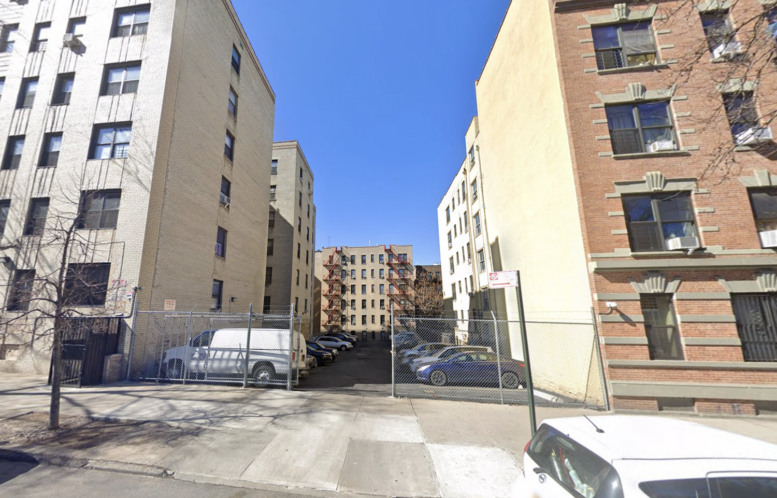
Permits Filed for 1917 Morris Avenue in Mount Hope, The Bronx


Permits have been filed for a 12-story residential building at 1917 Morris Avenue in Mount Hope, The Bronx. Located between East Tremont Avenue and East 177th Street, the lot is near the Tremont Avenue subway station, served by the B and D trains. Andrea Gjini of 781-783 Elsmere Place is listed as the owner behind the applications.

The proposed 124-foot-tall development will yield 107,851 square feet designated for residential space. The building will have 99 residences with a total 154 residences on the lot, most likely rentals based on the average unit scope of 700 square feet. The concrete-based structure will also have a cellar and a 20-foot-long rear yard.

John Backos of Grid Drafting and Consulting LLC is listed as the architect of record.

Demolition permits will likely not be needed as the lot is vacant. An estimated completion date has not been announced.

Mayor Mamdani Announces Most Summer Ferry Service in City History Ahead of 2026 FIFA World Cup, Unveils New Ferry Designs Celebrating Each Borough


Starting this week, 2026 summer schedule will feature more ferry service, more frequent connections across the city and reservable seats on beach-bound trips  


Five custom-wrapped NYC Ferry vessels will celebrate the  identity and diversity of all five boroughs  


Increased ferry service comes as City prepares for 2026 FIFA World Cup and expected influx of visitors  


Ahead of the 2026 FIFA World Cup, Mayor Zohran Kwame Mamdani and New York City Economic Development Corporation (NYCEDC) Interim President and CEO Jeanny Pak today launched NYC Ferry’s 2026 summer schedule, delivering the most ferry service in the system’s history.   


In anticipation of one of the busiest summers in New York City history, the Mamdani administration is adding vessels and trips across high-demand routes to keep commuters, recreational riders and visitors moving reliably. The new schedule includes more route connections as well as the return of Rockaway Rocket and Rockaway Reserve tickets to help connect New Yorkers and tourists alike to the City’s beaches. This increased service — which began this week and will run through Sept. 13, 2026 — will ensure passengers spend less time waiting and more time enjoying everything New York City has to offer.   


The Mamdani administration also unveiled five newly wrapped NYC Ferry vessels, each featuring custom World Cup-inspired branding that reflects the diversity and character of the five boroughs. These specially designed ferries will travel throughout New York Harbor beginning this week and remain in service through the end of the summer.  


“The world is coming to New York City — and New York City is ready,” said Mayor Mamdani. “We are investing in the infrastructure that keeps this city moving: new bus lanes, safer streets, greener public spaces and now the most ferry service in City history. Whether you’re headed to a World Cup match a neighborhood block party, or one of our world-class public beaches, NYC Ferry will get you there quickly, safely and in style all summer long.”  


“We're putting more vessels on the water because this summer demands it,” said Deputy Mayor for Economic Justice Julie Su. “More service means more New Yorkers moving, more visitors exploring and more economic activity reaching communities across all five boroughs.”    


“We’re thrilled to celebrate the world’s game right here in New York City and to showcase our fleet with five custom-wrapped NYC Ferry vessels honoring each borough,” said Executive Director of NYC Ferry James Wong. “With the FIFA World Cup, Sail4th 250, and another busy beach season all converging in summer 2026, visitors will have plenty of opportunities to explore New York Harbor alongside New Yorkers on board NYC Ferry with more service than ever before.”  

  ferry 1ferry2


The Mamdani administration also unveiled five custom-wrapped NYC Ferry vessels that celebrate the identity of each borough and will remain in service through the end of summer. Credit: NYCEDC.  


NYC Ferry Summer 2026  


   ferry3


The 2026 Summer Ferry Service schedule will help New Yorkers and visitors move around the city quickly and efficiently ahead of a busy summer. Credit: NYCEDC.  


The Mamdani administration is expanding service to meet expected demand ahead of a historic summer. As part of the 2026 Summer Ferry Service, riders can expect:  


  •    More Ferry Service to Meet Demand  
  •    More weekend trips to reduce travel and wait times.  
  •   Larger vessels operating on high-demand routes and during peak travel periods to carry more passengers.  
  •   Expanded high-frequency beach service alongside the existing Rockaway-Soundview route.  


  •    Seasonal Summer Routes to Boost Efficiency and Expand Access to Top Summer Destinations  
  •    Direct, high-capacity shuttle service to Governors Island from Pier 11 for all NYC Ferry riders, including free transfer from other routes.  
  •    Extended weekend local service on the South Brooklyn route from Bay Ridge and Brooklyn Army Terminal to Red Hook and other points farther north.  


  •    Reservable Seats to the Beach on Summer Weekends   
  •    Return of the Rockaway Reserve for guaranteed seats on select departures from Pier 11 and Rockaway.  
  •    Return of the Rockaway Rocket with direct beach service from Long Island City and Greenpoint. This service will begin in early July and run until Labor Day.  


As part of the 2026 Summer Ferry Service, the Mamdani administration is bringing back Rockaway Reserve tickets, allowing passengers to reserve seats on vessels along the Rockaway route. Beginning May 23, passengers will be able to purchase Rockaway Reserve tickets for specific weekend and holiday departures. These tickets may only be purchased for riders boarding at Wall Street/Pier 11 and Rockaway  


Later this summer, the Rockaway Rocket will also return to service, offering express, fully reservable service for beachgoers from Long Island City and Greenpoint. Non-reserved seats will remain available on every vessel operating along the Rockaway-Soundview route. Both Rockaway Reserve and Rockaway Rocket tickets will cost $12 per person.  


The Mamdani administration’s increased ferry service comes as seasonal ridership continues to increase across the NYC Ferry system. This past weekend alone, the East River Route recorded its two highest ridership days ever, generating more than 40,000 boardings due to improved operations and capacity on that route and building off of last summer’s strong ridership numbers.  


Last summer, NYC Ferry set daily, weekly and monthly ridership records, with August 2025 marking the highest single-month ridership in system history. In 2025, the Rockaway Reserve sold 30,000 tickets, generating more than $360,000 in revenue for the City’s ferry system, while Rockaway Rocket sold more than 17,000 tickets and generated more than $200,000 in additional revenue. Average daily Rockaway Rocket ticket sales increased 19% from 2024  


In December 2025, NYC Ferry also announced the system’s first-ever route reconfiguration through the NYC Ferry Optimization Plan, improving efficiency, shortening commute times and expanding connections for riders across the city.    


Spanning 70 nautical miles, the NYC Ferry system operates 38 vessels across six routes and 25 landings, making it the largest passenger-only ferry fleet in the United States. NYC Ferry is not only a critical transit option for New Yorkers’ daily commutes — connecting residents to jobs, schools, parks and cultural destinations in every borough — but also an iconic part of the city’s waterfront that is seen each day by millions of New Yorkers and tourists alike  


The 2026 Summer Ferry Service comes as the Mamdani administration prepares New York City for an expected influx of visitors for the 2026 FIFA World Cup, July Fourth weekend, Sail4th 250 and other major summer events. Alongside permanent street redesigns improving bike and pedestrian access near the Brooklyn Bridge, a new dedicated bus lane connecting Queens to LaGuardia Airport and public-space upgrades across the city, the increased 2026 Summer Ferry Service will keep New Yorkers and visitors moving efficiently throughout the summer season


Attorney General James Sues to Stop Student Loan Cuts for Future Health Care Workers


New Federal Rule Would Harm Students Working to Become Nurses, Physical Therapists, Physician Assistants, and Other Health Care Professionals

New York Attorney General Letitia James today co-led a coalition of 24 other states and the District of Columbia in suing the Trump administration to stop unlawful restrictions on federal student loans for students pursuing careers in critical health care fields. In May, the U.S. Department of Education issued a rule dramatically limiting which degree programs qualify for higher federal student loan limits. The rule makes it significantly harder for students pursuing careers in nursing, social work, physical therapy, occupational therapy, physician assistant studies, and other essential fields to afford the education and clinical training they need. Attorney General James and the coalition argue that these restrictions will worsen the existing health care workforce shortage and make it harder for communities in New York and nationwide to access care. The coalition is asking the court to block the rule and restore access to the federal student loans these students are entitled to receive.

“You should not have to be wealthy to serve your community as a nurse, physical therapist, or physician assistant,” said Attorney General James. “Higher education is expensive, and our health care system is already under immense strain. This rule will shut talented people out of critical professions and leave communities with fewer health care providers they desperately need. We cannot afford fewer nurses, fewer providers, or fewer opportunities for working people to enter these essential fields.”

Last year, Congress enacted new federal student loan caps that distinguish between “graduate” and “professional” degree programs. The law set higher federal loan limits for students enrolled in professional degree programs, which often require extensive training, clinical placements, and professional licensure. Loans were capped at $100,000 total for graduate programs and $200,000 for professional degree programs. Congress used the existing federal definition of a “professional degree,” which includes programs that prepare students to begin practice in a profession and generally require professional licensure.

In May 2026, however, the Trump administration issued a final rule unlawfully narrowing that definition. The rule imposes new restrictions not enacted by Congress, leaving many health care and other professional degree programs unable to qualify for the higher loan limits. The Department of Education has acknowledged that several excluded programs meet Congress’ definition of a professional degree, but nevertheless refused to classify them as such under its new rule. As a result, students pursuing degrees in nursing, physical therapy, occupational therapy, physician assistant studies, social work, speech-language pathology, audiology, athletic training, and other fields will only be able to access $20,500 per year in federal student loans.

Attorney General James and the coalition argue that the rule will force many students to rely on more expensive private loans, take on unsustainable debt, delay completing their education, or abandon these programs altogether. The coalition warns that the rule will reduce the number of graduates entering critical health care fields, worsen workforce shortages, and make it harder for patients – especially those in rural and underserved communities – to access care. Public colleges and universities also stand to lose critical tuition revenue.

The attorneys general are also challenging the Department of Education’s unlawful restrictions on students who Congress intended to protect from the new loan limits. Although Congress grandfathered in many students already enrolled in programs before the changes take effect, the administration’s rule strips those protections from students who transfer schools or temporarily withdraw and later re-enroll, even if they continue pursuing the same course of study. Attorney General James and the coalition argue that these additional restrictions are unsupported by law and will cause serious financial disruption for students and schools.

Attorney General James and the coalition argue that the rule violates the Administrative Procedure Act because it directly contradicts federal law and is arbitrary and capricious. They are asking the court to block the rule and ensure the loans are made available as Congress intended.

Joining Attorney General James in filing this lawsuit are the attorneys general of Arizona, California, Colorado, Connecticut, Delaware, Hawaii, Illinois, Maine, Maryland, Massachusetts, Michigan, Minnesota, Nevada, New Jersey, New Mexico, North Carolina, Rhode Island, Oregon, Vermont, Virginia, Washington, Wisconsin, and the District of Columbia, as well as the governors of Kentucky and Pennsylvania.