Wednesday, May 20, 2026

Mamdani Administration Advances First Neighborhood Plans for White Plains Road in the Bronx and South of Prospect Park in Brooklyn


First neighborhood plans advanced by the Mamdani administration will focus on key corridors in the Bronx and Brooklyn  


Community engagement led by City Planning will shape proposals for housing, neighborhood investments and economic growth  


Today, Mayor Zohran Kwame Mamdani and Department of City Planning (DCP) Director Sideya Sherman announced the City will advance neighborhood plans in the North Bronx and the communities south of Prospect Park in Brooklyn.   


Centered on White Plains Road in the Bronx and Coney Island and McDonald avenues in Brooklyn – transit-rich corridors constrained by outdated zoning rules – the plans aim to create urgently needed housing, including permanently affordable housing, support job growth and deliver long-overdue neighborhood investments.   


DCP will conduct community engagement in the coming months to help shape rezoning and investment proposals in partnership with City Council Land Use Chair Kevin Riley and Council Members Eric Dinowitz, Shahana Hanif, Rita Joseph, Farah Louis and Simcha Felder. The Mamdani administration will advance additional planning initiatives in the coming weeks.  


“New Yorkers are being pushed out of the neighborhoods they built because our city has spent decades refusing to build enough housing where people actually want and need to live,” said Mayor Mamdani. “These plans are about changing that. Along major transit corridors in the Bronx and Brooklyn, we have an opportunity to build more homes, create permanently affordable housing, support small businesses and invest in public spaces and infrastructure that communities deserve. And we are going to do it with New Yorkers leading the process every step of the way.”  


“As we work to usher in a new era of housing across our city, neighborhood plans will be a powerful tool for working with communities to deliver housing, jobs, investments and neighborhood improvements. I’m looking forward to identifying priorities, developing these plans, and envisioning what's possible together with partners in the Bronx and Brooklyn,” said Leila Bozorg, Deputy Mayor for Housing and Planning. “We’ll continue looking for opportunities to deliver the housing New Yorkers need, whether through land use changes, direct investment or other policies.” 


“Transit-rich areas saddled by outdated zoning, White Plains Road and the neighborhoods south of Prospect Park are exactly the kinds of places where thoughtful planning can deliver more affordable homes, stronger commercial corridors, and public investments to address community needs,” said DCP Director Sideya Sherman. “Working alongside local elected officials and the people who live, work, and spend time here, we are thrilled to begin a community-driven process to plan for equitable growth that supports more affordable and livable neighborhoods.”  


“Thoughtful, community-driven planning is essential to understanding how we can better meet the evolving needs of neighborhoods across our borough,” said Bronx Borough President Vanessa L. Gibson. “As this process moves forward, it is important that community conversations remain focused on affordable housing, economic opportunity, infrastructure improvements, and the needs of Bronx residents. We look forward to robust community engagement efforts that ensure residents have a meaningful voice throughout the process, and I look forward to working  with Councilmember Eric Dinowitz and Councilmember Kevin Riley, the NYC Department of City Planning, and community stakeholders to help shape proposals that reflect the needs and priorities of the North Bronx community.”  


“For a year, our office has worked closely with the Department of City Planning, Council Member Eric Dinowitz, community stakeholders, residents, and small business owners on the White Plains Road Neighborhood Plan to ensure this process reflects the voices and priorities of the people who live and work here every day,” said Council Member Kevin C. Riley. “I want to thank Mayor Mamdani and his administration for prioritizing this important planning effort and recognizing the need for proactive, community-driven investment in the Northeast Bronx. White Plains Road has long served as a vital corridor and central hub for the Northeast Bronx, and this work is about building on the strength of the community by creating a more community-centered and accessible corridor, one that expands housing opportunities, strengthens small businesses and the local economy, improves public spaces and infrastructure, increases affordability, and creates a safer, higher quality of life for residents and future generations alike. I look forward to continuing this partnership alongside our communities as we move this vision forward, not only for the Bronx, but as part of the broader work needed to build a more affordable, accessible, and livable New York City for all.”  


“We know that White Plains Road needs more investment, but how we get there makes all the difference. This community-driven process must deliver truly affordable housing, protect the small businesses that are on this corridor, and ensure that longtime residents benefit from future development. I will be focused on making sure this plan gets that balance right,” said Council Member Eric Dinowitz 


White Plains Road Plan     


White Plains


The White Plains Road Plan will build on community planning work conducted in close partnership with Council Members Riley and Dinowitz. The plan focuses on a key, transit-accessible corridor in the North Bronx and intersecting commercial streets that are currently dominated by one- and two-story strictly commercial buildings and have seen little new housing development, particularly affordable housing.   


The plan will build on recent community engagement efforts, including in-person events and the online Voice to Vision tool, where residents identified affordability concerns, public realm needs and economic challenges facing the corridor.   


Over the next year, the City will work with residents to develop a community-driven proposal that updates zoning to encourage more housing, requires income-restricted affordable homes, supports small businesses and economic development, improves neighborhood infrastructure and enhances public spaces.   


Community engagement will begin with a neighborhood “walkshop” in June, followed by the release of a zoning concept map later this year. The study area includes White Plains Road from Adee Avenue to the Bronx-Mount Vernon border, along with portions of Gun Hill Road and East 233rd Street.  


South of Prospect Plan 


Prospect South


The South of Prospect Plan is a new initiative focused on portions of Coney Island and McDonald avenues in neighborhoods south of Prospect Park, stretching roughly from Caton Avenue and Fort Hamilton Parkway to Avenue I.   


Along these corridors, outdated single-use zoning has limited new housing and job growth, worsened affordability pressures and prioritized auto-oriented uses despite strong public transit access.   


Announced in partnership with Council Members Joseph, Hanif, Louis and Felder, the South of Prospect Plan aims to support more transit-oriented, mixed-use development with permanent affordable housing, expand jobs and services and investments in the public realm.   


The planning effort will also help the City and surrounding communities prepare for the MTA’s future Interborough Express (IBX), which will serve the area.   


The plan launches with a new online survey, and DCP will hold a series of public engagement events in coming months that will inform a zoning concept map scheduled for release next year.  


OASAS RELEASES NEW FACT SHEET TO EDUCATE NEW YORKERS ON THE IMPACTS OF KRATOM AND 7-OH


New York State Office of Addiction Service and Supports

Kratom is Unregulated, and not FDA-approved 

It Can Cause Effects that Mimic Other Substances Like Stimulants and Opioids

The New York State Office of Addiction Services and Supports (NYS OASAS) released a new fact sheet to educate New Yorkers about kratom and 7-hydroxymitragynine, or 7-OH. Kratom is legal substance, however is not FDA-approved to treat any medical conditions, while 7-OH is the natural breakdown product of kratom’s primary psychoactive chemical, mitragynine.

The United States Drug Enforcement Agency classifies kratom as a “Drug and Chemical of Concern” because of its sedative effects and addiction potential, however it has not been scheduled under the Controlled Substances Act. Since they are not regulated, there is no quality control, meaning consumers may not always be aware of what is in the products they buy.

“While kratom is legal, it can still cause adverse health effects, and people need to be aware of the potential dangers.” OASAS Commissioner Dr. Chinazo Cunningham said. “This is important information that can help New Yorkers keep themselves and their loved ones safe by making sure they are educated about these emerging substances”

“People consume kratom either recreationally or to help managing pain or anxiety, but many are unaware that kratom carries certain health risks, including liver toxicity and potential dependance or withdrawal symptoms – risks that may be worsened when the product is strengthened by the concentration of 7-hydroxymitragynine,” State Health Commissioner Dr. James McDonald said. “New Yorkers have a right to know what they’re consuming and if those products come with health risks. The fact sheet released by OASAS combined with the safety information and guidance to clinicians released by the Department of Health ensures that information is available and accessible.”

Kratom is an herb from Southeast Asia that may be used for its stimulant and pain relief effects. It’s effects can mimic both stimulants, such as making an individual more alert and talkative; and opioids, including euphoria, decreased alertness, and confusion. While kratom itself is not an opioid, when taken in larger quantities it can act in a way similar to opioids, leading to tolerance, physical dependence and withdrawal symptoms similar to opioid withdrawal. Severe kratom intoxication can lead to respiratory depression, seizures, or abnormal heart rhythm, and has been linked to coma and death in some individuals.

A minor natural component of kratom, 7-hydroxymitragynine (7-OH), can have a strong opioid effect when in concentrated form. Manufacturers have made synthetic 7-OH (which may be sold as 7-OH or added to kratom plant products) in substantially higher quantities than would be found in unadulterated kratom. Research about 7-OH and its potential association with dependence or overdose is ongoing.

In New York, the possession and sale of kratom products is legal. In December of 2025, Governor Hochul signed legislation prohibit sale of these products to individuals under the age of 21, and to require all kratom products to have a full list of ingredients along with a consumer warning that the product may be addictive and interact with other medications or substances.  

This fact sheet compliments the background and safety information released by the New York State Department of Health in December, which includes general information for the public to learn about this emerging substance, as well as clinical guidance for providers to be aware of and address the use of kratom among their patients. The New York State Department of Health began to specifically monitor 7-OH in June 2025.

The New York State Office of Addiction Services and Supports oversees one of the nation’s largest systems of addiction services with approximately 1,700 prevention, treatment, harm reduction, and recovery programs serving over 731,000 individuals per year. This includes the direct operation of 12 Addiction Treatment Centers where our doctors, nurses, and clinical staff provide inpatient and residential services to approximately 8,000 individuals per year.

New Yorkers struggling with an addiction, or whose loved ones are struggling, can find help and hope by calling the state’s toll-free, 24-hour, 7-day-a-week HOPEline at 1-877-8-HOPENY (1-877-846-7369) or by texting HOPENY (Short Code 467369).  Available addiction treatment including crisis/detox, inpatient, residential, or outpatient care can be found on the NYS OASAS website

Mayor Mamdani Reopens Orchard Beach Pavilion After $114 Million Reconstruction Project


Historic pavilion reopens for first time in 17 years following a major restoration to improve accessibility, preserve landmarked architecture and expand public amenities

Mayor Zohran Kwame Mamdani, NYC Parks Commissioner Tricia Shimamura and New York City Economic Development Corporation (NYCEDC) Interim President & CEO Jeanny Pak today reopened the 140,000-square-foot Orchard Beach Pavilion in the Bronx following a $114 million reconstruction project that restored the landmarked building’s historic architecture, expanded ADA access and revitalized concession and community spaces.  


Built in 1936 with funding secured largely through the Works Progress Administration, the pavilion has been fully closed since 2009. Known for its striking columns, limestone cladding, bright blue tiles and terrazzo flooring, the pavilion was designated a landmark by the NYC Landmarks Preservation Commission (LPC) in 2006. 


“No longer can the Bronx be treated as an afterthought in a city of five boroughs,” said Mayor Mamdani. “As beach season approaches, Bronxites and New Yorkers from across this city will once again be able to gather at the Bronx’s only public beach in a space worthy of this community and its history.”    


“The reopening of the Orchard Beach Pavilion is an exciting investment that reflects the City's commitment to world-class public spaces for New Yorkers to enjoy in all five boroughs,” said Deputy Mayor for Operations Julia Kerson. “We’re thankful to our partners across City government who helped restore this landmark and ensure it is accessible and open to all New Yorkers.”  


“We are proud to have restored the Orchard Beach Pavilion to its former glory, with a level of investment that the Bronx deserves,” said NYC Parks Commissioner Tricia Shimamura. “Thanks to this project, the pavilion is more accessible to all visitors, will offer improved amenities and has a revived look that highlights its striking architectural features. After being closed off to public access for more than 17 years, we’re thrilled to welcome New Yorkers back to the pavilion this summer!”  


“The Orchard Beach Pavilion is one of New York City's most beautiful destinations, and we are thrilled of the work we have done to renovate this historic space that will be enjoyed by many New Yorkers when beach season officially begins,” said NYCEDC Interim President & CEO Jeanny Pak. “With these renovations, the 'Riviera of New York' will once again become a public amenity that is fitted for modern times, and we look forward to welcoming families to this landmark destination to relax, rest and play.”  


“The restoration of the landmark Orchard Beach Bath House and Promenade shows what is possible when government delivers for the people of New York,” said Landmarks Preservation Commission Chair Lisa Kersavage. “Originally built during the Great Depression to create a beautiful public space for all New Yorkers, thanks to restoration and accessibility improvements led by NYC Parks and NYCEDC and approved by LPC, this iconic Bronx landmark is ready to welcome visitors back for this summer — and beyond.”  


The pavilion’s ground floor is now open to the public and includes upgraded restroom facilities. Visitors can also enjoy the upper balconies to take in views of the beach and Long Island Sound.  


The restoration included extensive structural and architectural repairs to the roofs, columns, limestone cladding, glazed terracotta, terrazzo and metalwork. The project also added new trees and upgraded lighting throughout the site.    


To improve accessibility, the landside entrance now includes new ramps leading to the upper level of the pavilion. On the beach side, a curved brick-clad accessible ramp connects the upper level to the lower plaza near the beach, ensuring all visitors can move through the pavilion with equitable access for the first time.    


Historic concession spaces within the pavilion are being rebuilt to accommodate new food and retail offerings, with upgraded mechanical, electrical and plumbing systems for long-term resiliency. NYC Parks selected Unwind Hospitality Group to operate food service and merchandise spaces within the pavilion. The company will partner with local vendors to provide a range of food options for beachgoers. These concession areas are expected to open later this summer, while the pavilion’s restaurant space is scheduled to open in 2027.  


The reconstruction project was funded by the Mayor’s Office, the Office of the Bronx Borough President, the New York City Council and New York State. Design work was completed by Marvel Architects and construction management services were provided by Gilbane.   


Orchard Beach, the Bronx’s only public beach, spans 115 acres and stretches 1.1 miles along Pelham Bay Park. The beach features a promenade, playgrounds, picnic areas, a soccer field and courts for basketball, volleyball and handball. Orchard Beach is also home to NYC Parks Orchard Beach Nature Center, which offers educational exhibits on local wildlife, live marine displays and programming led by the Urban Park Rangers.  


New York City public beaches officially open for the season on Saturday, May 23.


CONSUMER ALERT: NYS Department of State’s Division of Consumer Protection Provides New Yorkers with Tips for Avoiding Home Improvement Scams


Logo

Spring and Summer are the Peak Seasons for Home Improvements - and for Scammers Trying to Cash in

The New York State Division of Consumer Protection today warned consumers to be alert for home improvement scams. Late spring and summer are peak seasons for home improvement projects, but home improvement scams can cost homeowners thousands of dollars and leave them with poor workmanship, unfinished projects, or an unsafe result. Home improvement scams have consistently ranked among New Yorkers’ top five consumer complaints.

“Spring and summer times are the perfect seasons to do home renovations, but consumers should be wary of unsolicited contractors who knock on your door offering repairs or home improvement projects at a ‘bargain price’ because it could simply be a scam,” said Secretary of State Walter T. Mosley. “The Division of Consumer Protection offers tips to New Yorkers so they can avoid costly mistakes by hiring nefarious scammers who can take advantage of their hard-earned money with an unfinished job or no work at all.” 

Consider the following list of tips to avoid common home improvement scams:

Before Hiring a Contractor, Always Research and Verify: 

  • Shop Around: Get at least three written estimates. Each estimate should clearly list:
  • Materials to be used
  • Scope of work
  • Labor costs
  • Estimated start and finish dates
  • Payment schedule
  • Verify Credentials: Ask friends and neighbors for referrals. Check online reviews, references, and complaint history through the Better Business Bureau, local consumer agencies, and state records. Be cautious if the contractor has no physical address or changes business names often.  
  • Check your local government licensing requirements: New York State does not license home improvement contractors. However, some counties and local municipalities do, including New York City, Suffolk, Nassau, Westchester, Putnam, and Rockland counties, and the City of Buffalo. If your local government requires licensure for home improvement contractors or certain home improvement trades, be sure to only hire a licensed contractor.
  • Know the codes: Check with your town or county about permit requirements and the applicable building codes. Be sure you or your contactor obtains the necessary permits.

Avoid Major Red Flags:

  • Be cautious if someone:
  • Knocks on your door unexpectedly
  • Says they have “leftover materials from another job”
  • Pressures you to sign today
  • Demands cash only
  • Refuses permits or paperwork
  • Keeps finding new urgent problems after starting
  • Wants you to finance through “their lender”
  • Asks you to sign insurance checks over to them  
  • Many good contractors are too busy to seek business at your front door. Be wary of contractors that knock on your door offering repairs or home improvement projects at a “bargain price” or because they have extra supplies left over from another project in your neighborhood. Scammers provide poor-quality work or may be quick to disappear if the homeowner provides any type of payment up front.
  • Unscrupulous actors may exaggerate home improvement issues or claim a recent city, state, or federal regulation requires immediate upgrades to create a false sense of urgency and panic and push homeowners into unnecessary and expensive repairs. 

Be A Savvy Consumer:

  • Get It in Writing: A contract should include:
  • Contractor’s full name, address, and phone number
  • Detailed work description
  • Total price and payment terms
  • Timeline
  • Warranty terms
  • Change-order process for extra work
  • Don’t sign anything until you have decided to hire: You should not have to sign anything until you are ready to hire a contractor. Never sign a document that has blank spaces – if anything is “not applicable” the language should be removed or crossed out and signed by the contractor. Do not sign anything if you are not sure what it means for you or the project. Take the time you need to make sure you are comfortable with the contract.
  • Never Pay Full Price Up Front: Avoid large upfront deposits. Use a staged payment schedule tied to completed work. Pay by check or with credit card when possible. Do not pay with cash, wire transfer, Zelle, or gift cards. Withhold final payment until the job is complete and satisfactory.   

If Problems Arise: First, speak with the contractor and try to reach a resolution. If a resolution is not possible, file a complaint with your local consumer protection agency or the New York State Division of Consumer Protection at https://dos.ny.gov/consumer-protection. 

About the New York State Division of Consumer Protection
The New York State Division of Consumer Protection provides resources and education materials to consumers on product safety, as well as voluntary mediation services between consumers and businesses. The Consumer Assistance Helpline 1-800-697-1220 is available Monday to Friday from 8:30am to 4:30pm, excluding State Holidays, and consumer complaints can be filed at any time at www.dos.ny.gov/consumer-protection.

NYS Office of the Comptroller DiNapoli: State Pension Fund Posts Strong 11.94% Annual Return, Closes at Record High of $295.4 Billion


Office of the New York State Comptroller News

New York State Comptroller Thomas P. DiNapoli today announced that the New York State Common Retirement Fund (Fund) delivered a strong estimated investment return of 11.94% for the state fiscal year ending March 31, 2026, closing at a record-high estimated value of $295.4 billion — the highest fiscal year-end value in the Fund’s history.

“The New York State Common Retirement Fund delivered another year of strong results despite economic uncertainty, persistent inflation, and turbulence out of Washington,” DiNapoli said. “Under my watch, our diversified, disciplined investment strategy continues to protect the retirement security of nearly 1.3 million public workers, retirees and their families. We have built one of the nation’s strongest and best-funded public pension funds by focusing on long-term stability, smart diversification, and responsible risk management. Reaching a record-high value is a testament to the strength of our investment team and our commitment to keeping the promises made to New Yorkers.”

The Fund’s long-term expected rate of return is 5.9%, the second lowest among major public pension funds in the country. During his tenure, DiNapoli steadily lowered the assumed rate of return from 8% to a more prudent and sustainable level that has earned praise from independent fiscal experts for strengthening the Fund’s long-term fiscal health.

While annual returns can fluctuate with market conditions, the Fund continues to deliver strong long-term performance, achieving a three-year annualized return of 9.74%, five-year annualized return of 6.77% and a 10-year annualized return of 8.94%.

The Fund's value reflects retirement and death benefits of $16.8 billion paid out during the fiscal year.

As of March 31, 2026, the Fund had 39.4% of its assets invested in publicly traded equities. The remaining Fund assets by allocation are invested in cash, bonds, and mortgages (22.9%), private equity (14.3%), real estate and real assets (14.3%), and credit, absolute return strategies, and opportunistic alternatives (9.1%).

DiNapoli’s management of the Fund has received praise from two independent reviews in 2026. First, a legally required fiduciary and conflict of interest review of the Fund released in January recognized the Fund for its exemplary investment oversight, risk management, and ethical governance. This review, conducted by Weaver and Tidwell LLP and required by state regulations, is part of the reforms that DiNapoli fought for when he became State Comptroller to provide the public with a clear, independent assessment of how the Fund is being managed and where improvements could be made.

Weaver’s review found:

  • The Fund operates under a strong governance framework with a rigorous system of internal controls and maintains a high level of operational transparency.
  • DiNapoli manages the Fund with the highest ethical, professional, and conflict of interest standards, and acts for the sole benefit of the retirement system’s members and beneficiaries.
  • The Fund has a great deal of focus on the fees applied to each individual deal and whether the proposed fees fall within prevailing market norms.
  • The Fund demonstrates a strategic asset allocation between public and private markets that closely aligns with its peer group.
  • Fund staff are knowledgeable and dedicated and manage the Fund in the most efficient and effective manner possible.

The review highlights that the Fund’s high-funded status and conservative assumed rate of return put it in a stronger financial position to meet long-term obligations than its peers and is able to weather market volatility. The funded status was 92.2%, as of March 31, 2025, and is still being calculated for the fiscal year that just ended.

A second independent review conducted by the State Department of Financial Services (DFS), the Funds’ regulator, found the investment and risk teams are performing their duties professionally and competently while safeguarding the retirement security of the state pension fund’s members. The report found total fund performance versus benchmarks over 3-, 5-, and 10-year periods “has been very good,” and highlighted the Fund’s consistently healthy funded ratio as evidence of a well-managed portfolio and low risk to pensioners, and found that investment fees and expenses were reasonable.

Employer contribution rates are determined by investment results over a multi-year period along with numerous other actuarial assumptions, including wage growth, inflation, age of retirement, and mortality. Integral to the Fund’s strength have been the state and local governments, which consistently pay their contributions.

The New York State Common Retirement Fund is one of the largest public pension funds in the United States. It holds and invests the assets of the New York State and Local Retirement System on behalf of nearly 1.3 million state and local government employees and retirees and their beneficiaries, and has consistently been ranked as one of the best managed and best funded public plans in the nation.

Links

Mamdani Administration Will Double Width of Popular Protected Bike Lane on Sixth Avenue Ahead of World Cup


City will expand lane from six to 10 feet to improve safety for New Yorkers and visitors traveling to major destinations in the area  


Similar projects have reduced pedestrian deaths and injuries by nearly 32%  


Mayor Zohran Kwame Mamdani and New York City Department of Transportation (NYC DOT) Commissioner Mike Flynn today announced that the City will double the width of one of Manhattan’s busiest protected bike lanes along Sixth Avenue to improve safety ahead of the 2026 FIFA World Cup™.  


“What better way to welcome the World Cup than by making our streets safer and more accessible for everyone who uses them?” said Mayor Mamdani. “From Sixth Avenue in Manhattan to Broadway in Queens and the iconic Brooklyn Bridge, we’re redesigning our streets to better protect pedestrians, cyclists and drivers alike. Long after the sun sets on this summer of celebration, these improvements will continue serving New Yorkers every single day.”  


“The Mamdani administration has tasked us to work with urgency to improve safety on our streets. With a colorful history, Sixth Avenue now hosts one the city’s most popular bike lanes, and it is time we make it even better,” said NYC DOT Commissioner Mike Flynn. “New Yorkers and visitors alike should be able to connect to Manhattan’s major tourist destinations comfortably, whether they are traveling by bike, on foot or by car. Widening this bike lane will make the street safer for everyone and provide a calmer, more comfortable cycling experience by allowing more room for passing.”  


The project will expand the protected bike lane on Sixth Avenue from six feet to 10 feet between 14th Street and West 31st Street. Between 31st and 35th streets, NYC DOT will maintain the existing five-foot protected bike lane and add nine feet of expanded pedestrian space with a painted sidewalk extension. Wider bike lanes create a safer and more comfortable riding experience by allowing faster riders, including e-bike users, to pass more safely while also supporting side-by-side riding 


In 2024, NYC DOT installed a double-wide protected bike lane on Sixth Avenue from Lispenard Street in Tribeca to West 13th Street in Greenwich Village, closing a key gap in the City’s bike network. This latest project will extend those improvements farther into Midtown.   


Bicycle ridership across New York City continues to grow. Daily bike trips over the East River bridges reached a record high of nearly 29,000 riders in 2025 — almost 18 times the number recorded in 1980, when the City first began tracking bicycle traffic on the bridges.  


In 1980, Sixth Avenue briefly became home to New York City’s first on-street protected bike lane. Inspired by a visit to China, Mayor Ed Koch directed the former Department of Traffic to install a curb-protected lane in Midtown. The lane generated significant controversy and hostility at the time, including from then-Governor Hugh Carey, and was removed six months later. The current protected lane was installed in 2020.  


While safety has improved under the current street design, Sixth Avenue remains one of NYC DOT’s Vision Zero Priority Corridors, meaning it has a high rate of pedestrian deaths and serious injuries per mile. Between 2019 and 2023, there were 29 traffic deaths and severe injuries recorded along this stretch of Sixth Avenue. Similar redesign projects have reduced deaths and serious injuries for all road users by 30% and for pedestrians by 31.7%.  


NYC DOT plans to complete installation of the widened bike lane before the World Cup matches begin in June.  


Permits Filed for 122 Bruckner Boulevard in Mott Haven, The Bronx


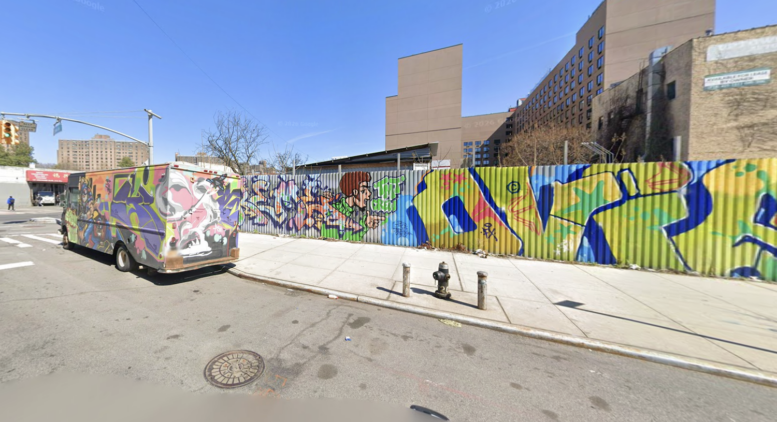
Permits have been filed for a 14-story residential building at 122 Bruckner Boulevard in Mott Haven, The Bronx. Located between St. Ann’s Avenue and Brook Avenue, the lot is near the Brook Avenue subway station, served by the 6 train. Anshel Fridman of Arist Construction LLC is listed as the owner behind the applications.

The proposed 145-foot-tall development will yield 194,886 square feet designated for residential space. The building will have 99 residences with a total 297 residences on the lot, most likely rentals based on the average unit scope of 656 square feet. The concrete-based structure will also have a cellar and a 37-foot-long rear yard.

S. Wieder Architect P.C. is listed as the architect of record.

Demolition permits were filed this month for the single-story structure on the site. An estimated completion date has not been announced.