Thursday, May 21, 2026

DEC ANNOUNCES 2025 DEER HARVEST ESTIMATES


Logo

Crossbow Expansion Widely Adopted by Archery Hunters

First Time in Modern New York History that Mature Buck Harvest Exceeds Yearling Buck Harvest 

New York State Department of Environmental Conservation (DEC) Commissioner Amanda Lefton announced that hunters harvested an estimated 227,032 white-tailed deer during the 2025-26 hunting seasons, approximately 2% more than the 2024 season and within 1% of the 5-year average. 

“It is clear that deer hunters took advantage of expanded crossbow hunting opportunities this past season,” said Commissioner Lefton. “We are pleased that more hunters can participate in New York’s archery deer seasons and contribute to effective deer management into the future. The results from this past season continue to demonstrate that New York has much to offer for deer hunters.” 

Following an amendment to the Environmental Conservation Law in 2025 that allowed deer hunters to use a crossbow in the same seasons, places, and manner as a vertical bow, DEC documented widespread adoption of crossbows. In 2025, crossbows accounted for 55% of the total archery season deer harvest. For comparison, in 2024, crossbows accounted for 33% of the total archery harvest. Crossbows are a more approachable hunting implement for hunters who are new to archery or have difficulty drawing a vertical bow. In 2025, archery hunters who harvested a deer using a crossbow were on average 9 years older and were more than twice as likely to be female than those who harvested a deer with a vertical bow. 

The 2025 antlered buck harvest of 120,909 was 1% less than 2024, but finally passed a landmark in buck age structure. For the first time in modern history, New York hunters harvested as many 3.5-year-old or older bucks (28.1%) as yearling bucks (28.0%). For comparison, 25 years ago only 10% of harvested bucks in New York were 3.5 years old or older and 67% were 1.5 years old.  

The 2025 antlerless deer harvest of 106,123 was up 5% from 2024. However, antlerless deer harvest throughout much of New York was still below what is necessary to achieve deer population objectives. Sufficient harvest of antlerless deer is necessary to keep deer populations in balance with available habitat and at levels that are acceptable to all members of the public. To encourage hunters to harvest more antlerless deer in future seasons, DEC recently proposed Changes to Hunting Regulations to Increase Harvest of Antlerless Deer

Notable Numbers from the 2025 Deer Seasons: 

  • 0: The number of positive results from 3,050 wild deer tested for Chronic Wasting Disease, as efforts continue to “Keep NY’s wild deer CWD-free.”
  • 530,808: The number of licensed NY hunters during the 2025 deer hunting seasons, an estimated 85% of whom actively participated in deer hunting.
  • 11%: The estimated percentage of hunters who used the newly-offered E-tags for all of their 2025 deer hunting. An additional 19% of hunters used a combination of E-tags and paper tags throughout the hunting seasons.
  • 63%: The portion of successful deer hunters reporting their harvest as required by law. This is well above the five-year average of 49%. Harvest reporting was likely increased through hunters adopting E-tagging, which requires immediate reporting as part of the tagging process.
  • 2,567: The estimated deer harvest by 12–15-year-old hunters during the Youth Firearms Season.
  • 17.1 and 0.7: The estimated number of deer harvested per square mile in the Wildlife Management Units (WMUs) with the highest (WMU 8R) and lowest (WMU 5F) harvest density.
  • 12,385: The number of harvested deer checked by DEC field staff to gather data such as deer age, sex, and hunter reporting This check data, along with hunter harvest reports, allows DEC to estimate the total deer harvest and monitor trends in deer populations. 

DEC’s 2025 Deer Harvest Summary report provides tables, figures, and maps detailing the deer harvest around the state. Past harvest summaries are also available on DEC’s website. DEC’s White-tailed deer Management Plan provides information on how DEC determines deer population objectives throughout the state.

Wednesday, May 20, 2026

United States Unseals Superseding Indictment Charging Raul Castro and Five Castro Regime Co-Defendants for 1996 Shoot-Down of Brothers to the Rescue Aircraft


Image 1
Raul Modesto Castro Ruz

The U.S. Department of Justice today announced the unsealing of a superseding indictment charging Raul Modesto Castro Ruz, 94, of Holguin, Cuba; along with Lorenzo Alberto Perez‑Perez of Las Tunas, Cuba; Emilio José Palacio Blanco; José Fidel Gual Barzaga; Raul Simanca Cardenas; and Luis Raul Gonzalez‑Pardo Rodriguez, for their alleged roles in the Feb. 24, 1996 shoot‑down of two unarmed U.S. civilian aircraft operated by Brothers to the Rescue (BTTR), also known as Hermanos al Rescate, over international waters.

“Over three decades later, we are committed to holding those accountable for the murders of four brave Americans: Carlos Costa, Armando Alejandre Jr., Mario de la Peña, and Pablo Morales,” said Acting Attorney General Todd Blanche. “For the first time in nearly 70 years, senior leadership of the Cuban regime has been charged in the United States for alleged acts of violence resulting in the deaths of American citizens. President Trump and this Justice Department are committed to restoring a simple principle: if you kill Americans, we will pursue you. No matter who you are. No matter what title you hold.”

“Today’s superseding indictment of Raul Castro and five Castro regime co-defendants is a major step toward accountability in the 1996 murders of four Brothers to the Rescue members - including three U.S citizens - Carlos Costa, Armando Alejandro Jr, Mario de la Pena, and Pablo Morales,” said FBI Director Kash Patel. “For 30 years these families have waited for answers - and this FBI never forgot. We will continue working with our Justice Department partners to bring to justice those who attacked our civilians.”

“For 30 years, the families of these men have waited. The Miami community has waited. Our country has waited. Today is a step toward accountability,” said U.S. Attorney Jason A. Reding Quiñones for the Southern District of Florida. “This passage of time does not erase murder. It does not diminish the value of these lives. And it does not weaken our commitment to the rule of law.”

BTTR was an organization based in Miami that conducted humanitarian flight operations across the Florida Straits to search for Cuban migrants in distress. As alleged, beginning in the early 1990s, Cuban intelligence agents infiltrated the organization and relayed detailed information about its flight operations back to the Cuban government. These reports were allegedly used by military leadership in planning the Feb. 24, 1996 operation.

The superseding indictment charges conspiracy to kill U.S. nationals, two counts of destruction of aircraft, and four counts of murder.

According to the allegations, on Feb. 24, 1996, three BTTR aircraft flew from South Florida toward Cuba. Cuban military fighter jets under the chain of command overseen by Raul Castro fired air‑to‑air missiles at two unarmed civilian Cessna aircraft — destroying them without warning while they were flying outside Cuban territory, killing four U.S. nationals, including three U.S. citizens: Carlos Costa, Armando Alejandre Jr., Mario de la Peña and Pablo Morales.

Image 3

Rodriguez in a MiG fighter jet

The indictment further alleges that, in the weeks prior to the attack, Cuban military pilots conducted training exercises designed to locate and intercept slow‑moving civilian aircraft. On the day of the incident, three BTTR planes departed from Opa‑locka Airport for a planned humanitarian flight south of the 24th parallel. Two of the aircraft — tail numbers N2456S and N5485S — were allegedly targeted and shot down in international airspace, resulting in the deaths of all four victims.

If convicted, the defendants face a maximum penalty of death or life imprisonment on the murder and conspiracy to kill U.S. nationals counts. Castro Ruz and Perez-Perez face up to five years in prison for each of the destruction of aircraft counts. The statutory maximum penalties are prescribed by Congress and provided here for informational purposes only, as the sentencing of any defendant will be determined by a judge.

Luis Raul Gonzalez‑Pardo Rodriguez, 65, of Havana, Cuba, is in U.S. custody pending sentencing later this month in the Middle District of Florida for making false statements in an immigration document.

Image 2

Luis Raul Gonzalez-Pardo Rodriguez and Lorenzo Alberto Perez-Perez

The U.S. Attorney’s Office also acknowledged the assistance of the Florida Attorney General’s Office. “We are grateful for the support provided by Attorney General James Uthmeier and his team during this investigation,” said U.S. Attorney Reding Quiñones.

Today’s announcement is in conjunction with a ceremony at the Freedom Tower in Miami to honor the victims. Participants at today’s press conference included Acting Attorney General Blanche, U.S. Attorney Reding Quiñones, U.S. Senator Ashley Moody, Deputy Director Christopher G. Raia of the FBI, and Florida Attorney General James Uthmeier.

Assistant U.S. Attorneys Abbie D. Waxman and Michael E. Gilfarb for the Southern District of Florida are prosecuting the case, with the investigation led by the FBI Miami Field Office.

An indictment is merely an allegation. All defendants are presumed innocent unless and until proven guilty beyond a reasonable doubt in a court of law.

Attorney General James and NYPD Commissioner Tisch Announce Takedown of Drug Trafficking Operation in Queens


Investigation Recovered More Than $93,000 and Nearly Three Kilograms of Cocaine
Defendants Sold Cocaine Near Public Elementary School in Queens

New York Attorney General Letitia James and New York City Police Department (NYPD) Commissioner Jessica Tisch today announced the arrests and indictments of two individuals for their roles in a drug trafficking operation that illegally trafficked cocaine in Queens. A 65-count indictment unsealed today charges Jason Alvarez of Queens, 47, and Christopher Sanchez of Brooklyn, 43, with possessing and selling cocaine. An investigation, led by the Office of the Attorney General’s (OAG) Organized Crime Task Force (OCTF) revealed that Sanchez supplied Alvarez with cocaine, which Alvarez sold near the grounds of an elementary school in Queens. The investigation recovered approximately three kilograms of cocaine and more than $93,000 in cash.

“Dismantling dangerous drug operations is critical to keeping our communities safe,” said Attorney General James. “Jason Alvarez and Christopher Sanchez put school children and their neighbors at risk by selling cocaine near an elementary school. We are shutting down their drug trafficking operation and I thank all our partners in law enforcement for their collaboration in this investigation.” 

“These two defendants showed a complete disregard for children’s safety – selling drugs near an elementary school, and in one case, even bringing the defendant’s own children along during a drug drop,” said NYPD Commissioner Jessica S. Tisch. “After a 17-month joint investigation, we have now dismantled this drug trafficking operation, recovering approximately 3 kilograms of cocaine and more than $93,000 in cash. I thank our NYPD investigators, law enforcement partners, and the New York Attorney General’s Office for their work throughout this case and their commitment to protecting New Yorkers from dangerous narcotics trafficking.”

Today’s takedown was the result of a joint investigation between OCTF and Homeland Security Investigations (HSI) New York, the Drug Enforcement Administration (DEA), NYPD, United States Customs and Border Protection (CBP), and the New York State Police (NYSP). The investigation spanned 17 months and included hundreds of hours of physical and covert surveillance, analysis of voluminous electronic evidence, including cell phone data, GPS data, and other traditional investigative methods.

The investigation revealed that from December 2024 to October 2025, Alvarez sold cocaine near the grounds of a public elementary school – P255 at PS 908Q – located on 38th Avenue in Queens. Through physical and covert surveillance, investigators determined that Sanchez stored and prepared cocaine in a garage that he co-owned on Lincoln Avenue in Brooklyn, and supplied Alvarez with this cocaine for resale. During at least one occasion, Sanchez brought his two children to a meeting to supply Alvarez with cocaine. Forensic analysis of cell phones belonging to Alvarez and Sanchez revealed that the two communicated via text messages, WhatsApp messages, and FaceTime. A search warrant on the Brooklyn garage resulted in the seizure of numerous kilogram presses, electronic scales, and narcotics adulterant – substances added to dilute the potency of narcotics and increase the amount of product that can be sold to increase profit. 

During the execution of search warrants in October 2025, Sanchez attempted to evade law enforcement by driving away in his personal vehicle, causing a member of the investigative team to jump out of the way to avoid being struck. Sanchez then abandoned his vehicle, threw a kilogram of cocaine into the trunk of a parked vehicle, and continued to flee on foot, discarding his outer clothing in an attempt to disguise himself, before being apprehended in a nearby clothing store by members of the investigative team. The team later recovered the kilogram of cocaine that Sanchez tossed into the parked car.

The search warrants also resulted in the recovery of $93,831 in alleged narcotics proceeds and additional quantities of cocaine from various locations associated with Sanchez and Alvarez, including Alvarez’s apartment, Sanchez’s home in Queens, and Sanchez’s garage in Brooklyn.

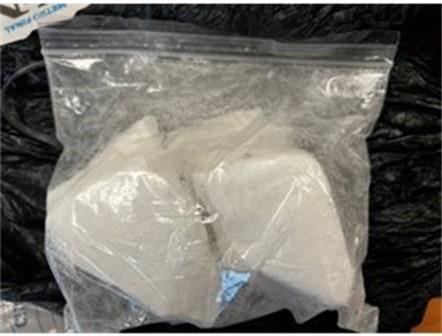
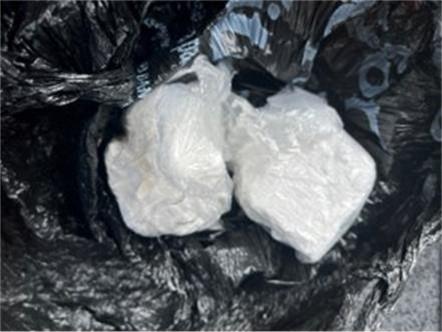
Bags of cocaine seized in the investigation

Bags of cocaine seized in the investigation

Bags of cocaine seized in the investigation

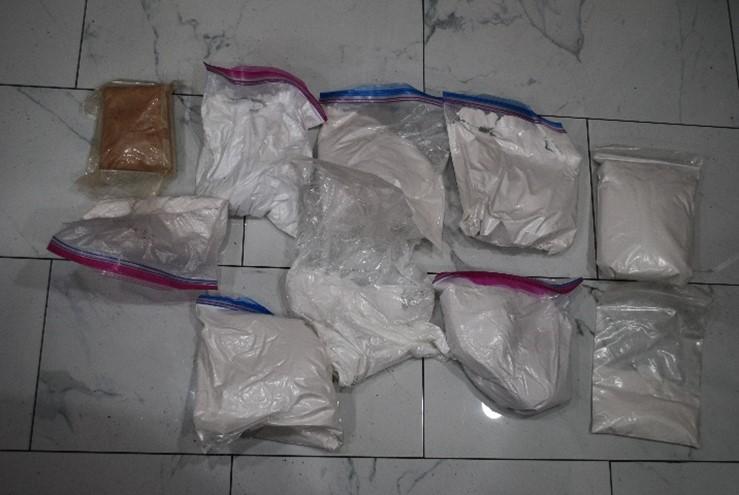
Bags of narcotics adulterant

Bags of narcotics adulterant

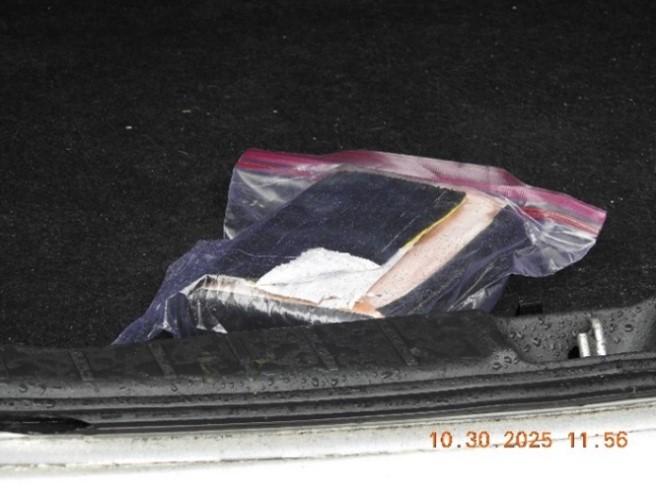
The kilogram of cocaine that Sanchez tossed into the parked car

The kilogram of cocaine that Sanchez tossed into the parked car.

The indictment, unsealed today before Queens County Supreme Court Judge Toni Cimino, charges Sanchez and Alvarez with multiple crimes, including Criminal Sale of a Controlled Substance in the First Degree (a Class A-I Felony), Criminal Possession of a Controlled Substance in the First and Second Degree, Criminal Sale of a Controlled Substance in or near School Grounds, and Conspiracy in the Second Degree, among other charges. If convicted, Alvarez faces a maximum of 24 years in prison. Sanchez faces a maximum of 20 years in prison.     

The charges against the defendants are merely accusations and the defendants are presumed innocent unless and until proven guilty.

“Today’s indictments expose an alleged cocaine trafficking operation that pushed poison into our communities just steps from an elementary school in Queens in the very place where parents should feel their children are safest,” said HSI New York Special Agent in Charge Michael Alfonso. “As alleged, conducting drug deals near where kids play, converting a Brooklyn garage into a clandestine drug mill, and attempting to flee law enforcement in a manner that endangered both investigators and the public represent a direct threat to our neighborhoods, our families, and our shared sense of security.”

“The arrest of these two individuals who choose to traffic and distribute cocaine near an elementary school underscores the grave danger these traffickers pose to our children and our community,” said DEA New York Enforcement Division Special Agent in Charge Farhana Islam. “In one particularly disturbing instance, one of the individuals arrested brought his own children to a drug transaction, exposing them to the very criminal activity that destroys lives and families. Illicit drugs have no place in our homes, nor near our schools, and we will continue to target those who compromise the health and safety of our communities, especially our most vulnerable.”

“Today’s arrests and indictments are the result of an aggressive strategy to stop illegal drug trafficking and keep cocaine and other deadly substances off our streets,” said New York State Police Superintendent Steven G. James. “The coordination, cooperation, and investigative persistence of the law enforcement agencies responsible for intercepting these acts is imperative. We will continue to work with our partners to disrupt the supply of dangerous drugs in our communities and put those responsible behind bars.”

The investigation was led by HSI New York's Homeland Security Task Force Strategic Interdiction Group, alongside NYPD Detective Robert Locher, under the supervision of NYPD Sergeant Joseph DeCandia, Lieutenant Timothy Burke, and Captain Matthew Gorman under the overall supervision of Chief of Detectives Joseph Kenny.

For OAG, the investigation was led by OCTF Detectives Fernando Espindola and Robert Geary, under the supervision of OCTF Acting Supervising Detective Shavaun Clawson, Assistant Chief Ismael Hernandez, and Deputy Chief Andrew Boss, with special assistance from the detective specialists from the OAG Special Operations Unit, led by Deputy Chief Sean Donovan. The Attorney General’s Investigations Bureau is led by Chief Oliver Pu-Folkes.

Governor Hochul Joins NYPD to Announce Expanded Bronx Patrols and Highlight Citywide Summer Crime-Fighting Efforts


Governor Hochul: "We've invested $3 billion at the state level in fighting crime. Often it's the technology, crime fighting, license plate readers, whether it's drone technology, or even something like enhancing patrols on the subways… $77 million more in funding for NYPD to be able to protect our subways.”

Hochul: “So these are the changes we're making in Albany. We had a focus on the repeat offenders, our discovery laws, the bail laws… You can complain about a late budget, but everything I'm talking about happened in a late budget. So I'll take a late budget any day — prefer on time — but if that's what gets these streets safer and gives our police commissioner and our DAs and others the tools they need, then I'll be on the front lines of that as well. So, it's about partnerships.”

Thank you, Mayor. You know, in order to keep this city safe, it is absolutely incumbent upon its leaders to be real partners in fighting crime. And I thank the Mayor and his extraordinary police commissioner, Jessica Tisch, for all of us working together toward one objective – making this the safest summer that we've ever seen. And I'm really proud of your announcements, Mayor. They make common sense improvements and changes. I want to hear, I’m here to tell you how much I appreciate that. Also, it's an opportunity for me to come out and tell the men and women of NYPD how grateful I am for them every single day for showing up on the job, putting their lives on the line. And here, you heard it, the largest decline in crime was in one borough. The largest was in this borough, right here in the Bronx.

I'm really, really excited to know that because I'm reminded of a time when I came here just a few years ago when there was a huge surge in crime across the state, across the nation, in fact, but the Bronx seemed to be hardest hit. And I remember walking with some leaders in a business district, a business improvement district, and stopping into a little bakery. And the owner said, "Retail theft has gotten so bad that I just leave my cash drawer open because they're coming in, they may be getting arrested, they get an appearance ticket, and they're literally back the next day." And I took that story to Albany, and I said, "We have to do more. We have to look at the laws that are allowing this to happen. We have to look at the crimes, the sanctions we have for retail theft, and aggregate crimes together so more can be treated as felonies to stop these crime rings." And I've been tracking these numbers closely. Here in the Bronx, retail theft alone is down 20%, not since that time, but literally since last year. So I want to thank the people who are making this happen on the ground. I'll continue to be a partner in driving the message in Albany that we have to do more to help our district attorneys. We have unprecedented funding for our district attorneys on retail theft and a whole series of crimes. People like Darcel Clark on the front lines helping protect our neighbors. I want to thank her and all the others who've joined us here today. But I just want to say a couple more things.

We've invested $3 billion at the state level in fighting crime. Often it's the technology, crime fighting, license plate readers, whether it's drone technology, or even something like enhancing patrols on the subways. We saw this not long ago. Started making some progress on the subways, but spring hit, and all of a sudden there was a spike. We cannot tolerate a spike in this because all of a sudden it goes back to that time when people are starting to feel unease. Is it safe to let my child take the subway to high school? Is it safe to go to a doctor's appointment if you're a senior citizen? The subway has to be safe. So we invested in people, we put in more resources, and I'm proud in the budget that we're just, in my opinion, is done, but they're just still voting on it. $77 million more in funding for NYPD to be able to protect our subways.

Lastly, I also know that there's been a spike in ghost guns. You know what ghost guns are? Someone can literally have a 3D-printer in their kitchen and create a gun that is undetectable, obviously never registered, and use that with a little device they make – it's this big – to have it be an enhancement to a gun that is capable of having 1,300 rounds per minute. That is a weapon of mass destruction. We'll be the first state in the nation to say we are banning the sale of those products in our stores. You cannot sell a 3D-printer in New York that can be enabled to create these weapons of destruction. So these are the changes we're making in Albany. We had a focus on the repeat offenders, our discovery laws, the bail laws. And I'm just getting one more editorial comment here. You can complain about a late budget, but everything I'm talking about happened in a late budget. So I'll take a late budget any day – prefer on time – but if that's what gets these streets safer and gives our police commissioner and our DAs and others the tools they need, then I'll be on the front lines of that as well. So, it's about partnerships.

I know we're in for a heck of a summer because we've got the World Cup. Have you heard about this? It's a big event. Big event. We will have a lot of events together. America 250, we are so happy to host the world to come and see the birth of our democracy play out in reenactments and events across the state. Sail 250. So our police officers are going to be so busy. You can count on the state of New York to be your ally and your partner to continue the work that's being done here on the streets, to be an ally to help make sure that we all do what we want to do. We'd rather prevent crimes than have to solve crimes. Thank you very much.

Well, I'll introduce you. It is an honor to introduce you because your reputation has spread across our nation in terms of someone who has the common sense approach and the leadership skills to protect the largest, most diverse city in this country. So ladies and gentlemen, it's a huge point of pride for me to introduce our Police Commissioner, Jessica Tisch.


STATE ASSEMBLYWOMAN JENIFER RAJKUMAR UNVEILS “FEE RELIEF ACT” TO END SKYROCKETING INTEREST ON FINES


LANDMARK BILL HALTS SKY-HIGH INTEREST ON UNPAID FEES, FINES, AND TOLLS, PROTECTING NEW YORKERS FROM FINANCIAL FREEFALL

Assemblywoman Jenifer Rajkumar today announced the introduction of the Fee Relief Act (A10912), sweeping legislation to protect New Yorkers and their hard-earned money from penalties that transform a few hundred dollars in unpaid State fees, tolls, or fines into crippling debt in the tens of thousands.

Rajkumar’s bill takes direct aim at astronomical interest rates and service fees on such debts, which quickly exceed the cost of the original amount owed. Such debt may not even be the result of intentional nonpayment, but stem from State errors such as misreading a car’s license plate or pursuing the former owner of a vehicle. Compounding the problem, interest can begin accruing after just 30 days, before someone may even discover they owe anything. If left unpaid long enough, the debt could even become a criminal matter.

Horror stories have included drivers racking up $20,000 to $100,000 over a few thousand dollars in tolls unpaid due to issues like a defective E-ZPass, a transponder not matching the plate registered, or tolls not paid by a relative who used the car. In one especially alarming case, a Brooklyn man saw his home foreclosed on due to owing $20,000 for $600 in unpaid water bills.

The Fee Relief Act ends these debt traps by setting reasonable limits on penalties. The bill caps interest to just above the rate of inflation, eliminates collection fees, and requires a full year before interest accrues.

Assemblywoman Rajkumar said, “Right now, New Yorkers who are doing everything right are still getting crushed by a system where small debts spiral into life-altering burdens. A $200 ticket can become thousands of dollars before you even know it exists. That’s not debt collection: that’s extortion. The government should never profit from confusion or delay.  This changes with my Fee Relief Act. My bill puts the brakes on runaway interest, ends these unfair fee escalations, and ensures that working families can pay what they owe without being buried by it. It’s time we stop letting debt grow faster than people’s ability to get back on their feet.”

Mamdani Administration Advances First Neighborhood Plans for White Plains Road in the Bronx and South of Prospect Park in Brooklyn


First neighborhood plans advanced by the Mamdani administration will focus on key corridors in the Bronx and Brooklyn  


Community engagement led by City Planning will shape proposals for housing, neighborhood investments and economic growth  


Today, Mayor Zohran Kwame Mamdani and Department of City Planning (DCP) Director Sideya Sherman announced the City will advance neighborhood plans in the North Bronx and the communities south of Prospect Park in Brooklyn.   


Centered on White Plains Road in the Bronx and Coney Island and McDonald avenues in Brooklyn – transit-rich corridors constrained by outdated zoning rules – the plans aim to create urgently needed housing, including permanently affordable housing, support job growth and deliver long-overdue neighborhood investments.   


DCP will conduct community engagement in the coming months to help shape rezoning and investment proposals in partnership with City Council Land Use Chair Kevin Riley and Council Members Eric Dinowitz, Shahana Hanif, Rita Joseph, Farah Louis and Simcha Felder. The Mamdani administration will advance additional planning initiatives in the coming weeks.  


“New Yorkers are being pushed out of the neighborhoods they built because our city has spent decades refusing to build enough housing where people actually want and need to live,” said Mayor Mamdani. “These plans are about changing that. Along major transit corridors in the Bronx and Brooklyn, we have an opportunity to build more homes, create permanently affordable housing, support small businesses and invest in public spaces and infrastructure that communities deserve. And we are going to do it with New Yorkers leading the process every step of the way.”  


“As we work to usher in a new era of housing across our city, neighborhood plans will be a powerful tool for working with communities to deliver housing, jobs, investments and neighborhood improvements. I’m looking forward to identifying priorities, developing these plans, and envisioning what's possible together with partners in the Bronx and Brooklyn,” said Leila Bozorg, Deputy Mayor for Housing and Planning. “We’ll continue looking for opportunities to deliver the housing New Yorkers need, whether through land use changes, direct investment or other policies.” 


“Transit-rich areas saddled by outdated zoning, White Plains Road and the neighborhoods south of Prospect Park are exactly the kinds of places where thoughtful planning can deliver more affordable homes, stronger commercial corridors, and public investments to address community needs,” said DCP Director Sideya Sherman. “Working alongside local elected officials and the people who live, work, and spend time here, we are thrilled to begin a community-driven process to plan for equitable growth that supports more affordable and livable neighborhoods.”  


“Thoughtful, community-driven planning is essential to understanding how we can better meet the evolving needs of neighborhoods across our borough,” said Bronx Borough President Vanessa L. Gibson. “As this process moves forward, it is important that community conversations remain focused on affordable housing, economic opportunity, infrastructure improvements, and the needs of Bronx residents. We look forward to robust community engagement efforts that ensure residents have a meaningful voice throughout the process, and I look forward to working  with Councilmember Eric Dinowitz and Councilmember Kevin Riley, the NYC Department of City Planning, and community stakeholders to help shape proposals that reflect the needs and priorities of the North Bronx community.”  


“For a year, our office has worked closely with the Department of City Planning, Council Member Eric Dinowitz, community stakeholders, residents, and small business owners on the White Plains Road Neighborhood Plan to ensure this process reflects the voices and priorities of the people who live and work here every day,” said Council Member Kevin C. Riley. “I want to thank Mayor Mamdani and his administration for prioritizing this important planning effort and recognizing the need for proactive, community-driven investment in the Northeast Bronx. White Plains Road has long served as a vital corridor and central hub for the Northeast Bronx, and this work is about building on the strength of the community by creating a more community-centered and accessible corridor, one that expands housing opportunities, strengthens small businesses and the local economy, improves public spaces and infrastructure, increases affordability, and creates a safer, higher quality of life for residents and future generations alike. I look forward to continuing this partnership alongside our communities as we move this vision forward, not only for the Bronx, but as part of the broader work needed to build a more affordable, accessible, and livable New York City for all.”  


“We know that White Plains Road needs more investment, but how we get there makes all the difference. This community-driven process must deliver truly affordable housing, protect the small businesses that are on this corridor, and ensure that longtime residents benefit from future development. I will be focused on making sure this plan gets that balance right,” said Council Member Eric Dinowitz 


White Plains Road Plan     


White Plains


The White Plains Road Plan will build on community planning work conducted in close partnership with Council Members Riley and Dinowitz. The plan focuses on a key, transit-accessible corridor in the North Bronx and intersecting commercial streets that are currently dominated by one- and two-story strictly commercial buildings and have seen little new housing development, particularly affordable housing.   


The plan will build on recent community engagement efforts, including in-person events and the online Voice to Vision tool, where residents identified affordability concerns, public realm needs and economic challenges facing the corridor.   


Over the next year, the City will work with residents to develop a community-driven proposal that updates zoning to encourage more housing, requires income-restricted affordable homes, supports small businesses and economic development, improves neighborhood infrastructure and enhances public spaces.   


Community engagement will begin with a neighborhood “walkshop” in June, followed by the release of a zoning concept map later this year. The study area includes White Plains Road from Adee Avenue to the Bronx-Mount Vernon border, along with portions of Gun Hill Road and East 233rd Street.  


South of Prospect Plan 


Prospect South


The South of Prospect Plan is a new initiative focused on portions of Coney Island and McDonald avenues in neighborhoods south of Prospect Park, stretching roughly from Caton Avenue and Fort Hamilton Parkway to Avenue I.   


Along these corridors, outdated single-use zoning has limited new housing and job growth, worsened affordability pressures and prioritized auto-oriented uses despite strong public transit access.   


Announced in partnership with Council Members Joseph, Hanif, Louis and Felder, the South of Prospect Plan aims to support more transit-oriented, mixed-use development with permanent affordable housing, expand jobs and services and investments in the public realm.   


The planning effort will also help the City and surrounding communities prepare for the MTA’s future Interborough Express (IBX), which will serve the area.   


The plan launches with a new online survey, and DCP will hold a series of public engagement events in coming months that will inform a zoning concept map scheduled for release next year.