Thursday, July 2, 2026

DEA New York Task Force & New York State Attorney General Announce Convictions and Sentencings of Members of New York City Gun and Drug Trafficking Ring


Final Three Individuals Sentenced for Roles in Multistate Operation That Sold Assault Weapons, Ghost Guns, and Cocaine in New York City
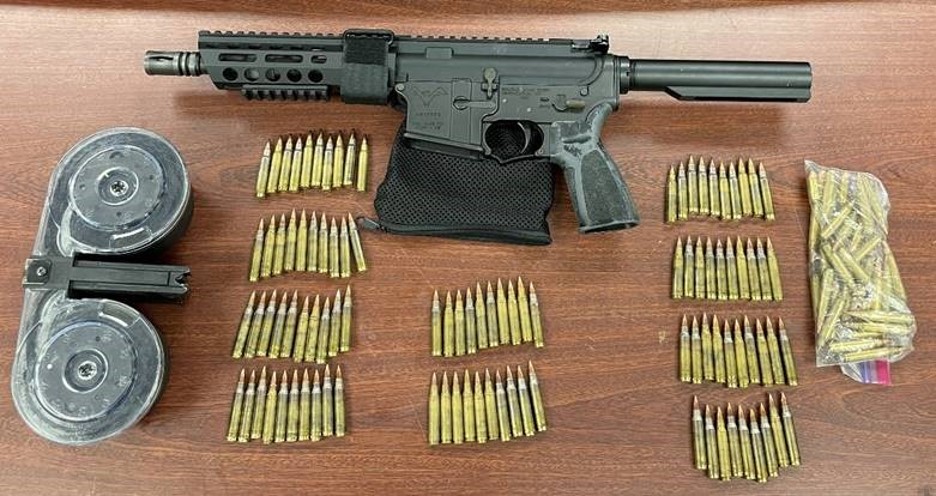
Assault rifles, ghost guns, ammunition, and a high-capacity magazine recovered by the investigation

Drug Enforcement Administration (DEA) New York Task Force Division Special Agent in Charge Christopher Roberts and New York Attorney General Letitia James announced the convictions and sentencings of Anthony Ortiz Vasquez, Hector Vasquez, and Kiara Rodriguez for their roles in a gun and drug trafficking network that sold assault weapons, ghost guns, and other firearms, in addition to cocaine in New York City. Ortiz Vasquez, Vasquez, and Rodriguez were the final three members of this ring to be sentenced. In total, 13 defendants were convicted and sentenced after pleading guilty beginning in February 2025. The Office of the Attorney General’s (OAG) investigation led to the recovery of 74 firearms, including nine assault-style rifles, eight assault-style pistols, and four ghost guns, in addition to 500 grams of cocaine with a street value of $15,700 and over 2,100 rounds of ammunition.

“The sentencing and conviction of these 13 individuals, along with the seizure of 74 firearms and cocaine, reflect the strength of the partnerships the DEA shares with our federal, state, and local law enforcement counterparts in targeting those who pose a threat to our communities,” said DEA New York Task Force Division Special Agent in Charge Christopher Roberts. “The removal of 17 assault style weapons, ghost guns, thousands of ammunitions, and illicit drugs underscores the grave risk these individuals posed not only to the neighborhoods they targeted, but also the brave law enforcement officers who confront them. From every borough to every block, the DEA remains steadfast in its commitment to protecting our communities from the devastating impact of illicit drugs and gun violence.”

“The success of this case is an important reminder that it will take all of us working together to end senseless gun violence in our communities,” said Attorney General James. “I thank my partners in law enforcement for their invaluable assistance in holding these traffickers accountable and removing dozens of dangerous and illegal guns and narcotics from our streets. My office will continue to do everything in its power to crack down on criminal operations that profit from violence and endanger our city.”

These sentences mark the conclusion of a 20-month prosecution, following a 10-month joint investigation led by the OAG’s Organized Crime Task Force (OCTF) and a task force (formerly Strike Force Group Z-13) comprised of the Drug Enforcement Administration (DEA), New York City Police Department (NYPD), New York State Police (NYSP), and Homeland Security Investigations (HSI). The joint investigation included physical and covert video surveillance, court-authorized wiretapping of cellular telephones, the analysis of electronic evidence, including cellphone communications, and other traditional investigative operations.

The investigation began in August 2023 with a focus on Ortiz Vasquez, who sold illegal firearms, illegal rapid-fire modification devices that transform semiautomatic weapons into automatic weapons, high-capacity magazines, and ammunition. Wiretap evidence revealed a coordinated network of individuals around Ortiz Vasquez working together to buy, store, transport, and sell these firearms and accessories. 

The investigation revealed that Ortiz Vasquez bought firearms from Nelphy Reyes-Peralta, Nestor Vasquez Vargas and his cousin Derek Vargas, Harry Laureano, and Jeffry Deschamps. Vasquez Vargas, who resides in Kissimmee, Florida, would mail illegal firearms – some of which he custom painted – to Ortiz Vasquez in Paterson, New Jersey. Ortiz Vasquez bought firearms from the other defendants at various locations in Paterson, often using codewords like “toys,” “sneakers,” or “panties” to refer to the guns when arranging purchases. Ortiz Vasquez and his sources also referred to ammunition as “food” and the illegal rapid-fire modification devices as “switches” when they communicated about sales. In addition to Ortiz Vasquez’s payments, Tiffany Diaz Fermin and brothers Carlos Torres and Juan Torres sent money transfers through Zelle and CashApp to pay Ortiz Vasquez’s sources.   

After buying the firearms, Iris Molina, Diaz Fermin, and Rodriguez stored firearms for Ortiz Vasquez at Molina, Diaz Fermin, and Ortiz Vasquez’s homes in Paterson. Ortiz Vasquez also enlisted his mother, Yadira Vasquez, to help move, hide, store, and pay for the firearms. 

The Torres brothers regularly assisted Ortiz Vasquez in driving the firearms, rapid fire modification devices, high-capacity magazines, and ammunition from Paterson, New Jersey to Washington Heights in New York City, where they were sold. The defendants consistently made their sales on the same street corner in Washington Heights. In addition, Deschamps, Laureano, Yadira Vasquez, and Rodriguez all transported firearms from New Jersey to Manhattan and were each present for at least one sale made by Ortiz Vasquez. The defendants used different methods to disguise the weapons and ammunition as they transported them, often wrapping guns in blankets and sheets or hiding them in reusable grocery bags. At least once, the defendants used a guitar case to hide an assault rifle while driving it to New York City.  

Ortiz Vasquez also sold 500 grams of cocaine in Washington Heights, which was consistently sourced from his brother, Hector Vasquez.

ssault rifles, ghost guns, ammunition, and a high-capacity magazine recovered by the investigation

Assault rifles, ghost guns, ammunition, and a high-capacity magazine recovered by the investigation.

An assault-style pistol, other firearms, and ammunition recovered by the investigation

An assault-style pistol, other firearms, and ammunition recovered by the investigation.

The following individuals have now been convicted and sentenced:

  • Anthony Ortiz Vasquez, 26, of Paterson, NJ, was convicted of Criminal Sale of a Firearm in the First Degree, Criminal Sale of a Controlled Substance in the First Degree, Conspiracy in the Second Degree, and Conspiracy in the Fourth Degree and sentenced to concurrent sentences of 10 years in prison, followed by five years of post-release supervision on each of the Criminal Sale of Controlled Substance and Criminal Sale of a Firearm counts, and one to three years in prison on each of the Conspiracy counts.
     
  • Nelphy Reyes-Peralta, 48, of Wayne, NJ, was convicted of Criminal Sale of a Firearm in the First Degree and Conspiracy in the Fourth Degree and sentenced to concurrent sentences of five years in prison, followed by five years of post-release supervision on the Criminal Sale of a Firearm count, and one and one-third to four years in prison on each of the Conspiracy counts.
     
  • Nestor Vasquez Vargas, 21, of Kissimmee, FL, was convicted of Conspiracy in the Fourth Degree and sentenced to one to three years in prison.
     
  • Hector Vasquez, 38, of Passaic, NJ, was convicted of Criminal Sale of a Firearm in the Second Degree, Criminal Possession of a Controlled Substance in the Second Degree, and Conspiracy in the Fourth Degree and sentenced to concurrent sentences of three and a half years in prison, followed by five years of post-release supervision on the Criminal Sale of a Firearm count, three years in prison, followed by five years of post-release supervision on the Criminal Possession of a Controlled Substance Count, and one to three years in prison on the Conspiracy count.
     
  • Derek Vargas, 22, of Paterson, NJ, was convicted of Conspiracy in the Fourth Degree and sentenced to one and one-third to four years in prison.
     
  • Jeffry Deschamps, 33, of Paterson, NJ, was convicted of Conspiracy in the Fourth Degree and sentenced to one to three years in prison.
     
  • Carlos Torres, 23, of Paterson, NJ, was convicted of Criminal Sale of a Firearm in the First Degree and Conspiracy in the Fourth Degree and sentenced to concurrent sentences of eight years in prison, followed by five years of post-release supervision on the Criminal Sale of a Firearm count, and one and one-third to four years in prison on each of the Conspiracy counts.
     
  • Juan Torres, 22, of Paterson, NJ, was convicted of Criminal Sale of a Firearm in the First Degree and Conspiracy in the Fourth Degree and sentenced to concurrent sentences of five and a half years in prison, followed by five years of post-release supervision on the Criminal Sale of a Firearm count, and one and one-third to four years in prison on each of the Conspiracy counts.
     
  • Harry Laureano, 33, of Paterson, NJ, was convicted of Conspiracy in the Fourth Degree and sentenced to 364 days in jail.
     
  • Iris Molina, 41, of Paterson, NJ, was convicted of Conspiracy in the Fifth Degree and sentenced to three years of probation.
     
  • Tiffany Diaz Fermin, 29, of Paterson, NJ, was convicted of Conspiracy in the Fourth Degree and sentenced to 364 days in jail.
     
  • Yadira Vasquez, 43, of Hackensack, NJ, was convicted of Criminal Sale of a Firearm in the Third Degree and sentenced to time served.
     
  • Kiara Rodriguez, 24, of Hackensack, NJ, was convicted of Conspiracy in the Fourth Degree and sentenced to six months in jail, followed by the balance of five years of probation.

“By moving assault style weapons, ghost guns, rapid-fire conversion devices, and cocaine from out-of-state and through a single street corner in Washington Heights, these defendants turned our neighborhoods into an open-air market for lethal firepower and narcotics,” said Homeland Security Investigations (HSI) Acting Special Agent in Charge Pete Gizas. “They exposed unsuspecting residents to the risk of sudden gunfire and drug-fueled violence — all for a profit that can no longer protect them from the consequences of their recklessness. This outcome was only possible because of the seamless partnership between HSI New York, the Attorney General’s Office, and our federal, state, and local law enforcement allies, and we will continue to stand shoulder to shoulder to keep our communities safer.”

“The defendants in this case were part of a brazen trafficking ring that funneled guns and drugs into our communities,” said NYPD Commissioner Jessica S. Tisch. “Over the course of this long-term investigation, the NYPD dismantled this criminal network, taking 74 deadly firearms — including assault-style rifles and untraceable ghost guns — along with 500 grams of cocaine and over 2,000 rounds of ammunition off our streets. I thank our NYPD investigators, law enforcement partners, the New York Attorney General’s Office, and all who worked to ensure that these criminals were held accountable.”

The Attorney General would also like to thank the joint task force members of NYPD, DEA, HSI, the Internal Revenue Service (IRS), and NYSP, the Passaic City (New Jersey) Police Department, the New Jersey Office of the Attorney General – Division of Criminal Justice (DCJ) Weapons Trafficking Unit, the Passaic County Prosecutor’s Office, the Manhattan District Attorney’s Office, the New Jersey State Police Weapons Trafficking North Unit, the Bergen County Sheriff’s Office, and the United States Postal Inspection Service for their valuable assistance and participation in this investigation.

The investigation was led by NYPD Detective/Task Force Officer (TFO) Hector Rodriguez and HSI New York personnel of the joint NYPD-DEA Strike Force Group Z-13, under the supervision of NYPD Sergeant Ryan Boylan and Commanding Officer Gene Ryerson, NYPD Lieutenant Michael Pomerantz, NYPD Associate Chief of Operations Levon Holley, and under the overall supervision of NYPD Chief of Detectives Joseph Kenny. HSI New York is overseen by Acting Special Agent in Charge (SAC) Pete Gizas. Dennis Acheson is the DEA Assistant Special Agent in Charge (ASAC). Christopher Roberts is the DEA Special Agent in Charge (SAC) for the New York Region, and Frank A. Tarentino, III is the Assistant Chief of Operations.

For the Office of the Attorney General (OAG), the investigation was led by Organized Crime Task Force (OCTF) Detective Robert Geary, under the supervision of OCTF Supervising Detective Paul Grzegorski, Assistant Chief Ismael Hernandez, and Deputy Chief Andrew Boss, with special assistance from the detective specialists from the OAG Special Operations Unit, led by Deputy Chief Sean Donovan. The Attorney General’s Investigations Bureau is led by Chief Oliver Pu-Folkes.

The case was prosecuted by former OCTF Assistant Deputy Attorneys General Brandi S. Kligman and Christopher Clark, under the supervision of Downstate OCTF Deputy Chief Lauren Abinanti with the assistance of OCTF Legal Support Analyst Alex DiGiacomo and former Legal Support Analyst Madeline Rosen. Nicole Keary is the Deputy Attorney General in Charge of OCTF. Both OCTF and the Investigations Bureau are part of the Division for Criminal Justice, which is led by Chief Deputy Attorney General José Maldonado and overseen by First Deputy Attorney General Jennifer Levy.

Texas Woman Who Filed Fraudulent FEMA Claims Relating to the Los Angeles Fires Sentenced to Prison


Anyone who defrauds American taxpayers will face the consequences

A Texas woman was sentenced to 21 months in federal prison for fraudulently obtaining more than $28,000 in federal disaster relief money. In addition to several false non-disaster claims, she submitted a fraudulent disaster benefits application to FEMA, claiming she lived in Pasadena, California in a rental property that had been damaged by the Eaton Fire.

The Trump Administration is taking aggressive action to root out fraud and protect taxpayer dollars, ensuring disaster assistance reaches only those who truly need it. As part of this commitment, the Federal Emergency Management Agency (FEMA) and the Department of Homeland Security (DHS) are working with the United States Department of Justice (DOJ) and federal and local partners to investigate fraud and hold offenders accountable.

“Anyone who steals from American taxpayers will be held accountable,” said Acting Assistant Secretary Lauren Bis. “We are protecting taxpayer dollars and making sure disaster assistance goes to those who truly need it. Anyone who tries to steal from survivors will be caught and held accountable.”

Assistant United States Attorney Kerry L. Quinn of the Major Frauds Section prosecuted this case.

Taking funds meant for disaster survivors is a serious crime. In Fiscal Year 2025, FEMA investigated over 1,700 fraud cases. The agency refers suspected fraud in its Individual Assistance program to the DHS Office of Inspector General (OIG) and other law enforcement partners for investigation and potential prosecution, including cases involving organized criminal activity.

The Administration is doubling down on efforts to prevent, detect, and punish fraud. President Trump’s Executive Order 14395 established the Task Force to Eliminate Fraud, bringing together federal agencies to coordinate a national strategy to stop fraud, waste, and abuse in federal benefit programs. FEMA is fully engaged in strengthening eligibility verification, enhancing pre-payment controls, and ensuring disaster assistance is delivered quickly and securely to eligible survivors. 

The agency is focused on ensuring disaster assistance reaches eligible survivors and communities quickly while preventing scammers from exploiting FEMA disaster assistance programs. FEMA will continue to review and refine disaster declaration practices to ensure responsible stewardship of federal resources and support for communities in need.

If you suspect fraud, report it to the DHS Office of Inspector General at https://www.oig.dhs.gov/hotline or FEMA’s Fraud Investigations and Inspections Division at StopFEMAFraud@fema.dhs.gov.

Mexican National Sentenced to Prison for Drugging and Smuggling Unaccompanied Alien Children into the United States


A Mexican national was sentenced to five years in prison for smuggling children into the United States from Mexico.  

According to court documents, Manuel Valenzuela, 35, and other members of an alien smuggling organization brought unaccompanied alien children between the ages of five and 13 illegally into the United States from Juarez, Mexico, sometimes using candy laced with THC to sedate them during smuggling events. The drivers and their co-conspirators would then present U.S. documents to inspecting officers falsely claiming the documents belonged to the children, and that they were the parents of the children. Once inside the United States, the children were then transported to El Paso. During one smuggling event, one of the children was taken to a local hospital and diagnosed with THC poisoning.

A photo of THC gummies recovered by agents during secondary inspection at the port of entry.

A photo of THC gummies recovered by agents during secondary inspection at the port of entry.

A photo of Manuel Valenzuela entering the United States shortly before the attempted smuggling of several alien children.

A photo of Manuel Valenzuela entering the United States shortly before the attempted smuggling of several alien children.

“Needing to sedate children with THC under the guise of giving them candy, shows just how heinous crimes like this are,” said Assistant Attorney General A. Tysen Duva of the Justice Department’s Criminal Division. “Smuggling unaccompanied children into the country, pretending to be their parents, and then lying to U.S. immigration officials shows the lengths to which criminals like this will go to smuggle children across our borders. The Criminal Division and our law enforcement partners will put an end to this conduct.  Protecting children and keeping our borders safe go hand-in-hand.”

“We fight every day in the Western District of Texas to ensure that the people and organizations responsible for heinous crimes like this are brought to justice,” said U.S. Attorney Justin R. Simmons for the Western District of Texas. “Criminal organizations like this one would be well advised to think twice before engaging in this type of crime. Our message to them is this: we will find you, we will secure a conviction, and we will ensure you are removed from society for as long as possible.”

“Drug traffickers who exploit children as part of their criminal schemes show total disregard for human life and safety,” said Acting Special Agent in Charge Ryan G. McRae of U.S. Immigration and Customs Enforcement Homeland Security Investigations (HSI) El Paso. “Using THC-infused candy to facilitate the smuggling of children across the border into the United States is reprehensible and cruel and puts vulnerable minors at serious risk. HSI will relentlessly pursue transnational criminal organizations responsible for these heinous tactics and bring them to justice.”

Valenzuela pleaded guilty to one count of conspiracy to transport aliens, three counts of bringing aliens without authorization for financial gain, and one count of aiding and abetting on Nov. 10, 2025. 

HSI El Paso and U.S. Border Patrol led investigative efforts, with substantial assistance from HSI’s Human Smuggling Unit in Washington, D.C. and Customs and Border Protection’s National Targeting Center International Interdiction Task Force. 

Trial Attorney Bethany Allen of the Criminal Division’s Human Rights and Special Prosecutions Section and Assistant U.S. Attorney Adam Hines for the Western District of Texas are prosecuting the case.

The investigation and indictment were supported and prosecuted by Joint Task Force Alpha (JTFA), the Department’s lead effort in combating high-impact human smuggling and trafficking committed by cartels and Transnational Criminal Organizations (TCOs). A highly successful partnership between the Department of Justice and the Department of Homeland Security (DHS), JTFA investigates and prosecutes human smuggling and trafficking and related immigration crimes that impact public safety and border security. JTFA’s mission is to target the leaders and organizers of Cartels and TCOs involved in human smuggling and trafficking throughout the Americas. The Attorney General has elevated and expanded JTFA to target the most prolific and dangerous human smuggling and trafficking groups operating not only in Mexico and the Northern Triangle countries of Guatemala, El Salvador, and Honduras, but also in Canada, the Caribbean and the maritime border, and elsewhere. Led by the Criminal Division’s Human Rights and Special Prosecutions Section and supported by the Money Laundering, Narcotics and Forfeiture Section, the Office of International Affairs, and the Office of Enforcement Operations, among others, JTFA has dedicated Assistant U.S. Attorney-detailees from the Southern District of California; District of Arizona; District of New Mexico; Western and Southern Districts of Texas; Southern District of Florida; Northern District of New York; and District of Vermont. JTFA also partners with other U.S. Attorney’s Offices throughout the country and supports high-priority cases in any district. All JTFA cases rely on substantial law enforcement resources from DHS, including HSI and Customs and Border Protection, Border Patrol and Office of Field Operations as well as FBI and other law enforcement agencies. To date, JTFA’s work has resulted in more than 464 domestic and international arrests of leaders, organizers, and significant facilitators of alien smuggling and/or trafficking; more than 414 U.S. convictions; and more than 360 significant jail sentences imposed, and forfeitures of substantial assets.

This case is part of Operation Take Back America, a nationwide initiative that marshals the full resources of the Department of Justice to repel the invasion of illegal immigration, achieve the total elimination of cartels and transnational criminal organizations (TCOs), and protect our communities from the perpetrators of violent crime. Operation Take Back America streamlines efforts and resources from the Department’s Project Safe Neighborhoods (PSN).

BROOKLYN WOMAN CHARGED WITH USING FALSE INFORMATION TO RECEIVE AFFORDABLE HOUSING


Nadia I. Shihata, Commissioner of the New York City Department of Investigation (“DOI”), announced the arrest of a Brooklyn woman on charges relating to her use of false documents to obtain New York State-funded affordable housing. DOI’s investigation was prompted by another investigation, which led to an arrest last year of another individual on charges of selling forgeries used in affordable housing applications. This arrest is being prosecuted by the office of Brooklyn District Attorney Eric Gonzalez.

ADINA HODGES, 37, of Brooklyn, N.Y., was charged today with Offering a False Instrument for Filing in the First Degree and Perjury in the Second Degree, which are class E felonies. Upon conviction, a class E felony is punishable by up to four years in prison. HODGES was arraigned today and released on her own recognizance. Her next court date is scheduled for October 8, 2026. 

DOI Commissioner Nadia I. Shihata said, “According to the charges, this defendant allegedly used false information to apply for and receive affordable housing. Affordable housing is a scarce resource that is compromised when it is exploited by fraud. I am committed to protecting the integrity of affordable housing and ensuring that this resource is available to those who qualify for it. I thank District Attorney Gonzalez for his partnership in this important work.”  

According to the criminal complaint, HODGES allegedly provided false information relating to her income and employment in documents submitted to an affordable housing management company in Brooklyn, which is an agent for the New York State Division of Housing and Community Renewal. Specifically, she submitted a “Reaffirmation of Income” form on July 2, 2021, attesting, under the penalty of perjury, that a “Tenant Income Certification” form she submitted on June 24, 2021, was true and accurate. The investigation determined that statement was materially false as the various support documents the defendant provided, including bank records, pay stubs and an employment verification letter, were fraudulent. Pursuant to a search warrant, the investigation found that the defendant was in contact via email with Rodney Billings, who was a defendant in an earlier affordable housing investigation. HODGES communicated with Billings regarding the procurement of fraudulent bank records, pay stubs and an employment verification letter and paid Billings to receive those falsified documents.

Commissioner Shihata thanked Brooklyn District Attorney Eric Gonzalez for his and his staff’s partnership on this investigation. Assistant District Attorney Peter Choi in the District Attorney’s Public Integrity Bureau is handling the prosecution. Commissioner Shihata also thanked HDC President Eric Enderlin and his staff for their cooperation in this investigation.

A criminal complaint is an accusation. A defendant is presumed innocent until proven guilty. 

Attorney General James Wins Case Against Notorious Deed Thief Joseph Makhani


After Seven-Week Trial, Jury Finds Makhani Guilty of Stealing Harlem Brownstones Worth $4.7 Million

New York Attorney General Letitia James won her case against Joseph Makhani, 63, of Kings Point, Long Island, for criminally possessing two brownstones located at 107 West 118th Street and 135 West 131st Street in Harlem with a combined value of approximately $4.7 million. Makhani’s actions forced one building’s elderly homeowner to remain in a homeless shelter despite being the true owner of a property valued at approximately $2.9 million. Makhani also unlawfully attempted to evict the tenants of the other stolen property. T he jury found Makhani guilty of two counts of Criminal Possession of Stolen Property in the First Degree and one count of Scheme to Defraud in the First Degree. Makhani was remanded into custody and will return to court for sentencing on July 28, 2026 in front of New York State Supreme Court Judge Michele Rodney. Makhani faces a maximum sentence of eight and one-third to 25 years in prison on the top count.

“Joseph Makhani maliciously targeted an elderly homeowner and shamelessly attempted to evict long-time tenants in a heartless scheme to steal two homes that never belonged to him in the first place,” said Attorney General James. “Today’s conviction should serve as a warning to all deed thieves: my office will hold you accountable to the full extent of the law. I will continue to do everything in my power to combat deed theft and keep New Yorkers in their homes.”

107 West 118th Street
The evidence at trial showed that beginning in 2012, Makhani used fraudulent deeds, other false documents, and shell companies to steal the brownstone located at 107 West 118th Street from an elderly and vulnerable homeowner.

  • In a 2012 filing used to further his scheme, a Makhani-controlled corporation claimed to have paid only $10 for the brownstone.
  • In a mortgage application filed by Makhani, he falsely claimed that he paid $975,000 for the brownstone and in order to obtain a $650,000 construction loan for renovations.
  • Makhani then refinanced and received a $1.2 million long-term mortgage loan on the property.
  • Makhani also submitted a forged application to the New York Department of Housing Preservation and Development (HPD) in order to convert the building into market-rate apartment rentals. 
  • From 2016 to 2023, Makhani rented out each unit for as much as $3,400 per month, allowing him to collect a monthly rent income of more than $12,000.
  • Makhani was able to amass this wealth while the elderly owner of the brownstone never received any money from him.
  • The true owner of the brownstone was forced to live in a homeless shelter for years. The value of the stolen home in 2023 was approximately $2.9 million.

135 West 131st Street
The evidence at trial showed that beginning in 2012, Makhani used fraudulent deeds and other false documents to criminally possess another brownstone located at 135 West 131st Street.

  • Prior to Makhani's takeover, the last true deed recorded on this property was dated in 1975 in the name of an elderly homeowner who died soon after.
  • Around 2012, Makhani approached one of the building’s tenants and told them that he had purchased the brownstone. Makhani secured the tenant’s signature by pretending to offer him a job.
  • Makhani then filed a fraudulent deed, misrepresenting the tenant as the owner of the building to unlawfully transfer the property to a company he controlled.
  • In 2013, Makhani attempted to evict the tenants of the brownstone and filed a lawsuit against the tenants on behalf of his company. During eviction proceedings, Makhani’s ownership of the brownstone and the deed were questioned.
  • Makhani then filed a new fraudulent deed that claimed the heirs of the last recorded owner transferred the property to his company.
  • The stolen home was valued at approximately $1.8 million in 2018. 

The evidence at trial showed that Makhani orchestrated fraudulent civil lawsuits as a part of his scheme to obtain the two stolen properties.  

Attorney General James thanks the New York State Police, New York City Sheriff’s Office, the New York City Department of Finance, New York City Department of Buildings, New York City Department of Housing Preservation and Development, and the New York State Department of State for their assistance in this matter.

New Yorkers who believe they are a victim of deed theft are encouraged to contact OAG by calling 1 (800) 771-7755, emailing deedtheft@ag.ny.gov, or filing a confidential complaint online.

Governor Hochul Announces Work Zone Speed Camera Program Now in Effect on MTA Bridges and Tunnels

Automated Work Zone Safety Enforcement Program Designed to Protect Workers and Motorists by Enforcing Speed Limits in Construction Zones

Signed Into Law in 2021 by Governor Kathy Hochul for State Highways; Expanded as Part of 2026 State Budget to Include MTA Bridges and Tunnels

Governor Kathy Hochul and the Metropolitan Transportation Authority (MTA) announced the activation of speed cameras at active construction zones on MTA vehicular bridges and tunnels. To reduce traffic crashes and road worker fatalities, vehicle owners whose vehicles are recorded driving more than 10 miles per hour above the posted speed in the work zones will be subject to warnings and fines. More information on the program is available on the MTA webpage.

“Our road crews perform essential work and they must be able to perform their duties safely,” Governor Hochul said. “Speeding in work zones is reckless and it is dangerous – we owe it to highway workers to keep them safe on the job. As Governor, I have been proud to advance the largest expansion of work zone enforcement in our state’s history, including this expansion to MTA Bridges and Tunnels.”

The cameras are part of the Automated Work Zone Speed Enforcement Program, which was signed into law in 2021 by Governor Kathy Hochul and initially covered work zones on state highways. It was expanded in 2025 to include MTA Bridges and Tunnels, which operates and maintains nine facilities in the five boroughs:

  • Bronx-Whitestone Bridge
  • Cross Bay Veterans Memorial Bridge
  • Henry Hudson Bridge
  • Hugh L. Carey Tunnel
  • Marine Parkway-Gil Hodges Memorial Bridge
  • Queens Midtown Tunnel
  • Robert F. Kennedy Bridge
  • Throgs Neck Bridge
  • Verrazzano-Narrows Bridge

MTA Chair and CEO Janno Lieber said, “We owe it to our bridge and tunnel construction crews to do whatever is necessary to get them home safely. Work zone speed cameras are a common-sense solution to make sure they do.”

MTA Bridges and Tunnels President Catherine Sheridan said, “Automated Work Zone Safety Enforcement has been proven to save lives, reduce traffic accidents and make roads safer for both drivers and highway workers. I thank Governor Hochul for expanding this initiative to include MTA Bridges and Tunnels and for her unwavering commitment to protecting crews who work tirelessly to maintain our crossings.”

In the first phase, warning notices will be issued. In the second phase, which will start later this year, fines will be issued. Violations start at $50 for the first offense and $75 for the second offense, if within 18 months of the first violation. Drivers with three or more violations will be fined $100 for each subsequent offense, if within 18 months of the first violation. These fines are subject to additional late fees. All violations will be validated by a certified technician before they are issued. Because these are considered non-moving infractions, they will not appear on driving records nor be reported to insurance providers. Fines can be paid online, via mobile app, by mail, or in person at the NYC Department of Finance Business Centers.

An unmarked vehicle equipped with radar and camera equipment will be stationed in active work zones and operate during work hours. There will be signs alerting drivers to the presence of cameras posted ahead of these active construction sites.

Almost 900 fatalities and 40,000 injuries occurred in U.S. work zones in 2023. The program has proven successful on New York State Department of Transportation roads and the New York State Thruway, with a majority of road workers reporting they feel safer working in zones where the program is enforced. 

New York State Parks Announces Completion of Watkins Glen State Park’s Sentry Bridge


New York State Office of Parks, Recreation and Historic Preservation

Fourth of July Visitors will be Among the First to Cross the New Span 

Restores Visitor Capacity and Access to the Popular Gorge Trail 

The Office of Parks, Recreation and Historic Preservation announced the completion and opening of the new Sentry Bridge at Watkins Glen State Park, restoring full access to the renowned Gorge and Southern Rim Trails. Opening just in time for the Fourth of July weekend, the bridge reconnects visitors to the park’s iconic waterfalls, overlooks and trail network while providing a durable, long-term investment in one of New York’s most visited parks. 

New York State Office of Parks, Recreation and Historic Preservation Commissioner Kathy Moser said, “We are thrilled to welcome visitors back to the full Watkins Glen State Park experience with the opening of the new Sentry Bridge ahead of Independence Day weekend. This project restores access to one of the most breathtaking gorge trails in the country while ensuring this critical infrastructure will serve park visitors for generations to come. This milestone would not have been possible without the dedication and expertise of our staff and design and construction teams who worked tirelessly to complete the project ahead of one the busiest weekends of the year.” 

A significant upgrade, the new Sentry Bridge, designed by a team led by the New York-based studios of schlaich bergermann partner (sbp) and Snøhetta, is less vulnerable to erosion than the previous bridge, provides improved sightlines for visitors, and features a modern deck surface designed to reduce congestion and improve pedestrian flow. With construction now complete, visitors can once again experience all 19 waterfalls and the park’s treasured features, including the spray of Cavern Cascade and the historic 120-step Couch’s Staircase which connects to trails leading to the South Pavilion and swimming pool. 

Utilizing $7.5 million in New York State Parks capital funding, the new Sentry Bridge is constructed of lightweight and durable stainless steel designed to with withstand the challenging gorge environment for more than a century. Weighing approximately 100 tons less than the previous structure, the new bridge removes significant pressure from the surrounding rock formations. Additionally, the new span features a unique half-arch design, allowing the primary foundation point to be anchored on the much stronger northern wall of the Watkins Glen Gorge. This design calls back to the historic 1908 stone arch and utilizes recovered stone from the original structure for portions of the kneewalls on the approach to the new bridge. 

Watkins Glen Chamber of Commerce President Nigar Hale said, “It is a thrill to celebrate the opening of the Sentry Bridge during the week of America 250 in Watkins Glen. The Sentry Bridge connects visitors to the world-renowned Gorge Trail, the signature experience that has made Watkins Glen State Park one of New York's most beloved destinations. We applaud the dedication and vision of the New York State Office of Parks, Recreation and Historic Preservation in completing this important project. It strengthens the visitor experience, enhances public safety, and preserves access to the breathtaking beauty of Watkins Glen State Park for generations to come.” 

Finger Lakes Regional Commission Chair Sharon Miller said, “Watkins Glen State Park is a place where cherished memories are made not only by those who have visited for generations, but by families and friends creating new traditions every day. The completion of this remarkable new bridge ensures that future generations will continue to experience the beauty, adventure, and accessibility of this extraordinary park. Visitors travel from across New York, the United States, and around the world to experience what truly feels like America’s backyard here in the Finger Lakes. This investment preserves both the park’s rich legacy and its promise to inspire unforgettable memories for decades to come.” 

The restored trail access supports Governor Hochul’s ‘Get Offline, Get Outside’ initiative which encourages New Yorkers to take explore state parks, trails, campgrounds, pools and historic sites while promoting a healthy lifestyle for individuals and families. 

Opening just days before July 4th, visitors to Watkins Glen State Park will be among the first to experience the new Sentry Bridge as New York commemorates the 250th Anniversary of the American Revolution. New York is leading the nation’s semiquincentennial commemoration through a series of events, educational programs, and historic sites experiences. Information on commemorative events statewide can be found on the I Love New York “Path Through History” website, found here. The New York State Park system includes many parks and historic sites associated with the Revolution. More information can be found here. 

Governor Hochul’s FY27 Executive Budget includes significant investments in New York’s park system and outdoor recreation infrastructure. The enacted budget provides $340 million in capital funding for Office of Parks, Recreation and Historic Preservation (OPRHP), including $200 million through NY Works to improve and expand parks and recreation facilities statewide. The budget also includes a record $450 million Environmental Protection Fund, which supports conservation, stewardship, and environmental enhancement throughout New York. These investments will help preserve public lands, improve visitor experiences and expand recreational opportunities.  

Watkins Glen State Park is the most visited park in the Finger Lakes Region, welcoming approximately 1.3 million annual visitors. Over the course of two miles, Glen Creek descends nearly 400 feet through a dramatic gorge featuring 19 waterfalls, stone staircases, bridges and scenic overlooks. The park also offers campgrounds and cabins, playgrounds, picnic facilities and a guarded swimming pool.  

About New York State Office of Parks, Recreation and Historic Preservation 

The New York State Office of Parks, Recreation and Historic Preservation oversees more than 250 parks, historic sites, recreational trails, golf courses, boat launches and more, and welcomes over 86 million visitors annually. For more information on any of these recreation areas, visit parks.ny.gov, download the free NY State Parks Explorer app or call 518.474.0456. Connect with us on Facebook, Instagram, X, LinkedIn, the OPRHP Blog or via the OPRHP Newsroom.

Mamdani Administration Announces Financial Closing for Sol on Park, Creating 229 Affordable Senior Homes on NYCHA’s Morris Houses Campus


NYCHA, HPD and HDC collaborate on $214 million project, the City’s largest use of the “Transfer of Assistance” program to date  


Eighty homes reserved for NYCHA residents and 68 for formerly homeless older New Yorkers  


Sol on Park


Rendering of Sol on Park. Credit: Magnusson Architecture and Planning, P.C.  


Mayor Zohran Kwame Mamdani announced the financial closing for Sol on Park, a new affordable housing development that will create 229 affordable homes for older New Yorkers on the New York City Housing Authority’s (NYCHA) Morris Houses campus in the Bronx.   


Developed through a partnership among NYCHA, the Department of Housing Preservation and Development (HPD) and the Housing Development Corporation (HDC), the $214 million project demonstrates how public land, public investment and innovative financing can work together to deliver desperately needed affordable housing.   


The project is the City’s largest use to date of the Transfer of Assistance program, an innovative financing tool that the Mamdani administration plans to expand through its Block by Block housing plan.  


Sol on Park will include 80 apartments reserved for current NYCHA residents living at Morris I and II, 68 supportive homes for formerly homeless seniors and 80 homes available through the Housing Connect lottery for low- and middle-income seniors. The project will also feature community facility space, a new pedestrian plaza and will be built to LEED Platinum and Passive House standards. Construction by the NRP Group, Selfhelp Realty Group and Foxy Management will begin following the closing, with residents to move in during early 2029.  


“New Yorkers need housing relief, and we’re using every tool at our disposal to deliver it. Sol on Park project will create more than 200 permanently affordable homes for older New Yorkers while strengthening the Morris Houses community. This project shows what is possible when City agencies work together to put public land and public investment to work for the people of this city. We are building affordable homes, creating opportunities for NYCHA residents and proving that government can act with the urgency this housing crisis demands,” said Mayor Mamdani 


“Sol on Park is a win for all New Yorkers, providing brand-new affordable senior housing for both NYCHA residents and new neighbors. Projects like these show how we can use innovative financing models and public land to build the housing that New Yorkers need. This is a success story for the Transfer of Assistance tool and proof of concept for similar projects across the five boroughs,” said Leila Bozorg, Deputy Mayor for Housing and Planning. “Congratulations to the NYCHA, HPD, HDC, and development teams, and the current and future Morris Houses and Sol on Park residents on this milestone!”  


“We are thrilled to reach this important milestone and close on the financing for Sol on Park,” said NYCHA Chief Executive Officer Lisa Bova-Hiatt. “With this achievement, we are one step closer to delivering a truly remarkable and dignified living experience to hundreds of low- to moderate-income seniors in the Bronx. Through NYCHA's largest Transfer of Assistance transaction to date, we will provide new homes for 80 existing residents from Morris I and II while helping to create much-needed affordable housing for seniors, including those who had previously experienced homelessness. We are deeply grateful to our partners at City Hall, HPD, and HDC for their collaboration and unwavering commitment to expanding meaningful affordable housing opportunities in New York City.”  


“Sol on Park responds to the growing housing needs of New York City’s aging population while simultaneously strengthening the community of NYCHA’s Morris Houses in the Bronx,” said HDC President Eric Enderlin. “HDC looks forward to working with all of our public and private partners to bring more than 220 deeply affordable senior homes to the Morrisania community.”  


“As we strive to ensure safe, affordable housing for all New Yorkers, we must also make sure that our most vulnerable residents are cared for,” said HPD Commissioner Dina Levy. “The Sol on Park project will not only create more than 200 homes for low- to middle-income seniors, it will also provide social services to its residents, as well a health and wellness center and career training opportunities for the local community. Sol on Park represents our commitment to building housing that contributes positively to local neighborhoods, while providing seniors with stable, dignified homes.”  


NYCHA began engaging Morris Houses residents on the project in 2019, conducting years of community outreach that helped shape the development’s design. That engagement led to the introduction of the Transfer of Assistance model, allowing current Morris Houses residents the opportunity to move into Sol on Park while creating a brand-new, approximately 1,400 square-foot, fully accessible home for the Morris Houses Resident Association.  


When complete, Sol on Park will feature a health-focused design and robust on-site services, including partnerships with the Union Community Health Center and Green Bronx Machine’s National Health & Wellness Center. Residents will also have access to bicycle storage, laundry facilities, exercise rooms and computer labs.  


Expanding the use of Transfer of Assistance is one part of the Mamdani administration’s broader commitment to public housing. Through Block by Block, the administration is making the largest capital investment in NYCHA in recent history while restoring NYCHA’s role as a public developer. Those investments include comprehensive building repairs, bringing vacant apartments back online, repairing elevators, remediating mold and expanding opportunities for resident leadership through stronger Resident Associations, “NYCHA in Your Neighborhood” events and deeper tenant participation following Permanent Affordability Commitment Together (PACT) conversions.  


Block by Block, the Mamdani administration’s comprehensive housing strategy, outlines a path to build 200,000 affordable homes and preserve another 200,000 over the next decade. The plan also strengthens tenant protections — including an overhaul of how the City responds to building code complaints — expands pathways to homeownership, supports the workers who build housing and streamlines the production of new affordable homes.   


“Sol on Park marks an exciting new chapter at NYCHA of leveraging every tool in our toolbox to create new housing opportunities for both our existing residents and low-income New Yorkers citywide,” said NYCHA Interim Chief Real Estate Officer Heather Beck. “With this project, in partnership with our sister agencies and development partners, we are building 100 percent permanently affordable senior housing on NYCHA land, with homes for Morris Houses residents through Transfer of Assistance, and a brand-new space for the Morris Houses Resident Association. I want to thank and congratulate the Morris Houses community for participating in this planning process with us over many years where your ideas and input helped to shape this great project in your community.”