Monday, April 27, 2026

Suspect in White House Correspondents’ Dinner Shooting Charged with Attempt to Assassinate the President


Cole Tomas Allen, 31, of Torrance, California, was arraigned today in U.S. District Court on charges stemming from the April 25, 2026, shooting at the White House Correspondents’ Association Dinner, announced the Department of Justice.

Allen is charged by complaint with one count of attempt to assassinate the President of the United States, transportation of a firearm & ammunition in interstate commerce with intent to commit a felony, and discharge of a firearm during a crime of violence. 

Shotgun

"Cole Allen now faces the full weight of federal justice,” said Acting Attorney General Todd Blanche. “This alleged assassin was stopped because of the courage and professionalism of law enforcement officers who responded without hesitation by doing their jobs. Because of them, the President of the United States, administration officials and all attendees at the dinner were safe. Make no mistake: deranged attacks on our elected officials will never go unpunished."

“The evidence is abundantly clear: Cole Tomas Allen traveled to Washington D.C. for the purpose of assassinating President Trump and targeting members of the Trump administration, “said FBI Director Kash Patel. “Thanks to the heroic actions of our brave law enforcement partners who acted quickly and professionally, Allen did not succeed - and now, he will be held fully accountable. This FBI and our interagency partners have worked around the clock over the past two days investigating this case, and today’s charges are the first step in justice being served and providing answers to the American people.”

“Cole Allen traveled across the country with deadly weapons and a plan to assassinate the President of the United States,” said U.S. Attorney Jeanine Pirro for the District of Columbia. “The swift and courageous response of the Secret Service officers prevented unimaginable tragedy. There is no room in this city for political violence.”

"This foiled plot was a brazen attempt to assassinate the president and numerous high-ranking U.S. government officials," said Darren Cox, Assistant Director in Charge of the FBI Washington Field Office. "Violence is never an acceptable means of expressing political dissent. I would like to thank our partners for their assistance in the aftermath of this attack as we work tirelessly to ensure Allen is brought to justice."

According to court documents, on April 6, 2026, Allen made a reservation at the Washington Hilton hotel for three nights, from April 24 to April 26, 2026. Allen traveled by train from his home near Los Angeles to Chicago before boarding a train from Chicago to Washington, D.C. Allen arrived in the District at approximately 1 p.m. on April 24, 2026, and checked into the Washington Hilton later that day.

At approximately 8:40 p.m., Allen approached a security checkpoint on the Terrace Level of the hotel leading to the hotel’s ballroom. Allen ran through the magnetometer holding a long gun. U.S. Secret Service personnel assigned to the checkpoint heard a loud gunshot. A U.S. Secret Service officer, who was wearing a ballistic vest, was shot once in the chest. 

The Secret Service officer drew his service weapon and fired multiple times at Allen, who fell to the ground and suffered minor injuries but was not shot. Officers subsequently arrested Allen, who was in possession of a 12-gauge pump action shotgun and a Rock Island Armory 1911 .38 caliber pistol. 

Pistol

Compilation
Following his arrest, Allen was advised of his Miranda rights and invoked his right to remain silent. Allen was transported to Howard University Hospital for minor injuries and has since been released to law enforcement custody. 

Shortly before 8:40 p.m. on April 25, 2026, Allen sent an email to members of his family and a former employer explaining the actions he was about to take. The email, a copy of which law enforcement has obtained from a recipient, stated: “I wish I could have said anything earlier, but doing so would have made none of this possible. My sincerest apologies for all the trouble I've caused. (scheduled send)-Cole.”  Allen signed his email “Cole ‘coldForce’ ‘Friendly Federal Assassin’ Allen.” 

As part of this investigation, law enforcement reviewed records of firearm transactions from California and federal database sources. These records showed that on Aug.17, 2025, Allen purchased a 12-gauge pump action shotgun from a California firearms dealer. On Oct. 6, 2023, Allen purchased a .38 caliber semi-automatic pistol from another firearms dealer. Based on the serial numbers in the database records, these two firearms are the same two firearms that Allen at the Washington Hilton on April 25, 2026.

This case is being investigated by the FBI Washington Field Office and the U.S. Secret Service.


Two Chinese Nationals Charged With Methamphetamine Trafficking Crimes For Developing A Mass-Scale Methamphetamine Production Facility


Law Enforcement Authorities Seize Tens of Thousands of Pounds of Machinery the Defendants Shipped From China to Europe to Construct an Industrial Methamphetamine Factory While Importing Methamphetamine Precursor Chemicals to the United States

United States Attorney for the Southern District of New York, Jay Clayton, and Special Agent in Charge of the Special Operations Division of the Drug Enforcement Administration (“DEA”), Cindy Marx, announced today the unsealing of an Indictment charging WENFENG CUI, a/k/a “Vincen,” and FAN PANG, a/k/a “Jerry,” with conspiracy to traffic methamphetamine, conspiracy to import methamphetamine precursor chemicals, and methamphetamine importation related to a nearly year-long effort to research, develop, and put into operation a technologically sophisticated factory to mass produce methamphetamine.  The defendants were arrested in New York City on February 2, 2026, after a meeting in which they provided detailed instructions for the chemical synthesis of the drug, as well as the technological operation of industrial machinery the defendants created to produce it.  Law enforcement authorities later seized shipping containers packed with the equipment at a port in Europe.  Both defendants were previously charged by criminal complaint and presented before U.S. Magistrate Judge Gabriel W. Gorenstein, who ordered them detained pending trial.  The case is assigned to U.S. District Judge Lorna G. Schofield. 

“As alleged, the defendants worked with chemists and engineers to develop and deploy a sophisticated technology for the industrial production of methamphetamine capable of producing 400 kilograms of ‘meth’ every day,” said U.S. Attorney Jay Clayton.  “Their goal was terrifying in its ambition.  The potential harm of this scale of methamphetamine on our streets should give all New Yorkers and all Americans pause.  This Office will find and prosecute not only the dealers distributing poison to New Yorkers, but also the people behind those operations.  Working with our international law enforcement partners, we will bring narcotics traffickers to justice—no matter where they are in the world, and no matter whether they commit their crimes in laboratories or on street corners.” 

“This indictment underscores the evolving threat posed by the synthetic drug market, in particular the increase we are seeing in methamphetamine,” said DEA Special Agent in Charge Cindy Marx, Special Operations Division. “The level of technical expertise, industrial-scale machinery, and international reach revealed in this case is a stark reminder that today’s illicit drug trade is driven by innovation and relentless adaptation. The cartels are adapting, and so are we. DEA will continue to leverage its resources to protect our communities from the devastating impact of synthetic drugs.”

According to the allegations contained in the Indictment and other public court filings:[1]

Over the course of approximately eight months, confidential sources acting at the direction of the DEA and posing as narcotics traffickers communicated regularly with CUI and PANG in order to broker chemical agreements.  During one recorded call, CUI said that he could produce customized machinery to produce methamphetamine over the course of several months, and additional machines with subsequently refined designs in as few as 30 days.  CUI said that he could provide training in the assembly, installation, and operation of the equipment once it was produced, and offered ongoing parts and technical support on-site in Central America to a narcotics trafficker who purported to be located in Guatemala.

During a June 5, 2025, meeting, CUI said that he had many repeat customers who purchased hundreds of kilograms of precursor chemical from which methamphetamine could be synthesized from CUI and PANG.

During a June 17, 2025, meeting, CUI said, in sum and substance, that prototype machinery was already working.  PANG said that a completed machine could be ready by July and would produce as much as 800 kilograms of methamphetamine per production cycle.  During the meeting, CUI and PANG also offered to facilitate the sale of a sample of approximately forty kilograms of methylamine hydrochloride, a List I chemical used in the synthesis of methamphetamine.  CUI offered to deliver the chemical from China to New York in exchange for $4,000.  After the meeting, on or about June 18, 2025, CUI sent a confidential source screenshots of the chemical compositions of controlled substances his synthesis techniques could produce, including the CAS Registry number for methamphetamine. In August 2025, the defendant directed the shipment of methamphetamine precursor chemicals to New York.

In the course of developing the technology, CUI produced and disseminated detailed blueprints and schematics, technical specifications, equipment lists, and instruction manuals for both the assembly of the machinery into an industrial laboratory and the operational synthesis of methamphetamine using the machinery.  For example, CUI provided: a spreadsheet identifying dozens of necessary component parts, including stainless steel reactors, condensers, storage tanks, valves, explosion-proof pumps, refrigeration and hydrogenation systems, cylinders, centrifuges, and compressors; a detailed, nearly 5,000-word instruction manual for synthesizing meth using the technology, specifying, among other things, chemical proportions, pressure levels, and temperature controls; a flowchart visualizing the steps of production; and renderings of the laboratory assembly:

description in pr

description in pr

In January 2026, CUI sent a confidential source multiple photos and videos of the machinery as it neared completion, including the below:

description in pr

After completing fabrication in December 2025, CUI and PANG directed the shipment of the full-scale methamphetamine production factory to a port in a European country.  According to freight records, the laboratory equipment—weighing more than 21,120 kilograms and measuring nearly 200 cubic meters—was packed into multiple shipping containers and dispatched from a port in Shanghai.  CUI sent a confidential source photographs of workers loading the equipment into shipping containers.  Standing next to the machine, CUI’s workers boasted that the technology—a “complete set of automated equipment”—represented the “future of the global chemical industry”:

description in pr

In February 2026, law enforcement officials in a European country seized multiple shipping containers containing the machinery, including the components pictured below:

description in pr

description in pr

CUI, 41, and PANG, 26, both citizens of the People’s Republic of China, are charged with one count of conspiracy to distribute methamphetamine, which carries a maximum sentence of life in prison; one count of conspiracy to import methamphetamine precursor chemical with intent to manufacture narcotics, which carries a maximum sentence of 20 years in prison; and one count of importation of methamphetamine precursor chemical, which carries a maximum sentence of 20 years in prison.

The maximum potential sentences in this case are prescribed by Congress and provided here for informational purposes only, as any sentencing of the defendants will be determined by a judge.

Mr. Clayton praised the outstanding investigative work of the DEA’s Special Operations Division Bilateral Investigations Unit.  Mr. Clayton also thanked the Polish Provincial Police of Wroclaw and the Lower Silesian Branch of the National Prosecutors Office, and the German Zentrale Kriminalinspektion (“ZKI”) Osnabrück.

The case is being handled by the Office’s Narcotics Unit.  Assistant U.S. Attorney Ryan T. Nees is in charge of the prosecution.

The charges contained in the Indictment are merely accusations, and the defendants are presumed innocent unless and until proven guilty.

[1] As the introductory phrase signifies, the entirety of the text of the Indictment and the description of the Indictment set forth below constitute only allegations, and every fact described should be treated as an allegation.

Governor Hochul Announces Nearly $45 Million to Create and Improve More Than 420 Rental Homes

exterior of housing complex

Includes $24 Million in Funding for Vacant Rental Program to Transform Uninhabitable Apartments into 291 Affordable Homes


Governor Kathy Hochul today announced $44.7 million in funding has been awarded across three New York State Homes and Community Renewal (HCR) programs to create and rehabilitate more than 420 rental homes. The investment includes $24 million for 291 homes as part of HCR’s Vacant Rental Program, which transforms vacant and uninhabitable apartments into affordable homes.

“New York is committed to using all tools in its toolbox when it comes to housing affordability,” Governor Hochul said. “The Vacant Rental Program is a great example of how we can transform underutilized spaces to create homes that hundreds of households in communities across New York will be able to afford.”

The Vacant Rental Program was created as part of the FY25 Enacted Budget to support renovations of buildings with up to five vacant and distressed rental units into viable affordable housing for low- and moderate-income tenants in communities outside of New York City. The funding was awarded to 19 non-profits and local governments to assist property owners with the renovations.

Property owners that provide apartments for households earning up to 80 percent of the Area Median Income will receive up to $50,000 in subsidy per unit, and up to $75,000 per unit for apartments for households earning up to 60 percent of the Area Median Income. Today’s announcement is the final round of funding for the program during Fiscal Year 2026 – an earlier investment of $16.2 million was awarded during the previous fiscal year.

The awarded partners are:

  • $300,000 to Allegany County Community Opportunities and Rural Development for four units across Allegany County.
  • $1.57 million to Affordable Housing Partnership of the Capital Region for 19 units across Albany County.
  • $1 million to Albany County Rural Housing Alliance for 12 units across Albany County.
  • $2.3 million to Broadway Fillmore Neighborhood Housing Services for 28 units in the city of Buffalo.
  • $1.11 million to Broome County Land Bank Corporation for 14 units across Broome County.
  • $2.3 million to Buffalo Urban Renewal Agency for 28 units across the city of Buffalo.
  • $1 million to Chautauqua Home Rehabilitation and Improvement Corporation for 12 units across Chautauqua County.
  • $654,000 to the City of Elmira for eight units across Elmira.
  • $645,000 to the City of Glens Falls for eight units across Warren County.
  • $300,000 to the City of Jamestown for four units across Jamestown.
  • $750,000 to Development Chenango Corporation for nine units across Chenango County.
  • $2.3 million to East Buffalo Development Corporation for 28 units across East Buffalo.
  • $2.3 million to Home HeadQuarters for 28 units across the city of Syracuse.
  • $300,000 to Onondaga County for four units across Onondaga County.
  • $300,000 to Ontario County Economic Development Corporation for four units across Ontario County.
  • $1.7 million to Oswego Housing Development Corporation for 21 units across Oswego County.
  • $1.9 million to PRIDE of Ticonderoga (d.b.a. North Country Rural Development Coalition) for 23 units across Warren, Washington, Essex, Hamilton, and Clinton Counties.
  • $2.3 million to RUPCO for 28 units across Columbia, Dutchess, Greene, Orange, Putnam, Rockland, Ulster, Westchester, and Sullivan Counties.
  • $750,000 to Tioga County Property Development Corporation for nine units across Tioga County.

The investment also includes $10.7 million for 62 homes as part of HCR’s Small Rental Development Initiative, which supports the creation and preservation of multifamily rental developments with five to 20 apartments. Funding is awarded to non-profit organizations that own, develop, and manage small rental development housing. The homes will be affordable to households earning up to 80 percent of the Area Median Income.

The awarded partners are:

  • $1.6 million to Shore/iCare for 19 Greenridge Avenue, a six-unit building in the city of White Plains.
  • $1.3 million to Sisters of Charity for 200 Tremper Avenue, a six-unit building in the city of Kingston.
  • $2.5 million to Nazareth Housing for 406 E 184th Street, a 20-unit building in the Bronx.
  • $833,669 to Blue Mountain for 7 Katonah Avenue, a 4-unit affordable building in Katonah, Town of Bedford.
  • $2.5 million to FAC Inc. for 573 Warren Street, a 16-unit building in Brooklyn.
  • $1.9 million to RUPCO for The Wellington, a 10-unit building in Pine Hill, Town of Shandaken.

More than $10 million was also awarded for three projects as part of HCR’s Small Buildings Participation Loan Program, which assists in financing buildings with between five and 50 units. All of the projects will be affordable to households earning up to 80 percent of the Area Median Income.

The awarded projects are:

  • $2 million for Church House on Seneca, which will transform a former church complex in the city of Buffalo into 15 homes.
  • $4.8 million for Salina 1st, a new 32-unit building in the city of Syracuse.
  • $3.3 million for renovations at 40-42 South Street, a 22-unit building in the city of Auburn.

The Vacant Rental Program, Small Rental Development Initiative, and Small Buildings Participation Loan Program are part of Governor Hochul’s $25 billion five-year Housing Plan, which is on track to create or preserve 100,000 affordable homes statewide. 

Mayor Mamdani, Governor Hochul and FIFA World Cup 2026 ™ NYNJ Host Committee Announce Free Fan Events Across Five Boroughs


City expands World Cup programming with free events in the Bronx, Brooklyn, Queens, Manhattan and Staten Island  

Mayor Zohran Kwame Mamdani and the FIFA World Cup 2026 ™ New York New Jersey Host Committee today announced a free, citywide slate of Official NYNJ Fan Events across all five boroughs, bringing live match viewings, cultural programming, local businesses and interactive experiences directly to New Yorkers at no cost.  


All together, these five FIFA World Cup 2026 ™ Fan Events in New York City will be one of the largest free fan events in the country.   


“When I think back on my first World Cup, some of my most meaningful memories weren’t in the stadium, they were in the fan zones, surrounded by thousands of people brought together by a pure love of the game,” said Mayor Mamdani. That’s what we’re building here: a World Cup that belongs to New Yorkers. By bringing these free fan events to every borough, we’re making sure everyone can be part of that joy.”   


“New Yorkers are ready to welcome fans from across the world for the 2026 World Cup and we’re making sure everyone who calls this city home is part of this historic event,” said Governor Hochul. “These free fan events across all five boroughs bring the excitement of the game to every New Yorker in every community — supporting our small businesses and bringing New Yorkers together.”  


“The World Cup is an opportunity to celebrate all of the diverse cultures and people that call New York City home,” said Deputy Mayor for Economic Justice Julie Su. “In the past, host cities have been criticized for failing to ensure their own workers and residents benefit and get to participate in the opportunities this global game presents. Under Mayor Mamdani, we are charting a new model where New Yorkers across the five boroughs are prioritized with free events, activations, and celebrations like these.”  


“These free fan events show our commitment to making New York City the best host city in North America,” said World Cup Czar Maya Handa. “By expanding free programming across all five boroughs, we are ensuring that local restaurants and small businesses share in the benefits of the World Cup.”  


“These events are about welcoming the world to New York New Jersey and showcasing the very best of our region,” said Alex Lasry, CEO of the NYNJ 2026 World Cup Host Committee. “As the sports and entertainment capital of the world, we’re creating fan experiences that are affordable, accessible, and authentically New York New Jersey—for visitors and, just as importantly, for the residents who call this region home. We’re grateful to Governor Hochul and Mayor Mamdani for their leadership and partnership in bringing these experiences to life.”    


Staten Island University Hospital Community Park, where the announcement took place, received a new LED scoreboard, funded through the Economic Development Corporation and a donation from the FIFA New York New Jersey Host Committee. The collaborative effort between the City and the Host Committee not only readies the Stadium to host FIFA Fan Fest watch parties this summer but will also serve as a permanent critical equipment upgrade for baseball seasons well beyond the end of the 2026 World Cup.   


Free Official NYNJ Fan Events Across the Five Boroughs  


QUEENS | NYNJ World Cup 26 Queens Group Stage HQ | USTA Billie Jean King National Tennis Center, Flushing Meadows | June 11–27 | Daily programming and match viewings  


MANHATTAN | NYNJ World Cup 26 & Telemundo Fan Village at Rockefeller Center | Rockefeller Center | July 6–19 | Daily programming; extended hours during Finals Week  


THE BRONX | NYNJ World Cup 26 Bronx Fan Zone | Bronx Terminal Market | June 13–14 | Matchday programming and local cultural programming  


BROOKLYN | Brooklyn Fan Zone | Brooklyn Bridge Park | June 13 - July 19 | Daily Programming and match viewings  


STATEN ISLAND | NYNJ World Cup 26 Staten Island Fan Zone | Staten Island University Hospital Community Park | June 29–July 2 | Daily programming and evening match viewings  


Together, these events form a 39-day, citywide celebration – spreading economic opportunity and World Cup energy across every corner of the city, not just its busiest destinations.    

Additional details on programming, partners and talent will be announced in the coming weeks. For more information, visit nynjfwc26.com 


Van Cortlandt Park Alliance - Join us for Pinkster on Saturday, May 2


Our Contact Information
Van Cortlandt Park Alliance
80 Van Cortlandt Park South, Ste. E1
Bronx, NY 10463
718-601-1460
http://vancortlandt.org

VAN NEST NEIGHBORHOOD ALLIANCE (VNNA)–WEDNESDAY MAY 6–MONTHLY MEETING—7PM


VAN NEST NEIGHBORHOOD ALLIANCE (VNNA)
WEDNESDAY, MAY 6, 2026
7:00 PM
MONSIGNOR FIORENTINO SENIOR APTS.
1830 AMETHYST STREET
5.6.2026 VNNA flyer.jpg
Van Nest Neighborhood Alliance

Permits Filed for 3142 Park Avenue in Melrose, The Bronx


Permits have been filed for a four-story residential building at 3142 Park Avenue in Melrose, The Bronx. Located between East 159th Street and East 160th Street, the lot is near the 161 Street – Yankee Stadium subway station, served by the 4, B, and D trains. Jacob Zicherman of Happy Living Management is listed as the owner behind the applications.

The proposed 53-foot-tall development will yield 7,437 square feet designated for residential space. The building will have 15 residences, most likely rentals based on the average unit scope of 495 square feet. The concrete-based structure will also have a penthouse and a 25-foot-long rear yard.

Ariel Golshan of AG Engineering is listed as the architect of record.

Demolition permits have not been filed yet. An estimated completion date has not been announced.

McLean Place Tops Out At 1139–1145 Webster Avenue in Morrisania, The Bronx


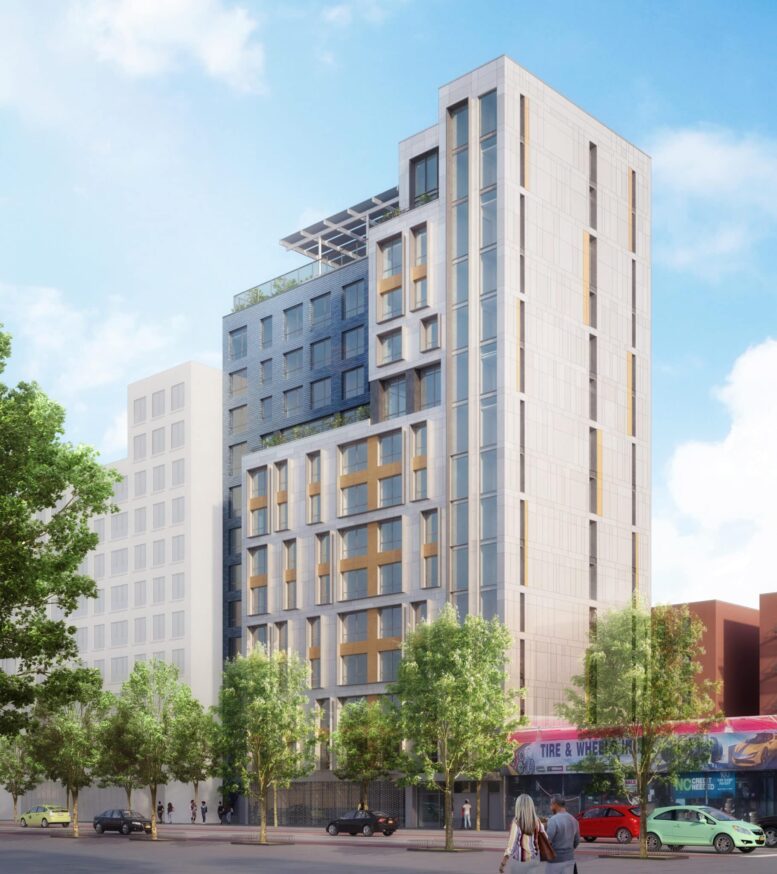
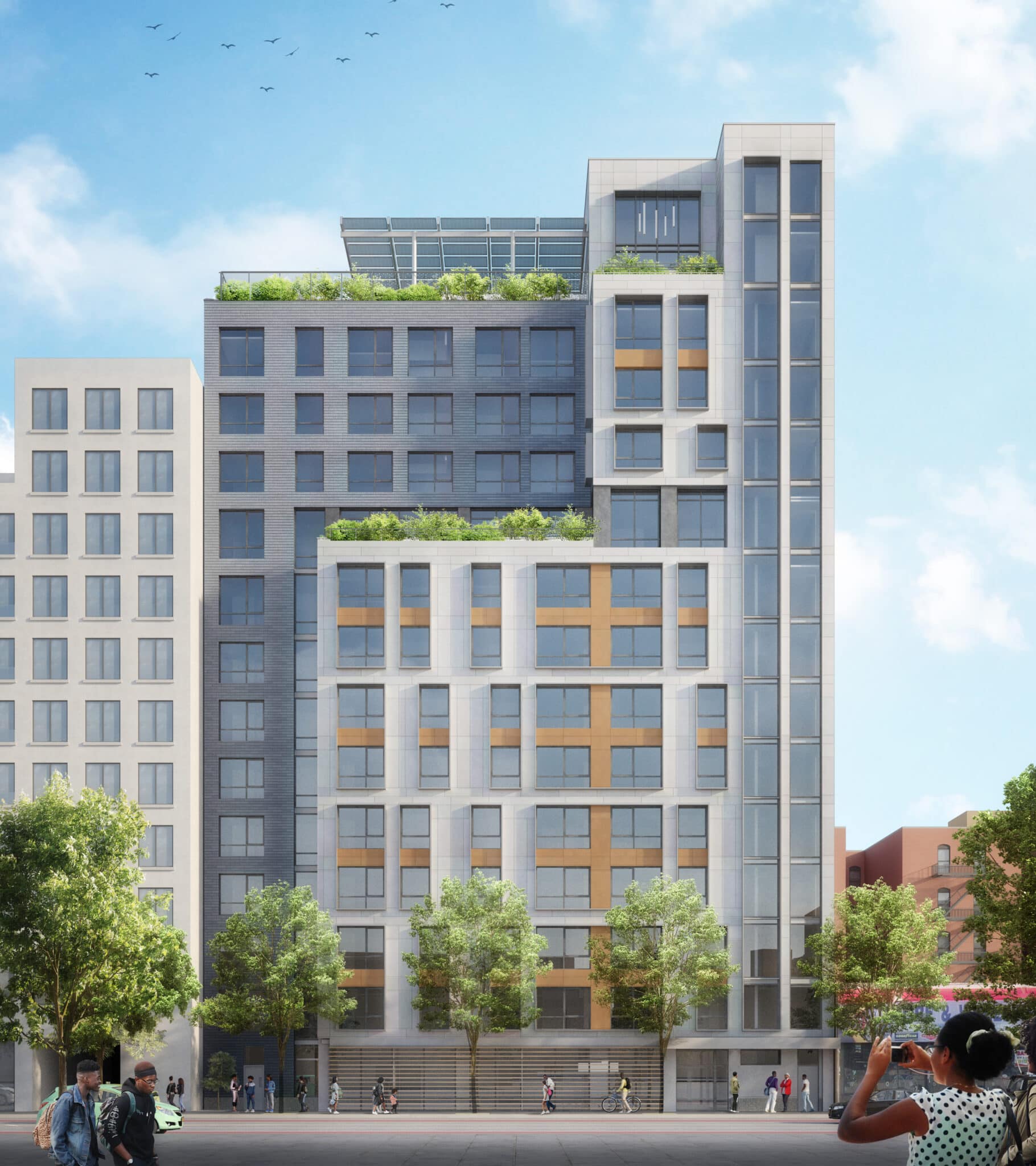
McLean Place. Rendering courtesy of Magnusson Architecture & Planning.

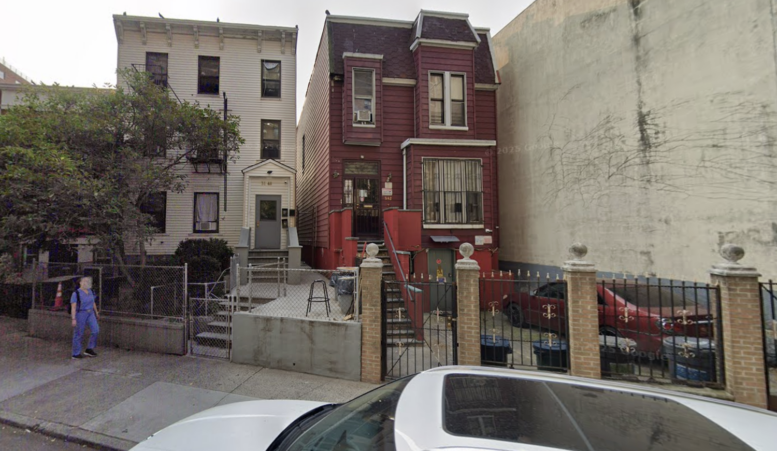
Construction has topped out on McLean Place, a 15-story residential building at 1139–1145 Webster Avenue in Morrisania, The Bronx. Designed by Magnusson Architecture & Planning and developed by New Destiny Housing, the structure will yield 72 supportive housing units in a mix of studio, one-, two-, and three-bedroom layouts. Forty-three of the apartments will be set aside for domestic violence survivors and their children exiting the shelter system. The property is located near the corner of Webster Avenue and East 167th Street.

The project is named after New Destiny’s founding executive director and long-term board member, Charles E. McLean, Jr., who died in July 2023.

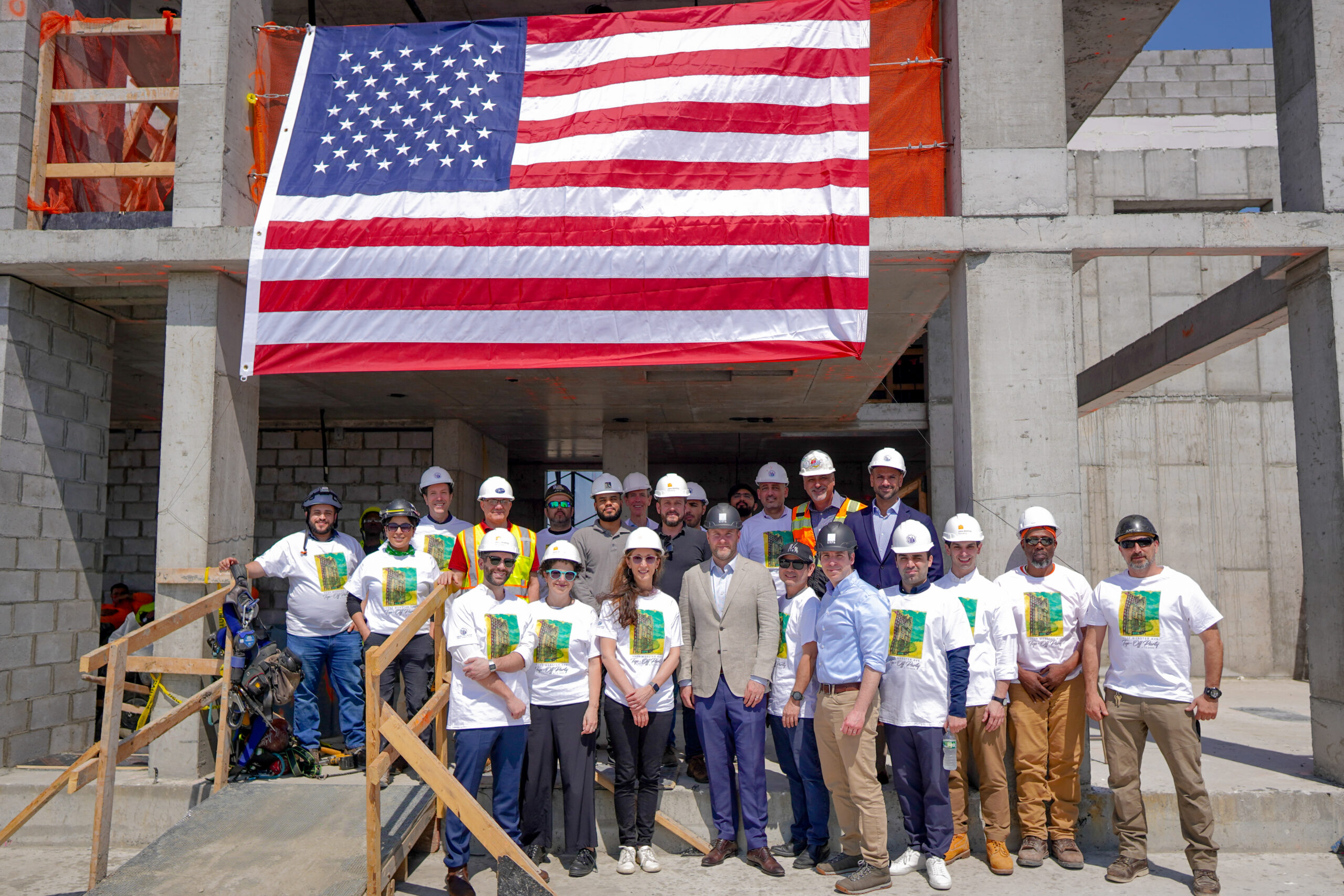
McLean Place topping out ceremony. Photo courtesy of New Destiny Housing.

McLean Place topping out ceremony. Photo courtesy of New Destiny Housing.


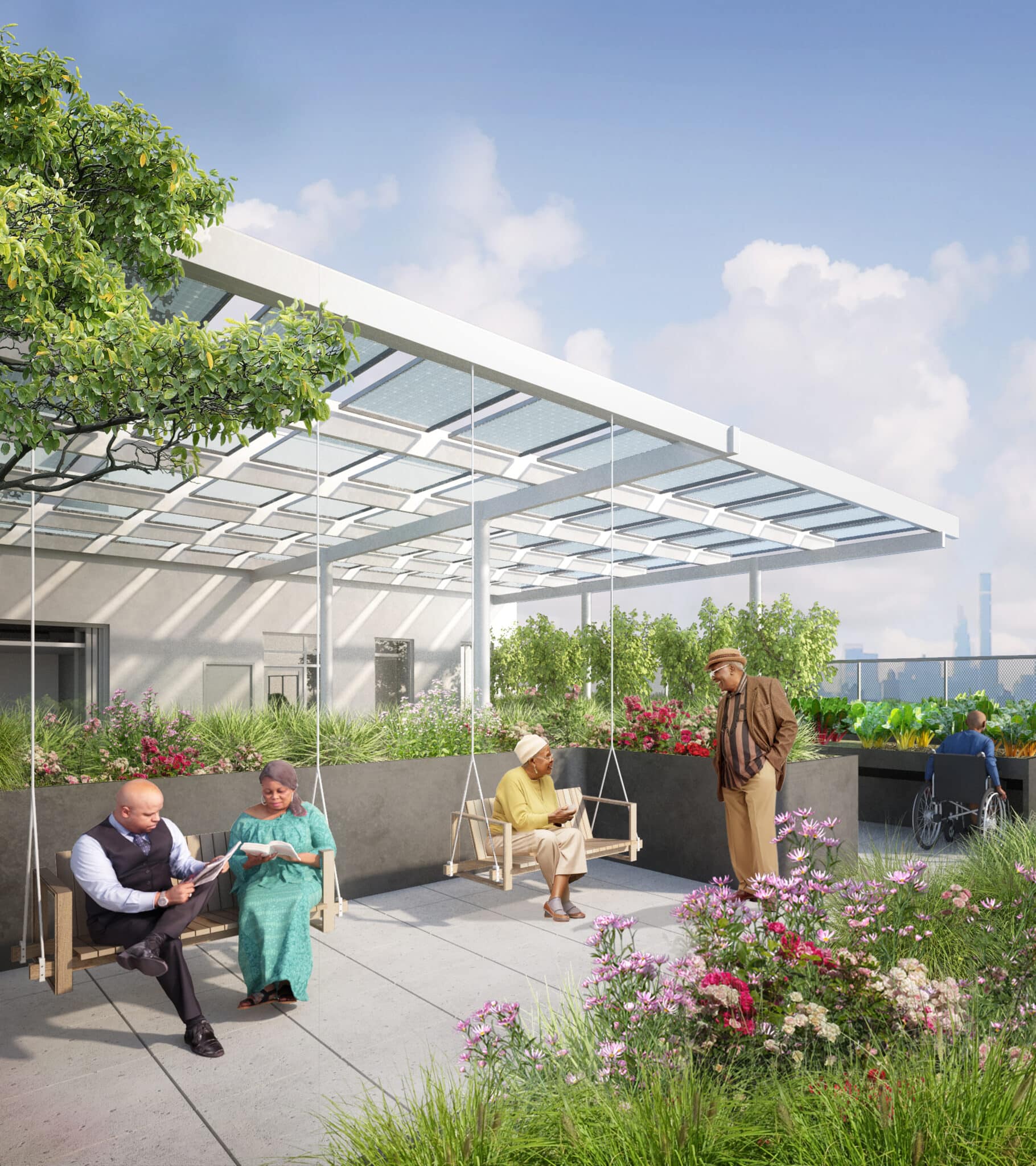
The renderings in the main photo and below depict the main eastern elevation, showing a multifaceted massing incorporating setbacks topped with landscaped terraces. The design will feature multiple fenestrations, including an irregular grid of floor-to-ceiling windows grouped in two-story increments with protruding metal frames and bronze-hued spandrels. Behind the setbacks, the building will be clad in dark gray brick with a more conventional grid of square windows. The structure will culminate in a landscaped roof deck topped with a photovoltaic canopy
McLean Place. Rendering courtesy of Magnusson Architecture & Planning.

The rear western profile, pictured below, will be clad primarily in dark gray brick. The roof terrace will offer panoramic views of the Manhattan skyline to the south.

McLean Place. Rendering courtesy of Magnusson Architecture & Planning.

Residential amenities will include a community room, a common kitchen, a library lounge, an outdoor courtyard, a fitness room, and security. On-site supportive services will include mental health counseling, case management, and recreational activities for adults and children alike.

McLean Place was designed to achieve Passive House certification and will be fully electric

Financing for McLean Place includes a mix of public and private funding, including $25 million from the New York City Department of Housing Preservation and Development’s Supportive Housing Loan Program, $9.7 million from the New York State Office of Temporary and Disability Assistance’s Homeless Housing and Assistance Program, and a $14 million construction loan from Capital One. Hudson Housing Capital syndicated $16 million in Low-Income Housing Tax Credit for the project, and acquisition and pre-development funding was made possible thanks to the Corporation for Supportive Housing and Deutsche Bank’s Supportive Housing Acquisition and Rehabilitation Effort.

The project will receive operating funds from Section 8 project-based vouchers as well as New York’s Empire State Supportive Housing Initiative.

The closest subways from the project are the B and D trains at the 167th Street station to the west along the Grand Concourse. The Melrose station on the Metro-North Railroad’s Harlem Line is also about a 10-minute walk to the south along Park Avenue.

McLean Place’s anticipated completion date is slated for early next year.