Monday, May 18, 2026

AIR QUALITY HEALTH ADVISORY UPDATED TO INCLUDE LOWER HUDSON VALLEY REGION


Logo

Advisory Remains In Effect for New York City Metro through Monday, May 18, 2026

New York State Department of Environmental Conservation (DEC) Commissioner Amanda Lefton and State Department of Health (DOH) Commissioner Dr. James McDonald updated an Air Quality Health Advisory through Monday, May 18, 2026, for ozone for the Lower Hudson Valley region. This is in addition to the previously announced advisory for the New York City Metro region. 

The pollutant of concern is: Ozone  

The advisory will be in effect: 11 a.m. through 11 p.m.

The Quality Health Advisory regions consist of: Lower Hudson Valley, which includes Dutchess, Orange, Putnam, Ulster, and Sullivan counties and New York City Metro, which includes New York City, and Rockland and Westchester counties. 

DEC and DOH issue Air Quality Health Advisories when DEC meteorologists predict levels of pollution, either ozone or fine particulate matter (PM2.5), are expected to exceed an Air Quality Index (AQI) value of 100. The AQI was created as an easy way to correlate levels of different pollutants to one scale, with a higher AQI value indicating a greater health concern.

OZONE  

Increased heat can lead to the formation of ground-level ozone, a major component of photochemical smog. Automobile exhaust and out-of-state emission sources are the primary sources of ground-level ozone and the most serious air pollution problems in the northeast. This surface pollutant should not be confused with the protective layer of ozone in the upper atmosphere.

Ozone is not a direct emission, and is produced indirectly when sunlight chemically reacts with nitrogen oxides (NOx) and volatile organic compounds (VOCs) from automobile exhaust and industrial emissions. High ozone is not as visible as PM2.5 because it is a colorless gas, but will produce hazy skies and reduce visibility in high concentrations.

People, especially those with cardiovascular disease and those who have respiratory disease (such as asthma), young children, the elderly, those who exercise outdoors, and those involved in vigorous outdoor work should consider limiting strenuous outdoor physical activity when ozone levels are the highest (generally afternoon to early evening). When outdoor levels of ozone are elevated, going indoors will usually reduce exposure. Individuals experiencing symptoms such as shortness of breath, chest pain, or coughing should consider consulting their personal physician.

Ozone levels generally decrease at night and can be minimized during daylight hours by curtailment of automobile travel and the use of public transportation where available.

New Yorkers also are urged to take the following energy-saving and pollution-reducing steps: 

  • use mass transit or carpool instead of driving, as feasible, as automobile emissions account for about 60 percent of pollution in our cities; 
  • conserve fuel and reduce exhaust emissions by combining necessary motor vehicle trips; 
  • turn off all lights and electrical appliances in unoccupied areas; 
  • use fans to circulate air. If air conditioning is necessary, set thermostats at 78 degrees; 
  • close the blinds and shades to limit heat build-up and to preserve cooled air; 
  • limit use of household appliances. If necessary, run the appliances at off-peak (after 7 p.m.) hours. These would include dishwashers, dryers, pool pumps and water heaters; 
  • set refrigerators and freezers at more efficient temperatures; 
  • purchase and install energy efficient lighting and appliances with the Energy Star label; and 
  • reduce or eliminate outdoor burning and attempt to minimize indoor sources of PM 2.5 such as smoking.

Additional information on ozone and PM 2.5 is available on DEC's website and on DOH's website (PM 2.5) / DOH's website (ozone). A new DEC fact sheet about the Air Quality Index is available on DEC’s website or by PDF download https://dec.ny.gov/sites/default/files/2024-05/aqiweb.pdf.

To stay up-to-date with announcements from DEC, sign up to receive Air Quality Alerts through DEC Delivers: DEC's Premier Email Service. A toll-free Air Quality Hotline (1-800-535-1345) was also established by DEC to keep New Yorkers informed of the latest air quality situation. 

Senator Gustavo Rivera and Assemblymember Phara Souffrant Forrest Introduce Safe Access to Care Act


Today, Senator Gustavo Rivera and Assemblymember Phara Souffrant Forrest introduced the Safe Access to Care Act (S.10494/A. bill number pending) to extend legal and liability protections for healthcare facilities, both public and private, and their workers in order to ensure every New Yorker, regardless of immigration status, has equitable access to healthcare. The bill sponsors introduced the legislation in response to concerns brought by healthcare professionals about the presence of ICE in our health care facilities in violation of patients’ rights.


This bill will ensure that facilities and healthcare workers have the necessary guidance, training, and legal backing to respond to and lawfully decline unauthorized access attempts by ICE. 


It would also ensure that patients who arrive already in immigration detention receive the same standard of care as any other person accused of a civil violation, which is a principle rooted in both medical ethics and equal protection under law.


“Every day, our communities face increasing attacks from the federal government, and it is our duty to work tirelessly to protect our neighbors. This legislation, championed by health care workers, will make sure that healthcare facility staff have the training and legal protections they need to feel safe in their workplaces. Our doctors and nurses must be able to focus on what matters most—the care of their patients—while administrative staff should never fear doing their jobs or safeguarding patients’ private health information. This bill is about defending the law, empowering health care workers, and respecting the rights of all New Yorkers,” said State Senator Gustavo Rivera.


"Hospitals are places of healing, not staging grounds for immigration enforcement. The Safe Access to Care Act will ensure that healthcare workers have the protections and guidance they need to keep our facilities safe, and that every New Yorker can seek care without fear. As a Brooklyn legislator and a nurse, I will not stand by while our neighbors are forced to choose between their health and their safety,” said Assemblymember Phara Souffrant Forrest 


In January 2025, the Trump administration removed longstanding restrictions against immigration enforcement actions in hospitals, clinics, and doctor's offices. This policy shift will force countless New Yorkers to avoid the necessary care in fear of getting arrested at medical appointments or during emergencies.


By enacting this bill, our State will guarantee that healthcare facilities across our State are safe for immigrant New Yorkers by ensuring that all New Yorkers can seek care without fear, and that healthcare workers are equipped and protected when they serve those patients without fear or intimidation.


Mayor Mamdani Announces the Peninsula in the Bronx as the Second Site for City’s Public Grocery Stores


20,000-square-foot municipal grocery store in Hunts Point expected to open in 2027 

Today, Mayor Zohran Kwame Mamdani and the New York City Economic Development Corporation (NYCEDC) announced The Peninsula in the Bronx has been selected as the second site for the City’s municipal grocery store program. The 20,000-square-foot store in Hunts Point is expected to open in 2027 and serve as an economic anchor for the South Bronx community.

“Working families in the Bronx have been forced to pay the price for a city that keeps getting more expensive while government looks the other way. That has to change. Our administration is putting communities like Hunts Point at the center of our work to address the affordability crisis,” said Mayor Mamdani. “Making sure every New Yorker can buy fresh, affordable groceries in their own neighborhood is a key part of our affordability agenda. We are proud to begin this work in the South Bronx and remain committed to opening a store in every borough before the end of our first term.”

“No family in the Bronx should have to choose between rent and groceries,” said Deputy Mayor for Economic Justice Julie Su. “This summer, we will issue a request for proposals to bring in operators who meet our affordability standards, and we will have a store open in Hunts Point by 2027. This is what public investment looks like when it is done right — government setting the terms, holding to a timeline, and making sure the benefits reach the families who need them most.”

Last month, the administration announced La Marqueta in East Harlem as the first site selected for the municipal grocery store program. The Mamdani administration plans to open one store in each borough by the end of the Mayor’s first term.

Mayor Mamdani and NYCEDC also announced the launch of the N.Y.C. Groceries Sites Portal to identify potential locations for future stores in Brooklyn, Queens, and Staten Island. Property owners with eligible sites are encouraged to submit them through the portal for consideration as the N.Y.C. Groceries initiative expands.

“The selection of The Peninsula is a historic win for Hunts Point, and we are very proud that the Bronx will be the first borough where the first N.Y.C. Grocery store will open by end of 2027 and serve a community that has been neglected in the past,” said NYCEDC Interim President & CEO Jeanny Pak. “And with the launch of the N.Y.C. Groceries Sites Portal, the city is taking bold action to address the affordability crisis, and we encourage all property owners in Brooklyn, Queens and Staten Island that meet the criteria to submit their sites for consideration.”

The Peninsula, an NYCEDC project, is the multiyear redevelopment of the former Spofford Juvenile Detention Facility in Hunts Point. The dynamic, mixed-use campus will include 740 units of 100% affordable housing, more than 50,000 square feet of new public open space, 30,000 square feet of light industrial space, more than 50,000 square feet of community space and 20,000 square feet of commercial space that will house the South Bronx’s municipal grocery store.

“I am grateful to Mayor Mamdani and the New York City Economic Development Corporation for their work to open a public grocery store at the Peninsula in Hunts Point and strengthen food access across the South Bronx,” said Representative Alexandria Ocasio-Cortez. “Access to affordable, fresh food should not be a luxury determined by zip code; it should be a right.” 

Hunts Point is a community where more than half of households have relied on public assistance within the last year, and where a staggering 77% of households in surrounding neighborhoods struggle to afford basic necessities.

First announced in April, the N.Y.C. GroceriesProject is a NYCEDC initiative designed to lower the cost of everyday essentials by utilizing City-owned property, where available, to reduce overhead costs that are currently passed on to consumers. Mayor Mamdani has allocated $70 million in capital funding to develop five grocery store sites across the five boroughs. 

“From the very beginning, the Hunts Point community was clear: The Peninsula should become a vibrant, mixed-use center that provides not just affordable housing but also the amenities residents need and deserve,” said James Patchett, CEO of Gilbane Development. “A neighborhood grocery store was central to our vision from day one and we are excited to officially announce a new supermarket. Once opened, it will have an immediate impact on the community and serve as another powerful reminder of how our campus is making Hunts Point healthier and more affordable for generations to come.”

Mayor Mamdani’s decision to site a municipal grocery store at The Peninsula builds on the City’s broader commitment to transforming the former Spofford Juvenile Detention Facility — once known for dangerous and inhumane conditions — into a community-centered development with affordable housing, early childhood education, wellness services, public open space, and soon, New York City’s first operational public grocery store.

Sites submitted through the N.Y.C. Groceries Portal will be reviewed by NYCEDC to identify and advance potential locations for further consideration. Eligible sites must include at least 10,000 square feet of retail space and be available on a timeline that supports opening of a grocery store by 2029. 

NYCEDC is also preparing a request for proposals for private operators to manage the stores, which is expected to be released this summer.

The N.Y.C. Groceries Sites Portal will remain open until locations in Brooklyn, Queens and Staten Island have been identified. Additional information is available on the N.Y.C. Groceries webpage.  

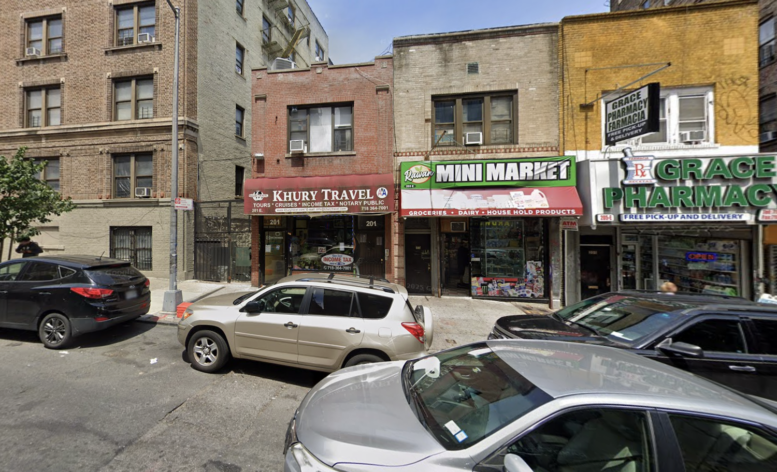
Permits Filed for 201 East 198th Street in Bedford Park, The Bronx


Permits have been filed for a 13-story residential building at 201 East 198th Street in Bedford Park, The Bronx. Located between Valentine Avenue and Grand Concourse, the lot is near the Bedford Park Boulevard subway station, served by the B and D trains. Yanky Indigo of Indigo Developers is listed as the owner behind the applications.

The proposed 123-foot-tall development will yield 60,884 square feet designated for residential space. The building will have 69 residences, most likely rentals based on the average unit scope of 882 square feet. The concrete-based structure will also have a 50-foot-long rear yard.

Nikolai Katz is listed as the architect of record.

Demolition permits have not been filed yet. An estimated completion date has not been announced.

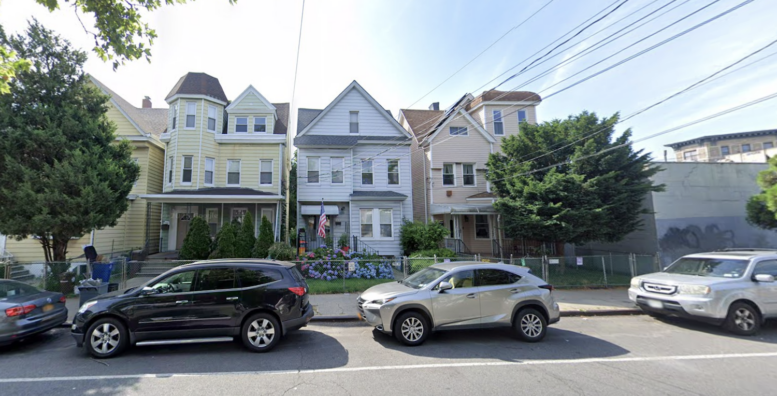
Permits Filed for 1538 Silver Street in Westchester Square, The Bronx


Permits have been filed for a four-story residential building at 1538 Silver Street in Westchester Square, The Bronx. Located between Williamsbridge Road and East Tremont Avenue, the lot is near the Westchester Square–East Tremont Avenue subway station, served by the 6 train. Aleksander Vilajeti of AV Group Corp. is listed as the owner behind the applications.

The proposed 37-foot-tall development will yield 7,408 square feet designated for residential space. The building will have 14 residences, most likely rentals based on the average unit scope of 529 square feet. The masonry-based structure will also have a penthouse, cellar, and a 30-foot-long rear yard.

Mohammad Badaly of Badaly Architects is listed as the architect of record.

Demolition permits were filed this month for the 2.5-story building on the site. An estimated completion date has not been announced.

PPNA June Guests


AIR QUALITY HEALTH ADVISORY EXTENDED FOR NEW YORK CITY METRO REGION


Logo

In Effect through Monday, May 18, 2026 

New York State Department of Environmental Conservation (DEC) Commissioner Amanda Lefton and State Department of Health (DOH) Commissioner Dr. James McDonald extended an Air Quality Health Advisory through Monday, May 18, 2026, for ozone for the New York City Metro region.

The pollutant of concern is: Ozone 

The advisory will be in effect: 11 a.m. through 11 p.m. 

The Quality Health Advisory regions consist of:New York City Metro, which includes New York City and Rockland and Westchester counties.

DEC and DOH issue Air Quality Health Advisories when DEC meteorologists predict levels of pollution, either ozone or fine particulate matter (PM2.5), are expected to exceed an Air Quality Index (AQI) value of 100. The AQI was created as an easy way to correlate levels of different pollutants to one scale, with a higher AQI value indicating a greater health concern.

OZONE 

Summer heat can lead to the formation of ground-level ozone, a major component of photochemical smog. Automobile exhaust and out-of-state emission sources are the primary sources of ground-level ozone and the most serious air pollution problems in the northeast. This surface pollutant should not be confused with the protective layer of ozone in the upper atmosphere. 

Ozone is not a direct emission, and is produced indirectly when sunlight chemically reacts with nitrogen oxides (NOx) and volatile organic compounds (VOCs) from automobile exhaust and industrial emissions. High ozone is not as visible as PM2.5 because it is a colorless gas, but will produce hazy skies and reduce visibility in high concentrations. 

People, especially those with cardiovascular disease and those who have respiratory disease (such as asthma), young children, the elderly, those who exercise outdoors, and those involved in vigorous outdoor work should consider limiting strenuous outdoor physical activity when ozone levels are the highest (generally afternoon to early evening). When outdoor levels of ozone are elevated, going indoors will usually reduce exposure. Individuals experiencing symptoms such as shortness of breath, chest pain, or coughing should consider consulting their personal physician. 

Ozone levels generally decrease at night and can be minimized during daylight hours by curtailment of automobile travel and the use of public transportation where available. 

New Yorkers also are urged to take the following energy-saving and pollution-reducing steps: 

  • use mass transit or carpool instead of driving, if possible, as automobile emissions account for about 60 percent of pollution in our cities; 
  • conserve fuel and reduce exhaust emissions by combining necessary motor vehicle trips; 
  • turn off all lights and electrical appliances in unoccupied areas; 
  • use fans to circulate air. If air conditioning is necessary, set thermostats at 78 degrees; 
  • close the blinds and shades to limit heat build-up and to preserve cooled air; 
  • limit use of household appliances. If necessary, run the appliances at off-peak (after 7 p.m.) hours. These would include dishwashers, dryers, pool pumps and water heaters; 
  • set refrigerators and freezers at more efficient temperatures; 
  • purchase and install energy efficient lighting and appliances with the Energy Star label; and 
  • reduce or eliminate outdoor burning and attempt to minimize indoor sources of PM 2.5 such as smoking.

Additional information on ozone and PM 2.5 is available on DEC's website and on DOH's website (PM 2.5) / DOH's website (ozone). A new DEC fact sheet about the Air Quality Index is available on DEC’s website or by PDF download https://dec.ny.gov/sites/default/files/2024-05/aqiweb.pdf.  

To stay up-to-date with announcements from DEC, sign up to receive Air Quality Alerts through DEC Delivers: DEC's Premier Email Service. A toll-free Air Quality Hotline (1-800-535-1345) was also established by DEC to keep New Yorkers informed of the latest air quality situation. 
Sunday, May 17, 2026

Bronx Week Parade


Sunday May 17th was a beautiful day for the Bronx Week Parade, Food Festival, and Concert. The temperature was in the mid 80's and the day began with the Bronx Community Board 7 Memorial Day Commemoration before the rest of the day's events. Mosholu Parkway was closed on both sides with the Bronx Week Parade going on in the North Side, and the Food Festival and Concert going on in the South side of the parkway.


The Bronx Week Parade went off right after the Memorial Day Commemoration ended. The Police and Fire Departments opened the Bronx Week Parade, and they were followed by hundreds of marchers from community groups and organizations, and performers from the many schools in the Bronx. Bronx Borough President Vanessa Gibson was joined onstage by Councilman Kevin Riley, Bronx District Attorney Darcel Clark, and Assemblywoman Yudelka Tappia. 


The Bronx Week Parade was opened by the Police and Fire Departments


Councilman Kevin Riley and Assemblywoman are on stage with Bronx Borough President Vanessa Gibson.


Bronx Community Board 7 had a good showing of members marching.


Community groups Bronx Community Justice and Save Our Streets march together.


PS/MS 95 students perform in front of the reviewing stand, as did many other schools or groups of children.


MS/HS 368 students perform in front of the reviewing stand.