Tuesday, July 7, 2026

Kansas City Man Pleads Guilty to Firearms and Dog Fighting Charges from Interstate “Mayhem Madness” Event


16 Dogs Rescued by U.S. Marshals Program to Rehabilitate for Adoption

Kansas City, Missouri, resident Vinol Wilson, 52, pleaded guilty today in federal court to illegally possessing a firearm after a felony conviction and to multiple federal dogfighting offenses. Those offenses include conspiring to violate the federal Animal Welfare Act’s animal fighting law, keeping a dog for use in dog fighting, and buying and receiving a dog to use in a dogfighting venture.

“Wilson subjected animals to pain and suffering all for sport and profit,” said Principal Deputy Assistant Attorney General Adam Gustafson of the Justice Department’s Energy and Natural Resources Division. “The Justice Department continues to aggressively prosecute this criminal activity, and we work with our partners to rescue dogs whenever we can.”

“Inflicting cruelty on innocent dogs for entertainment and profit is both deplorable and in violation of federal law,” said U.S. Attorney R. Matthew Price for the Western District of Missouri. “The Western District of Missouri is proud to have worked alongside our local, state, and federal law enforcement partners to enforce the Animal Welfare Act and hold those responsible accountable. Through these efforts, we help protect those that cannot defend themselves.”

According to court documents filed in the case, the defendant ran a dog fighting operation. He invited several others to participate in a multi-card dog fighting event known as “Mayhem Madness 2025” to be held at his residence in Kansas City on May 17, 2025. Parties traveled with fighting dogs from multiple states and used rental cars and short-term, internet-based vacation rental housing in connection with their trip to attend the “Mayhem Madness 2025” dog fighting event.

At the event, four dog fights were set to take place and three occurred. During the overnight period of May 17–18, 2025, after all dog fights were completed, the defendant polled attendees for their views on which dog performed the best and which was the “gamest,” or most willing to continue fighting despite injury, of the evening. The defendant awarded large trophies for “Best in Show” and “Gamest in Show” to two of the dog fight participants. Wilson further purchased and received a puppy from one of the out-of-state participants and intended to possess this dog for fighting purposes.

During a search warrant executed at Wilson’s residence on May 20, 2025, agents recovered sixteen fighting dogs, four of whom were pregnant and soon thereafter gave birth to 31 puppies. Agents also recovered items used in connection with the possession and maintenance of fighting dogs, such as medications, syringes, a “slatmill” dog treadmill, and fighting dog “pedigrees.” The defendant was further found in unlawful possession of a 5.56mm pistol loaded and chambered with 29 rounds of ammunition.

The dogs were rescued and cared for by a program administered by the U.S. Marshals Service. Following a separate, successful civil forfeiture action brought by the U.S. Attorney’s Office for the Western District of Missouri, these dogs did not have to be returned to the defendant, but instead, could be rehabilitated and evaluated for possible adoption.

Under federal law, it is illegal not only to fight dogs in a venture that affects interstate commerce, but also to possess, train, transport, deliver, sell, purchase or receive dogs for fighting purposes.

Each of the three dog fighting counts carries a maximum penalty of five years in prison and a criminal fine of up to $250,000. The firearm charge carries a maximum penalty of fifteen years in prison and a criminal fine of up to $250,000.

The U.S. Department of Agriculture, Office of Inspector General and the Jackson County Drug Task Force investigated the case. Assistant U.S. Attorneys Paul Becker, David Barnes, and James Kirkpatrick for the Western District of Missouri and Senior Trial Attorney Ethan Eddy of ENRD’s Environmental Crimes Section are prosecuting the case. Assistant U.S. Attorney Leigh Farmakidis for the Western District of Missouri handled the civil forfeiture case for the dogs.

Governor Hochul Celebrates Groundbreaking of $39 Million Housing Project in Niagara Falls

The Nest Project Features 73 Affordable and Market Rate Apartments, Including 21 Supportive Units for Survivors of Domestic Violence


Governor Kathy Hochul today announced the start of construction for The Nest, a new mixed-use development located at 333 First Street in Niagara Falls. The $39.5 million project is a six-story new build development that will provide 73 new affordable and market rate apartments for individuals and families, including 21 supportive units for survivors of domestic violence, and commercial space for job readiness and workforce development training in downtown Niagara Falls.

“The Nest is a transformative project that will breathe new life into a vacant parcel and bring workforce and market-rate housing, career development opportunities, and a new vibrancy to downtown Niagara Falls,” Governor Hochul said. “New York is proud to create housing opportunities that are affordable, accessible, sustainable, and supportive for all our residents, particularly the most vulnerable members of our community.”

The new building, developed by Community Services for Every1 in partnership with Edgemere Development, will be nearly 82,000 square feet and feature 73 studio, one-, and two-bedroom apartments and will include approximately 4,445 square feet of ground-floor commercial space. Of the 70 affordable apartments, eight apartments will be adapted for households with mobility impairments and four will be adapted for households with audio/visual impairments. Recognizing great need in the community, Community Services for Every1 will set aside 21 supportive units for formerly homeless survivors of domestic violence ready to move to permanent housing. Three of the units will be market rate. The building will feature street-level commercial space to contribute to pedestrian activity. Community Services for Every1 will use the commercial space to provide job readiness and workforce development services that will benefit people with disabilities and their families.

New York State Homes and Community Renewal (HCR) is supporting the project through its Federal Low Income Tax Credit Program, which is expected to generate $16 million in equity, HCR’s State Low Income Housing Tax Credit program, which is expected to generate $5 million in equity, and $3.8 million in subsidy. Empire State Development is providing a $1 million grant through USA Niagara Development Corporation and a $320,000 capital grant through the WNY Regional Economic Development Council to support design and construction. Other financial assistance includes $547,500 from the Clean Energy Initiative (CEI), a partnership between HCR and New York State Energy Research and Development Authority (NYSERDA), and $4.5 million from the NYS Office of Temporary and Disability Assistance (OTDA) Homeless Housing and Assistance Program.

In addition, operating funding for the supportive units will be provided by the Empire State Supportive Housing Initiative, administered through OTDA. The site is also participating in the New York State Department of Environmental Conservation’s (DEC) successful Brownfield Cleanup Program and, when completed, would be eligible for tax credits administered by the New York State Department of Taxation and Finance. There is also support from a private equity investor.

The Nest’s design takes its inspiration from the Falls, with a parallel goal in complementing the neighborhood’s existing characteristics, including the adjacent First Presbyterian Church. The ground-story portion of the building will use traditional and natural building materials to match the features of the historical church. The design also incorporates strong visual demarcation features with brick masonry materials on the lower level of the building, terra cotta metal shingles in the middle, and metal panels at the top. This look is intended to be reminiscent of the Falls’ geology. The ground floor is designed to bring the scale of the building down to a human scale, encouraging positive interactions with street-level activity by incorporating high levels of transparency and robust tactile materials, including brick masonry and metal panels with storefront access.

Project amenities will include a community room, central air-conditioning, an on-site rental office, common laundry, an elevator, tenant parking, and green space featuring a playground. The project will incorporate sustainable building practices, which include:

  • High performance windows
  • Low flow plumbing fixtures
  • High performance electric heating, ventilation, and air conditioning systems
  • Air sealing and energy recovery ventilation
  • High efficiency lighting
  • High efficiency appliances
  • Low-emitting products
  • Rainwater management
  • Active solar-ready design

The property was acquired by USA Niagara Development Corporation (USAN) through the state’s Strategic Land Acquisition Program, aimed at returning long-dormant properties back to productive use. In preparation for the project, USAN demolished an existing vacant 85,000-square-foot, two-story, pre-engineered building on the site. 

Former Texas Tech Professor Pleads Guilty to Running Fentanyl Trafficking Conspiracy


A former Texas Tech marketing and supply chain professor pled guilty today for his leadership role in a fentanyl distribution conspiracy, announced United States Attorney for the Northern District of Texas Ryan Raybould.

Daniel Taylor, 51, of Lubbock, Texas, was charged in February 2026 with conspiracy to possess with intent to distribute fentanyl. On July 1, 2026, he pled guilty to conspiring to distribute more than 40 grams of fentanyl. During the entire scope of the conspiracy, Taylor was employed as an assistant professor of marketing and supply chain management at the Texas Tech University Rawls College of Business. He admitted in court documents that his educational background and expertise in supply chain management helped to further or advance his fentanyl distribution network. 

“This defendant exploited the knowledge and credibility he gained as a university professor to build a fentanyl trafficking operation that put lives at risk throughout the Lubbock community,” said Special Agent in Charge Joseph B. Tucker of the DEA Dallas Field Division. “DEA and our law enforcement partners remain committed to identifying and dismantling the criminal networks responsible for distributing fentanyl, and we will continue pursuing those who profit from this deadly poison.”

“Taylor utilized his education and background in supply chain management to build and operate his own supply chain of dangerous narcotics in the Lubbock area, primarily dealing out of the Executive Inn,” said U.S. Attorney Ryan Raybould. “With his pink flamingo and ghost branding of fentanyl, he also drugged prostitutes to fuel his own sexual desires.  I expect—and we will certainly be asking for—a severe prison sentence to hold him accountable for the harm he caused our community.”

According to court documents, agents with the Drug Enforcement Administration (DEA) and Caprock High Intensity Drug Trafficking Area (HIDTA) Task Force began investigating Taylor and others in June 2025, after receiving information that a Texas Tech professor named “Dan” was distributing fentanyl powder in Lubbock.

In January 2026, agents were conducting surveillance on Taylor when they observed him leave his residence with a female. They followed Taylor and the female as Taylor drove (them) to the Executive Inn in Lubbock.  At the Executive Inn, Taylor and the female picked up a second female.  Agents learned that, while this second female was in custody in September 2025, Taylor created an account through the jail electronic messaging system and used it to put money on her jail account and to arrange to pick her up upon her release from jail.

Shortly thereafter, agents obtained a court order to place a GPS tracking device on Taylor’s vehicle.

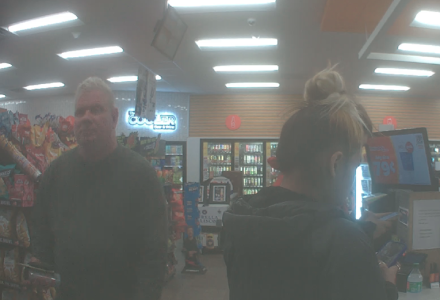
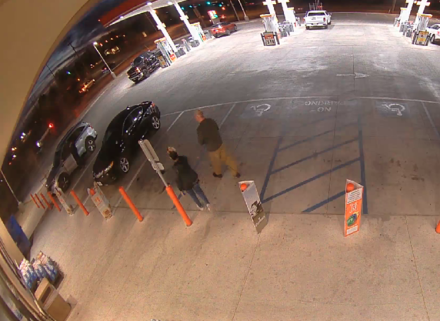
On January 12, 2026, agents and watched Taylor leave his residence and travel to a convenience store off Frankford Avenue. Inside the store, Taylor made contact with the female he previously picked up at the Executive Inn, who followed Taylor outside and entered Taylor’s vehicle for less than a minute before exiting and returning to her vehicle, some of which is depicted below:

Taylor (left) and the female (right) inside convenience store

Taylor (left) and the female (right) inside convenience store

Taylor and the female walking towards Taylor’s Acura

Taylor and the female walking towards Taylor’s Acura

Agents believed they had witnessed a narcotics transaction and conducted a traffic stop on the female’s vehicle. As a Lubbock County Sheriff’s Office deputy approached the vehicle, the occupants began telling the deputy that there was a male in the back seat experiencing a drug overdose. Paramedics arrived and transported the individual to the University Medical Center (UMC) hospital in Lubbock. The individual required endotracheal intubation and was intubated for approximately three days. The individual’s treating physician stated that he was experiencing imminent, life-threatening deterioration as a result of an opioid overdose.

Subsequent investigation revealed that Taylor had just distributed two different types of fentanyl powder to the female: white fentanyl powder, marketed as “ghost,” and a pink powder that the DEA laboratory determined to be a combination of fentanyl and bromazoloam, a benzodiazepine that was emergency scheduled by the DEA as a Schedule I controlled substance in March 2026. Taylor marketed the pink powder as “pink flamingo.” The individuals in the vehicle began consuming the drugs immediately after obtaining it from Taylor, causing the individual’s overdose.

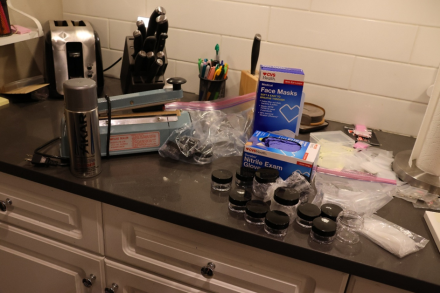
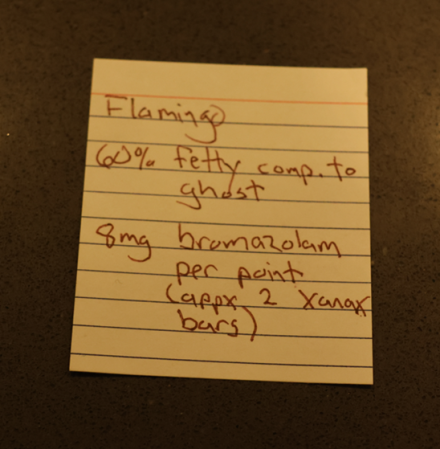
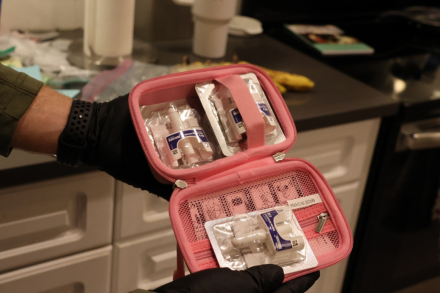
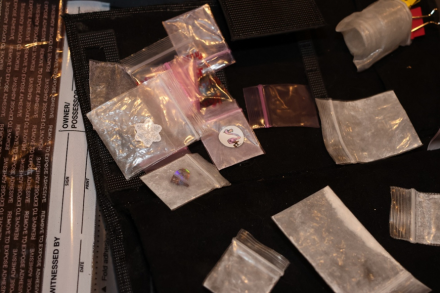
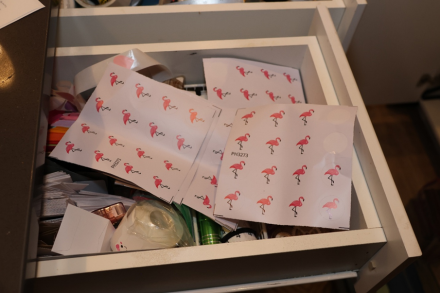
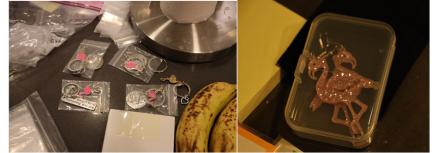
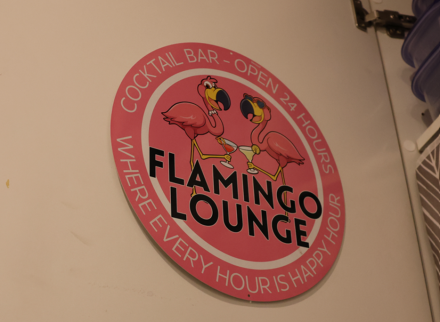
On February 17, 2026, agents were conducting surveillance on Taylor when they observed another female leaving his house with fentanyl powder. Agents obtained a search warrant for Taylor’s residence, where the found a station containing a heat-sealer, multiple clear and pink plastic baggies, and a handwritten note describing the recipe for “flamingo,” which was indicated to be 60% “ghost” fentanyl powder and “8mg bromazoloam per point (appx. 2 Xanax bars). Inside a Pelican case, agents found numerous containers of suspected fentanyl powder, baggies with stickers of scissors on them containing a white powdery substance. Agents also located a pink container with several doses of Narcan. Flamingo-related paraphernalia, including small flamingo stickers, keychains, and pink envelopes. Inside the kitchen, agents found a sign with cartoon flamingos holding cocktails. Various items were seized during the execution of the search warrant, some of which are depicted below:

Station containing heat-sealer, plastic baggies, and nitrile gloves

Station containing heat-sealer, plastic baggies, and nitrile gloves.

Handwritten recipe for “Flamingo” indicating a combination of fentanyl and bromazoloam

Handwritten recipe for “Flamingo” indicating a combination of fentanyl and bromazoloam.

Pink case containing doses of Narcan

Pink case containing doses of Narcan.

Sheets of flamingo stickers

Sheets of flamingo stickers.

Sheets of flamingo stickers

Sheets of flamingo stickers.

Flamingo keychains

Flamingo keychains.

Wall sign found in Taylor’s kitchen area

Wall sign found in Taylor’s kitchen area.

The drugs were analyzed by the DEA laboratory and confirmed Taylor’s possession of various quantities of fentanyl, bromazoloam, cocaine base (also known as crack cocaine), methamphetamine, ketamine, and 3,4-Methylenedioxymethamphetamine (MDMA).

Inside Taylor’s home office, agents observed that his computer monitor displayed a photograph of a young adult female dressed in lingerie and posing on Taylor’s bed. Subsequent investigation revealed that Taylor was providing fentanyl powder to prostitutes in exchange for sex. Three different cooperating sources independently stated the following that females would arrange to meet with Taylor at his residence through text messaging applications. Upon their arrival, Taylor would have a small quantity of fentanyl powder, and sometimes methamphetamine, out on his kitchen counter. The women would consume the narcotics and would then be directed to shower in Taylor’s bathroom, where he would often have a gift basket that included lingerie, a toothbrush, a razor, and perfume. The women would shower and put on the lingerie, and Taylor would often photograph the women in the lingerie before having sex with them. Taylor would then provide the women with additional fentanyl powder, and occasionally cocaine, methamphetamine, or MDMA, and they would leave.

In total, Taylor admitted to distributing fentanyl powder to three different prostitutes several times a week for at least two years, and that he had been selling “pink flamingo” fentanyl powder for approximately eight months. Taylor was told by the women that the ghost fentanyl powder was causing people to overdose.Taylor then started mixing ghost with bromazoloam and would mix the substances with water and red food coloring, which would turn the powder pink. Taylor chose to call and market the substance as “pink flamingo.” Taylor would put cartoon flamingo stickers on his product and conceal the narcotics inside different types of snack and candy packaging and would heat-seal the packages to make it look as though the packages had never been opened.

Taylor referred to the prostitutes as his “flamingo fam” and that he had a plan to purchase a house for himself and the prostitutes to all live together.

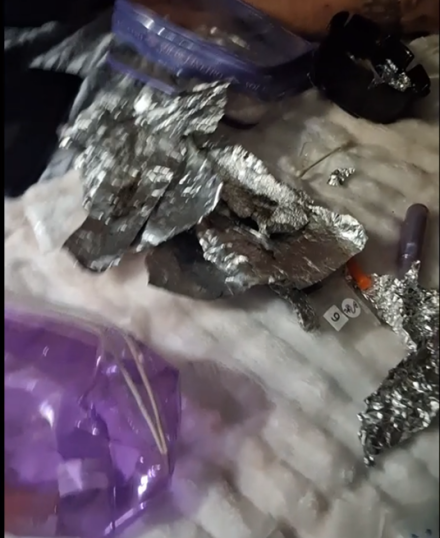
Confidential sources confirmed that several individuals had overdosed on fentanyl supplied by Taylor and had to be administered Narcan. On one occasion, a prostitute overdosed on fentanyl at Taylor’s house, and Taylor had to administer two doses of Narcan to revive her. In total, Taylor admitted to causing at least eight overdoses on fentanyl powder he had supplied. On one coconspirator’s phone, agents found a video taken in 2025 of an adult male appearing to suffer from a drug overdose. During the recording, the camera panned to drugs and drug paraphernalia on a table, including a clear plastic baggie with a flamingo sticker, as depicted below:

Screenshot from cell phone video

Screenshot from cell phone video.

Taylor remains in federal custody pending sentencing before United States District Judge James Wesley Hendrix.The date for the sentencing hearing is currently pending.Taylor faces a statutory maximum sentence of 40 years in federal prison and a $5,000,000 fine.

This investigation was a joint operation of the Texas Anti-Gang Center and the Caprock Hi-Intensity Drug Trafficking Area. This group is composed of agents with the Drug Enforcement Administration Lubbock Resident Office, the Bureau of Alcohol, Tobacco, Firearms, and Explosives, the Texas Department of Public Safety, the Lubbock County Sheriff’s Office, and the Lubbock Police Department. 

QUEENS RESIDENT PLEADS GUILTY FOR FATAL SHOOTING IN FRONT OF JAMAICA CHURCH DURING FUNERAL


Queens District Attorney Melinda Katz announced that Joseph Gilbert Stevens has pleaded guilty to manslaughter in the first degree for fatally shooting Richard Carter outside a Jamaica church while a funeral was taking place inside in April.

District Attorney Katz said: “A sorrowful day turned even more tragic when this defendant made the cruel decision to shoot a mourner outside a funeral. He has pleaded guilty and will now be sentenced to a lengthy term in prison for his actions. Our thoughts are with Richard Carter’s loved ones as they continue to mourn his loss.”

Stevens, 34, of Jamaica, pleaded guilty on Thursday, July 2 to manslaughter in the first degree. Queens Supreme Court Justice Ushir Pandit-Durant set sentencing for August 14 when Stevens is expected to face 24 years in prison to be followed by five years of post-release supervision.

DA Katz said that, according to the charges, on April 10, 2026, at approximately 2:12 p.m., Stevens arrived on a Citi Bike at the Shekinah Youth Chapel, which is located at the intersection of Merrick Boulevard and Sayres Avenue in Jamaica and is part of the Greater Allen AME Cathedral. He went inside to the funeral, approached the casket and then left.

At approximately 2:17 p.m., Stevens ran toward 49-year-old Richard Carter of Valley Stream, who was walking toward the chapel on Sayres Avenue, and shot him four times.

Carter was immediately transported to Jamaica Hospital Medical Center where he was pronounced deceased.

Stevens fled the scene. He was apprehended on April 11.

Mayor Mamdani Takes Aggressive Action to Address Upper East Side Legionnaires’ Disease Community Cluster


The Mamdani Administration will publicly release addresses of buildings with positive initial Legionella tests, require immediate cleaning and disinfection of cooling towers  

Mayor Zohran Kwame Mamdani and the New York City Health Department today announced additional emergency measures to respond to the Legionnaires’ Disease community cluster on the Upper East Side that has sickened at least 23 people as of July 6. 


After identifying just two cases that suggested a possible community source on Thursday, July 2, Mayor Mamdani directed the Department of Health to immediately begin testing cooling towers across the affected area and launch community outreach ahead of the holiday weekend. The Department mobilized more than 100 staff members to carry out the investigation. 


As part of this response, the Administration will take an unprecedented step of publicly releasing the addresses of all buildings whose cooling towers test positive for Legionella bacteria during the initial PCR screening process. Buildings with positive initial tests are also being ordered to immediately drain, clean and disinfect their cooling towers to reduce the risk of further exposure.


When there’s a public health threat, New Yorkers deserve urgency and transparency from their government,” said Mayor Mamdani. “That’s why we’re using every tool available to protect people by moving quickly to identify potential sources of exposure, requiring immediate remediation and making sure New Yorkers have the information they need to keep themselves and their families safe. If you live, work or recently visited the area and are experiencing symptoms like fever, cough or difficulty breathing, please contact a healthcare provider as soon as possible.”  


“Our administration is increasing the speed with which it responds to the spread of Legionnaires' Disease and improving systems that keep the public informed,” said Deputy Mayor for Health and Human Services Dr. Helen Arteaga. “New York City is aggressively identifying, cleaning and disinfecting cooling towers that test positive for the presence of Legionella bacteria, and while our administration works to address this public health emergency, we urge everyone in the area, especially older adults and other vulnerable communities, to seek care if they develop flu-like symptoms.” 


“More than 100 NYC Health Department staff members have worked nonstop since the start of this cluster as we take aggressive action to ensure that we are cutting off the source of exposure as quickly as possible,” said NYC Health Commissioner Dr. Alister F. Martin. “The Mamdani administration is taking unprecedented steps, not just to cut off the source of exposure, but to keep New Yorkers informed on what’s happening. We urge New Yorker who live or work on the Upper East Side to seek medical care if they are experiencing flu like symptoms. We look forward to providing more information in the coming days.”  


The City’s immediate priority is stopping any further exposure by rapidly identifying and remediating cooling towers that may contain Legionella bacteria. Cooling towers release mist into the outside air and have been identified as the source of previous community outbreaks of Legionnaires’ disease.  


Under this response, any building whose cooling tower tests positive during the initial PCR screening test will receive a Commissioner’s Order requiring immediate remediation, including draining, cleaning and disinfecting the towers immediately  


In previous community clusters investigations, buildings with positive PCR results were initially required to boost chemical disinfectant levels while awaiting confirmatory culture testing, a process that can take up to two weeks. Full cleaning and disinfection was generally required only after a positive culture result  


This year, the City is taking a more aggressive approach by requiring full remediation immediately after a positive PCR result, accelerating the response and reducing the possibility of ongoing exposure. Several building owners have already completed remediation, while others are actively carrying out the required work.  


The Upper East Side has a high concentration of cooling towers — more than three times the number tested during the 2025 Central Harlem investigation. As of July 6, 2026, approximately 160 cooling towers are registered within the three ZIP codes under investigation, though not all are operating or located within the investigation zone.  


As of July 6, 2026, Health Department staff had collected samples from 139 cooling towers. The remaining operating towers will be sampled, if operating, within the next 24 hours  


The Health Department will release the addresses of all buildings whose cooling towers test positive on the PCR screening test as results become available  


The Health Department launched its investigation July 2 after identifying two Legionnaires’ disease cases in close proximity in Carnegie Hill and Yorkville (ZIP codes 10028 and 10128). Although a community cluster is typically defined as three or more cases linked by location and time, the Health Department initiated its response immediately rather than waiting for additional cases  


On July 5, ZIP code 10075 was added to the investigation after another confirmed case involving someone who lives, works, or recently visited that area  


As of July 6, 23 people have been diagnosed with Legionnaires’ disease connected to this cluster. 17 people have been hospitalized, including two who have since been discharged and are now recovering at home. No deaths have been reported. The Health Department continues to test every cooling tower in the investigation area. Building owners whose cooling towers test positive for Legionella bacteria are required to complete full remediation.  


Anyone who lives, works or has visited the affected area since late June and develops symptoms such as fever, cough or difficulty breathing should contact a health care provider immediately. 


The Health Department issued a Health Alert to providers and has conducted community outreach since July 2, including throughout the holiday weekend. The Health Department hosted a virtual town hall on July 6 and will hold an in-person town hall tonight at 6 p.m. at St. Ignatius Loyola Wallace Hall, 980 Park Avenue. Legionnaires’ disease is a form of pneumonia caused by the Legionella bacteria, which grow in warm water. People become infected by breathing in water droplets containing the bacteria; the disease does not spread from person to person.  


Symptoms typically develop two to 14 days after exposure and may include fever, chills, muscle ache and coughs. Legionnaires’ disease can be treated effectively with antibiotics, particularly when diagnosed early  


The Health Department reminds New Yorkers that it is safe to use air conditioners, cooling centers and other City facilities in the affected area. It is also safe to shower and drink tap water. Cooling tower mist is released outdoors and does not affect indoor air conditioning systems, window air conditioners or building plumbing. People at higher risk include adults age 50 and older, people who smoke and those with chronic lung disease or weakened immune systems  


Long Island MS-13 Gang Member Sentenced to 42 Years in Prison for His Role in Two 2016 Murders in Nassau County


Earlier today, in federal court in Central Islip, Kevin Cuevas Del Cid, also known as “Creeper,” “Malcriado,” “Sombra,” “Vinky” and “Dabura,” a member of the Sailors Locos Salvatruchas Westside (Sailors) clique of La Mara Salvatrucha, also known as the MS-13, a transnational criminal organization, was sentenced by United States District Judge Joan M. Azrack to 42 years’ imprisonment for his role in the May 21, 2016 murder of Kerin Pineda and the October 10, 2016 murder of Javier Castillo, both of whom were killed in Freeport, New York, as well as a conspiracy to distribute cocaine and marijuana. Del Cid had previously pleaded guilty to these crimes in [month, year].

Joseph Nocella, Jr., United States Attorney for the Eastern District of New York, James C. Barnacle, Jr., Assistant Director in Charge, Federal Bureau of Investigation, New York Field Office (FBI), and Patrick J. Ryder, Commissioner, Nassau County Police Department, announced the sentence.

“Today, the defendant faces justice for his role in the brutal murder of two innocent victims, young men who were targeted and tortured by the MS-13 street gang,” stated United States Attorney Nocella.  “This defendant used social media to lure Kerin Pineda to his death, and this callous disregard for human life has now been met with a just punishment thanks to the work of our Office.” 

“Today's sentencing marks an important step in holding violent MS-13 gang members accountable for the harm they inflict on innocent civilians. Kevin Cuevas Del Cid, an alleged MS-13 gang member, is facing punishment for the abhorrent crimes he committed. Rest assured that the FBI with its partners will continue to dismantle the MS-13 gang presence in New York and across the United States,” stated FBI Assistant Director in Charge Barnacle. 

“Gang activity will never be tolerated here in Nassau County.  The County Executive and I will dedicate any resources necessary to combat criminal behavior.  Our department worked aggressively to investigate these cases with our partners in the FBI and US attorneys’ office.  Today’s sentencing demonstrates our commitment to holding the defendant accountable for these murders," stated NCPD Commissioner Ryder. 

According to court filings and statements by the defendant at the guilty plea proceeding, the defendant participated in the murder of 20-year-old Kerin Pineda, who was killed because of his suspected membership in the 18th Street gang.  Specifically, in May 2016, Del Cid and other MS-13 members devised a plan where Del Cid created a fake Facebook profile of a young female to communicate with Pineda and lure him out to be killed.  On May 21, 2016, Pineda went to a secluded wooded area near the Merrick-Freeport border believing that he was meeting the young female he had been communicating with on Facebook, who was, in fact, Del Cid. When Pineda arrived, he was surrounded and violently attacked by Del Cid and the other MS-13 members, each of whom took turns hacking and slashing him with the machetes.  Pineda’s body was then buried in a hole that had been dug in the ground the day before, in anticipation of the murder.  Del Cid is the first of six participants in the Pineda murder, all of whom have pleaded guilty, to be sentenced for that crime. 

Del Cid also pleaded guilty to the murder of 15-year-old Javier Castillo, who, like Pineda, was killed because the MS-13 suspected him of being a member of the 18th Street gang.  On October 10, 2016, members of the Sailors clique in Brentwood convinced Castillo, who lived in Central Islip, to go with them to Freeport – approximately 30 miles away – to smoke marijuana.  Del Cid and the other MS-13 members took Castillo to an isolated marsh area along the water in Cow Meadow Park in Freeport, where they attacked and killed him, taking turns hacking him with a machete.  Thereafter, the MS-13 members dug a hole and buried Castillo’s body, which was not recovered until one year later, in October 2017.  More than a half dozen MS-13 members have been charged and pleaded guilty in connection with the Castillo murder. 

Del Cid, who was 16 years-old at the time of the Pineda and Castillo murders, initially was charged by a juvenile information filed under seal on May 20, 2020. The government subsequently filed a motion to transfer Del Cid to adult status for prosecution, and an evidentiary hearing was held on June 3, 2022.  On July 6, 2022, United States Circuit Judge Joseph F. Bianco, sitting by designation, issued a Memorandum and Order granting the government’s motion, and ordering Del Cid be prosecuted as an adult. 

Today’s sentencing is the latest achievement in a series of federal prosecutions by the United States Attorney’s Office for the Eastern District of New York targeting members of the MS-13, a violent, transnational criminal organization.  The MS-13’s leadership is based in El Salvador, Honduras, Guatemala and Mexico, but the gang has thousands of members across the United States.  With numerous branches, or “cliques,” the MS-13 is the most violent criminal organization on Long Island.  Since 2003, hundreds of MS-13 members, including dozens of clique leaders, have been convicted on federal felony charges in the Eastern District of New York.  A majority of those MS-13 members have been convicted on federal racketeering charges for participating in murders, attempted murders and assaults.  Since 2010, this Office has obtained indictments charging MS-13 members with carrying out more than 75 murders in the Eastern District of New York, resulting in the convictions of dozens of MS-13 leaders and members in connection with those murders.  These prosecutions are the product of investigations led by the FBI’s Long Island Gang Task Force, which is comprised of agents and officers of the FBI, NCPD, Suffolk County Police Department, Nassau County Sheriff’s Department, Suffolk County Probation Office, Suffolk County Sheriff’s Office, the New York State Police, the Hempstead Police Department, the Rockville Centre Police Department and the New York State Department of Corrections and Community Supervision. 

The case is part of Operation Take Back America, a Department of Justice initiative aimed at eradicating transnational criminal organizations, combating violent crime, and restoring the rule of law.

ICE Investigation Leads to Arrest of Australian Alien Who Illegally Voted in Multiple Federal Elections


The suspect is accused of falsely claiming U.S. citizenship to cast a ballot in the 2022 and 2024 elections

The United States Department of Homeland Security (DHS) released the following statement after an investigation by U.S. Immigration and Customs Enforcement’s (ICE) Homeland Security Investigations (HSI) led to the arrest of an Australian alien who committed voter fraud in Louisiana.

According to the U.S. Attorney’s Office for the Eastern District of Louisiana, Denise Nataly Migliore, a Lawful Permanent Resident (LPR) from Australia, is charged with knowingly making false claims of U.S. citizenship so that she could register to vote in a federal election. She then allegedly cast ballots in the 2022 and 2024 elections.

Australian1

Denise Nataly Migliore

Migliore was indicted on June 11 in the Eastern District of Louisiana on the charges of illegal voting in an election and making false statements in order to register to vote. On July 1, HSI New Orleans arrested Migliore at the federal courthouse in New Orleans.

“This alien from Australia now faces federal charges for falsely claiming to be a U.S. citizen and illegally casting ballots in two elections,” said Acting Assistant Secretary Lauren Bis. “Her arrest and charges are the result of the hard work of the men and women of ICE law enforcement and our federal partners. Our message to aliens who vote in American elections is clear: we will find you, arrest you, and you will face the consequences, including criminal charges and deportation. Only Americans should be electing American leaders.”

HSI and the Federal Bureau of Investigation (FBI) investigated the case. Special Assistant United States Attorney Rick Veters of the General Crimes Unit is in charge of the prosecution.

International Crackdown on India-Based Organized Crime Gangs Results in 24 Arrests in U.S., Canada, and Europe


Assassination of Political Figure in Canada Among Crimes Alleged

Law enforcement in the United States, Canada, and Europe have arrested 24 defendants – 11 of them in California – connected to three India-based transnational organized crime groups charged with a litany of criminal acts, including the assassination in Canada in 2023 of a prominent Indian political and religious figure, the Justice Department announced today.

Today’s law enforcement action – “Operation Hard Ball” – is the result of a years-long federal investigation into Indian crime syndicates that engage in racketeering, targeted killings, shootings, extortion, the trafficking of bulk quantities of narcotics across international borders, and other crimes around the world whose impact is especially felt in the Indian diaspora. 

In total, 37 defendants – including two defendants who ran their global criminal syndicates while imprisoned in India – are charged across three indictments unsealed today. Those arrested in the United States – 11 in California, one in Indiana, and one in Georgia – are expected to make their initial appearances today in federal court.

Three defendants have been arrested in Canada, one defendant was arrested in Spain, and seven defendants already were in custody prior to today’s law enforcement operation.

Law enforcement is looking for 10 fugitives – seven in the United States, two in India, and one in Europe.

As part of this investigation, law enforcement has seized approximately 1,000 kilograms of cocaine and 1 kilogram of heroin along with $40,000 in cash and a dozen firearms. A total of 23 search warrants have been executed in the Sacramento area and 11 warrants have been executed in the Los Angeles area.

“Transnational criminal gangs who spread fear, drugs, and violence will face the full force of justice and the weight of the federal government,” said First Assistant United States Attorney Bill Essayli. “Working together, law enforcement in the U.S., Canada, Europe, and Asia are determined to target and dismantle these criminal organizations wherever they operate. There is no safe harbor for these thugs.”

“Today’s coordinated operation strikes at the heart of three brutal transnational organizations that have terrorized families, exploited communities, and stolen lives through ruthless acts of violence in the U.S. and abroad,” said Patrick Grandy, Assistant Director in Charge of the FBI's Los Angeles Field Office. “We, alongside our partners, remain steadfast in our commitment to identifying these violent organizations, disrupting their activities, and ensuring they face the justice they deserve.”

“The true measure of this operation isn’t found in the arrests or the seizures alone,” said Los Angeles Police Chief Jim McDonnell. “It’s found in what they represent: a united commitment between the LAPD and our federal and international partners to relentlessly pursue those who threaten our communities. Together, we are dismantling organized crime, removing dangerous offenders from our streets, and making Los Angeles a safer city.”

“The most effective way to combat transnational crime is for multiple law enforcement partners to team up and target criminals where they operate,” said Royal Canadian Mounted Police Commissioner Mike Duheme. “Together, we disrupted the operations of organized criminals who used murder, cruelty and fear to extort and control people in both Canada and the United States. We won’t pause for long to reflect on the work it took to get this job done – we’ll keep doing what we do best to preserve public safety in Canada, in the United States, and around the world.”

          United States v. Bishnoi, et al.

Lawrence Bishnoi, 33, of Punjab, India, a gangster long imprisoned in India, was a self-styled university student leader before tiring of politics and turning himself and his followers to crime, according to a nine-count indictment that a federal grand jury returned on July 1.  

In public, Bishnoi projected an image of himself as a “patriot,” “nationalist,” and deeply religious individual through social media posts and interviews with news organizations and used this public image to recruit members and associates to his crime syndicate in India, the United States, and elsewhere.

In private, Bishnoi presided over a sweeping criminal enterprise that spanned multiple continents. Using contraband cellphones and other voice-over internet protocol devices smuggled into his jail cell, Bishnoi personally directed political assassinations, murders, shootings, extortions, kidnappings, drug trafficking, human smuggling, and other crimes committed by members and associates of the Bishnoi enterprise worldwide.

The Canadian government in September 2025 designated the Bishnoi enterprise as a terrorist entity.

To help manage the enterprise’s day-to-day operations, Bishnoi delegated control to trusted lieutenants and regional leaders of the enterprise. These lieutenants and regional leaders included Satinderjeet Singh, 32, a.k.a. “Goldy Brar”, of Punjab, India, the North American leader of the Bishnoi enterprise, Rohit Godara, 37, of Rajasthan, India, the European leader of the Bishnoi enterprise, and Sukhraj Singh Kang, 58, of Punjab, India. According to the indictment, both Brar and Godara effectively spoke for Bishnoi and helped direct the actions of members and associates of the Bishnoi enterprise worldwide, including acts of violence committed by the gang’s members and associates in the United States, Canada, and elsewhere.

This criminal gang engaged in violent activity in each country in which it operated, including the United States, and used violence to cultivate a climate of fear, in particular in India and among Indian diaspora communities worldwide. The gang exploited this fear to extort its victims, hyping their violence and criminality through online videos and internet posts.

Among the crimes alleged in the indictment is the assassination of a prominent political and religious leader – identified in court documents as “H.S.N.” – from India’s Punjab state and who was living in Canada at the time of his death. Bishnoi and Brar are charged with ordering this assassination, which occurred when two gunmen shot and killed H.S.N. as he left a Sikh temple in Surrey, British Columbia on June 18, 2023.

According to the indictment, the enterprise routinely targeted prominent religious, social, and political leaders with violence, and used these high-profile acts to terrorize and extort members of the community. For instance, in November 2023, Bishnoi claimed responsibility for a separate shooting that occurred at the Vancouver, Canada residence of a prominent Indian actor and singer, and warned in the Punjabi language in a Facebook post, “no one can save you from us.”

Bishnoi, Brar, Godara, and others extorted victims via WhatsApp and other encrypted messaging applications by threatening violence against the victims or the victims’ families. For example, Bishnoi, Brar, Godara, and other defendants attempted to extort victims in Los Angeles and Thousand Oaks, demanding in December 2025 and January 2026 that the latter victim make a $5 million payment.

In addition to these extortion schemes, the Bishnoi enterprise helped fund its activities through international drug trafficking and stealing drug shipments from rival gangs. For example, in November 2024, Bishnoi and Brar oversaw the transportation of 49 kilograms (108 pounds) of cocaine that was intercepted in Redlands and was intended for shipment via long-haul semi-trucks from the U.S. to Canada. 

From March 2024 to July 2025, the Bishnoi enterprise stole a total of approximately 520 kilograms (1,146.4 pounds) of cocaine in the greater Los Angeles area from rival drug trafficking gangs.

The indictment charges Bishnoi, Brar, Godara, and six other defendants with one count of racketeering conspiracy, one count of conspiracy to interfere with commerce by extortion (Hobbs Act), six counts of attempted Hobbs Act extortion, and one count of conspiracy to distribute controlled substances, namely cocaine and methamphetamine.

           United States v. Bhagwanpuria, et al.

A seven-count federal grand jury indictment returned June 25 charges 17 defendants with operating a criminal enterprise that engaged in murder-for-hire, drug trafficking, kidnappings, extortions, weapons trafficking, and other crimes around the world, including in the United States and Canada.

Jaggu Bhagwanpuria, 38, of Punjab, India, a gangster imprisoned in India, is an associate-turned-rival of Bishnoi, and founded his own criminal enterprise in India’s Punjab state. 

The Bhagwanpuria gang operates as a transnational criminal syndicate headquartered in India with members across the United States, Canada, the United Kingdom, Europe, Australia, and New Zealand. This group includes more than 1,000 members and associates worldwide, and more than 100 members and associates in the United States.

To expand its power, this group corrupted law enforcement officers in India and partnered with corrupt government officials, including to assist in extortion schemes. It also provided false information to law enforcement officers in India regarding alleged crimes. The Bhagwanpuria group used this false information to target perceived rivals and individuals that members or associates believed were cooperating with law enforcement, often triggering baseless criminal proceedings and extortion plots by corrupt Indian law enforcement officers against perceived rivals.

According to the indictment, in April 2026, Gurlal Singh, 22, of Stockton, California, a member of the Bhagwanpuria syndicate who is an illegal alien from India, threatened a victim and then provided the victim’s name to a corrupt law enforcement officer in India’s Punjab state. This ultimately led to the victim, the victim’s father, and the victim’s sister being falsely accused of the January 2026 murder of a victim in India identified in court documents as “B.S.” It also led to the corrupt law enforcement officer in India extorting the victim and the victim’s father in connection with that pending murder case. A separate member of the Bhagwanpuria syndicate, Gurdev Singh, 26, is alleged to have attempted to extort a family living in Ohio while he was being held in ICE custody, including by threatening to “put [] bullets in your kids.”

The group funded its activities through drug trafficking, including through drug transportation sub-networks in Los Angeles and the Inland Empire, as well as through illegal firearms dealing.

Garinder Deo, 40, a.k.a. “Doctor, “Rocket,” and “Ritz Carlton,” of Vancouver, Canada, though not charged as a member or associate of this criminal group, allegedly helped enrich the group by purchasing bulk quantities of cocaine and heroin that were to be shipped from Southern California to the eastern United States with the assistance of members and associates of the Bhagwanpuria enterprise. This included the attempted shipment in June 2025 of 99.2 kilograms (218.7 pounds) of cocaine and one kilogram (2.2 pounds) of heroin that law enforcement ultimately intercepted. 

The indictment charges one count of racketeering conspiracy, one count of attempted Hobbs Act extortion, two counts of conspiracy to distribute and possess with intent to distribute controlled substances, one count of distribution of cocaine, one count of conspiracy to engage in the business of dealing in firearms without a license, and one count of possession of a machine gun.

          United States v. Dhanda, et al.

Ravinder Singh Dhanda, 57, a.k.a. “Randy,” “Rolex,” and “John Wick,” of Vancouver, Canada, Jaskarn Baghri, 50, a.k.a. “Baba,” of Surrey, British Columbia, Canada, Gurtej Singh Smagh, 43, a.k.a. “Simba,” of Creston, British Columbia, Canada, and eight other defendants are charged in an eight-count indictment returned June 23 alleging they transported, smuggled, and distributed hundreds of kilograms of cocaine and methamphetamine each week from the U.S. into Canda. 

According to the indictment, Dhanda operated a drug distribution network that provided international smuggling services for bulk quantities of cocaine and methamphetamine to drug trafficking organizations (DTOs) in the U.S., Canada, and Mexico. He negotiated transportation rates and logistics with these DTOs and subcontracted the storage and transportation of these drugs.

The cocaine and methamphetamine were concealed and transported on long-haul semi-trucks from the greater Los Angeles area – including Los Angeles, West Covina, Ontario, Fontana, and Perris – to the U.S.-Canada border. Sometimes, farm trucks from working farms were used to hide the narcotics en route to Canada.

The indictment specifically alleges the shipment of 430.1 kilograms (948.2 pounds) of cocaine from July 2023 to November 2024. 

The indictment charges one count of conspiracy to distribute and possess with intent to distribute controlled substances, one count of conspiracy to export controlled substances, one count of operating a continuing criminal enterprise, and five counts of possession with intent to distribute cocaine.

An indictment is merely an allegation. All defendants are presumed innocent until proven guilty beyond a reasonable doubt in a court of law.

If convicted, many of the defendants would face a mandatory minimum prison sentence between 10 years in federal prison and life imprisonment, and a statutory maximum sentence of life in federal prison.

The FBI; the Los Angeles Police Department; the Royal Canadian Mounted Police (RCMP); and United States Customs and Border Protection’s Buffalo Field Office are investigating these matters. RCMP is conducting a parallel investigation into South Asian organized crime.

Assistance was provided by Unidad Central Operativa de la Guardia Civil (Spain); Homeland Security Investigations Los Angeles; the Drug Enforcement Administration’s Los Angeles Division; the Regional Narcotics Suppression Program, a specialized multi-agency task force that targets high-level drug trafficking and money laundering organizations operating in Southern California and managed by the Orange County Sheriff’s Department; the Brownsburg (Indiana) Police Department; the Pennsylvania State Police; the Bureau of Alcohol, Tobacco and Firearms (ATF) Philadelphia Field Division; the FBI’s field offices in Buffalo, Sacramento, and San Francisco; and the FBI’s Legal Attaché offices in New Delhi, Mexico City, Madrid, and Ottawa.

This case is part of the Homeland Security Task Force (HSTF) initiative established by Executive Order 14159, Protecting the American People Against Invasion. HSTF is a whole-of-government partnership dedicated to eliminating criminal cartels, foreign gangs, transnational criminal organizations, and human smuggling and trafficking rings operating in the United States and abroad. Through historic interagency collaboration, the HSTF directs the full might of United States law enforcement towards identifying, investigating, and prosecuting the full spectrum of crimes committed by these organizations, which have long fueled violence and instability within our borders.