Thursday, November 26, 2026

Bronx River Art Center (BRAC) - Happy Thanksgiving from all of us at BRAC


Dear Friends,


This Thanksgiving we wanted to take a moment to simply say thank you.


Thank you for being part of the Bronx River Art Center community this year, whether you joined us for a class or workshop, visited an exhibition, came to a concert, supported an artist, brought your family through our doors, or simply followed along and cheered us on.


BRAC is a special place because of the people who make it one. Every day, we get to see artists creating, young people learning and experimenting, neighbors gathering, and new ideas taking shape. We’re grateful to be part of a community that continues to show us how much art, creativity, and connection matter.


There is a lot to be thankful for, and you are a big part of that.


From all of us at BRAC, we wish you and your loved ones a very happy Thanksgiving. We hope the holiday brings you good food, good company, a little rest, and plenty of reasons to smile.


With gratitude,
Akia, Alexandra, Bebo, Danny, Gio, Jennifer, Juanita, Natisha, Priscilla, Ray, Ruddy, Stephanie M, Stephany C, Tonia, Tony & Ukari


The Bronx River Art Center Team 

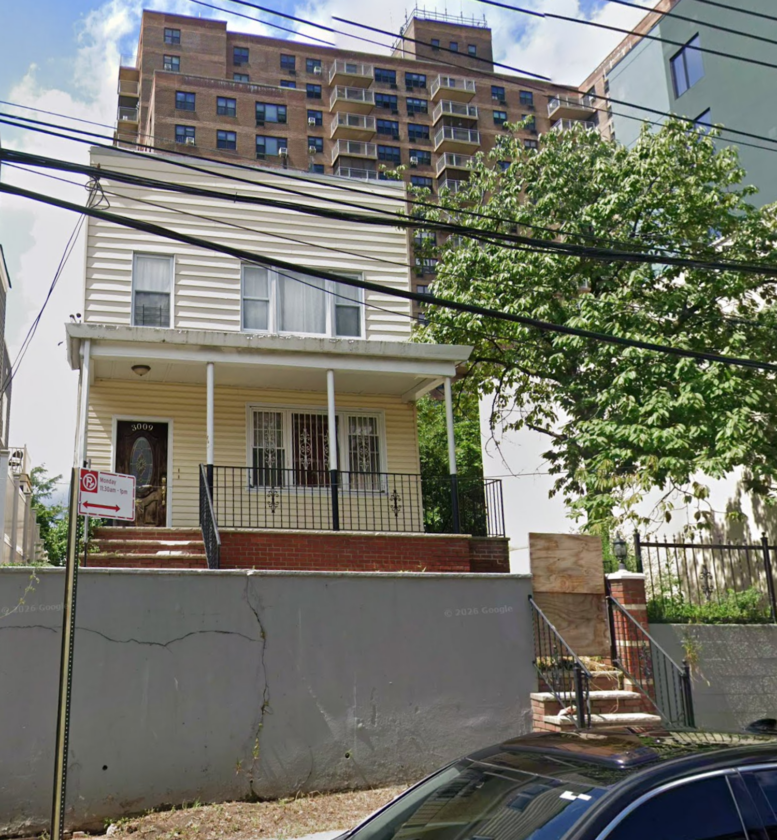
Permits Filed for 3009 Barker Avenue in Olinville, The Bronx


Permits have been filed for a six-story residential building at 3009 Barker Avenue in Olinville, The Bronx. Located between Adee Avenue and Burke Avenue, the lot is near the Burke subway station, served by the 2 and 5 trains. Alex Stanaj is listed as the owner behind the applications.

The proposed 62-foot-tall development will yield 20,554 square feet designated for residential space. The building will have 30 residences, most likely rentals based on the average unit scope of 685 square feet. The concrete-based structure will also have a cellar and penthouse.

Gerald J. Caliendo Architects is listed as the architect of record.

Demolition permits were filed in July for the two-story structure on the site. An estimated completion date has not been announced.

Attorney General James Wins $1.3 Billion Judgment Against Crypto Scammers Who Targeted Haitian Community


New York Attorney General Letitia James released the following statement after winning a court judgment ordering Cynthia and Eddy Petion, the founders of cryptocurrency trading company NovaTechFx (NovaTech), to pay $1,367,023,585 for defrauding hundreds of thousands of investors worldwide, including 11,000 New Yorkers, through a cryptocurrency Ponzi scheme that targeted Haitian communities:

“This historic judgment finally delivers some semblance of justice for the thousands of New Yorkers who were targeted by this merciless scam.

“NovaTech cruelly targeted immigrant families through faith and community groups with the promise of a better life while robbing them of their life savings.

“My office will always fight to bring fraudsters who take advantage of hardworking New Yorkers to justice.”

This judgment comes after Attorney General James asked the court to order the Petions to pay damages and disgorgement following a default judgment issued in August 2025 after the couple fled the country. The default judgment also banned the Petions from the securities, commodities, and cryptocurrency industries.

In June 2024, Attorney General James sued NovaTech and cryptocurrency mining company AWS Mining Pty Ltd. (AWS Mining) for targeting immigrant communities, particularly Haitian New Yorkers, in prayer groups and through social media and WhatsApp group chats with fraudulent promises of high returns on investments, while running illegal pyramid schemes. As a result of her lawsuit, Attorney General James also secured nearly $6 million from four others involved in the scheme – Martin Zizi, Frantz Ciceron, Ricardo Roy, Sr., and James Corbett. All four have also been permanently banned from participating in the securities, commodities, and cryptocurrency industries.

As Storefront Vacancies Persist Across NYC, Comptroller Levine Launches New Tool to Track Neighborhood Retail Health


Latest quarterly data show as of September 2026 more than one in nine storefronts citywide remain vacant, with Manhattan and Brooklyn exceeding the citywide vacancy rate

Ahead of Small Business Saturday, Comptroller encourages New Yorkers to shop locally this holiday season

With more than one in nine storefronts across New York City sitting empty, Comptroller Mark Levine launched a new dashboard to track street-level retail vacancies across the five boroughs. The Storefront Vacancy Dashboard aims to help policymakers, small business advocates, and community organizations monitor the economic health of neighborhood commercial corridors, identify emerging challenges, and inform targeted strategies to local businesses. The dashboard will be updated quarterly, allowing users to monitor changes in storefront vacancies at the citywide, borough, and neighborhood levels. 

“Thriving commercial corridors are essential to the health of New York City’s economy and neighborhoods,” said City Comptroller Mark Levine. “In many ways, New York City has recovered since the pandemic, but the comeback has been uneven, with storefronts sitting empty in many communities that deserve bustling activity. Keeping an up-to-date accounting of the severity of this problem is essential for us in government to develop solutions.”   

The dashboard’s launch comes on the eve of a crucial shopping period for storefronts, especially those occupied by small businesses, which rely on increased foot traffic during Black Friday and Small Business Saturday to boost revenue. 

The latest quarterly data show that citywide vacancies between July and September remain a stubborn concern for the Big Apple’s nearly 142,000 storefronts. The citywide vacancy rate stood at 11.32% in the third quarter of 2026, up slightly from 11.26% in the previous quarter and still above pre-pandemic levels. The citywide rate has hovered between 11% and 11.6% since the third quarter of 2023, the first post‑pandemic period with complete data and a baseline for assessing the pandemic’s lasting impact on storefront vacancies. 

Key findings from the Q3 2026 data include: 

  • Five New York City neighborhoods continue to see vacancy rates at or near 20%, including the Financial District and Tribeca in Manhattan; Ocean Hill and East New York in Brooklyn; and Old Astoria-Hallets Point in Queens.  
  • The city recorded a net loss of 205 small businesses between the second and third quarters of 2026, continuing a recent pattern of modest net losses. 
  • Manhattan continues to have the highest storefront vacancy rate at 13.12%, despite a gradual decline since the pandemic. 
  • Brooklyn’s vacancy rate stands at 12.68%, reflecting an upward trend over the past several years. 
  • Queens has experienced the largest increase in its storefront vacancy rate since 2023, reaching 9.80%. 
  • The Bronx’s storefront vacancy rate has remained relatively stable, just above 8%, since the first quarter of 2026. 
  • Staten Island’s storefront vacancy rate rose to 8.13%, up 0.40 percentage points from the previous quarter, despite a longer-term downward trend. 

The dashboard builds on the Comptroller’s Office’s June 2026 report Who’s Minding the Storefront? An Analysis of Storefront Vacancies, which found that while vacancies had declined from their pandemic peak, recovery remained uneven, with rates in some neighborhoods reaching 20%. The dashboard is part of the Comptroller’s broader efforts to support local small businesses, including a partnership with the Hebrew Free Loan Society to provide $8 million in interest-free loans of up to $60,000 to eligible entrepreneurs. 

Explore the new Storefront Vacancy Dashboard: comptroller.nyc.gov/services/for-the-public/storefront-vacancy/dashboard/. 

For more information about interest-free loans for NYC small businesses, visit HFLS.org/small-business. 

District Court Orders Queens-Based Logistics Company, Affiliate, and Their Owner to Pay $300,000 and Cease Sending Packages Through United States Mail


Court-Ordered Settlement Resolves Civil Complaint Brought by Government Alleging Defendants Shipped Packages Received from China with Counterfeit Postage Labels

Joseph Nocella, Jr., United States Attorney for the Eastern District of New York, and Darnell Edwards, Acting Inspector in Charge, United States Postal Inspection Service (USPIS) announced a settlement agreement with Yizhao Hou and two companies he controls, YDH Express Inc. and YDH Int’l Inc. (together, Defendants).  The settlement, so ordered by the U.S. District Court for the Eastern District of New York on November 25, 2026, resolves the lawsuit filed by the United States against Defendants in May 2025, alleging that Defendants violated the False Claims Act (FCA) by shipping thousands of parcels bearing counterfeit United States Postal Service (USPS) labels that Defendants received from their customers in China and seeking injunctive relief pursuant to the Anti-Fraud Injunction Act.  Defendants will pay $300,000 and agree to permanently cease using USPS to mail parcels.

“The Postal Service provides essential services to Americans, and we will not allow businesses that use fake postage to unlawfully deprive USPS of revenue,” stated United States Attorney Nocella.  “As alleged, Defendants mailed parcels with counterfeit labels through USPS for years.  This settlement demonstrates our commitment to protecting USPS from unscrupulous actors.”

Mr. Nocella expressed his appreciation to the United States Postal Inspection Service and Customs and Border Patrol for their work on the case.

“In this case, as alleged, the Defendants participated in a scheme that caused massive revenue losses to the Postal Service.  The Postal Inspection Service and USPS will continue to implement measures to uncover counterfeit postage labels.  This settlement is an example of the dedication of postal inspectors to stop those who would defraud the U.S. Mail,” said New York Division Acting Inspector in Charge Darnell Edwards.

On May 15, 2025, the United States filed a civil complaint in federal court in Brooklyn, alleging that Defendants committed mail fraud and conspired to commit mail fraud by shipping thousands of parcels through USPS using counterfeit USPS postage labels.  The United States alleged that Defendants receive these parcels from their customers, which are companies located in China.  The complaint sought injunctive relief under the Anti-Fraud Injunction Act, as well as additional relief to remedy financial losses incurred by USPS.  The United States obtained a temporary restraining order immediately barring Defendants from using USPS to mail parcels on May 16, 2025.  Defendants thereafter stipulated to a preliminary injunction which the Court entered on June 6, 2025, and which has been in effect since that date. 

Under the terms of the Court-Ordered settlement agreement, Defendants will pay $300,000 to the United States.  In addition, they agreed to provide certain financial information, and to permanently stop mailing packages through USPS.  The claims against Defendants are allegations only and there has been no determination of liability. 

You can report mail theft, identity theft, fraud, or other crimes involving the U.S. mail by calling the Postal Inspection Service’s national toll-free number: 877-876-2455 or at http://uspis.gov/report. 

The government’s case is being handled by the Office’s Civil Division.

Justice Department Clarifies Lawful Use of Drone Detection Technologies to Protect Americans from Emerging UAS Threats


The Department of Justice issued an opinion concluding that law enforcement may deploy a broad range of technologies to detect unmanned aircraft systems (“UAS,” commonly called drones) consistent with federal law. The opinion provides critical guidance to federal, state, local, tribal, and territorial authorities working to identify and respond to emerging drone threats while respecting the privacy rights of Americans. 

Specifically, the opinion examines the application of the Pen-Trap Statute and the Wiretap Act to drone-detection technologies—including acoustic, electro-optical and infrared (EO/IR), radar, and radiofrequency detection systems—used by state, local, tribal, territorial, and federal law enforcement to protect the public from drone surveillance and other drone threats. 

“Drones present extraordinary opportunities for innovation, commerce, and public safety, but they also can be exploited by criminals, foreign adversaries, and other malicious actors,” explained T. Elliot Gaiser, Assistant Attorney General for the Office of Legal Counsel, who signed the opinion. “Today, DOJ provides renewed legal clarity that will help law enforcement detect and defeat drone threats to the safety and privacy of the American people.”

The opinion recognizes that hostile or unlawful drone activity can threaten critical infrastructure, public events, correctional facilities, and other sensitive locations. Such hostile drone activity may also invade the privacy of American citizens. The opinion carefully analyzes federal law to ensure that law enforcement can deploy drone detection technologies in a manner consistent with longstanding statutory protections for radio and electronic communications.

Key Conclusions

The opinion reaches several key conclusions about the use of drone detection technologies by law enforcement: 

  • Acoustic, electro-optical and infrared, and radar-based drone detection technologies generally do not violate either the Pen-Trap Statute or the Wiretap Act because they do not capture communications metadata or intercept protected communication contents. 
  • Radiofrequency detection systems used to identify drone activity generally do not violate the Pen-Trap Statute so long as they are not attached or applied to a telephone line or other communications facility. 
  • The use of radiofrequency systems for spectrum monitoring and the interception of FAA-required remote identification broadcasts generally does not violate the Wiretap Act because such broadcasts are designed to be publicly accessible. 
  • Whether interception of other drone-related communications complies with the Wiretap Act depends on the particular technology and communications involved and must be assessed on a case-by-case basis. 

Strengthening Security While Preserving Privacy

The opinion makes clear that federal, state, local, tribal, and territorial officials can use many widely available detection technologies to identify and track potentially dangerous drone activity without intruding on federally protected communications. It also emphasizes that technologies capable of obtaining the contents of drone communications remain subject to important statutory limitations and, in some circumstances, may require additional legal authority.

By clarifying the interaction between modern drone-detection technologies and longstanding federal privacy laws, the opinion supports efforts to secure the homeland against evolving aerial threats while maintaining strong protections for the privacy rights of Americans. The categories of drone-detection technologies analyzed in the opinion may often be deployed without relying on specialized counter-UAS statutory authorities, provided they are used in the manner described in the opinion and consistent with applicable constitutional and statutory requirements.

DEC FINALIZES POLICY TO IMPROVE ACCESS TO OUTDOOR RECREATION FOR PEOPLE WITH DISABILITIES


Department of Environmental Conservation

Other Power-Driven Mobility Device Policy Takes Effect January 1, 2027

The New York State Department of Environmental Conservation (DEC) announced finalization of a new policy that provides a clear process for members of the public who seek to use mobility devices on DEC-managed lands. Commissioner Policy 81 pertains to the use of Other Power-Driven Mobility Devices (OPDMDs), which are battery- or fuel-powered devices (other than wheelchairs) used for transportation, including but not limited to golf carts, scooters, e-bikes, and self-balancing personal transportation devices.

The policy takes effect on January 1, 2027 and establishes a framework to identify opportunities for the use of OPDMDs by people with mobility disabilities while consolidating and streamlining several existing DEC policies and procedures related to mobility devices.  

“The finalization of this policy reflects the thoughtful and invaluable input of those who shared their experiences, perspectives, and ideas throughout the public process,” DEC Commissioner Amanda Lefton said. “People with disabilities, outdoor recreationists, conservation organizations, local communities, and other stakeholders helped shape a policy that increases State land access and expands recreational opportunities while supporting public safety and responsible stewardship of our natural resources.”  

The adoption of CP-81 complements and further enhances DEC’s many other initiatives that help accommodate people with disabilities, including the interactive Accessible Recreation Destinations Map. To learn more about the many recreational opportunities and information DEC offers to people of all ages and abilities, including camping, hunting, picnicking, fishing, boating, hiking and nature viewing, visit DEC’s Accessible Recreation webpage. The new policy also complements Governor Hochul's "These Lands Are for Everyone" accessibility and inclusivity initiative announced during Earth Week in April.

DEC drafted CP-81 with input from the public, the Accessibility Advisory Committee, and the Forest Preserve Advisory Committee. These committees included members from local government, accessibility advocacy organizations, environmental organizations, recreation organizations, hunting and fishing groups, and staff from the Adirondack Park Agency. 

New York State Chief Disability Officer Kim Ridley said, “New York’s public lands belong to everyone, and this finalized OPDMD policy is a major step forward in making the outdoors more welcoming and accessible for people with mobility disabilities. By working closely with the disability community, environmental advocates, and our partners at DEC over the past two years, we have established a clear, thoughtful framework that expands recreation opportunities while continuing to protect our state’s natural resources. I applaud DEC for listening to public feedback and ensuring that New Yorkers of all abilities have clearer pathways to explore and enjoy our state’s incredible landscapes.”

The adoption of this new policy officially rescinds DEC’s Commissioner Policy 3 (CP-3) – Motorized Access Program for People with Disabilities. The new policy continues the previously permitted opportunities for cars, trucks, and ATVs while expanding opportunities for a wider range of devices and additional locations for their use. CP-81 provides clear information about public recreation opportunities that now allow OPDMD uses in select locations across the state, provides guidance for evaluating additional OPDMD uses over time, and identifies areas of DEC-managed land where certain categories of OPDMDs are incompatible due to public safety risks, potential harm to natural resources, or other concerns. 

A new online application is being developed for obtaining a DEC OPDMD accommodation permit under CP-81 and the process will be posted once the new policy takes effect on January 1. Current CP-3 permits will remain valid until their expiration date. Permit-holders will be notified when their CP-3 permits are set to expire and directed to the new application procedure. More information on CP-81, including the full text of the policy, can be found on DEC’s website.  

New Yorkers are encouraged to Love Our New York Lands at all natural spaces by practicing Leave No Trace™ principles and by recreating safely, sustainably, and hiking in suitable conditions based on weather and experience level. 

Armed Meth Supplier from Sandston Sentenced to 15 years in Prison


A Sandston woman was sentenced today to 15 years in prison for conspiracy to distribute methamphetamine and possession of a firearm in furtherance of a drug trafficking crime.

According to court documents, from December 2025 to February 2026, the Drug Enforcement Administration (DEA)- Washington Division conducted a series of three controlled purchases of a total of 418.89 grams of methamphetamine that was supplied by Celeste Black, 30. During each of the controlled purchases, Black was observed arriving at the Hermitage Hotel in Richmond to supply the methamphetamine.

On Feb. 26, Chesterfield County Police officers conducted a traffic stop of Black's vehicle. Black's driver’s license was suspended at the time, and she had an outstanding warrant for failing to appear in court. A drug detecting K-9 alerted to the presence of narcotics in the vehicle. During a search of the vehicle law enforcement recovered:

  •  a folded dollar bill containing 2.098 grams of methamphetamine; 

  • a plastic bottle containing 0.403 grams of methamphetamine; 

  • a drug ledger; 

  • a loaded semi-automatic handgun with an obliterated serial number; 

  • an ammunition magazine loaded with 18 rounds; 

  • 18 individual Suboxone strips; 

  • 60 trazodone tablets; 

  • 119 hydroxyzine tablets; 

  • 10 amphetamine tablets; 

  • 12 hydrocodone tablets; 

  • three morphine tablets; 

  • approximately 0.8 grams of MDMA; 

  • 0.152 grams of fentanyl; 

  • a drug testing kit; 

  • a digital scale with white powder residue; 

  • and various containers with narcotics residue.

Theophani K. Stamos, First Assistant U.S. Attorney for the Eastern District of Virginia, and Cindy Marx, Special Agent in Charge for the Drug Enforcement Administration’s (DEA) Washington Division, made the announcement after sentencing by U.S. District Judge Roderick C. Young.