Tuesday, June 9, 2026

Mayor Mamdani Nominates Housing Policy Leader John Mangin as Chair of the Board of Standards and Appeals


Today, Mayor Zohran Kwame Mamdani announced the nomination of John Mangin as Chair of the Board of Standards and Appeals (BSA). Mangin currently serves as Director of the Housing Division at the Department of City Planning, where he has played a leading role in many of the City’s most significant housing and land-use initiatives over the past decade.

“We are leaving no stone unturned and no body of government untapped in our work to deliver for New Yorkers. John Mangin has spent his career advancing the housing solutions our city needs and I am proud to nominate him to lead the BSA at a moment when we must move faster to build the affordable homes New Yorkers deserve,” said Mayor Mamdani.

“John Mangin is uniquely qualified to lead the BSA as we work to create more affordable housing across the city. I know he will bring his deep knowledge of the city’s housing and land use policy to the position, and I am excited about the prospect of working with him in this new role,” said Leila Bozorg, Deputy Mayor for Housing and Planning.

“It’s an honor to be nominated by Mayor Mamdani to chair the BSA. The housing crisis calls for urgency, and the BSA plays a crucial role in an active, all-of-government approach to build a more affordable city. I hope to work with colleagues at the BSA and in the administration, the City Council, and stakeholders across the city to uphold the responsibilities of this role,” said John Mangin, BSA chair nominee.

At the Department of City Planning, Mangin led the development of City of Yes for Housing Opportunity, a landmark package of citywide zoning reforms designed to create “a little more housing in every neighborhood.” He also helped develop Mandatory Inclusionary Housing and neighborhood plans across the five boroughs.

Mangin previously served as Director of Policy and Research for the 2025 Charter Revision Commission, which proposed the most significant changes to the City’s land-use review process since 1989. Before joining City government, he advanced fair housing policy and litigation at Fair Share Housing in New Jersey. He is also an Adjunct Associate Professor of Urban Planning at the NYU Wagner Graduate School of Public Service and a graduate of Yale Law School.

The BSA is an independent five-member board that reviews zoning matters and grants variances for certain types of development. In 2025, New York City voters approved the creation of a new Affordable Housing Fast Track action, allowing the BSA to approve certain affordable housing proposals.  

LPC Unveils New Historic District Markers In Longwood, The Bronx


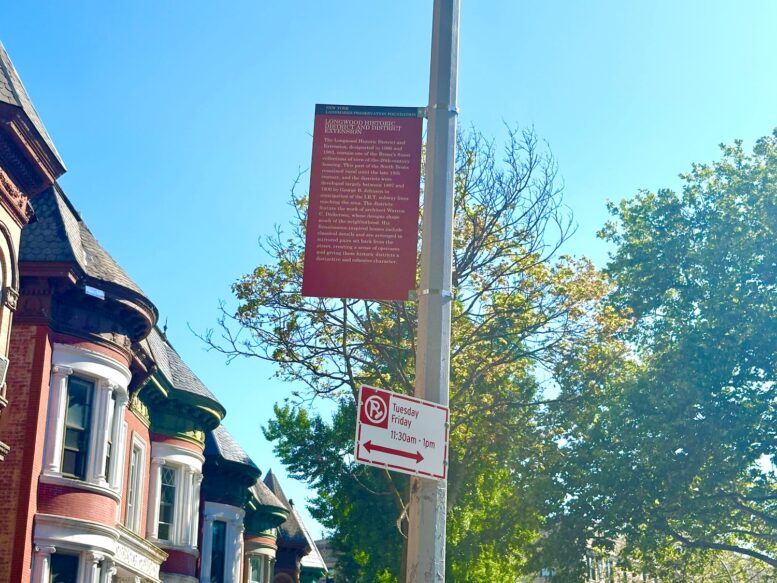
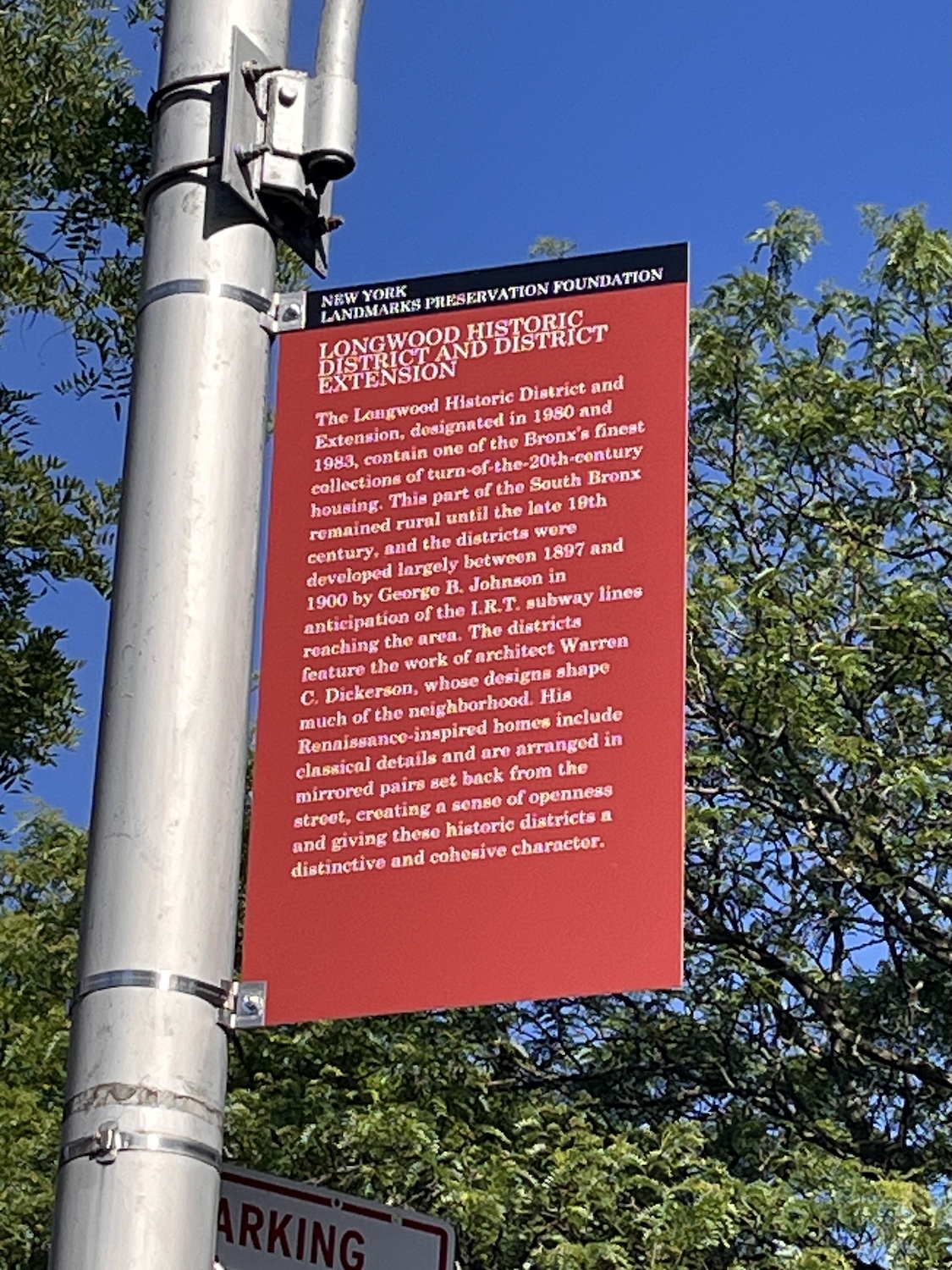
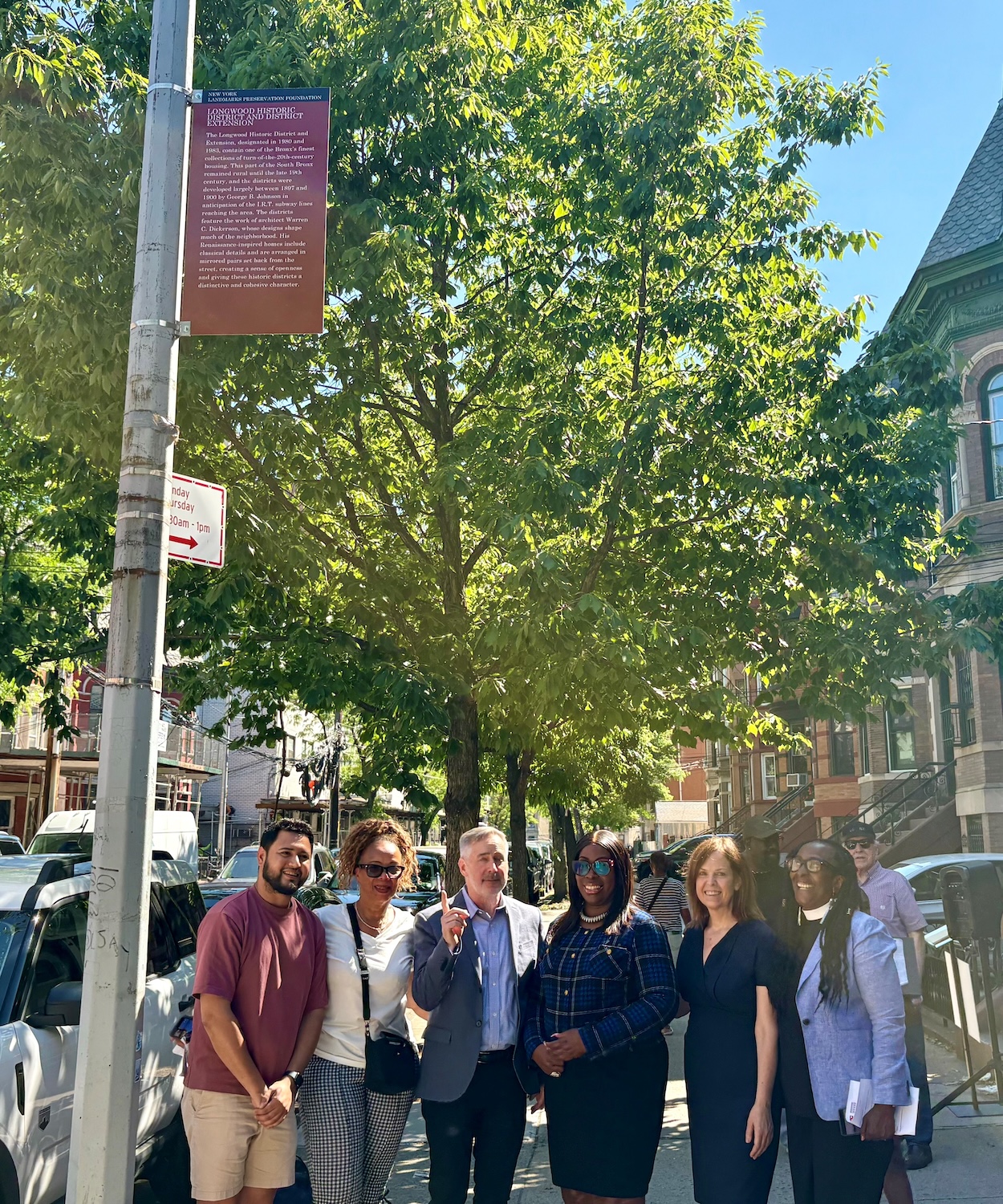
The New York City Landmarks Preservation Commission (LPC) has unveiled four new historic district markers commemorating the Longwood Historic District and Longwood Historic District Extension in Longwood, The Bronx. The markers recognize the architectural and historical significance of the neighborhood, which was designated by the LPC in 1980, with the extension added in 1983. 

Developed largely between 1897 and 1900, the districts represent one of The Bronx’s best preserved collections of turn-of-the-20th-century residential architecture. The area remained largely rural until plans for an IRT subway connection to Manhattan spurred residential development. Much of the neighborhood was developed by George B. Johnson, with homes designed by architect Warren C. Dickerson in the neo-Renaissance style, featuring Roman brick façades, classical ornamentation, and distinctive paired rowhouses.

The districts also include several notable institutional and historic buildings, including the former Montefiore Hebrew Congregation building at 760-764 Hewett Place, St. Margaret’s Episcopal Church at 940 East 156th Street, and 990 East 156th Street, an 1850 residence later used as Johnson’s real estate office. The newly installed markers are part of the New York Landmarks Preservation Foundation’s Historic District Marker Program and were produced and installed by the New York City Department of Transportation.

The Longwood Historic District is located in the South Bronx near the Longwood Avenue station on the 6 train, with additional access from the Prospect Avenue station on the 2 and 5 trains and the Hunts Point Avenue station on the 6 train.


Arrests, Drug Seizures, and Federal Drug Trafficking Charges Surge in San Francisco Through Coordinated Federal-Local Law Enforcement Efforts


The U.S. Attorney’s Office and law enforcement partners announced the results of a surge in federal drug enforcement measures in San Francisco.  Between early October 2025 to the end of May 2026, coordinated federal and local law enforcement efforts resulted in the seizure of over 2.2 kilograms of fentanyl, over 840 grams of methamphetamine, over $38,000 in drug proceeds, and approximately 89 arrests in San Francisco.  Over the same period, the U.S. Attorney’s Office brought federal criminal charges against more than 40 defendants for drug trafficking in San Francisco.

“There are some problems that cannot be solved alone and this was one of them.  San Francisco’s open-air drug markets were rending the fabric of the city, but working together with our federal, state, and local partners we have made significant progress cleaning up the streets of our great city and we will continue this important work.  We owe the people who live and work here nothing less,” said United States Attorney Craig H. Missakian.  “As we come off a successful Super Bowl and look forward to welcoming the world for FIFA, we hope that visitors will see what our citizens already know that our city and region are stronger and safer than ever.”

“The DEA is proud of our relationships with our federal, state, and local task force officers.  These partnerships provide a force multiplier in the fight against Drug Trafficking Organizations to save American lives, said DEA Special Agent in Charge Bob P. Beris.

“The FBI remains fully committed to working side‑by‑side with our federal, state, and local partners to disrupt the criminal networks responsible for bringing dangerous drugs into our community.  These results demonstrate what we can accomplish when we combine our authorities, intelligence, and resources toward a shared mission.  Every arrest and every seizure represents a meaningful step toward improving the safety and well‑being of the people of San Francisco, and we will continue this coordinated effort with urgency and resolve,” said FBI Special Agent in Charge Scott Schelble.

“Selling and using deadly narcotics in San Francisco will never be tolerated, and the San Francisco Police Department will continue to work closely with our federal partners to crack down on illegal drug markets across our city,” said SFPD Chief Derrick Lew.  “I want to thank our partners at the United States Attorney’s Office, the FBI, and the DEA for their close partnership in this vital work.  While we have more work to do, today’s announcement shows the progress San Francisco is making in taking major quantities of drugs off our streets and holding traffickers accountable.”

Many of the federal cases recently charged or resolved involve large quantities of drugs and carry mandatory minimum sentences for the offenders under federal drug statutes.  Examples include: 

  • Kiet Ly, 46, of San Francisco, who was indicted by a federal grand jury on September 9, 2025.  Ly pleaded guilty on December 10, 2025, to one count of possession with intent to distribute 50 grams and more of a mixture or substance containing methamphetamine in violation of 21 U.S.C. § 841(a)(1) and (b)(1)(B) and one count of possession of a firearm and ammunition as a felon in violation of 18 U.S.C. § 922(g), as well as to related supervised release violations.  According to the plea agreement, on or about July 19, 2025, law enforcement searched the car that Ly was driving in San Francisco and found 117 grams of methamphetamine and a Glock pistol loaded with seven bullets.  Ly was sentenced to ten years in federal prison on May 14, 2026.
  • Martha Alvarado Rodriguez, 50, and Solis Soto Alvardo, 35, both from Oakland, who were each charged by information with one count of possession with intent to distribute fentanyl and one count of possession with intent to distribute methamphetamine in violation of 21 U.S.C. § 841(a)(1) and (b)(1)(C). According to court documents and proceedings, Rodriguez and Alvardo sold fentanyl to undercover police officers on more than one occasion in the Tenderloin District of San Francisco.  A search of their car found 73.9 gross grams of fentanyl, 33.5 gross grams of methamphetamine, and 16.2 grams gross of cocaine base.  Rodriguez and Alvardo pleaded guilty on November 5, 2025, and were each sentenced to three years in federal prison on April 22, 2026.
  • Andy Cruz, 40, of Oakland, who was charged on January 29, 2026, by a superseding information with possession with intent to distribute 40 grams or more of fentanyl in violation of 21 U.S.C. § 841(a)(1) and (b)(1)(B) and failure to appear in court as required.  According to court documents and proceedings, Cruz had been selling drugs in the Tenderloin District of San Francisco and elsewhere since 2008.  An earlier search of his home discovered nearly one kilogram of fentanyl, 76 grams of heroin, and 25 grams of methamphetamine.  He was sentenced to 96 months in federal prison on March 25, 2026.

These efforts expand upon the U.S. Attorney’s Office-led “All Hands on Deck” law enforcement initiative to address endemic drug dealing – in particular of fentanyl and methamphetamine – in the Tenderloin District of San Francisco.  Since its inception, the initiative has resulted in over 200 federal drug prosecutions and over 160 convictions, with cases still pending. 

The recent increased operations involved coordination among the U.S. Attorney’s Office, DEA, FBI, ATF, IRS Criminal Investigations, the San Francisco Police Department, the San Francisco District Attorney’s Office, and California Highway Patrol.  Additional operations are planned in the coming months.  

A criminal complaint, information, or indictment merely alleges that crimes have been committed, and all defendants are presumed innocent until proven guilty beyond a reasonable doubt.

Friends,

Our summer event series continues with a SKATE PARTY at Kossuth Playground in partnership with the New York City Department of Parks & Recreation.

Join me on Friday, June 12, 2026, at 5:30 PM at Kossuth Playground for a FREE community skate party.

Skates, equipment, and beginner lessons will all be provided free of charge.

  • WHEN: Friday, June 12, 2026 
  • WHERE: Kossuth Playground (111 E. Mosholu Pkw N.) 
  • TIME: 5:30 PM

Come skate into a beautiful Bronx evening with friends, family, and neighbors.

Looking forward to seeing you there!

Yours Truly,
John Zaccaro, Jr. 
New York State Assembly


Attorney General James’ Office of Special Investigation Releases Report on Death of Samuel Williams


New York Attorney General Letitia James’ Office of Special Investigation (OSI) released its report on the death of Samuel Williams, who died on May 29, 2023 following a motor vehicle incident involving members of the New York City Police Department (NYPD) on May 28, 2023 in the Bronx. After a thorough investigation, which included review of commissioned expert reports and footage from officers’ body worn cameras (BWC) and a nearby security camera, as well as interviews with involved witnesses and comprehensive legal analysis, OSI determined that a prosecutor would not be able to prove beyond a reasonable doubt at trial that the involved officers committed a crime, and therefore closes the matter by issuing this report.

At 5:45 p.m. on May 28, a group of NYPD officers assigned to the Manhattan North Community Response Team (CRT) was driving over the University Heights Bridge from the Bronx to Manhattan in four unmarked police cars. At the same time, a group of dirt bikes and all-terrain vehicles (ATVs) led by Mr. Williams was crossing the bridge in the opposite direction. Two of the unmarked police cars then turned into the opposite lanes in an attempt to slow traffic and stop the bikes. Mr. Williams drove around the first car on his bike before colliding with the second car. After the collision, Mr. Williams’ right leg was visibly broken but he was alert and speaking. Mr. Williams hopped on one leg toward the officers before falling on the hood of an officer’s car. Mr. Williams was arrested at the scene and taken to a nearby hospital, where he underwent surgery for a broken leg. Mr. Williams died from complications from the surgery on May 29, 2023.

In order to convict an officer for causing a death with their police car while in pursuit of someone who violated the law, a prosecutor would have to prove beyond a reasonable doubt that the involved officer committed a crime that requires the mental state of recklessness. Although the actions of the officers who turned their cars into oncoming traffic raise serious concerns and were inconsistent with their training, the evidence does not establish the speed of either the police cars or Mr. Williams’ dirt bike at the time of the collision, or whether Mr. Williams accelerated in order to go around the police car and evade capture. Therefore, the evidence is insufficient to establish the officers’ guilt beyond a reasonable doubt.

In this case, the law and the evidence do not establish that the officers were without fault. However, the law and the evidence do establish that a prosecutor cannot meet the high burden to convict the officers of a crime at trial, by proving guilt beyond a reasonable doubt. For these reasons, OSI will not seek criminal charges. 

New York City Hispanic Chamber of Commerce - Reminder: NYCHCC Puerto Rico 2026 Trade Mission


Reserve Your Trip Today

EX-NYPD COP SENTENCED TO PROBATION FOR PERJURY INVOLVING 2009 ON-DUTY SHOOTING OF TEEN IN BRONX BUILDING


Bronx District Attorney Darcel D. Clark announced that a former New York City Police Officer has been sentenced to five years probation and a $2,500 fine for first-degree Perjury, first-degree Tampering with Public Records and Official Misconduct involving his shooting of a teen in 2009 during a police encounter. 

District Attorney Clark said, “This defendant told a Bronx Grand Jury in 2009 that he shot the teen from a distance away in defense of his partner, but later during civil litigation, a laboratory report unequivocally concluded that the bullet that was fired into Peter Colon’s back was discharged at point blank range. The teen also testified at trial. It took 16 years but finally truth and justice won out.” 

District Attorney Clark said the defendant, Danny Acosta, 46, was sentenced to five years probation and a $2,500 fine by Bronx Supreme Court Justice Seth Steed. Acosta was convicted by a jury after a two-month trial on April 24, 2026, of four counts of first-degree Perjury, first-degree Tampering with Public Records, and two counts of Official Misconduct. The people requested 2 1/3 to 7 years in prison.

According to the facts brought out at trial, on June 4, 2015, pursuant to the civil rules of discovery, Acosta was deposed by Peter Colon’s civil attorney during Colon’s lawsuit against the city and the Police Department. Under oath, Acosta testified that he was “a couple of steps down” from Colon, then 17, at the time that he fired the two shots in his direction. He also testified that Colon and his partner were “both standing” at the time that he discharged his weapon. 

In 2017, the Assistant Corporation Counsel who was representing Acosta in the lawsuit learned about a laboratory report that was generated by the New York City Police Department’s Trace Analysis Unit. This report refuted Acosta’s under oath suggestions that he was a significant distance away from Colon at the time that he fired his service weapon. The report in question unequivocally concluded that the bullet that was fired into Colon’s back was discharged at close/extreme close/or contact range.

During the trial Colon testified to the jury that while he lay face down on the floor, Acosta put his knee on his back and pressed the gun against him and fired.

District Attorney Clark thanked BXDA Detective Investigators Randy Scarpinato, Fernando Nunez, Clayton Nyonyo, Christopher Scerbak, Paula Alegria, Keila Ynfante, Debra Koch, Anai Tamarez, Nicholas Russo, and Dwayne Anderson; Sergeant Sherece Perkiss, Lt. Brian O’Loughlin, Deputy Chief Peter Holness for their work in this investigation. District Attorney Clark thanked Sergeant Louis Meade and Detective Danny Angen from the NYPD’s Bronx DA’s Squad for their assistance in this case.

Monday, June 8, 2026

Governor Hochul Celebrates Groundbreaking for Major Construction Stage of Second Avenue Subway Phase 2 Project

Governor Joins MTA Leadership to Break Ground on Launch Site for Tunnel Boring Machine

Lessons Learned from Phase 1 Result in $1 Billion in Cost Savings; Project Funded in Part by Revenues from Congestion Pricing

Nearly a Century After it Was First Proposed, Second Avenue Subway Phase 2 Will Bring a New Transit Connection to 100,000 East Harlem Daily Riders

Governor Kathy Hochul today joined leadership from the Metropolitan Transportation Authority (MTA), elected officials and Harlem community leaders to break ground on the major construction stage of the transformative Second Avenue Subway Phase 2 project. The groundbreaking occurred at the location where, in early 2027, the state-of-the-art tunnel-boring machine (TBM) will be lowered into the ground and begin mining the new subway tunnels from 120 Street and 2nd Avenue to 125 Street and Malcolm X Boulevard.

The governor also announced that, following the resumption of federal funding to the project in April, the MTA has awarded the next major contract to construct the final tunnel section of this phase from 105 Street to 110 Street, including the future 106 St Station, using a “cut and cover” approach. The MTA is applying lessons from Phase 1 of the project to deliver more than $1 billion in savings and is on track to complete advanced utility relocations early, allowing pending work on this project to start six months faster than originally scheduled.

“The Second Avenue Subway will change everything for East Harlem, saving people precious time and making possible opportunities that have for too long been out of reach for too many,” Governor Hochul said. “The last groundbreaking for a second avenue subway in East Harlem was 54 years ago, only for the project to be abandoned and this community left behind. When I became Governor, I promised that I would be the leader to finally get this done, and by breaking ground on the major construction phase of this project, we are one giant step closer to realizing a dream nearly a century in the making.”

The state-of-the-art variable-density Tunnel Boring Machines will be delivered early next year. Weighing more than one million and a half pounds, the machines are equipped with 23-foot, tungsten carbide cutter heads. The TBM can adjust its methods depending on what kind of material it encounters, toggling between one kind of drill for hard rock and another for soft soil or sand. The TBM also reinforces the tunnel lining it leaves behind as it travels beneath Harlem. The TBM will launch from the 120 Street site and travel to 125 Street and Malcolm X Boulevard.

Concurrent to today's milestone on the Phase 2 project, Governor Hochul and the MTA are already scoping and designing a potential next phase of the Q train westward across 125th St to Broadway with three new stations and more than 160,000 daily riders. Following the completion of an MTA feasibility study announced by the governor in 2024, this year’s FY27 enacted state budget secured $25 million to conduct preliminary engineering and design of a tunnel extension and approval of an efficient environmental review process. If the project is advanced, work on the tunnel could continue seamlessly using much of the same equipment from phase 2, saving time and money.

Second Avenue Subway Phase 2 is divided into four contracts – compared to 10 in Phase 1 – to increase project efficiency and minimize complicated contractor coordination. The tunnel boring is part of Contract 2, valued at $1.97 billion, including shaft excavation for the TBM, controlled blasting for future stations and asbestos and lead abatement in the existing 1970s tunnels. At today’s groundbreaking, the MTA and Governor Hochul announced progress on another major component of Phase 2: the award of Contract 3. Contract 3 will construct the structural shells of the new 106 St Station and associated tunneling, connecting the existing tunnels north and south of the station, which the contractor is expected to begin work in the coming months. The entire Second Avenue Subway Phase 2 project is budgeted at $6.968 billion and is on track for revenue service in 2032.

Using Cost Containment Strategies Learned During Phase 1

As part of the MTA's commitment to delivering key infrastructure projects better, faster and cheaper, the contracts for Phase 2 incorporate lessons learned from Second Avenue Subway Phase 1.

Addressing utility relocation requirements upfront reduces the risk of unexpected costs or delays later as construction progresses — especially in New York City which has one of the most complex underground utilities networks in the world, most of which is unmapped.

Additional cost containment initiatives in Phase 2 include: reuse of a tunnel segment that was built in the 1970s from 110 Street to 120 Street along Second Avenue, early real estate acquisition, adoption of innovative contract structures such as best-value, performance based contracts, design-build, close coordination of contracts, and the reduction in back-of-house, ancillary spaces, and station sizes.

All told, these initiatives have saved more than $1 billion.

Delivering Better Transit For East Harlem

East Harlem is a historically underserved neighborhood which has one of the largest concentrations of affordable housing in the United States and where 70 percent of residents rely on transit. Phase 2 will create three new accessible stations right in the heart of the community at 106 Street, 116 Street, and 125 Street, and offer one-seat rides from East Harlem to the Upper East Side, West Midtown and Coney Island, shortening travel times by up to 20 minutes.

The Second Avenue Subway Phase 2 project will create thousands of jobs, including union-wage construction jobs. A 20 percent local hiring goal for the project will generate good-paying job opportunities for hundreds of East Harlem residents.

East Harlem has long been promised a new subway connection on Second Avenue. In the 1920s, the Second System proposal, which ultimately became the IND subway system, included service on Second Avenue. In 1948, New York City voters approved bonding intended to build the second avenue subway, which was ultimately left unbuilt after the start of the Korean War. In 1972, construction on the line finally commenced in East Harlem, but was later abandoned in 1975 during the city’s fiscal crisis. Sections of the tunneling constructed in the 1970s will be adapted and utilized in Phase 2, including for the 116 St station.

About Phase 2

The second phase of the project will extend Q train service from 96 Street north to 125 Street and then west on 125 Street to Park Avenue, approximately 1.5 miles in total. There will be a direct passenger connection with the existing 125 St subway station on the Lexington Avenue subway line. Phase 2 will also feature an entrance at Park Avenue to allow convenient transfers to the Metro-North Railroad’s Harlem-125 Street Station.

Each station will have above-ground ancillary buildings that house ventilation, mechanical, and electrical equipment, as well as space for possible ground-floor retail and community uses. The expansion will serve 300,000 daily riders when combined with Phase 1 – and provide three new ADA accessible stations — raising the bar for customer comfort and convenience. Increased multimodal transit connectivity at the 125 Street station at Park Avenue with connections to the 4 5 6 lines, Metro-North and the M60 Select Bus Service to LaGuardia Airport will allow for convenient transfers to other subway and commuter rail lines, facilitating smoother, faster transportation across the city and metropolitan region.