Friday, June 26, 2026

U.S. Attorney Announces $2.2 Million Settlement With Urologists For Submitting False Claims To Medicare


Urologists Dr. Robert Simon and Dr. Nicole Fleischmann Admit That They Caused Medicare to Pay Claims for Implantations That Were Not Medically Reasonable and Necessary

United States Attorney for the Southern District of New York, Jay Clayton, and Special Agent in Charge of the New York Regional Office of the U.S. Department of Health and Human Services, Office of Inspector General (“HHS-OIG”), Naomi Gruchacz, announced that the United States has settled a civil healthcare fraud lawsuit against DR. ROBERT SIMON, a New Jersey-based urologist, and DR. NICOLE FLEISCHMANN, a New York-based urologist.  The settlement resolves claims that SIMON and FLEISCHMANN violated the False Claims Act by repeatedly subjecting their patients to medically unnecessary surgical procedures in connection with an implantable neurostimulation medical device and then improperly obtaining payments from Medicare for these same unnecessary procedures. 

Under the settlement, which was approved by U.S. District Judge Paul G. Gardephe, SIMON will pay a total sum of $1,112,695.88 plus interest, and FLEISCHMANN will pay a total sum of $1,101,044.80 plus interest.  As a part of the settlement, SIMON and FLEISCHMANN also made extensive factual admissions regarding their conduct.  Among other things, SIMON and FLEISCHMANN admitted that they each caused Medicare to pay claims for implantations of a neurostimulation medical device that were not medically reasonable and necessary and did not comply with Medicare’s billing rules and guidance. 

“Dr. Simon and Dr. Fleischmann performed unnecessary surgical procedures on their patients who suffered from urinary incontinence and then billed a taxpayer-funded program for these procedures,” said U.S. Attorney Jay Clayton.  “This illegal scheme violated the trust at the heart of doctor-patient relationships and our healthcare system.  This Office is committed to holding medical providers accountable, protecting patient care, and safeguarding the integrity of taxpayer-funded programs.” 

“Health care providers who perform medically unnecessary services can pose a significant risk to patients, especially when pre-operative tests are not completed appropriately and follow-up procedures are performed without sufficient justification,” said HHS-OIG Special Agent in Charge Naomi Gruchacz.  “HHS-OIG continuously works with key law enforcement partners to seek resolutions that hold accountable individuals who exploit federal health care programs.”

As alleged in the Complaint: 

The InterStim device is designed to treat urinary incontinence by sending electrical stimulation to a patient’s sacral nerve.  InterStim’s implantable components include a neurostimulator, a battery, and a thin wire—known as a lead—that connects to the sacral nerve, as well as other components that facilitate transmission of electrical impulses to the sacral nerve.  Relevant Medicare rules require that before a doctor may permanently implant an InterStim device, the patient must have had a successful test stimulation that met specific defined criteria.  The test stimulation is designed to determine whether the InterStim device is likely to be successful in improving the patient’s urinary incontinence.

From January 1, 2011, through December 31, 2022, FLEISCHMANN violated the False Claims Act by submitting, or causing the submission of, false claims to Medicare for medically unreasonable and unnecessary InterStim surgical procedures by failing to perform the required preoperative testing before implanting the InterStim device into patients and unnecessarily implanting two InterStim devices into a patient during the same surgical procedure. 

Similarly, from January 1, 2011, through October 18, 2021 (the “Simon Covered Period”), SIMON violated the False Claims Act by submitting, or causing the submission of, false claims to Medicare for medically unreasonable and unnecessary InterStim surgical procedures by: failing to perform the required preoperative testing before implanting the InterStim device into a patient; unnecessarily implanting two InterStim devices into a patient during the same surgical procedure; performing medically unreasonable and unnecessary battery and InterStim device replacement and revision surgeries; and improperly billing Medicare twice for removing the lead used to stimulate a patient’s sacral nerve during preoperative testing. 

SIMON frequently performed unnecessary procedures on patients to replace the InterStim batteries after the InterStim device had been implanted into his patients, despite the fact that there was often no indication that these batteries needed to be replaced.

SIMON and FLEISCHMANN also frequently implanted two InterStim devices into a patient during the same surgical procedure, in a procedure known as bilateral implantation.  They did this without conducting the required preoperative test to determine that one InterStim device would effectively treat the patient’s urinary incontinence, much less that two InterStim devices would be more effective than one. 

As part of the settlement, SIMON and FLEISCHMANN admitted and accepted responsibility for certain of their own respective conduct alleged by the United States, including the following:

  • SIMON and FLEISCHMANN were aware that the Centers for Medicare and Medicaid Services (“CMS”) had issued a National Coverage Determination (“NCD”)—which is a binding statement by CMS setting a national policy granting, limiting, or excluding Medicare coverage for a specific medical item or service—concerning the implantation of sacral nerve stimulators, such as InterStim, to treat urinary incontinence.
  • Specifically, SIMON and FLEISCHMANN were aware that in 2002 CMS issued NCD 230.18, which stated that in order to establish that a permanent InterStim implantation is medical necessary, a patient must first undergo a successful test stimulation during which the patient demonstrates a 50% or greater improvement.  This improvement is measured through voiding diaries, which are used by the patient to record their symptoms of urinary incontinence.
  • SIMON and FLEISCHMANN primarily performed a percutaneous nerve evaluation test (“PNE”) before permanently implanting the InterStim device into patients.  The PNE is supposed to take place over at least three, and up to seven, days.  SIMON and FLEISCHMANN repeatedly billed Medicare for permanent InterStim implantations despite failing to first complete a successful PNE.  Instead of completing a full PNE, SIMON and FLEISCHMANN frequently conducted an abbreviated test.  Further, SIMON and FLEISCHMANN also failed to collect and keep the voiding diaries required by NCD 230.18.
  • SIMON also admitted and accepted responsibility for additional conduct alleged by the United States, including the following:
  • During the Simon Covered Period, SIMON rarely concluded that a PNE did not support a permanent implantation—doing so for approximately 3% of his patients who received a PNE.  In these instances, SIMON contemporaneously recorded in his office notes that the PNE did not support a permanent InterStim implantation.  Nevertheless, in each of these cases, SIMON still performed a permanent implantation of the InterStim device and falsely documented in his surgical notes that the PNE had been successful.
  • During the Simon Covered Period, SIMON frequently performed medically unreasonable and unnecessary InterStim device revision and replacement surgeries on his patients and then billed Medicare for these procedures.  Specifically, SIMON often surgically removed and replaced InterStim batteries within three years or less of the implantation, despite the fact that InterStim batteries were supposed to last for approximately five years. 
  • SIMON also frequently replaced InterStim neurostimulators and added a second InterStim device for patients who started with one InterStim device, without any objective evidence that the neurostimulator needed to be replaced or that the patient would benefit from the implantation of a second InterStim device. 

In connection with the filing of the lawsuit and settlement, the Government joined a private whistleblower lawsuit that had been filed under seal pursuant to the False Claims Act.

Mr. Clayton praised the outstanding investigative work of HHS-OIG. 

The case is being handled by the Office’s Civil Frauds Unit. 

22-Year-Old Austin Man Sentenced to 20 Years in Federal Prison for Fentanyl Death


An Austin man was sentenced to 240 months in federal prison for distribution of fentanyl resulting in death, announced Drug Enforcement Administration (DEA) Special Agent in Charge Miguel Madrigal of the San Antonio Division and U.S. Attorney Justin R. Simmons for the Western District of Texas.

According to court documents, Keithrick Carter, 22, was a drug dealer who primarily sold blue “M30” fentanyl pills and marijuana. On March 23, 2023, a 24-year-old male living in Leander was found deceased in his apartment. In the man’s bathroom, Leander Police found an unlabeled pill bottle containing one blue “M30” pill and some marijuana. The autopsy and toxicology determined the cause of death as “drug toxicity: fentanyl.” A review of the deceased man’s phone revealed a text exchange between the victim and Carter.

An investigation by the Austin Police Department confirmed that Carter was dealing fentanyl in the form of blue “M30” pills. Carter was indicted for one count of distribution of fentanyl resulting in death on May 6, 2025. He was arrested on May 21, 2025, and pleaded guilty on Feb. 19, 2026. U.S. District Judge Robert Pitman sentenced Carter on June 24. 

“This administration has made clear that protecting Americans from the fentanyl crisis is a national priority, and we are at the front of that fight every day in this district,” said U.S. Attorney Simmons. “Keithrick Carter knowingly sold poison in a pill bottle to a young man in our community. He was held directly responsible for that young man’s death and will now spend the next 20 years of his life in federal prison. However, no measure of manmade justice can assuage the pain felt by the victim’s family in this case. The best we can do is to remove the defendant from society so that he cannot inflict the same level of grief on any other families in our community. I’m proud of AUSA Keith Henneke and our law enforcement partners for making that happen in this case.”

“Fentanyl remains the deadliest drug threat facing our nation, devastating families and claiming the lives of young people across the country,” said Special Agent in Charge of the Drug Enforcement Administration San Antonio Division, Miguel Madrigal. “That is why the DEA remains committed to holding those who traffic this deadly substance into our communities accountable and to protecting the safety and well-being of our citizens.”

The Drug Enforcement Administration, Leander Police Department, and the Austin Police Department investigated the case.

Attorney General James Announces Convictions and Sentencings of Members of New York City Gun and Drug Trafficking Ring


Final Three Individuals Sentenced for Roles in Multistate Operation That Sold Assault Weapons, Ghost Guns, and Cocaine in New York City

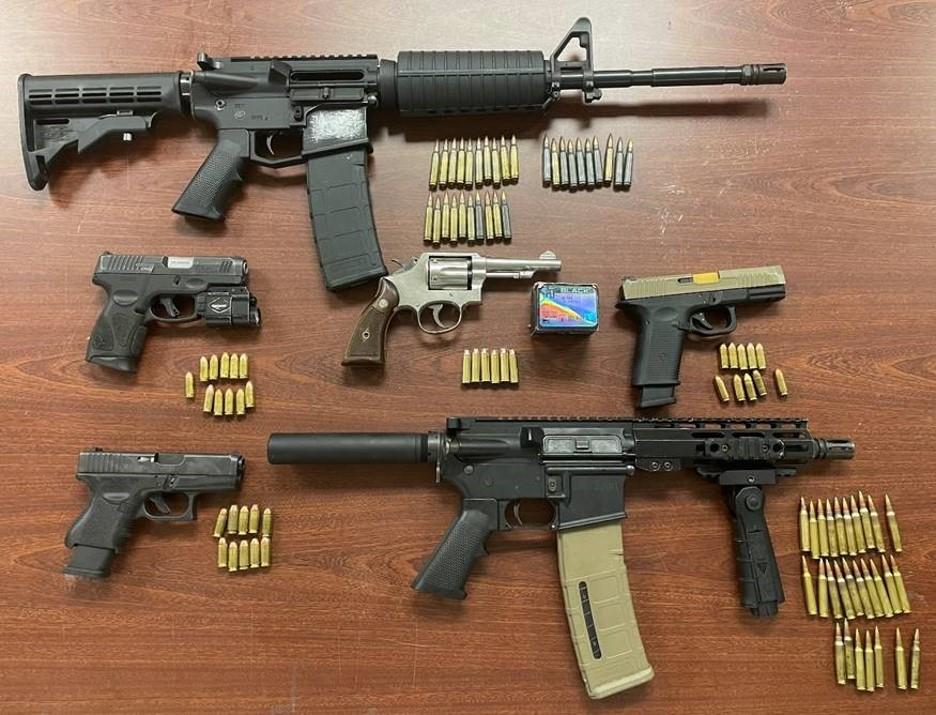
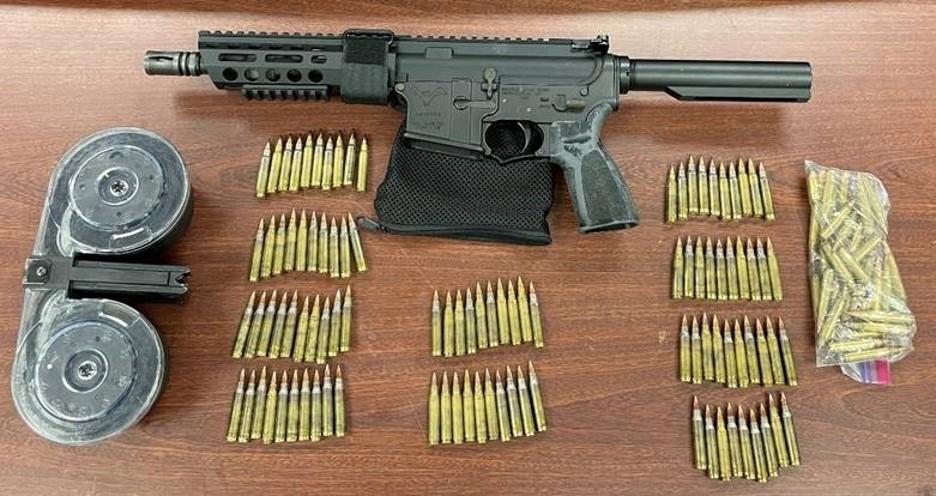
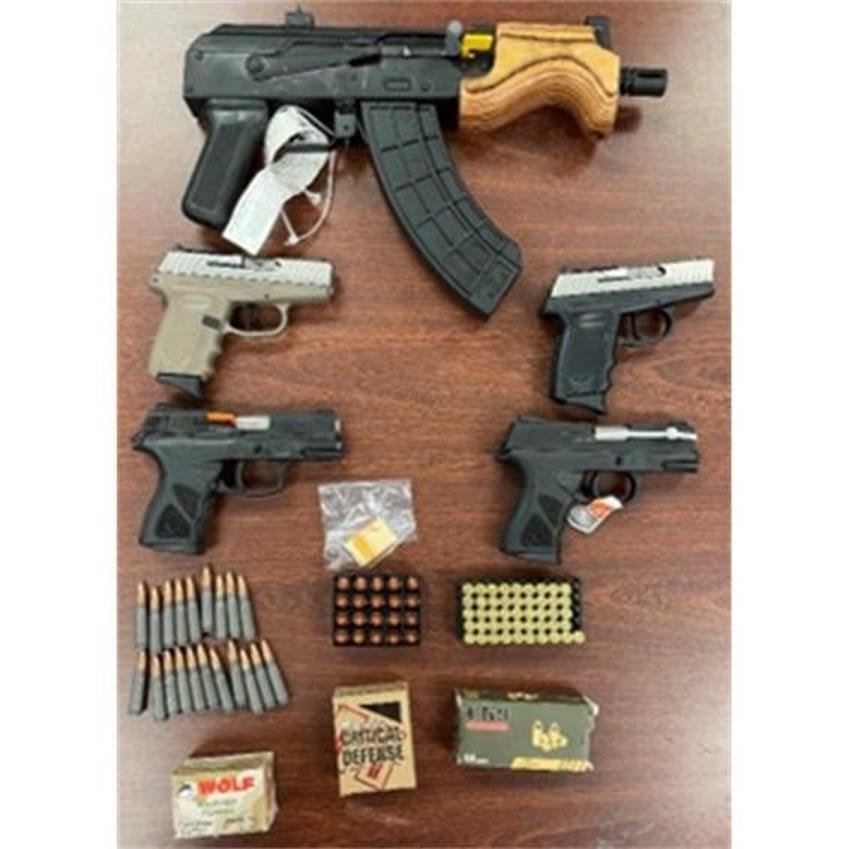
New York Attorney General Letitia James announced the convictions and sentencings of Anthony Ortiz Vasquez, Hector Vasquez, and Kiara Rodriguez for their roles in a gun and drug trafficking network that sold assault weapons, ghost guns, and other firearms, in addition to cocaine in New York City. Ortiz Vasquez, Vasquez, and Rodriguez were the final three members of this ring to be sentenced. In total, 13 defendants were convicted and sentenced after pleading guilty beginning in February 2025. The Office of the Attorney General’s (OAG) investigation led to the recovery of 74 firearms, including nine assault-style rifles, eight assault-style pistols, and four ghost guns, in addition to 500 grams of cocaine with a street value of $15,700 and over 2,100 rounds of ammunition.

“The success of this case is an important reminder that it will take all of us working together to end senseless gun violence in our communities,” said Attorney General James. “I thank my partners in law enforcement for their invaluable assistance in holding these traffickers accountable and removing dozens of dangerous and illegal guns and narcotics from our streets. My office will continue to do everything in its power to crack down on criminal operations that profit from violence and endanger our city.”

These sentences mark the conclusion of a 20-month prosecution, following a 10-month joint investigation led by the OAG’s Organized Crime Task Force (OCTF) and a task force (formerly Strike Force Group Z-13) comprised of the Drug Enforcement Administration (DEA), New York City Police Department (NYPD), New York State Police (NYSP), and Homeland Security Investigations (HSI). The joint investigation included physical and covert video surveillance, court-authorized wiretapping of cellular telephones, the analysis of electronic evidence, including cellphone communications, and other traditional investigative operations.

The investigation began in August 2023 with a focus on Ortiz Vasquez, who sold illegal firearms, illegal rapid-fire modification devices that transform semiautomatic weapons into automatic weapons, high-capacity magazines, and ammunition. Wiretap evidence revealed a coordinated network of individuals around Ortiz Vasquez working together to buy, store, transport, and sell these firearms and accessories. 

The investigation revealed that Ortiz Vasquez bought firearms from Nelphy Reyes-Peralta, Nestor Vasquez Vargas and his cousin Derek Vargas, Harry Laureano, and Jeffry Deschamps. Vasquez Vargas, who resides in Kissimmee, Florida, would mail illegal firearms – some of which he custom painted – to Ortiz Vasquez in Paterson, New Jersey. Ortiz Vasquez bought firearms from the other defendants at various locations in Paterson, often using codewords like “toys,” “sneakers,” or “panties” to refer to the guns when arranging purchases. Ortiz Vasquez and his sources also referred to ammunition as “food” and the illegal rapid-fire modification devices as “switches” when they communicated about sales. In addition to Ortiz Vasquez’s payments, Tiffany Diaz Fermin and brothers Carlos Torres and Juan Torres sent money transfers through Zelle and CashApp to pay Ortiz Vasquez’s sources.   

After buying the firearms, Iris Molina, Diaz Fermin, and Rodriguez stored firearms for Ortiz Vasquez at Molina, Diaz Fermin, and Ortiz Vasquez’s homes in Paterson. Ortiz Vasquez also enlisted his mother, Yadira Vasquez, to help move, hide, store, and pay for the firearms. 

The Torres brothers regularly assisted Ortiz Vasquez in driving the firearms, rapid fire modification devices, high-capacity magazines, and ammunition from Paterson, New Jersey to Washington Heights in New York City, where they were sold. The defendants consistently made their sales on the same street corner in Washington Heights. In addition, Deschamps, Laureano, Yadira Vasquez, and Rodriguez all transported firearms from New Jersey to Manhattan and were each present for at least one sale made by Ortiz Vasquez. The defendants used different methods to disguise the weapons and ammunition as they transported them, often wrapping guns in blankets and sheets or hiding them in reusable grocery bags. At least once, the defendants used a guitar case to hide an assault rifle while driving it to New York City.  

Ortiz Vasquez also sold 500 grams of cocaine in Washington Heights, which was consistently sourced from his brother, Hector Vasquez.

Assault rifles, ghost guns, ammunition, and a high-capacity magazine recovered by the investigation

Assault rifles, ghost guns, ammunition, and a high-capacity magazine recovered by the investigation

Assault rifles, ghost guns, ammunition, and a high-capacity magazine recovered by the investigation
An assault-style pistol, other firearms, and ammunition recovered by the investigation

The following individuals have now been convicted and sentenced:

  • Anthony Ortiz Vasquez, 26, of Paterson, NJ, was convicted of Criminal Sale of a Firearm in the First Degree, Criminal Sale of a Controlled Substance in the First Degree, Conspiracy in the Second Degree, and Conspiracy in the Fourth Degree and sentenced to concurrent sentences of 10 years in prison, followed by five years of post-release supervision on each of the Criminal Sale of Controlled Substance and Criminal Sale of a Firearm counts, and one to three years in prison on each of the Conspiracy counts.

     
  • Nelphy Reyes-Peralta, 48, of Wayne, NJ, was convicted of Criminal Sale of a Firearm in the First Degree and Conspiracy in the Fourth Degree and sentenced to concurrent sentences of five years in prison, followed by five years of post-release supervision on the Criminal Sale of a Firearm count, and one and one-third to four years in prison on each of the Conspiracy counts.

     
  • Nestor Vasquez Vargas, 21, of Kissimmee, FL, was convicted of Conspiracy in the Fourth Degree and sentenced to one to three years in prison.

     
  • Hector Vasquez, 38, of Passaic, NJ, was convicted of Criminal Sale of a Firearm in the Second Degree, Criminal Possession of a Controlled Substance in the Second Degree, and Conspiracy in the Fourth Degree and sentenced to concurrent sentences of three and a half years in prison, followed by five years of post-release supervision on the Criminal Sale of a Firearm count, three years in prison, followed by five years of post-release supervision on the Criminal Possession of a Controlled Substance Count, and one to three years in prison on the Conspiracy count.

     
  • Derek Vargas, 22, of Paterson, NJ, was convicted of Conspiracy in the Fourth Degree and sentenced to one and one-third to four years in prison.

     
  • Jeffry Deschamps, 33, of Paterson, NJ, was convicted of Conspiracy in the Fourth Degree and sentenced to one to three years in prison.

     
  • Carlos Torres, 23, of Paterson, NJ, was convicted of Criminal Sale of a Firearm in the First Degree and Conspiracy in the Fourth Degree and sentenced to concurrent sentences of eight years in prison, followed by five years of post-release supervision on the Criminal Sale of a Firearm count, and one and one-third to four years in prison on each of the Conspiracy counts.

     
  • Juan Torres, 22, of Paterson, NJ, was convicted of Criminal Sale of a Firearm in the First Degree and Conspiracy in the Fourth Degree and sentenced to concurrent sentences of five and a half years in prison, followed by five years of post-release supervision on the Criminal Sale of a Firearm count, and one and one-third to four years in prison on each of the Conspiracy counts.

     
  • Harry Laureano, 33, of Paterson, NJ, was convicted of Conspiracy in the Fourth Degree and sentenced to 364 days in jail.

     
  • Iris Molina, 41, of Paterson, NJ, was convicted of Conspiracy in the Fifth Degree and sentenced to three years of probation.

     
  • Tiffany Diaz Fermin, 29, of Paterson, NJ, was convicted of Conspiracy in the Fourth Degree and sentenced to 364 days in jail.

     
  • Yadira Vasquez, 43, of Hackensack, NJ, was convicted of Criminal Sale of a Firearm in the Third Degree and sentenced to time served.

     
  • Kiara Rodriguez, 24, of Hackensack, NJ, was convicted of Conspiracy in the Fourth Degree and sentenced to six months in jail, followed by the balance of five years of probation.

“The sentencing and conviction of these 13 individuals, along with the seizure of 74 firearms and cocaine, reflect the strength of the partnerships the DEA shares with our federal, state, and local law enforcement counterparts in targeting those who pose a threat to our communities,” said DEA New York Task Force Division Special Agent in Charge Christopher Roberts. “The removal of 17 assault style weapons, ghost guns, thousands of ammunitions, and illicit drugs underscores the grave risk these individuals posed not only to the neighborhoods they targeted, but also the brave law enforcement officers who confront them. From every borough to every block, the DEA remains steadfast in its commitment to protecting our communities from the devastating impact of illicit drugs and gun violence.”

“By moving assault style weapons, ghost guns, rapid-fire conversion devices, and cocaine from out-of-state and through a single street corner in Washington Heights, these defendants turned our neighborhoods into an open-air market for lethal firepower and narcotics,” said Homeland Security Investigations (HSI) Acting Special Agent in Charge Pete Gizas. “They exposed unsuspecting residents to the risk of sudden gunfire and drug-fueled violence — all for a profit that can no longer protect them from the consequences of their recklessness. This outcome was only possible because of the seamless partnership between HSI New York, the Attorney General’s Office, and our federal, state, and local law enforcement allies, and we will continue to stand shoulder to shoulder to keep our communities safer.”

“The defendants in this case were part of a brazen trafficking ring that funneled guns and drugs into our communities,” said NYPD Commissioner Jessica S. Tisch. “Over the course of this long-term investigation, the NYPD dismantled this criminal network, taking 74 deadly firearms — including assault-style rifles and untraceable ghost guns — along with 500 grams of cocaine and over 2,000 rounds of ammunition off our streets. I thank our NYPD investigators, law enforcement partners, the New York Attorney General’s Office, and all who worked to ensure that these criminals were held accountable.”

“Drug and weapon trafficking has long been a catalyst for violence and other criminal activities that plague our communities,” said New York State Police Superintendent Steven G. James. “The shut down and indictments resulting from this widespread trafficking ring exemplify the commitment law enforcement has in making our country a safer place. I thank the Attorney General’s Office for their partnership and our law enforcement colleagues for their dedicated police work that is succeeding in keeping dangerous drugs and weapons from infiltrating our neighborhoods.”

The Attorney General would also like to thank the joint task force members of NYPD, DEA, HSI, the Internal Revenue Service (IRS), and NYSP, the Passaic City (New Jersey) Police Department, the New Jersey Office of the Attorney General – Division of Criminal Justice (DCJ) Weapons Trafficking Unit, the Passaic County Prosecutor’s Office, the Manhattan District Attorney’s Office, the New Jersey State Police Weapons Trafficking North Unit, the Bergen County Sheriff’s Office, and the United States Postal Inspection Service for their valuable assistance and participation in this investigation.

The investigation was led by NYPD Detective/Task Force Officer (TFO) Hector Rodriguez and HSI New York personnel of the joint NYPD-DEA Strike Force Group Z-13, under the supervision of NYPD Sergeant Ryan Boylan and Commanding Officer Gene Ryerson, NYPD Lieutenant Michael Pomerantz, NYPD Associate Chief of Operations Levon Holley, and under the overall supervision of NYPD Chief of Detectives Joseph Kenny. HSI New York is overseen by Acting Special Agent in Charge (SAC) Pete Gizas. Dennis Acheson is the DEA Assistant Special Agent in Charge (ASAC). Christopher Roberts is the DEA Special Agent in Charge (SAC) for the New York Region, and Frank A. Tarentino, III is the Assistant Chief of Operations.

Illegal Alien from Honduras Sentenced for $89 Million Off-the-Books Payroll Tax Fraud Scheme Employing Illegal Aliens


Defendant and His Conspirators Caused a Combined Tax Loss of Over $38 Million and Facilitated Employment of Illegal Aliens

An illegal alien from Honduras was sentenced to 96 months in prison for his role in operating a years-long off-the-books cash payroll scheme that facilitated the employment of illegal aliens working in the United States. The scheme caused a total loss to the United States of more than $38 million.

According to court documents and statements made in court, from 2015 to 2022, Mario Flores, of Honduras, an illegal alien, conspired with others to create a series of shell companies to run an unlicensed check cashing and cash courier service business. These shell companies cashed approximately $89 million in checks from subcontractors in the construction industry, charging them a percentage of the dollar amount of the checks they cashed as a fee for this service. Through this scheme, construction contractors and subcontractors paid their workers in cash without withholding and paying required payroll taxes, allowing them to operate without regard to the workers’ legal authority to work in the United States. Flores also caused the filing of false tax documents with the IRS to conceal the scheme.

“Today, we held an illegal alien from Honduras accountable for a brazen scheme that stole more than $38 million from American taxpayers to facilitate the employment of illegal aliens,” said Assistant Attorney General Colin M. McDonald of the Justice Department’s National Fraud Enforcement Division. “This case exposes how unchecked illegal immigration fuels widespread payroll tax fraud and underground economies that harm American workers and taxpayers. This sentence sends a strong message: those who exploit our open borders, cheat the U.S. Treasury, and violate federal laws will face justice.”

“Homeland Security Investigations is committed to protecting the integrity of our financial system and enforcing our nation’s laws. Those who orchestrate large-scale payroll tax fraud and facilitate the illegal employment of unauthorized workers will be held accountable,” said HSI Acting Executive Associate Director John Condon. “HSI, alongside IRS Criminal Investigation and our federal, state, and local partners, remains dedicated to dismantling schemes that defraud the United States and undermine the integrity of our workforce.”

In addition, Flores and his conspirators defrauded workers’ compensation insurance companies by leasing their certificates of insurance to contractors and by providing false and fraudulent information to the insurers about, among other things, the number of workers covered by the insurance and the amount workers were paid.

Flores pleaded guilty to one count of conspiracy to defraud the United States and one count of conspiracy to operate an unlicensed money transmitting business. 

Iris Villafranca, Osman Zapata, and Francisco Alvarez, who conspired with Flores, were previously sentenced. Villafranca was sentenced to 17 years in prison. She was ordered to pay more than $38 million in restitution to the United States and forfeit $89 million of criminal proceeds from the scheme. Zapata was sentenced to more than four years in prison and was ordered to pay more than $2.5 million in restitution to the United States. Francisco Alvarez was sentenced to four years of probation and ordered to pay more than $2.3 million in restitution. Conspirator Michael Mayorga awaits sentencing.

Assistant Attorney General Colin McDonald of the Justice Department’s National Fraud Enforcement Division and U.S. Attorney Gregory W. Kehoe of the Middle District of Florida made the announcement.

IRS Criminal Investigation is investigating the case, with assistance from Homeland Security Investigations.  ICE ERO Miami (Orlando sub-office), Florida Highway Patrol, Customs and Border Protection, U.S. Marshals Service, State Department, and the Florida Department of Law Enforcement have assisted in arrest operations.

Senior Litigation Counsel Sean Beaty and Trial Attorney Kavitha Bondada of the Criminal Division’s Tax Section and Assistant U.S. Attorney Diane Hu of the Middle District of Florida are prosecuting the case. 

On April 7, the Department of Justice announced the creation of the National Fraud Enforcement Division. The core mission of the Fraud Division is to zealously investigate and prosecute those who steal or fraudulently misuse taxpayer dollars. Department of Justice efforts to combat fraud support President Trump’s Task Force to Eliminate Fraud, a whole-of-government effort chaired by Vice President J.D. Vance to eliminate fraud, waste, and abuse within Federal benefit programs.