Wednesday, October 7, 2026

On Anniversary of October 7 Attack on Israel, Governor Hochul Directs Flags to Half-Staff and Landmarks to Be Lit Yellow in Remembrance of the Victims


Governor Kathy Hochul today directed flags on State buildings to be flown at half-staff from sunrise to sunset on Wednesday, October 7 in mourning and honor of the victims of the Hamas attack on Israel three years ago. Additionally, the Governor directed landmarks to be illuminated in yellow in solidarity with the Israeli people and for the Israeli flag to be flown at the Capitol and Empire State Plaza.

“It’s hard to fathom that it has been three years since the October 7 Hamas massacre. Three years since the deadliest day for the Jewish people since the Holocaust,” Governor Kathy Hochul said. “The pain of that dark day has not faded. But neither has the strength, resilience and enduring hope of the Jewish people. Today, we remember the innocent lives stolen, stand with the survivors and the families forever changed, and pray for a lasting peace.”

Landmarks to be illuminated include:

  • One World Trade Center
  • Governor Mario M. Cuomo Bridge
  • Kosciuszko Bridge
  • The H. Carl McCall SUNY Building
  • State Education Building
  • Alfred E. Smith State Office Building
  • Empire State Plaza
  • State Fairgrounds – Main Gate & Expo Center
  • The “Franklin D. Roosevelt” Mid-Hudson Bridge
  • Grand Central Terminal - Pershing Square Viaduct
  • Albany International Airport Gateway
  • MTA LIRR - East End Gateway at Penn Station
  • Fairport Lift Bridge over the Erie Canal
  • Moynihan Train Hall
  • Roosevelt Island Lighthouse


The Federal Task Force to Combat Antisemitism Announces First Stop on The American Tour Against Hate


Today, the Department of Justice Task Force to Combat Anti-Semitism announced the first stop of the American Tour Against Hate will be in Southfield, Michigan on Wednesday, October 14. The Task Force’s national campaign reflects the Trump Administration’s steadfast commitment to eradicating antisemitism across the country. The Department of Justice, as the agency responsible for enforcing the nation’s civil rights laws, is carrying out the President’s mission. For more information and to register, please visit www.mizoa.org/events

Invitation for The American Tour Against Hate

The Tour is a first-of-its-kind federal initiative, bringing government resources and officials directly to local communities experiencing hate and discrimination.

“President Trump has made clear that this Administration will not tolerate antisemitism, and the Department of Justice is committed to implementing that directive,” said Attorney General Todd Blanche. “This national tour is an important step in ensuring communities across the country know the federal government stands ready to work with them to confront antisemitic threats, protect public safety, and uphold civil rights.”

"No American should live in fear of unjust discrimination or violence,” said Associate Attorney General Stanley E. Woodward, Jr. “The Department of Justice is working tirelessly to protect and defend all Americans’ right to freedom of speech and free exercise of religion. This event is sure to be a powerful evening.” 

"I am grateful to the President for the honor of leading this Task Force and Tour,” said Leo Terrell, Chair of the Department of Justice Task Force to Combat Anti-Semitism. “We are spearheading the fight against hate and prejudice wherever it appears across the country. Particularly on a day that was so painful for so many Jewish men and women around the world, we are proud to announce this event and look forward to gathering with many of you in Michigan.”

You can follow @thejusticedept and @leoterrelldoj for more updates. 

If you have been discriminated against, you can file a complaint with the Civil Rights Division at www.civilrights.justice.gov.

President Trump’s Executive Order on additional measures to combat antisemitism can be found at www.whitehouse.gov/presidential-actions/2025/01/additional-measures-to-combat-anti-semitism/.

Statement From Mayor Zohran Kwame Mamdani on the Third Anniversary of October 7


Today, Mayor Zohran Kwame Mamdani released the following statement on the third anniversary of the October 7 attacks:


This day is profoundly painful for so many New Yorkers. It marks three years since the horrific war crimes of October 7. On that day, Hamas killed more than 1,100 Israelis and abducted 251 others. We grieve alongside our many friends and neighbors who still carry that unthinkable loss.

The suffering did not begin nor end that day. It instead continued through the Israeli government’s devastating, ongoing genocide in Gaza, in which it has killed more than 74,000 Palestinians—including more than 21,000 children. Even since the so-called ceasefire, more than 1,400 Palestinians have been killed. That suffering has intensified with every Israeli bomb dropped on ambulances waiting outside hospitals, every drone strike targeting a residential building or journalist, and every shipment of food aid turned away at a border crossing. Many New Yorkers are reckoning with this unbearable grief, and we mourn alongside them—all while knowing that our tax dollars fund these war crimes.

Three years later, we must refuse to accept a world in which occupation and apartheid continue, where war crimes are met with impunity, and our federal government continues its complicity with every arms shipment.

To honor the dead, we must fight for a world in which every person can live with freedom, safety, and dignity.

EDITOR'S NOTE:

One small paragraph for the Jews and two large paragraphs for the Paletinians. On Mayor Mamdani's schedule today at 7 PM he attends an October 7th vigil. At 9 PM the mayor meets with Palestinian New Yorkers. Thus we see the true Zohran Mamdani the Antisemite. 

Permits Filed for 65 West 181st Street in University Heights, The Bronx


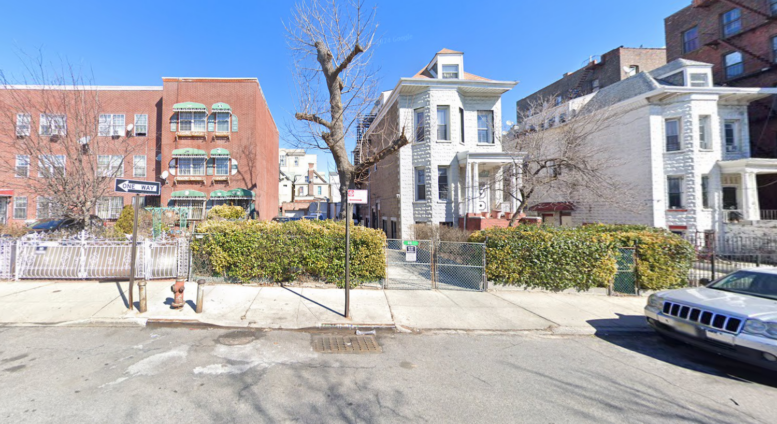
Permits have been filed for an eight-story residential building at 65 West 181st Street in University Heights, The Bronx. Located between Aqueduct Avenue East and Grand Avenue, the lot is near the 183rd Street subway station, served by the 4 train. Shimshon Grunstein of AFS Systems Inc. is listed as the owner behind the applications.

The proposed 80-foot-tall development will yield 37,014 square feet designated for residential space. The building will have 69 residences, most likely rentals based on the average unit scope of 536 square feet. The concrete-based structure will also have a 20-foot-long rear yard.

Nikolai Katz Architect is listed as the architect of record.

Demolition permits have not been filed yet. An estimated completion date has not been announced.

One Webb Ave Completes Construction In Harrison, Westchester County


Construction is finished on One Webb Ave, a five-story residential building at 1 Webb Avenue in Harrison, Westchester County. Designed by Minno & Wasko Architects and Planners and developed by The NRP Group in partnership with RPW Group, the structure yields 200 rental units in studio to two-bedroom layouts.

The unit mix comprises 30 studios, 75 one-bedrooms, 11 one-bedrooms with dens, and 84 two-bedrooms, all with in-unit washers and dryers and smart locks. Five percent of the residential inventory is reserved for residents earning 80 percent of the area median income. The building is LEED Silver certified.


Amenities include a fitness center, an indoor lounge, a shared workspace with individual work pods, an indoor dining room, a commuter coffee lounge, and a children’s playroom. Outside, two landscaped courtyards feature grilling and lounge areas, a heated pool, and fire pits. Five acres of the site have been preserved as open space, with a walking trail system open to the public, a dog park, and a community garden operated by the West Harrison-based nonprofit Our New Way Garden.

The property sits adjacent to RPW Group’s 800 Westchester Avenue office building, the onetime corporate home of General Foods.

AIDS Healthcare Foundation Agrees to Pay $1.44M to Settle False Claims Act Allegations


AIDS Healthcare Foundation, a non-profit organization based in Los Angeles, California, has agreed to pay $1.44 million to resolve allegations that it violated the False Claims Act by submitting or failing to delete false or invalid diagnosis codes in order to increase payments that it received from the Medicare Advantage program.

“The government relies on Medicare Advantage participants to submit accurate, substantiated diagnosis codes that are adequately documented in a medical record to ensure proper payment,” said Assistant Attorney General Brett A. Shumate of the Justice Department’s Civil Division. “The Justice Department will continue to protect the public fisc and hold accountable those who receive inflated payments by knowingly providing or failing to correct false information.”

“The integrity of our federal healthcare programs, including Medicare Advantage, must be preserved,” said First Assistant U.S. Attorney Bill Essayli for the Central District of California. “We will not tolerate companies undermining the interests of Medicare patients for financial gain.”

“Medicare Advantage organizations have a responsibility to ensure the accuracy of diagnosis codes they submit for payment. When entities fail to correct information they know is wrong, they undermine the integrity of a program millions of seniors rely on,” said Acting Deputy Inspector General for Investigations Miranda L. Bennett of the U.S. Department of Health and Human Services Office of Inspector General (HHS‑OIG). “HHS‑OIG will continue to safeguard taxpayer funds by holding organizations accountable when their failures inflate federal payments and compromise program trust.”

Under the Medicare Advantage (MA) Program, also known as Medicare Part C, Medicare beneficiaries may opt out of traditional Medicare and enroll in private health plans offered by insurance companies known as Medicare Advantage Organizations, or MAOs. The Centers for Medicare & Medicaid Services (CMS) pays the MAOs a fixed monthly amount for each Medicare beneficiary enrolled in their plans. CMS adjusts these monthly payments to account for various “risk” factors that affect expected health expenditures for the beneficiary. In general, CMS pays MAOs more for sicker beneficiaries expected to incur higher healthcare costs and less for healthier beneficiaries expected to incur lower costs. To calculate the payment amounts, CMS uses a health-based risk adjustment model — the Hierarchical Conditions Category (HCC) model — that takes into account diagnoses reported by healthcare providers. In general, the more severe the diagnosis or costly the associated treatment, the higher the risk score and the higher the corresponding payments to the MAO. Diagnosis codes submitted to CMS must be supported by the beneficiaries’ medical records and be accurate, complete, and truthful, based on the best knowledge, information, and belief of the MAO making the submission.

AIDS Healthcare Foundation (AHF) provides care and services to HIV patients in the United States and other countries. AHF’s Managed Care Division (doing business as Positive Healthcare Partners) operated special needs MA plans for Medicare beneficiaries who have HIV and lived in Florida, Georgia, or California.

The settlement resolves allegations that, for payment years 2017 to 2023, AHF failed to timely investigate and delete diagnosis codes that were either inaccurate or not documented in medical records. Beginning in around 2017, AHF’s risk adjustment coders conducted chart reviews to identify inaccurate or unsupported diagnosis codes for deletion. As part of this process, AHF’s risk adjustment coders maintained “Delete Research” spreadsheets, which listed diagnosis codes they identified as potentially lacking support in the medical record but needing further research. Although AHF knew that it was required to investigate and delete inaccurate and unsupported diagnosis codes within 60 days, AHF failed to timely investigate and delete the codes. AHF did not delete most of the inaccurate or unsupported diagnosis codes in the “Delete Research” spreadsheets until 2024 or 2025 — well after AHF was on notice that the codes potentially lacked support and only after being notified of the United States’ investigation.

The United States further alleges that, for payment year 2017, AHF knowingly submitted diagnosis codes for HIV (ICD-10 B20) where the diagnosis was not documented in any medical record for a face-to-face visit, in violation of CMS requirements that all diagnosis code submissions must be documented as a result of a face-to-face visit.

The civil settlement resolves claims brought under the qui tam or whistleblower provisions of the False Claims Act by Donna Irons, a former risk adjustment coder at AHF. Under the qui tam provisions, a private party can file an action on behalf of the United States and receive a portion of any recovery. The qui tam case is captioned United States ex rel. Irons v. AIDS Healthcare Foundation d/b/a Positive Healthcare Partners, Civil Action No. 23-cv-2160 (C.D. Cal.). Ms. Irons will receive $259,200 as her share of the federal recovery.

AHF received credit under the Department of Justice’s guidelines for taking disclosure, cooperation, and remediation into account in False Claims Act resolutions, Justice Manual § 4-4.112. In addition to cooperating in the government’s investigation and enhancing its compliance program, AHF proactively remediated its conduct during the course of Department’s investigation by submitting deletes for diagnosis codes that, based on review of medical records, were not supported.

The resolution obtained in this matter was the result of a coordinated effort between the Justice Department’s Civil Division, Commercial Litigation Branch, Fraud Section and the U.S. Attorney’s Office for the Central District of California, with assistance from the Department of Health and Human Services, Office of Inspector General.

The investigation and resolution of this matter illustrate the government’s emphasis on combating healthcare fraud. One of the most powerful tools in this effort is the False Claims Act. Tips and complaints from all sources about potential fraud, waste, abuse, and mismanagement, can be reported to the Department of Health and Human Services at 800-HHS-TIPS (800-447-8477).

This year the Administration launched the Task Force to Eliminate Fraud and the National Fraud Enforcement Division to enhance the Administration’s war on fraud, waste, and abuse in federal programs. When unscrupulous actors exploit these programs for their own financial gain, they defraud the government, harm the people these programs are designed to aid and protect, and undermine American businesses that play by the rules. The Civil Division’s FCA enforcement plays a critical role in combatting such fraudulent schemes, recovering billions of dollars for the American taxpayers, and holding wrongdoers accountable. FCA matters will continue to be on the forefront of the battle against fraud, and the Civil Division’s FCA work will support and advance the mission of the Task Force to Eliminate Fraud and the National Fraud Enforcement Division.

The claims resolved by the settlement are allegations only and there has been no determination of liability.

Mayor Mamdani Appoints Christopher Watler as Chair of the Board of Correction


Watler has dedicated his career to fighting for a more equitable criminal legal system and expanding pathways to successful reentry 


As Chair, Walter will advance the administration’s commitment to improving conditions for people in custody while closing Rikers Island 


Mayor Zohran Kwame Mamdani announced the appointment of Christopher Watler as Chair of the Board of Correction (BOC), the independent body responsible for overseeing the City’s jail system. Watler will lead the Board as the Mamdani administration works to improve conditions for people in custody and the staff who serve them, strengthen accountability across the jail system and finally close Rikers Island.

Interim Chair Felipe Franco will continue serving as a member of the BOC.

Watler has dedicated his career to fighting for a more equitable criminal legal system. Most recently, he served as Executive Vice President of the Center for Employment Opportunities (CEO), where he led efforts to connect people returning from incarceration with employment opportunities and reentry services.

The BOC is charged with establishing and ensuring compliance with minimum standards governing conditions of confinement, correctional health and mental health care in all City correctional facilities.

“Christopher Watler has spent his career helping New Yorkers navigate a criminal legal system that too often fails to treat them with the dignity and respect they deserve. He understands that community safety and justice go hand in hand, and that means improving conditions for people in custody, supporting the staff who care for them and finally closing Rikers Island. I am confident he will lead the Board of Correction with integrity and an unwavering commitment to that work,” said Mayor Zohran Kwame Mamdani. “I also want to thank Felipe Franco for his leadership during this period of transition. Because of his service, the Board continued its essential work without interruption.”

“I am honored by this appointment and deeply grateful to the Mayor for entrusting me with this position,” said Christopher Watler, incoming Chair of the Board of Correction. “For too long, the people under care in our jails have been denied the dignity, safety and justice that the law promises and our conscience demands.  This great city is my home and the people incarcerated in our jails are our neighbors, sons and daughters. Like every New Yorker, they deserve the same access to justice, health care, jobs and housing that we all want. In this position, I look forward to working with my colleagues on the board, the dedicated BOC staff, NYC DOCs leadership, union leaders, advocates, City Council, the Correctional Health Services Team, Remediation Manager, Federal Monitor and other partners to ensure the safety and humane treatment of the people held in the city’s care and the safety of our staff and partners working in the jails.”

“We have set this agency on a course to improve conditions for all who live and work in our jails and the Board of Correction is a vital partner in fulfilling that mission,” said New York City Correction Commissioner Stanley Richards. “Chair Watler brings a wealth of experience that makes him exceptionally well-suited for this role, and we look forward to working with him.”

“The Board of Correction is critical to our shared goal of oversight and reform in New York City's jails.” said Public Advocate Jumaane D. Williams. “The task ahead is immense, and I look forward to working with incoming Chair Watler to faithfully implement reforms like Local Law 42, expand transparency and accountability, and protect people on both sides of the bars as we reject failing practices and build systems that deliver justice and progress.” 

About Christopher Watler:

Christopher Watler is a nonprofit leader who has dedicated his career to fighting for a more equitable criminal legal system.

As Executive Vice President of CEO, Watler oversees efforts to build and promote reentry and diversion programs in more than 30 cities across the country. He previously served as Executive Director of CEO’s New York State program, where he led efforts to connect recently incarcerated New Yorkers with job opportunities and supportive services.

Before joining CEO, Watler spent more than two decades at the Center for Justice Innovation, where he developed reentry and diversion programs for young people and adults, as well as eviction prevention programs for housing court litigants.

Watler is a graduate of the State University of New York at Purchase, where he received a bachelor’s degree in political science, and John Jay College, where he received a master’s degree in public administration. A native New Yorker and the proud son of Jamaican and Honduran immigrants, Watler lives in Bedford-Stuyvesant with his family.

Attorney General James Issues Voter Guidance to Inform New Yorkers of Their Rights Ahead of November Election


New York Attorney General Letitia James issued guidance to inform New York voters of their rights and help them vote safely in the November 3 general election. With early voting set to begin statewide on Saturday, October 24, Attorney General James reminded voters that state and federal laws protect their right to cast a ballot free from intimidation, harassment, or interference from anyone, including government officials and armed federal agents. Attorney General James also released new guidance on voters’ rights to language assistance and sent a letter to local Boards of Elections (BOEs) and law enforcement agencies, reminding them of their responsibility to stop voter intimidation and protect every voter at the polls

“Every New Yorker has the right to vote freely and safely, without fear of being threatened or harassed in the voting booth,” said Attorney General James. “I will not let anyone or anything stand between New Yorkers and the ballot box. I encourage all New Yorkers who encounter voter intimidation or suppression efforts to report the incident to my office immediately.”

The Office of the Attorney General (OAG)'s Election Protection Hotline will be available to help voters resolve problems from Saturday, October 24 through Wednesday, November 4. New Yorkers can call 866-390-2992 or submit a complaint online. Anyone who witnesses potentially dangerous or violent conduct should call 911 immediately.

Key Dates and Deadlines

New York voters should keep the following dates and deadlines in mind as they make a plan to vote:

  • Saturday, October 24: Last day to register to vote, and last day to request a mail ballot online or by mail.
  • Saturday, October 24 - Sunday, November 1: In-person early voting.
    • New York City voters are assigned an early voting site by the New York City BOE, which may be different from their Election Day poll site. New York City voters can find both sites on the NYCBOE website.
    • Voters outside New York City may vote at any early voting site in their county and can find locations through their county board of elections or the New York State BOE Poll Site Search.
  • Monday, November 2: Last day to request a mail ballot in person at the local BOE.
  • Tuesday, November 3: Election Day. Polls are open statewide from 6 a.m. to 9 p.m.
    • Mail ballots must be postmarked by Election Day and received by the county BOE by Tuesday, November 10. Because of recent changes in how the U.S. Postal Service applies postmarks, a ballot dropped in a mailbox may not be postmarked for a day or more.
    • Voters are encouraged to mail in their mail ballots as early as possible or drop their ballot off in person at their county BOE, any early voting site in their county, or any open poll site in their county by 9 p.m. on Election Day.

Know Your Rights

Every New York voter has the right to vote freely and without fear of intimidation, coercion, or threats to their safety. Every voter has the right to:

  • Vote without showing photo ID. New York never requires photo identification to vote. If a voter is voting for the first time in their district and did not provide identification when they registered, they may be asked to confirm their name and address. They can choose to show a photo ID or a copy of a current utility bill, bank statement, government check, paycheck, or other government document with their name and address. If they have none of these, they can still cast an affidavit ballot.
  • Refuse demands for ID or proof of citizenship from poll watchers or observers. Only election officials can ask for identification, and only in the limited case above. A poll watcher, observer, or any other person demanding to see a voter's ID or proof of citizenship may be engaging in illegal voter intimidation.
  • Vote in private. No one may stand anywhere that lets them see how a person votes, and no one may be within three feet of the ballot scanner, ballot marking device, or privacy booth while someone is using it. It is a crime for anyone to ask to see a person’s completed ballot. However, voters may bring a trusted individual to the polling site to help fill out their ballot.
  • Cast an affidavit ballot. If a person's name is not on the voter list but they believe they are eligible and at the right polling site, they can request an affidavit ballot. Election officials will count it once they confirm eligibility and the voter's address.
  • Stay in line. If someone is in line when polls close, they still have the right to vote.
  • Vote free from campaigning. Electioneering is banned inside polling places and within 100 feet of the entrance. Within that zone, no political banners, buttons, posters, or placards are allowed, and no one may urge anyone to vote a certain way.
  • Vote with a criminal record. If someone is in jail awaiting trial, incarcerated on a misdemeanor, or on parole or probation, they are eligible to vote. If a person has been released from prison after a felony conviction, they are eligible to vote but may need to re-register. However, people currently incarcerated for a felony conviction cannot vote.

Language Access

New Yorkers who have difficulty reading or writing in English have the right to bring someone to the polls to help them vote. The person helping does not have to be a U.S. citizen or a registered voter and can be a minor, family member, or friend – it just cannot be the voter's employer, an agent of the employer, or an officer or agent of the voter’s union.

The helper can assist throughout the entire voting process, including inside the voting booth, but may be asked to swear an oath that they will not improperly influence anyone's vote. If a voter does not have anyone to help them, two poll workers from different political parties or a designated interpreter can assist.

Under the New York Voting Rights Act and federal law, certain BOEs, counties, cities, towns, villages, and school districts must provide assistance to voters who do not speak or read English well. Where these requirements apply, local governments must:

  • Make all voting materials and election information that are available in English also available in the required languages;
  • Provide translated ballots, voter registration forms, and other written materials, including information about absentee and mail voting; and
  • Provide oral language assistance, such as interpreters or bilingual poll workers. 

Voters can contact their county board of elections to learn whether it provides language assistance. Questions about language access can be sent to OAG at votinglanguage@ag.ny.gov.

Accessibility and Accommodations

Under New York law, voters with disabilities must receive reasonable accommodations to ensure meaningful access to voting.

  • If voting in person:
    • A trusted individual may help in the voting booth. The person helping does not have to be a U.S. citizen or a registered voter and can be a minor, family member, or friend – it just cannot be the voter's employer, an agent of the employer, or an officer or agent of the voter’s union.
    • Election inspectors can assist and provide assistive devices.
    • Poll workers can offer a chair, let someone hold a place in line, or move a person to the front if they cannot stand for long periods.
  • If voting by mail:
    • Voters can request an accessible ballot, which comes with a postage-paid return envelope.
    • Voters can sign the security envelope on the raised marker, or anywhere else on the envelope if signing on the marker is difficult.
    • Voters can mark their ballot electronically using their own assistive technology.

Recognizing Voter Intimidation

Under state and federal law, it is illegal for anyone to intimidate, threaten, or coerce voters to interfere with their right to vote. It is also illegal to obstruct or impede someone trying to vote or participate in the voting process. Examples of potentially illegal voter intimidation include:

  • Individuals or groups patrolling outside polling places and trying to scare people out of line;
  • Poll watchers aggressively challenging large numbers of voters, or targeting voters of a particular background, to create long lines and false fears of illegal voting;
  • Poll watchers standing near privacy booths or in unauthorized areas, recording or photographing voters, or following or harassing voters;
  • Civilians dressing as law enforcement officers and harassing voters;
  • People carrying weapons or wearing foreign military uniforms or military gear at polling locations; and
  • People spreading rumors that voting will have negative consequences.

Courts have also found that threatening to evict someone for voting, threatening to share voter information with debt collectors, threatening to use voter information to track down old warrants, publishing voters’ names and addresses online (“doxing”), and following voters to the polls while talking loudly about prosecuting them for illegal voting all constitute illegal voter intimidation. The First Amendment does not protect true threats or false statements meant to keep people from voting.

It is a felony to bring a firearm, rifle, or shotgun to a polling place in New York, or to threaten or harass someone with other dangerous objects, such as a baseball bat, tire iron, knife, or hammer.

Poll Watchers and Federal Election Monitors

Poll watchers can observe and report problems, but they cannot interfere with voters. Under New York law, poll watchers must be appointed in writing by a political party, independent body, candidate, or ballot proposal committee, and their certificate must be delivered to the election inspector. Each organization may have no more than three poll watchers per election district at a time, and only one may be inside the guard rail where election inspectors work.

Poll watchers may challenge a voter's eligibility in appropriate circumstances, but they may not:

  • Solicit votes or wear, carry, or hand out campaign literature, buttons, posters, or banners;
  • Tamper with election materials, including posted signs or results tapes;
  • Protest an election inspector's ruling on a voter challenge; or
  • Follow a voter to the privacy booth, ballot scanner, or ballot marking device.

A poll watcher who blocks voters from reaching the voting booths can be ordered to remain seated and removed if they refuse.

The U.S. Department of Justice (DOJ) has announced plans to send monitors to polling places during the November election and may send monitors to New York. These monitors may not demand identification, challenge voters, direct or interfere with poll workers, or campaign or engage in political activity. DOJ monitors typically coordinate with local election officials in advance. Poll workers who encounter someone identifying as a DOJ monitor without prior notice should contact their county election officials.

Law Enforcement at Poll Sites

It is a federal crime to order or keep troops, military personnel, or armed federal officers, including U.S. Immigration and Customs Enforcement (ICE), U.S. Customs and Border Protection (CBP), or Federal Bureau of Investigation (FBI) agents, at a poll site. In addition, members of the military may not use force, threats, or intimidation to stop anyone from voting, and government officials may not use their authority to interfere in a federal election. 

New York law also prohibits local governments and their employees from granting immigration enforcement officers access to a polling location in violation of these protections, unless they present a valid judicial warrant or court order.