Ahead of an oversight hearing on visiting Rikers Island, the New York City Council released a report outlining the challenges New Yorkers face while visiting a loved one being held at the jail. The investigation found visiting Rikers to be an “all-day” event, hindered by poor communication and information for visitors, long waiting periods, arbitrary visit denials, and unhelpful interactions with Department of Correction (DOC) staff. Investigators also observed apparent failures to comply with the regulations governing the visiting process, including those set by the Board of Correction’s (BOC) Minimum Standards and DOC’s own internal Visit Procedures Directive. The Council’s findings corroborate the experiences of some New Yorkers who have described visiting loved ones on Rikers as an arduous, confusing, and frustrating process.
The report, entitled Still Waiting, can be found here.
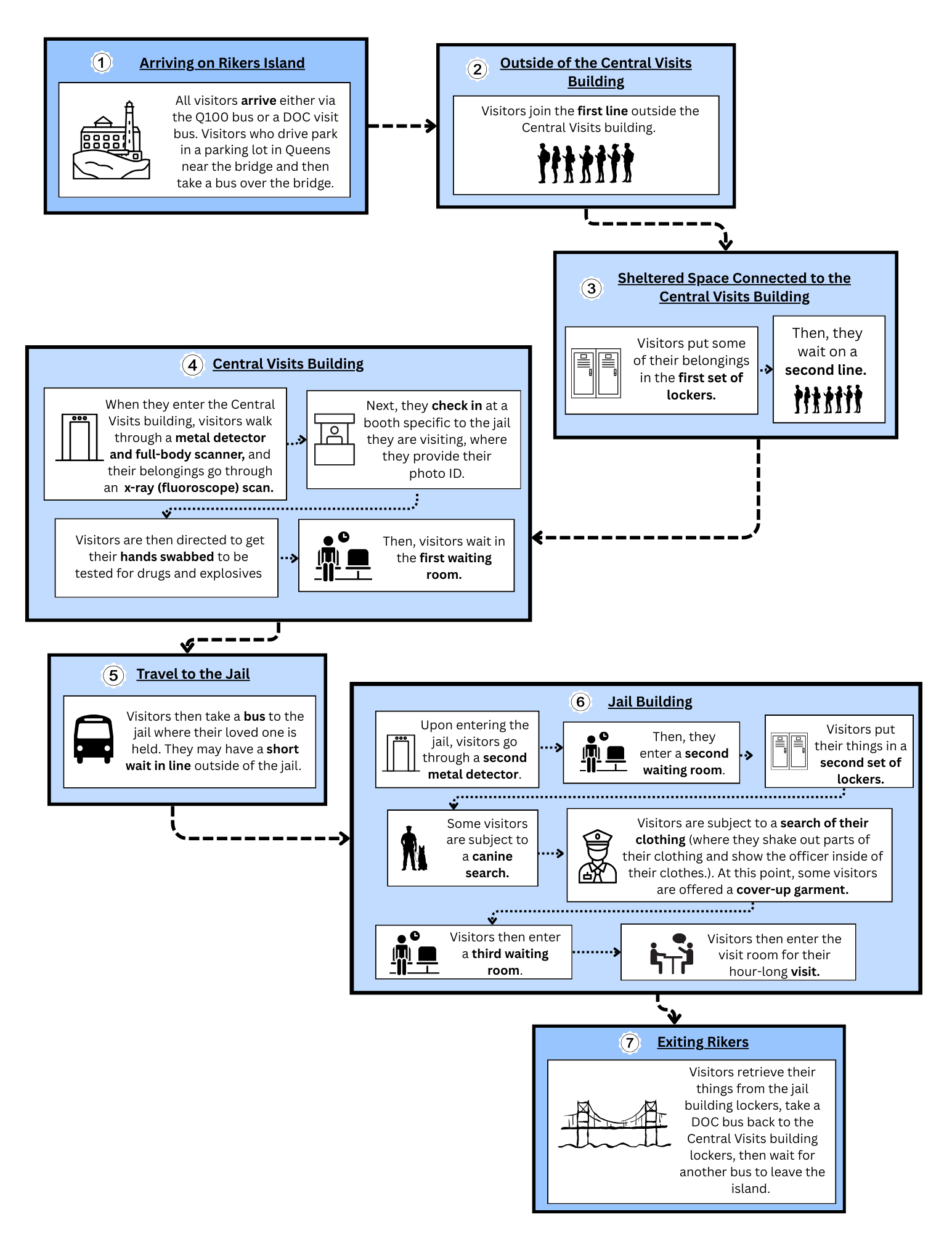
A flowchart depicting the process of a typical visit to Rikers, as observed by an investigator, can be viewed here.
“After a long trip to Rikers Island, New Yorkers who are visiting their loved ones too often encounter hurdles and barriers that make their experiences frustrating,” said Speaker Adrienne Adams. “Visiting someone at Rikers can be an emotional process, and the Department of Correction should take steps to ensure it is improved. Reforms to this process are paramount, and the difficulties described in this investigation only emphasize the need for the next mayoral administration to act with urgency in transitioning to a borough-based system that incorporates them. I thank the Council staff for their work and all those who participated in this important investigation.”
To understand and examine the visiting process at Rikers Island, the Council’s Oversight and Investigations Division reviewed previous Council hearings, held meetings with organizations familiar with Rikers visits, conducted interviews with individuals who had recently visited the jail system, visited a person detained on the Island, and attended an observation tour led by DOC.
The Council’s investigation revealed the following issues with the Rikers Island visiting process:
- Visiting Rikers Island can take several hours, not including travel to the Island. In interviews, visitors shared that it had taken them over five hours for a one-hour visit. A Council investigator who took a recent trip arrived at 12:30 pm and left at approximately 7:00 pm. According to DOC’s own internal study, visitors spend an average of four-and-a-half hours on the Island for a visit.
- Visitors can wait for long periods of time outside the Benjamin Ward Visit Center without available seating or proactive information about access to restrooms or water fountains. Interviewees shared experiences of waiting outside the Visit Center for over an hour, and a Council investigator waited for an hour and 15 minutes (including 45 minutes after the start of visiting hours).
- DOC’s publicly available online information and posted signs on the Island fail to adequately prepare individuals for the visiting process. Interviewees described procedures that varied each time they visited, and feeling unprepared for the search process based on what they learned from others or could read online.
- Some visitors are denied visits due to their attire and are not offered cover-up garments, as required by DOC’s Visit Procedures Directive. A Council investigator’s visit and interviews revealed multiple instances of people being turned away at the Benjamin Ward Visit Center due to their clothing, without being offered a cover-up garment. DOC’s internal guidelines state that visitors should be offered cover-up garments, and those willing to wear one should be allowed to proceed through the process.
- Some visitors found DOC staff to be unhelpful when navigating the visiting process. Interviewees shared that they found officers to be inconsistent in their application of rules.
“This investigation makes clear what families have been saying for years: visiting a loved one on Rikers is an exhausting, confusing, and often dehumanizing ordeal,” said Council Member Gale Brewer, chair of the Committee on Oversight and Investigations. “This report underscores the need for a more consistent, humane, and efficient visiting process. We heard, for example, from visitors who waited more than an hour outside without access to seating, restrooms, or drinking water—conditions that fall short of the standards families should expect. Maintaining family connections is essential to the wellbeing of people in custody and to the stability of their loved ones, and the City has a responsibility to ensure those visits are safe, respectful, and accessible. I urge the Department of Correction to act swiftly on these findings.”
To ensure New Yorkers can see their loved ones with courtesy and respect, and without being denied access or experiencing long delays, the Council recommends the following improvements to the visiting process at Rikers:
- DOC should accelerate its assessment of the visiting process, publish its findings, and immediately take steps to enact improvements. Additionally, it should implement an online scheduling system as soon as possible.
- DOC should add benches and clear signage directing visitors to the restrooms closest to the outdoor waiting area, in compliance with the Board of Correction’s Minimum Standards.
- In its Visit Procedures Directive, trainings, and a memo to all staff, DOC should clarify that dress code compliance should be assessed only once, at each jail, and that any visitor willing to wear a cover-up garment should not be denied visiting access.
- DOC should update its website and relocate on-site signs to ensure that visitors understand the rules and are properly prepared for visits.
- DOC should evaluate its training for correction officers who work with visitors and assess the roles that non-uniformed employees or volunteers can play in family visits.

No comments:
Post a Comment