Wednesday, January 14, 2026

Governor Hochul Announces Child Care Expansion Pilot Partnerships With 3 Counties as Part of Statewide Investments in Universal Child Care

an outline of a news clip in white on a blue background

Under New Pilot Program, State Will Partner With Dutchess, Monroe and Broome Counties to Expand Child Care in Their Communities

Part of Governor Hochul’s Statewide Plan to Deliver Universal Child Care For All New York Children Under 5 Through Statewide Universal Pre-K, Launch of 2-Care and Reaching Universal 3K Access in NYC, and Expanded Access to Child Care Subsidies

As part of her $4.5 billion investment to deliver statewide universal child care, Governor Hochul today announced the State will partner with Dutchess County, Monroe County and Broome County in a new State pilot program to help counties offer additional child care options in their communities. This pilot program will include a total of $60 million in State funding, along with new investments from each of the three counties, as they expand child care access with a particular focus on serving children 0-3.

This pilot program is one of many investments that Governor Hochul is making to help deliver universal child care for all under the age of five across New York State, saving New York families billions of dollars each year.

“I'll never stop working to make life more affordable for New Yorkers – and that's why my plan will deliver universal child care for families all across New York,” said Governor Hochul. “As part of my plan to support every county statewide, this new pilot program will help counties develop and expand new models for providing child care for families, regardless of their income status.”


Governor Hochul’s statewide plan to deliver universal child care for all New York children under the age of five also includes:

Achieving Truly Universal Pre-K

While four-year-olds in some parts of New York have long had access to Pre-K, there are dozens of school districts that have not yet been able to make it available. Governor Hochul is providing additional support to ensure truly universal Pre-K for all four-year-olds in the State by the start of the 2028-2029 school year.

The State will not only fund additional seats to achieve universality but will also increase funding for existing seats, bringing them up to the greater of $10,000 or the applicable school district’s current selected foundation aid per pupil, so that districts have what they need to provide high-quality Pre-K. This combination reflects a commitment of roughly a half-billion dollars and will ensure that every child in New York State enters kindergarten ready to learn.

Continuing Access to Low-Cost, Affordable Child Care Assistance Programs

Under Governor Hochul’s leadership, New York has more than doubled investment in the state’s Child Care Assistance Program (CCAP), which provides subsidies to help low-income families access child care. By dramatically increasing the State’s investments in the program while expanding eligibility, the program now supports 2.5 times more children — an additional 100,000 — than when Governor Hochul took office; the number of children served has increased by almost 25 percent in the past year alone. Most of the families of the 170,000 children served by the program pay no more than $15 per week for child care.

This year, Governor Hochul will continue to grow the State’s investment in child care subsidies for those that need it most with a $1.2 billion increased investment, bringing the total available for subsidies to over $3 billion. This is more than 3.5 times more than the $832 million provided prior to the Governor taking office, and a nearly 40 percent increase from what was made available in the FY 2026 Enacted Budget.


Launching 2-Care and Reaching Universal 3K Access in NYC

New York City has already launched universal Pre-K and 3K, and Governor Hochul will partner with New York City to age this program down and launch an unprecedented initiative to offer entirely free child care for two-year-olds within New York City.

The Governor is committing to fully fund the first two years of the city’s implementation. As envisioned by the new mayoral administration, the first year of the program will focus on high-need areas selected by New York City and expand to serve all interested families across the city by year 4. In addition, the Governor will partner with New York City to strengthen and fix the city’s 3K program and ensure it achieves its promise of universal access.

Office of Child Care and Early Education

A new Office of Child Care and Early Education will drive the implementation of high-quality, universal child care in New York State. The Office will oversee and support roll out of universal Pre-K, continued investment in 3K, launch of 2-Care and other innovative care options, expansion and improvement of vouchers, and ongoing support for the workforce.

Supporting the Workforce Through Early Childhood Educator Preparation

Governor Hochul’s plan to strengthen New York’s early childhood education workforce includes expanding existing workforce scholarships, seeking opportunities for new Workforce Pell grants, and directing SUNY and CUNY to take a number of steps to expand and streamline early childhood education programs.

Expanding the Child and Dependent Care Credit to Better Support Families

Governor Hochul will expand and simplify the child and dependent care tax credit to provide an additional average benefit of $575 for 230,000 tax filers. She will also undertake a thorough review of existing tax incentives for employers with the goal of helping them better serve the child care needs of their employees.

Mayor Mamdani Signs Executive Order to Inventory and Cut Fines and Fees for Small Businesses


Executive Order 11 directs City agencies to identify ways to cut costs and simplify regulations for small businesses

TODAY, New York City Mayor Zohran Mamdani signed Executive Order 11 to create an inventory and identify ways to cut the fees and fines that small businesses pay in New York City. Small businesses face a complex web of over 6,000 regulations and rules, which make it harder to start or grow a business in New York, and drives up costs for businesses and customers alike. The executive order directs the Deputy Mayor for Economic Justice, Julie Su, and seven agencies to create a comprehensive inventory of fees and civil penalties, identify ways to reduce and streamline them, and advance policy reforms to do so in the coming months. Mayor Mamdani signed the executive order on the counter of a locally-owned small business in Cypress Hills, Brooklyn. 


“You cannot tell the story of New York without our small businesses. Yet, our City has long made it too hard for these same businesses to open their doors, and to keep them open. With today’s Executive Order, we will bring that chapter to an end, instead delivering relief to businesses from the fines and fees that drive up their costs,” said Mayor Zohran Kwame Mamdani. 


“The small business owners who give this city its identity and vibrancy have too rarely been considered in the backrooms where decisions are made. Not on our watch,” said Deputy Mayor for Economic Justice Julie Su. “Mayor Mamdani was elected to City Hall not solely because his campaign offered solutions for the countless New Yorkers tired of rents being raised, childcare costs soaring year after year, and public transit failing those who rely upon it. He was elected because he spoke to the small business owners of this city as partners and because he knows that when New Yorkers feel a challenge, small business owners often feel it first. For us, uplifting small businesses is a core responsibility of city government.” 


Under Executive Order 11, seven City agencies, under the direction of the Deputy Mayor for Economic Justice, must create a full inventory of the fees and civil penalties that they collect and identify whether they can be reduced within 45 days. Within 90 days, these agencies must determine which fees are unnecessary and can be eliminated through a rulemaking process. Within 180 days, city officials will identify even further fees and penalties that require legislative action to be reduced. Lastly, within the next year, city agencies will create a report on the feasibility of an amnesty and relief program for business owners.  


Housing Lottery Launches for 29 Featherbed Lane in Morris Heights, The Bronx


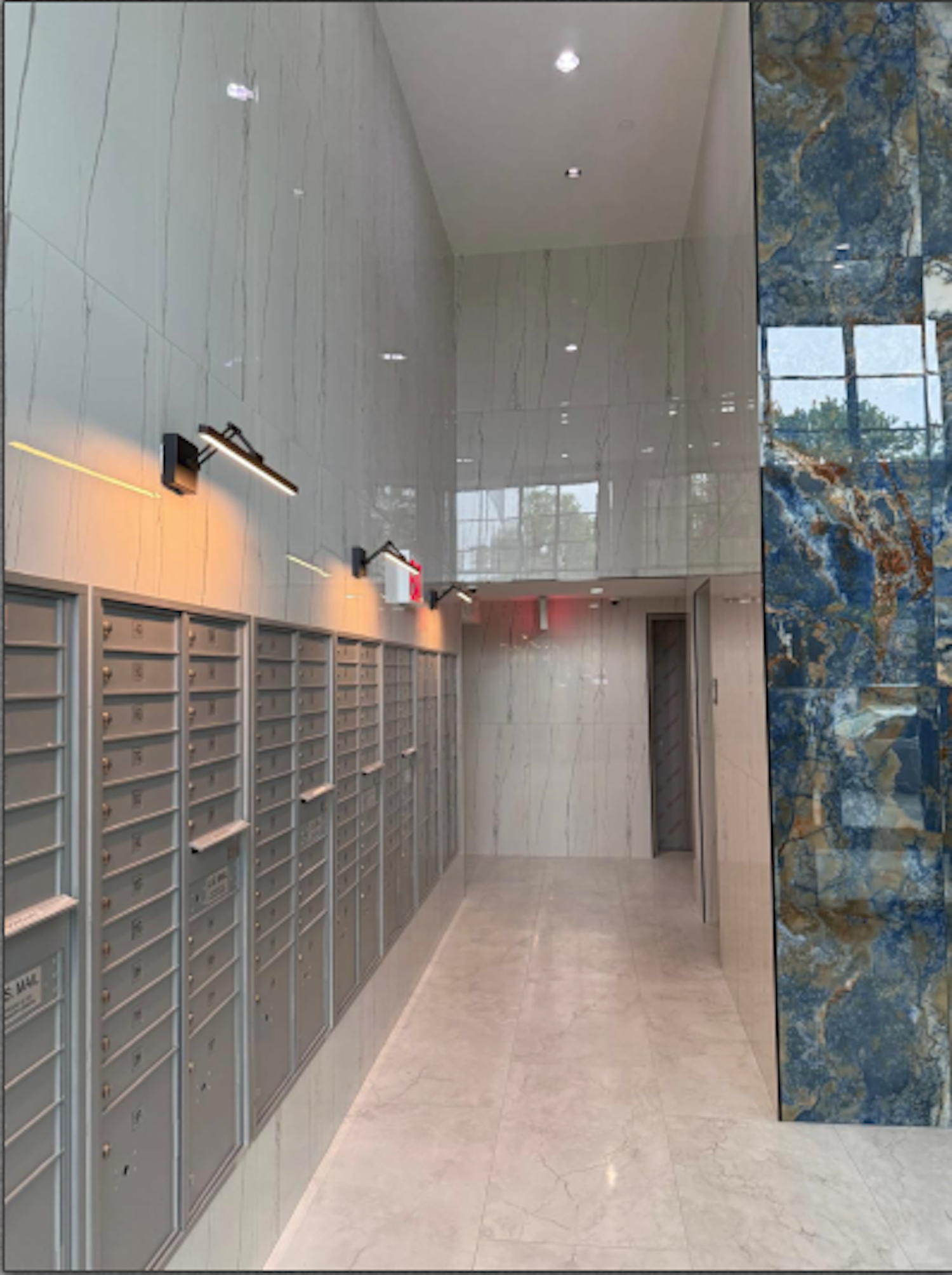
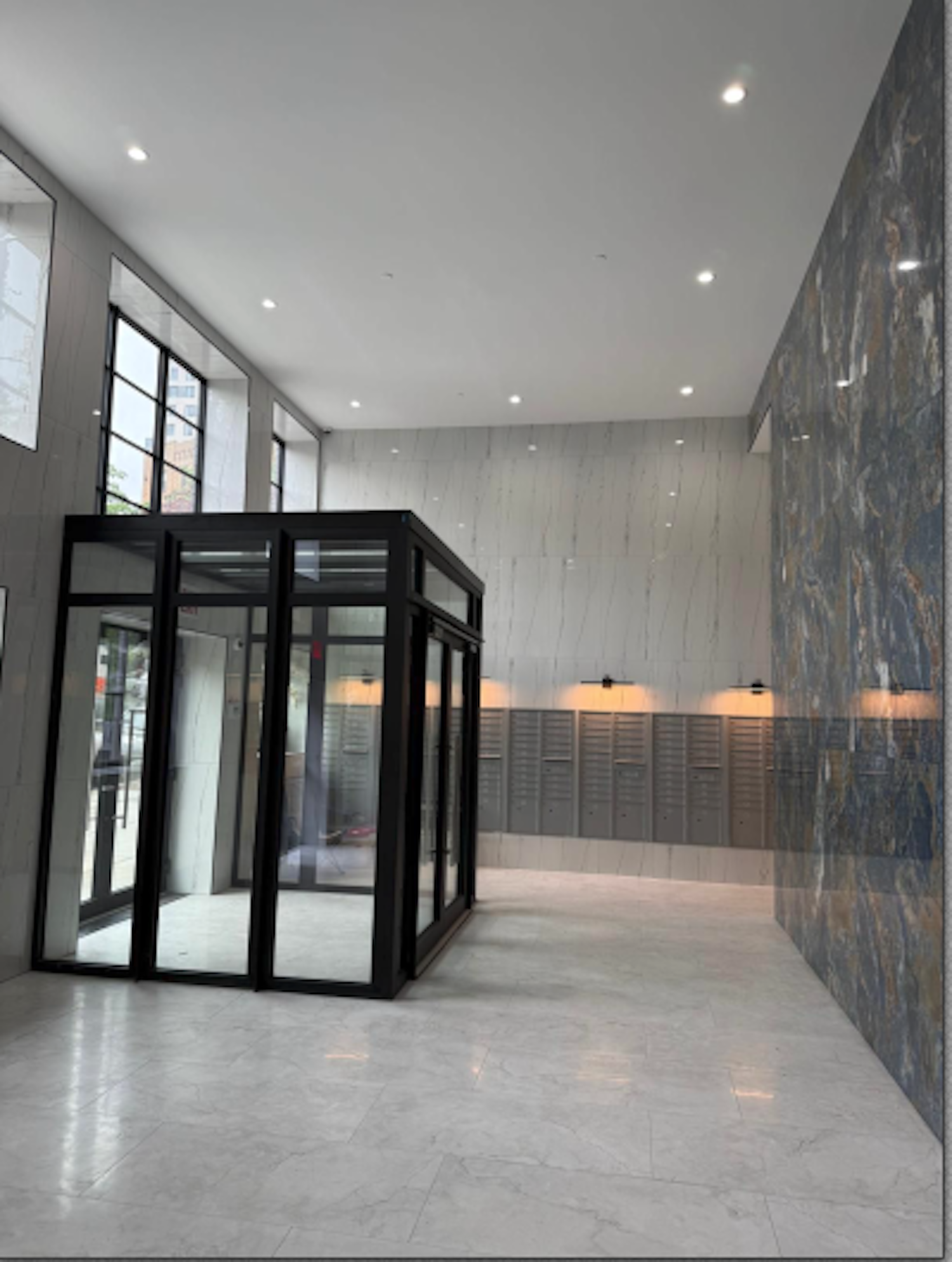
The affordable housing lottery has launched for 29 Featherbed Lane, a 12-story residential building in Morris Heights, The Bronx. Designed by Badaly Architect and developed by Arjan Gjushi, the structure yields 160 residences. Available on NYC Housing Connect are 40 units for residents at 40 to 60 percent of the area median income (AMI), ranging in eligible income from $28,595 to $105,000.

Amenities include covered parking, bike storage lockers, a shared laundry room, gym, and outdoor terrace. Residences are equipped with air conditioning, intercoms, and name-brand kitchen appliances, countertops, and finishes. Tenants are responsible for electricity and electric stove.

At 40 percent of the AMI, there are seven studios with a monthly rent of $723 for incomes ranging from $28,595 to $51,840; five one-bedrooms with a monthly rent of $770 for incomes ranging from $30,755 to $58,320; and four two-bedrooms with a monthly rent of $915 for incomes ranging from $37,200 to $70,000.

At 60 percent of the AMI, there is one studio with a monthly rent of $1,121 for incomes ranging from $42,240 to $77,760; 15 one-bedrooms with a monthly rent of $1,196 for incomes ranging from $45,360 to $87,480; and eight two-bedrooms with a monthly rent of $1,427 for incomes ranging from $54,755 to $105,000.

Prospective renters must meet income and household size requirements to apply for these apartments. Applications must be postmarked or submitted online no later than March 16, 2026.

ICE Arrests Criminal Illegal Alien and Member of the Violent Tren de Aragua Gang Wanted for Murder, Racketeering, and Drug Trafficking in New Mexico


Following the murder the victim's body was jammed into a suitcase, this TdA gang member and murderer was RELEASED into the country by the Biden administration

Yorvis Michel Carrascal Campo, a criminal illegal alien from Venezuela and confirmed member of the violent transnational Venezuelan gang Tren de Aragua (TdA), has been charged for murder, racketeering, and drug trafficking in New Mexico. U.S. Immigration and Customs Enforcement's (ICE) Homeland Security Investigations (HSI) arrested this gang member in Colorado Springs, CO on January 8, 2026.

According to the Department of Justice indictment, on or about June 16, 2024, several TdA gang members viciously kidnapped a man, tortured and then strangled him to death. Carrascal Campo is charged with participating in strangling the victim and proceeded to destroy all evidence of the brutal murder. Then the victim’s body was ruthlessly jammed into a suitcase and was buried in a remote location within New Mexico.

Gang1

Yorvis Michel Carrascal Campo

“Carrascal Campo’s crimes shock the conscience and are yet another example of the failed border policies of Joe Biden that RELEASED TdA gang members into American communities,” said Assistant Secretary Tricia McLaughlin“Just last week, two vicious Tren de Aragua gang members—also let loose on American streets by Joe Biden—weaponized their vehicle against Border Patrol in Portland. These are the types of monsters our law enforcement is targeting. We are working around the clock to clean up the chaos caused by the Biden administration who let untold millions of illegal aliens including murderers, pedophiles, rapists, terrorists, and gang members pour into our country.”

Carrascal Campo illegally crossed the southern border in October 2023 and was released into the country by the Biden administration on December 18, 2023. He was issued a final order of removal from an Immigration Judge on June 11, 2024.

Governor Hochul Unveils Ratepayer Protection Plan to Hold Energy Companies Accountable and Ensure a Reliable Grid

High voltage electric power lines

Proposing Sweeping Reforms To Protect Ratepayers From Rising Utility Costs by Introducing the NYS Affordable Utilities Omnibus Legislation

Requiring Data Centers To Pay Their Fair Share and Streamlining Interconnections for Job-Creating Businesses

Establishing a Nuclear Reliability Backbone for a Zero-Emission Grid and Ensuring New York’s Nuclear Power Future Is Built by and for New Yorkers

Protecting New York’s Energy Grid From Cyber Threats

Supporting Solar Deployment in Public Schools

Establishing a Sales Tax Exemption for Electric Vehicle (EV) Charging Stations

Supporting Farms Through the Sun and Soil Program

Governor Hochul unveiled her plan to hold energy companies accountable to reduce energy bills and ensure a strong and reliable grid as part of her 2026 State of the State. Facing a hostile federal landscape, the Governor continues to champion her all-of-the-above approach to energy that prioritizes affordability, reliability, and sustainability. Governor Hochul will seek safeguards for ratepayers by pushing strict accountability measures on utility companies to protect consumers while advancing aggressive measures to increase clean energy supply.

“As we grapple with frequent attacks from the federal government on energy progress and prices, I remain laser-focused on energy affordability and reliability in New York State,” Governor Hochul said. “We will continue to protect our most vulnerable by making investments in energy affordability programs like Empower+ while holding utility companies accountable to protect consumers from unfair practices. My commitment to an all-of-the-above approach will ensure we keep the lights on and prices down.”

Protecting Against Utility Bill Increases

New Yorkers deserve reliable energy at a price they can afford. Governor Hochul is proposing a sweeping set of reforms, the NYS Affordable Utilities Omnibus Legislation, to modernize the Public Service Law, demanding strict fiscal discipline from utilities and empowering the State to fight more effectively for lower bills.

  • Tying executive pay to affordability: The Governor is putting ratepayers first. Utilities will be required to publicly disclose how CEO salaries compare to the average worker’s pay and executive compensation will be tied directly to customer affordability. CEOs shouldn't be reaping outsized benefits while ratepayers are struggling to make ends meet.
  • Eliminating gold-plated rate cases: When requesting rate increases, utilities will be required to present a budget constrained option that keeps their operating and capital costs below the rate of inflation. This exercise will require utilities to prioritize efficiency and affordability and prove why any spending is truly necessary before asking customers to foot the bill.
  • Removing hidden fees: Ratepayers should only pay for energy services. Period. The Governor is directing the Department of Public Service to review utility bills to ensure customers never foot the bill for inappropriate utility spending, including corporate advertising, fines, and certain legal fees.

Mitigating Energy Cost Burden

Governor Hochul will introduce legislation that will require utilities to create and report on an affordability index, accurately showing the energy burden on customers throughout their service territory. She will also require the Department of Public Service to report on utility affordability by utility, benchmark against data from other states, and make an annual affordability presentation to the Public Service Commission (PSC).

If the PSC finds that any utility in New York is failing to protect energy affordability, this new legislation will empower the Commission to install an independent “Affordability Monitor” inside the utility to address the issue. The Affordability Monitor will have full access to management meetings, books, and records to review utility operations and expenditures to ensure efficient spending and report opportunities for cost savings to PSC.

Modernizing Utility Regulation to Protect Consumers

Rising utility bills are placing real pressure on household budgets. The current process of utility rate setting is increasingly complex, compressed, and difficult for the public to understand or meaningfully engage with in an impactful way. Governor Hochul will advance reforms to modernize how these rate cases are reviewed and resolved, giving regulators more time and flexibility to evaluate utility proposals to ensure they protect consumers, encourage good-faith negotiations, and reduce the frequency of disruptive rate increases. By improving how rate cases are conducted, New York will protect consumers, promote fair outcomes, and put affordability at the center of utility oversight.

Excelsior Power: Advancing a More Flexible and Affordable Grid

As energy demand grows, New York’s electric grid must become more flexible to control costs and maintain reliability, without overbuilding expensive infrastructure. New technologies such as smart thermostats allow utilities to strategically deploy or conserve energy when the grid needs it the most, effectively maintaining comfort and returning benefits such as lower energy bills. Governor Hochul will advance Excelsior Power, a new statewide initiative to make better use of such technologies to increase grid flexibility by shifting when and how electricity is used across the system. Excelsior Power will direct utilities to treat grid flexibility as a core system resource and expand consumer-facing incentive programs that encourage households and businesses to participate in energy flexibility programs.

By harnessing grid flexibility tools such as demand response and smart technologies, the State can avoid hundreds of millions of dollars in system costs each year while reducing the need for costly upgrades and backup power plants – averting costs that will otherwise be shouldered by rate payers. As these programs scale statewide, grid flexibility is expected to deliver billions of dollars in long-term savings, reducing utility bills and strengthening reliability for households and businesses across the State.

Revitalizing EmPower+ to Upgrade New York’s Homes

New York is home to the nation’s oldest building stock. As a result, the cost of upgrading a home to 21st-century energy efficiency and sustainability standards, which ultimately save consumers money, can be prohibitively expensive

Since its launch in 2023, Governor Hochul’s EmPower+ program has helped nearly 42,000 low- and moderate-income households across the state finance energy improvements, saving families about $600 per year on their utility bills, slashing emissions, and making homes more comfortable for families. In 2026, Governor Hochul will invest an additional $50 million into the EmPower+ program, making sure an estimated 10,000 additional households are able to access the free assessments, low-cost direct installs, and targeted upgrades that keep homes comfortable and safe—all while generating jobs and opportunities for local contractors.

Increasing Uptake of Energy Assistance Programs

New York State invests more than $1 billion annually on programs to help families lower their energy bills, such as the Energy Affordability Program (EAP), EmPower+, and the Weatherization Assistance Program (WAP). These programs reduce costs through cash assistance, monthly discounts, and weatherization and efficiency upgrades that reduce energy usage and costs. Despite these benefits, these programs are not being fully utilized by qualifying ratepayers. As a result, it is estimated that only half of income-eligible households utilize the EAP. Further, the delivery of bill financial assistance and weatherization programs can be better aligned to help reduce energy usage and associated bills for those households with the greatest energy burden.

To make sure these critical programs are implemented in a complementary manner and to increase awareness and access for vulnerable New Yorkers, the Governor will streamline planning and administration of these programs to increase the impact of public funds targeting energy burden reductions and make these programs simpler to access. She will also improve utilization by launching a centralized outreach campaign to reach as many New Yorkers as possible.

Establishing a Nuclear Reliability Backbone for a Zero-Emission Grid

As New York transitions to a zero-emission electric grid, the State must ensure reliable and cost-effective baseload power to keep homes, businesses, and critical infrastructure running at all hours. Governor Hochul will ensure that New York State leads in the race to harness safe and reliable advanced nuclear energy to power homes and businesses with zero-emissions electricity for generations to come.

To catalyze progress towards those goals, the Governor will advance a new initiative, the Nuclear Reliability Backbone, directing State agencies to establish a clear pathway for additional advanced nuclear generation to support grid reliability. The Nuclear Reliability Backbone will be developed by a new Department of Public Service (DPS) process to consider, review, and facilitate a cost-effective pathway to 4 gigawatts of new nuclear energy that will combine with existing nuclear generation and the New York Power Authority's (NYPA) previously announced 1 gigawatt project, to create an 8.4 gigawatt “backbone” of reliable energy for New Yorkers.

This effort will provide firm, clean power that complements renewable energy resources and reduces reliance on fossil fuel generation. By creating a stable foundation of always-on energy, the Backbone will allow renewable resources to operate more efficiently and flexibly. Together, these actions will support a resilient, flexible, and zero-emission grid that meets New York’s growing energy needs.

Ensuring New York’s Nuclear Power Future is Built By and For New Yorkers

As New York expands advanced nuclear energy, the State must ensure that New Yorkers benefit from these jobs and investments; and, moreso, that New Yorkers are prepared to build, operate, and sustain this emerging industry. Governor Hochul will launch NextGen Nuclear New York to develop a skilled, in-state nuclear workforce through coordinated education and training pathways. The initiative will expand partnerships across K–12 schools, higher education institutions, labor organizations, and training programs to align curricula, credentials, and career pathways with industry needs. It will also support workforce transitions for existing energy workers and increase public awareness of nuclear career opportunities. By investing in people and skills, New York will ensure its nuclear future is powered by New Yorkers, for New Yorkers.

Requiring Data Centers To Pay Their Fair Share and Streamlining Interconnections for Job-Creating Businesses

As energy demand surges across the state, New York State will advance a new initiative with a dual mandate: providing greater certainty and predictability for businesses seeking to invest in New York while ensuring that data centers pay their fair share. Unlike other sectors, data centers consume massive amounts of finite resources and place an unprecedented strain on the electric grid without creating many jobs in the process. Governor Hochul is taking action to ensure every day New Yorkers do not subsidize this energy intensive industry. To stop planning uncertainty caused by “phantom loads” and prevent rising costs for everyday consumers, the State will enforce a simple standard: these industries must pay more; if they do not, they must supply their own energy.

To attract responsible new businesses, give them the certainty they need to invest in New York, and protect the ratepayer, Governor Hochul will tap the Department of Public Service to launch a new initiative, Energize NY Development, with the goal of modernizing how large energy users connect to the grid, making it faster and more predictable, but it comes with strict conditions to protect ratepayers. This effort will streamline interconnection rules and improve transparency around grid upgrades while explicitly requiring that projects driving exceptional demand without exceptional job creation or other benefits cover the costs they create, or supply their own energy. By accelerating responsible development and requiring data centers to shoulder their own burden, Energize NY Development will support job creation, industry growth and economic investment across the State while sparing ratepayers additional pressure on utility bills.

Protecting New York’s Energy Grid from Cyber Threats

As New York modernizes its electric grid and brings more clean energy resources online, we must protect this vital asset from cyber threats that could put our power and safety at risk. Building on nation-leading actions already underway, Governor Hochul will strengthen protections for New York’s electric grid. This effort will expand enforceable cybersecurity standards beyond traditional information technology to include the operational technology that controls power generation, transmission, and distribution, while also addressing the growing cybersecurity risks. These actions will reduce the risk of disruption, protect ratepayers from costly outages, and ensure New York’s evolving energy system remains resilient, reliable, and secure.

Supporting Solar Deployment in Public Schools by Aligning State Building Aid with Climate Goals

New York’s thousands of public schools consume substantial energy, and can and should play an important role in advancing clean energy priorities while also providing healthier learning environments for students. Looking towards a more sustainable future, many school districts are choosing to invest in solar and other renewable energy systems, which will support the state’s transition long-term. However, current Building Aid rules can limit their ability to undertake these crucial projects. Governor Hochul will update how State Building Aid is applied so school districts have greater flexibility to install the most effective renewable energy systems, including ground-mounted solar where appropriate. This change will make it easier for schools to reduce energy costs, cut emissions, and invest in cleaner infrastructure without increasing overall Building Aid.

Establishing a Sales Tax Exemption for Electric Vehicle (EV) Charging Stations

As New York continues to work towards a greener, cleaner future, electric vehicles (EV) play an important role in weaning New Yorkers’ reliance on polluting and dangerous fuels. Governor Hochul has led the way in facilitating this transition by significantly building out the State’s EV charging infrastructure, deploying 15,000 chargers at more than 4,000 locations. This has resulted in nearly 187,000 EVs in New York. To further incentivize the installation of EV charging stations for public use, Governor Hochul will support legislation to establish a sales tax exemption on the retail sale of electricity–used to recharge an electric vehicle–by a commercial EV charging station. By encouraging additional charging options, Governor Hochul is removing historic barriers that prevent EV uptake and bringing New York one step closer to realizing its clean energy goals.

Supporting Farms Through the Sun and Soil Program

As New York expands clean energy generation, the State must ensure that renewable development and working farmland can coexist and complement one another. As farmers face rising operating costs, the transition to a clean energy economy presents opportunities to help farms diversify their revenues as they continue to operate and manage their valued farming activity.

Governor Hochul will introduce the Sun and Soil Program to increase options for farmers to benefit from the integration of solar energy development on their land while maintaining valuable land assets. The program builds on existing State-supported research and demonstration projects that show how solar panels can be co-located with active farming, such as grazing and crop production, allowing farms to generate clean energy while keeping land in agricultural use. Identifying avenues to capitalize on solar energy development while supporting continued use of productive farmland will help farmers financially and support the resiliency of their business. The program will be advised by – and inform efforts of – the state Agricultural Technical Working Group (ATWG) and will identify responsible solar development practices that support New York State’s agricultural operations, lands, farmers, and communities. The ATWG, led by NYSERDA in collaboration with the Department of Agriculture and Markets, includes agricultural land and farmer organizations, solar developers and operators, local government officials, academic experts, and additional nongovernmental organizations and state agencies. By advancing research, demonstration projects, and partnerships between farmers and renewable energy developers, Sun and Soil strengthens rural economies by supporting opportunities for both clean energy growth and sustained use of productive farmland for agricultural production.

Today’s announcement builds on the Governor’s record of protecting ratepayers and enhancing reliability over the last year:

  • Released the 2025 State Energy Plan, a realistic roadmap that prioritizes reliability above all else. Refusing to risk rolling blackouts or gas outages, this Plan embraces an “all-of-the-above” strategy that leverages hydropower, wind, solar, and firm zero-emission resources like nuclear to anchor the grid as demand grows.
  • Kick-started a nuclear renaissance to ensure Upstate New York has the carbon-free baseload needed to support industrial growth. The Governor directed the New York Power Authority (NYPA) to develop 1 gigawatt of zero-emission advanced nuclear power, reaffirming that nuclear power is essential to a reliable, 24/7 clean grid.
  • Rebuilt the grid’s physical backbone by advancing massive transmission projects that unblock the flow of clean energy. This includes the Champlain Hudson Power Express (CHPE), which is on track for completion in mid-2026 and will deliver 1,250 MW of Canadian hydropower directly to New York City. At its peak, CHPE once operational will deliver up to 20% of New York City’s energy, all of it clean.
  • Streamlined permitting by creating a "one-stop-shop" for renewable energy and electric transmission siting that accelerates project approvals that cut red tape and has supercharged the pace of moving critical generation projects from a contract on paper to construction on the ground. Since 2021, 31 large-scale solar and wind projects have been permitted, representing more than 4.2 gigawatts of clean energy, enough to power roughly 1.5 million homes.
  • Smashed the State’s solar goals. New York achieved its 2025 goal of installing 6 gigawatts of distributed solar a full year ahead of schedule and was named a national leader in community solar two years running.
  • Persevered to launch the American offshore wind industry. New York is now operating the nation’s first utility-scale offshore wind farm, South Fork Wind, and has two more under construction.


Atlantic Biologicals Corporation Enters into Deferred Prosecution Agreement in Opioid Distribution Scheme


Company Admits to Receiving More than $2.5 Million from Sales of Opioids and Other Commonly Abused Prescription Drugs to Houston-Area Pill Mill Pharmacies

Atlantic Biologicals Corporation, a pharmaceutical wholesaler based in Miami, has entered into a two-year deferred prosecution agreement with the Justice Department in connection with a criminal information filed in the Southern District of Florida charging it with one count of conspiracy to unlawfully distribute and dispense, and possess with intent to distribute, controlled substances. As part of the deferred prosecution agreement, Atlantic Biologicals admitted that its business unit National Apothecary Solutions (NAS), through its employees and agents, sold opioid pills to certain Houston area pill mill pharmacies, knowing and intending that the pharmacies would dispense the pills outside the usual course of professional practice and without a legitimate medical purpose. NAS commenced cessation of operations in or about November 2025, after selling over 14 million doses of opioids and opioid potentiators to pill mill pharmacies in the diversion “hot zone” of Houston, Texas.

“Atlantic Biologicals abused its trusted position in the pharmaceutical supply chain when it supplied Houston-area pill mill pharmacies with powerful, addictive opioids and other commonly abused controlled substances solely for its own financial gain,” said Assistant Attorney General A. Tysen Duva of the Justice Department’s Criminal Division. “Yesterday’s resolution demonstrates the Criminal Division’s longstanding commitment to holding corporations accountable when they fuel the opioid crisis. This resolution sends a clear message that the Criminal Division will not stop at prosecuting individuals but will also hold to account corporate criminal actors.”

“Atlantic Biologicals did not make a mistake, it made a choice,” said Assistant Administrator Cheri Oz of the Drug Enforcement Administration (DEA) Diversion Control Division. “A choice to put millions of opioid pills into the hands of Houston-area pill mills, knowing full well those drugs would be diverted, abused, and used to exploit vulnerable communities. When companies inside the pharmaceutical supply chain abandon their duty and chase profit over patients, they become part of the opioid crisis, not a cure for it. This case makes one point absolutely clear: if you knowingly fuel addiction and criminal diversion, no boardroom, badge, or business model will shield you from accountability. DEA will hold every registrant to the standards of the law — and the standards the American people deserve. "

“Atlantic Biologicals helped flood communities with addictive opioids, ignoring safeguards meant to protect patients and federal health care programs,” said Acting Deputy Inspector General for Investigations Scott J. Lampert of the U. S. Department of Health and Human Services, Office of Inspector General (HHS-OIG). “To the companies fueling the opioid crisis: we will find you, we will expose you, and we will hold you accountable.”

Joshua Weinstein, the former president of NAS, Atlantic Biologicals’ business unit that sold pharmaceutical opioids, other controlled and non-controlled drugs, and medical goods to independent pharmacies; Derrick Chad Atkinson, a former independent sales representative contracted by NAS; and Jason Smith, the former owner of Proven Rx Sales LLC (Proven), a consulting company that worked with NAS, each previously pleaded guilty to one count of conspiracy to unlawfully distribute and dispense, and possess with intent to distribute, controlled substances. Joseph Pesserillo and Cassandra Rivera, former employes of Proven, previously pleaded guilty to one count of conspiracy to use a communications facility to further commission of a felony controlled substance offense.

According to court documents and admissions, from 2017 through May 2023, NAS sold Houston-area pill mill pharmacies millions of highly-addictive opioids, specifically oxycodone, hydrocodone, and hydromorphone pills (“Commonly Abused Opioids”), as well as other controlled substances such as carisoprodol and alprazolam (known as “potentiators”) that are used to enhance the high users sought from the opioids (collectively, “Commonly Abused Prescription Drugs”). The pill mills diverted the drugs into the black market in the Houston area. As part of the deferred prosecution agreement, Atlantic Biologicals acknowledged its responsibility for the conspiracy and admitted that NAS realized gross proceeds of at least $2,508,735. 85 from sales to certain specifically-identified Houston area pill mill pharmacies, knowing and intending that the pharmacies would dispense the pills outside the usual course of professional practice and without a legitimate medical purpose.

The Controlled Substances Act (CSA) makes it unlawful for any person to knowingly or intentionally manufacture, distribute, or dispense a controlled substance, “except as authorized”. Manufacturers, distributors, and other individuals appropriately licensed and registered with the DEA — commonly called registrants — are authorized under the CSA to conduct controlled-substance transactions within the legitimate distribution chain. However, it is unlawful for a registrant to distribute opioids like oxycodone and hydrocodone when the registrant knows or intends they are being sought for an illegitimate purpose. Pharmacies operate legitimately only when they dispense these drugs pursuant to valid prescriptions issued for a legitimate medical purpose by a doctor or other practitioner acting in the usual course of professional practice.

According to court documents and admissions, NAS sold the Commonly Abused Prescription Drugs to pill mill pharmacies at a large markup. NAS also employed purported compliance measures that were circumvented in order to further the unlawful sales, such as requiring pharmacies to order controlled drugs in a specific ratio to their non-controlled purchases and setting monthly ordering quantities for pharmacies’controlled drug purchases. Many of NAS’s pharmacy customers exhibited red flags for diversion that included rarely ordering any controlled drug, in any strength, other than the Commonly Abused Prescription Drugs; almost always ordering as many of these drugs as NAS would sell them per month; expressing strong preferences for certain pill colors and shapes; ordering non-controlled drugs in suspicious patterns, including almost always ordering large quantities and limited varieties in exactly the quantities necessary to meet their NAS-imposed ordering ratio; a willingness to pay well-over-market prices to acquire both the Commonly Abused Prescription Drugs and the non-controlled drugs required to meet NAS’s ratio; maintaining hours of operation inconsistent with those of a legitimate pharmacy; and submitting photos as part of NAS’s due diligence process that depicted locations in strip malls with bars on the windows and doors and nothing for sale in customer areas.

The deferred prosecution agreement requires Atlantic Biologicals to, among other obligations, provide ongoing cooperation with and disclosures to the Justice Department, implement a compliance and ethics program to prevent violations of the CSA, and report to the Justice Department regarding remediation and implementation of these compliance measures. As part of the agreement, Atlantic Biologicals agreed to pay a criminal penalty of $450,000. This penalty has been adjusted based on Atlantic Biologicals’ ability to pay.

The government reached this resolution with Atlantic Biologicals based on a number of factors, including the nature and seriousness of the offense conduct, and that the company in May 2023 voluntarily ceased selling controlled substances to independently-owned pharmacies and later voluntarily closed the NAS business line responsible for the offense conduct. Atlantic Biologicals did not voluntarily and timely self-disclose the conduct to the Justice Department but did receive credit for its cooperation with the Department’s investigation, which included providing factual presentations to the government, collecting and organizing voluminous evidence and information, including financial information, and working with the government to expeditiously review potentially privileged documents seized pursuant to a search warrant and identify non-privileged documents for release to the government.

The criminal case is being investigated by DEA, the FBI, HHS-OIG, and the Texas Office of the Attorney General-Medicaid Fraud Control Unit.

Trial Attorneys Miriam L. Glaser Dauermann and Drew Pennebaker of the Criminal Division’s Fraud Section are prosecuting the case.

The Fraud Section leads the Criminal Division’s efforts to combat health care fraud through the Health Care Fraud Strike Force Program. Since March 2007, this program, currently comprised of nine strike forces operating in 27 federal districts, has charged more than 5,800 defendants who collectively have billed federal health care programs and private insurers more than $30 billion. In addition, the Centers for Medicare & Medicaid Services, working in conjunction with the Office of the Inspector General for the Department of Health and Human Services, are taking steps to hold providers accountable for their involvement in health care fraud schemes. More information can be found at www. justice. gov/criminal-fraud/health-care-fraud-unit. 

Mayor Mamdani Nominates Midori Valdivia as Chair of Taxi and Limousine Commission


Valdivia brings experience from TLC, Port Authority, and the MTA  


Nomination centers Mayor Mamdani’s fight for taxi drivers in City Hall 


Mayor Zohran Mamdani announced the nomination of transportation policy leader Midori Valdivia to lead the New York City Taxi and Limousine Commission (TLC) as Chair and Commissioner. Valdivia is a widely-recognized practitioner in transportation and operations, working nationwide to reduce urban congestion and decarbonize transportation through her own transportation and policy practice. She has delivered worker-centered policies throughout her career, including supporting the implementation of the first wage standards for service workers at JFK and LaGuardia Airports and working on the TLC’s first-in-the-nation driver pay study. She is a Metropolitan Transportation Authority (MTA) board member and previously served as Deputy Commissioner for Finance and Administration at the TLC, as Senior Advisor to the Executive Director at the Port Authority of New York and New Jersey, and as Chief of Staff to the Chair and CEO of the MTA. 


The nomination builds on Mayor Mamdani’s historic leadership on behalf of taxi drivers and working people. As an Assemblymember, Mayor Mamdani led a 15-day hunger strike in solidarity with the Taxi Workers Alliance, securing a debt relief program for drivers targeted by predatory lending practices tied to taxi medallions. He has continued to center the taxi drivers and their struggles in his work; the Mayor rode with taxi driver Richard Chow – who participated in the hunger strike alongside Mayor Mamdani in 2021 – to his inauguration earlier this month. 


“From City Hall, we will deliver meaningful change in the lives of the working people too often forgotten by our politics, and in the day-to-day existences of the taxi drivers who deserve a forceful champion at the TLC,” said Mayor Zohran Mamdani. “That champion is Midori Valdivia, who I am so proud to nominate today to be the Commissioner and Chair of the TLC.” 


“New Yorkers deserve safe, reliable, affordable transportation where those who drive for a living are treated with dignity and respect. A strong TLC working in partnership across all agencies is essential to making sure that happens,” said Julie Su, Deputy Mayor for Economic Justice. 


“It is an incredible honor to be nominated to join the Mamdani administration as they work to deliver safer streets and a more equitable economy,” said Midori Valdivia, nominee for Taxi and Limousine Commissioner and Chair. “I look forward to the City Council’s consideration and am committed to delivering for drivers, passengers, and New Yorkers across the city.” 


Valdivia is on the Board of the Regional Plan Association, a Trustee with the Transit Center, and a Board Member of the Shared-Use Mobility Center. She holds a Master's in Public Affairs and Urban and Regional Planning from Princeton University and a Bachelor of Arts in Political Science from Penn State University. Valdivia lives in Brooklyn with her husband and daughter. 


Created in 1971, TLC licenses and regulates more than 200,000 drivers who complete approximately 1,000,000 trips each day. The chair and commissioner is both the head of the City agency, and chair of the TLC’s nine-member board. TLC commissioners are subject to the City Council’s advice and consent powers. 


BRONX MAN INDICTED FOR ANIMAL CRUELTY IN DEATH OF CAT


Defendant Posted Photos of Bloody Feline on Social Media

Bronx District Attorney Darcel D. Clark announced that a Bronx man has been indicted on Aggravated Cruelty to Animals and Torturing and Injuring Animals in connection with the death of a cat. 

District Attorney Clark said, “This defendant is accused of the torture of a stray cat that he took into his home. The defendant’s alleged shocking behavior included posting images of a dead cat on social media and bragging about what he had allegedly done.” 

District Attorney Clark said the defendant, David Mosley, 26, of the Bronx, was arraigned today on Aggravated Cruelty to Animals and Torturing and Injuring Animals before Bronx Supreme Court Justice George Villegas. He pleaded not guilty. He is due back in court on March 17, 2026. 

According to the investigation, on or about October 11, 2025, the defendant posted a photo on Instagram of himself and a live cat. On or about October 22, 2025, a photo of a cat lying motionless in a pool of what appeared to be blood was posted on Instagram. Detectives searched Mosley’s apartment on October 29, 2025, and observed dried biological material on the floor that was later determined by the ASPCA to be feline blood. With the assistance of the ASPCA it was determined that the live cat pictured with Mosley in the October 11th social media post was the same animal pictured in the October 22nd Instagram post. Detectives also obtained surveillance video from Mosley’s apartment building that shows him carrying the cat into his apartment on October 9 th while it was still alive. When questioned by detectives Mosley said he had found the cat after it died.

District Attorney Clark thanked Intelligence Analyst Gabrielle Aarons of the Bronx District Attorney’s Crime Strategies Bureau; and NYPD Sergeant Louis Meade and NYPD Detectives Sandy Nunez and Brian O’Neill of the Bronx DA’s Squad for their work in the investigation. 

District Attorney Clark thanked Sergeant Timothy Cecchine and Detective Jean Seder of the NYPD Animal Cruelty Investigation Squad for their work in the investigation. 

District Attorney Clark thanked ASPCA forensic veterinarian Dr. Laura Niestat for her assistance in the investigation.

An indictment is an accusatory instrument and not proof of a defendant’s guilt.