Wednesday, July 15, 2026

Attorney General James Secures More Than $29 Million From Glenmark Pharmaceuticals for Illegal Scheme to Inflate Drug Prices


AG James Urges New Yorkers to Register Online to Check Eligibility and Claim Compensation

New York Attorney General Letitia James today joined a bipartisan coalition of 48 other attorneys general in securing more than $29 million from Glenmark Pharmaceuticals (Glenmark) for their role in a long running, coordinated scheme with other pharmaceutical companies to artificially inflate generic drug prices and reduce competition. The settlement is part of ongoing multistate lawsuits against dozens of companies that engaged in illegal agreements to coordinate the supply and sale of generic drugs to fix prices and boost profits. The companies in the scheme, some of which increased prices by 1,000 percent, manufactured essential medications to treat diseases ranging from diabetes to cancer to ADHD. Attorney General James is encouraging all New Yorkers who may have faced higher prices to register on the settlement website, check their eligibility, and submit a claim to seek compensation when the claims process begins.

“Affordable generic drugs are a lifeline for New Yorkers with heart conditions, diabetes, and a range of other chronic illnesses,” said Attorney General James. “Glenmark and other companies worked behind the scenes to boost their profits by illegally coordinating to raise drug prices, and now we are getting justice for the consumers who were harmed. I urge any New Yorker who may have been cheated by this scheme to find out if they are eligible for restitution and claim the money they are owed.”

New Yorkers who purchased a generic prescription drug listed here between May 2009 and December 2019 may be eligible for compensation. To determine your eligibility, call 1-866-290-0182 (toll-free), email info@AGGenericDrugs.com, or visit www.AGGenericDrugs.com

The settlement with Glenmark is the result of three lawsuits filed by the Office of the Attorney General (OAG) and a coalition of attorneys general against some of the nation’s largest generic pharmaceutical companies. The first complaint included 18 corporate defendants, two individual defendants, and 15 generic drugs. Two former executives from Heritage Pharmaceuticals, Jeffery Glazer and Jason Malek, have since entered into settlement agreements and are cooperating. The second complaint was filed in 2019 against Teva Pharmaceuticals and 19 of the nation’s largest generic drug manufacturers. The complaint names 16 individual senior executive defendants. The third complaint, to be tried first, focuses on 80 primarily topical generic drugs that account for billions of dollars of sales in the United States and names 26 corporate defendants and 10 individual defendants. Six additional pharmaceutical executives have entered into settlement agreements with the coalition of attorneys general and have been cooperating to support the states’ claims in all three cases.

The lawsuits allege these companies engaged in a broad, coordinated, and systematic conspiracy to fix prices, avoid competition, and rig bids for more than 100 different generic drugs. The companies maintained an interconnected web of industry executives where competitors met with each other during industry dinners, lunches, cocktail parties, and golf outings, and communicated via frequent telephone calls, emails, and text messages that sowed the seeds for their illegal agreements. Defendants used terms like “fair share,” “playing nice in the sandbox,” and “responsible competitor” to describe how they unlawfully discouraged competition, raised prices, and enforced an ingrained culture of collusion.

The drugs included in the scheme span all types – including tablets, capsules, creams, and ointments – and classes – including antibiotics, anti-depressants, contraceptives, and non-steroidal anti-inflammatory drugs. They treat a range of diseases and conditions from basic infections to diabetes, cancer, epilepsy, multiple sclerosis, HIV, ADHD, and more. In some instances, the coordinated price increases were over 1,000 percent.

Under the terms of the settlement, Glenmark will pay $25 million with interest over the course of the next four years, for a total of $29,668,000. The funds will be distributed to impacted consumers across the coalition states. Glenmark will also implement internal reforms to ensure fair competition and compliance with antitrust laws, including implementing an antitrust compliance program with annual training of sales and management staff.

Joining Attorney General James in securing the settlements are the attorneys general of Alaska, Arizona, California, Colorado, Connecticut, Delaware, Florida, Georgia, Idaho, Illinois, Indiana, Iowa, Kansas, Kentucky, Maine, Maryland, Massachusetts, Michigan, Minnesota, Mississippi, Montana, Nebraska, Nevada, New Hampshire, New Jersey, New Mexico, North Carolina, North Dakota, Ohio, Oklahoma, Oregon, Pennsylvania, Rhode Island, South Carolina, South Dakota, Tennessee, Utah, Vermont, Virginia, Washington, West Virginia, Wisconsin, Wyoming, the District of Columbia, Northern Mariana Islands, Puerto Rico, and the U.S. Virgin Islands.

Governor Hochul Issues Update on Statewide Air Quality to Keep New Yorkers Safe

Smoke From Canadian Wildfires and High Temperatures Will Create Unhealthy Air Conditions in New York

With Visible Smoke Statewide, New Yorkers Encouraged To Take Precautions and Be ‘Air Quality Aware’

Air Quality Tracked by DEC Meteorologists Using Data From More Than 50 Sites Across New York State

Governor Kathy Hochul today warned New Yorkers that smoke from wildfires in Canada and high temperatures will create unhealthy air conditions in New York. The smoke, which will be visible, is set to cross into the western part of the state in the early morning before moving across the rest of the state throughout the day.

“Distant wildfires have impacted New York State in recent years, and this week unfortunately will be no different with expected hazy skies and poor air quality,” Governor Hochul said. “We are now closely tracking these conditions and I strongly encourage New Yorkers to stay informed and take appropriate precautions to stay safe. Sensitive groups should take particular caution.”

The latest forecast indicates variable Air Quality Index levels throughout the day that are expected to create unhealthy air quality conditions. Smoke will be visible in the atmosphere but may not reach the ground level where people breathe.

New York State updated an Air Quality Health Advisory for fine particulate matter for today, July 15, 2026, to include all regions of New York State due to the impact of smoke from wildfires in Canada. While the western regions are expected to see the greatest impact, there will likely be spikes of poor air quality throughout the state. There is the potential for visible smoke and hazy skies across the state and New Yorkers may see temporary spikes in smoke-related pollution.

The New York Department of Environmental Conservation and the Division of Homeland Security and Emergency Services will be closely monitoring conditions to make any necessary changes to advisories. New York residents and visitors are reminded to include air quality awareness in their daily warm weather routines.

The New York State Department of Environmental Conservation (DEC) provides daily air quality forecasts to ensure air quality information is available at New Yorkers’ fingertips. While New York State has some of the nation’s most stringent air quality regulations to reduce air pollution and protect public health and the environment, there are certain days that ozone or particulate matter can impact air quality.

Using data collected from more than 50 sites across the state, DEC and Department of Health (DOH) issue Air Quality Health Advisories when DEC meteorologists predict levels of pollution, either ozone or PM2.5, are expected to exceed an Air Quality Index (AQI) value of 100. The AQI was created as an easy way to correlate levels of different pollutants to one scale, with a higher AQI value indicating a greater health concern. 

AQI Health Guidelines
AQI health guidelines are associated with recommendations to protect impacted populations.

  • 0-50: Good – Air quality is considered satisfactory and air pollution poses little or no risk.
  • 51-100: Moderate – Air quality is acceptable. However, for some pollutants there may be a moderate health concern for a very small number of people who are usually sensitive to air pollution.
  • 101-150: Unhealthy for Sensitive Groups – Members of sensitive groups may experience health effects. The general public is not likely to be affected. Sensitive groups include people with asthma, heart or lung disease, older adults, children and teenagers, minority populations, and outdoor workers.
  • 151-200: Unhealthy – Everyone may begin to experience health effects. Members of sensitive groups may experience more serious health effects.
  • 201-300: Very Unhealthy – Health alert. Everyone may experience more serious health effects.
  • 301-500: Hazardous – Health warnings of emergency conditions. The entire population is more likely to be affected.

The Air Quality Health Advisory for PM2.5 was issued for July 15 applied statewide and remains in effect through 11:59 p.m.

The AQI is forecasted to exceed 100, and could go above 150. When the AQI is above 100, air quality may be unhealthy for sensitive groups, including children, teens, older adults, people with heart or lung disease, and outdoor workers. An AQI above 150 means the air is unhealthy for everyone. We urge everyone, especially those in sensitive groups, to check their local AQI and take precautions as needed. 


Double Decker: Mayor Mamdani Advances First Busway in the Bronx, Launches Community Engagement for Three Bus Rapid Transit Corridors in Brooklyn


Just one week after unveiling historic plan with Governor Hochul to speed up 175 bus routes by up to six minutes, Mayor advances four major transit projects


Tremont Avenue busway will shorten commutes for 39,000 daily riders


Community engagement begins to transform three Central Brooklyn corridors, delivering faster trips for 150,000 riders along 13 bus routes every day  


City will deliver a new, world-class Bus Rapid Transit corridor on Flatbush Avenue by 2030   


Mayor Zohran Kwame Mamdani and New York City Department of Transportation (NYC DOT) Commissioner Mike Flynn today advanced major transit projects in the Bronx and Brooklyn that will speed commutes for nearly 200,000 bus riders every day.

The announcement comes just one week after Mayor Mamdani and Governor Hochul launched Next Stop: Fast Buses, Better Service, a comprehensive plan to make buses up to six minutes faster on more than 175 routes across the city.

In the Bronx, the City will install the long-delayed Tremont Avenue busway later this year. In Brooklyn, the City is launching a summer of community engagement to shape immediate improvements and a long-term vision for Bus Rapid Transit on three of the borough’s busiest transit corridors: Flatbush Avenue, Utica Avenue and Church Avenue.

On Flatbush Avenue, where construction is already underway on a center-running bus lane between Livingston Street and Grand Army Plaza, the City will build a full Bus Rapid Transit corridor by 2030. Bus Rapid Transit delivers faster, more reliable service through dedicated bus lanes and busways, techniques that give buses a head start at intersections, world-class stations with more seating and shelter, expanded public space and greenery and more frequent service.

Since January, the Mamdani administration has advanced major projects to speed buses along Fordham Road and 161st Street in the Bronx; 34th Street, 116th Street, Madison Avenue and Lexington Avenue in Manhattan; Marcy Avenue, Flatbush Avenue and Linden Boulevard in Brooklyn; Victory Boulevard on Staten Island; and Broadway in Queens.

“New Yorkers should not lose hours of their lives sitting in traffic on a bus. From the Bronx to Brooklyn, we’re building streets that move people instead of sticking them in gridlock,” said Mayor Mamdani. “These projects will make commutes faster, make our streets safer and return precious time to nearly 200,000 New Yorkers every single day. That’s exactly what public transit should do.”

“Just last week, I stood with Mayor Mamdani and the MTA and committed to bus riders a new era of faster speeds and better trips, all made possible through a historic collaboration between state and city leaders,” said Governor Hochul. “Today, we are moving full speed ahead, decisively advancing projects that will help hundreds of thousands of riders move faster and laying the groundwork for even more service improvements across the five boroughs to come.”

“When we said that we were going to make buses faster, we meant it — now upgrades are on the way in some of the City’s most bus-dependent communities,” said MTA Chair and CEO Janno Lieber. “This is what happens when the State, City and MTA are on the same page about speeding up service. Tremont and Central Brooklyn are just the beginning.”

“Along Tremont Avenue in the Bronx and all through central Brooklyn, slow, unreliable buses are robbing New Yorkers’ of their precious time every day,” said NYC DOT Commissioner Mike Flynn. “We want New Yorkers to have faith in our outreach, and that starts with actually delivering on projects promised years ago, like on Tremont Avenue, where riders deal with unreliable, over-packed buses every day. We look forward to discussing the possibilities for fast buses through Central Brooklyn this year as we develop exciting proposes for critical bus corridors in the area.”

“Today’s dual bus project announcements show that from the Bronx to Brooklyn, this Mayor is focused on delivering real results for New Yorkers on better buses,” said Elizabeth Adams, Senior Advisor for Fast and Free Buses for Mayor Mamdani. “The proof is in the pudding — and this administration is unsticking stalled projects, rolling out new bus corridor plans and taking immediate steps to bring Bus Rapid Transit to New York City. We aren’t waiting because we know bus riders have no time to waste when it comes to faster bus service. The Bronx is long overdue on getting its first busway on Tremont Avenue, and today’s announcement on central Brooklyn public engagement shows we are thinking differently when it comes to reaching bus riders. We’ll be out in the streets talking with New Yorkers directly about ways to improve their commute and speed up their buses. The millions of New Yorkers who depend on our buses everyday should have a say.”

The Bronx’s First Busway: Tremont Avenue

Mayor Mamdani today announced that the City will install the Bronx’s first busway on Tremont Avenue, delivering faster, more reliable service for 39,000 daily riders while making one of the borough’s busiest and most dangerous corridors safer.

Tremont serves the Bx36, where buses current travel as slowly as 5 mph, and connects riders to nearby subway routes and the Metro-North Railroad service. The corridor is home to a transit-dependent community, with 72% of households not owning a private car.

Tremont is also among the Bronx’s most dangerous streets, with one of the borough’s highest rates of pedestrian fatalities per mile. Between 2020 and 2024, nearly 630 people were injured in crashes along the corridor. There were 46 people severely injured and four traffic deaths in that period.

The redesign will improve safety while speeding bus service. Busways across New York City have increased bus speeds by as much as 60% while reducing injuries by up to 45%.

The project will include: 

  • An eastbound busway from Third Avenue to Southern Boulevard. 
  • A westbound busway from Southern Boulevard to Belmont Avenue. 
  • An offset shared bus-and-bike lane eastbound from Webster Avenue to Third Avenue.  

As part of the project, NYC DOT will also improve safety at intersections: 

  • Tremont Avenue and Webster Avenue. 
  • Tremont Avenue and Third Avenue. 
  • Tremont Avenue, Southern Boulevard and Crotona Parkway. 
  • Third Avenue and East 175th Street. 
  • Southern Boulevard, Crotona Parkway and 180th Street. 
  • Crotona Avenue and 180th Street. 
  • Third Avenue and 180th Street. 
  • Tremont Avenue and Washington Avenue. 

The redesign will add painted sidewalk extensions that shorten crossing distances for pedestrians and naturally slow turning vehicles. The curb extensions will be reinforced with flexible delineators, granite blocks and bicycle parking to discourage illegal parking.

The busway will operate seven days a week from 6 a.m. to 8 p.m. Buses, trucks with six or more wheels, emergency vehicles and Access-a-Ride vehicles will be permitted to travel the full corridor. Other vehicles, including taxis and for-hire vehicles, may enter only for local access and must exit at the next available right turn.

More information can be found online at nyc.gov/tremontbusway.

Next Stop: Fast Buses for Central Brooklyn

Central Brooklyn is home to three of the city’s most important bus corridors — Flatbush Avenue, Utica Avenue and Church Avenue — which together carry 150,000 bus riders every day across 13 routes where buses move as slowly as 5 mph.

One week after announcing the Next Stop bus action plan, Mayor Mamdani is launching a community engagement process to develop faster, more reliable bus service throughout Central Brooklyn.

NYC DOT and the Metropolitan Transit Authority (MTA) will develop short-term bus-priority improvements that can be implemented as early as next year while also creating a long-term vision for world-class bus service, including new Bus Rapid Transit corridors on Utica Avenue, Church Avenue and Flatbush Avenue, with Flatbush coming online by 2030.

The community engagement campaign will include: 

  • An online feedback portal, open July 15 through October 31. 
  • Bus rider engagement events beginning August 6 at 6 p.m. in Central Brooklyn. RSVP for exact location at organize.nyc.gov/fastbuses
  • Surveys of riders, pedestrians, local health and educational institutions, businesses and other stakeholders. 
  • Outreach at Open Streets events, block parties and community events. 

Following the summer engagement process, NYC DOT expects to release updated plans for bus-priority improvements this fall.

New Yorkers can learn more about Next Stop: Fast Buses for Central Brooklyn at nyc.gov/fastbuses-centralbk.

Read Next Stop: Fast Buses, Better Service for more information on the City’s bus action plan.

Permits Filed for 2786 Webster Avenue in Fordham, The Bronx


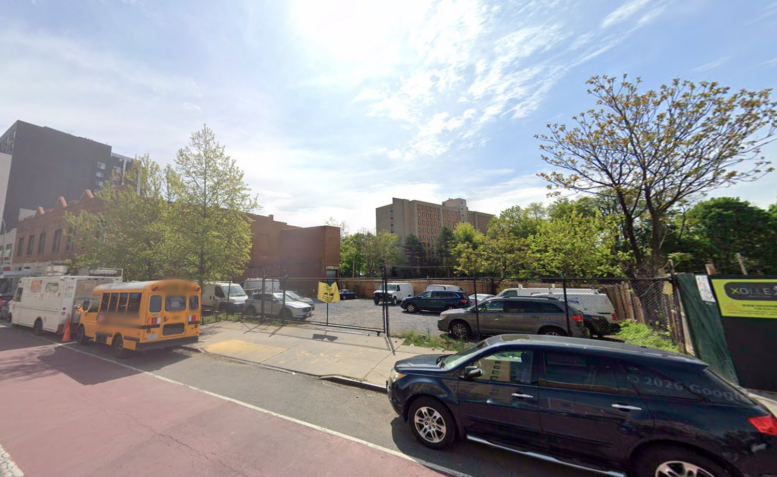
Permits have been filed for an 11-story mixed-use building at 2786 Webster Avenue in Fordham, The Bronx. Located between Bedford Park Boulevard and East Fordham Road, the lot is closest to the Kingsbridge Road subway station, served by the B and D trains. Yonah Grunhut of Grun Group LLC is listed as the owner behind the applications.

The proposed 103-foot-tall development will yield 75,380 square feet, with 52,081 square feet designated for residential space and 23,299 square feet for commercial space. The building will have 99 residences, most likely rentals based on the average unit scope of 526 square feet. The concrete-based structure will also have a 10-foot-long rear yard but no accessory parking.

Leandro Nil Dickson Architect, LLC is listed as the architect of record.

Demolition permits will likely not be needed as the lot is vacant. An estimated completion date has not been announced.

Bronx Borough President Vanessa L. Gibson - SUMMER IN THE BOOGIE DOWN


Dear Neighbor,


Over the past several weeks, the Bronx has proudly welcomed thousands of visitors through a series of exciting events and activations showcasing the very best of our borough. From FIFA watch parties and the Jay-Z Anniversary Concert weekend at Yankee Stadium to the reopening of the newly renovated pavilion at Orchard Beach and our annual Savor the Bronx Restaurant Week, these events have brought new energy to our neighborhoods while generating meaningful economic revenue for our local businesses and commercial corridors.


These events exemplify what is possible when we invest in the Bronx as a premier destination for culture, entertainment, recreation, and tourism. Anyone who dines at a neighborhood restaurant, shops at a local business, or explores one of our world-class attractions helps strengthen our local economy and supports the hardworking entrepreneurs who keep our communities thriving year-round.


As summer continues, I encourage everyone to keep that momentum going by supporting our local businesses, dining at our neighborhood restaurants, shopping along our commercial corridors, and exploring all that our borough has to offer. We are also excited to continue welcoming residents and visitors to our annual Summer Concert Series at Orchard Beach, which will run through Labor Day weekend and offer even more opportunities to enjoy live entertainment while supporting our local economy.


We welcome opportunities that continue to uplift our borough and shine a positive light on the Bronx. We look forward to building on this momentum with even more events, partnerships, and investments that celebrate our borough, attract visitors, support our small businesses, and create lasting economic opportunities for our residents. We invite everyone to experience all that makes our borough one of New York City's most vibrant destinations this summer and all year-round.


Warm Regards,

Vanessa L. Gibson

Bronx Borough President


For real-time updates and event highlights, remember to follow us on Social Media:


FACEBOOK: @BronxBp


INSTAGRAM: @Bronxbpgibson


TWITTER: @BronxBp


If you or someone you know needs help, please call our office at 718-590-3500 or email webmail@bronxbp.nyc.gov.


NEW YORK STATE ANNOUNCES STATEWIDE ENHANCEMENTS TO IMPROVE ASSISTED OUTPATIENT TREATMENT


New York State Office of Mental Health

Critical Investments from the FY 2026 Budget Standardize ‘Enhanced Voluntary Agreements’ with Recipients; Improving State Oversight

State Also Completes Massive Data Modernization Enhancing Local Coordination and Improving Outcome Monitoring

The New York State Office of Mental Health announced statutory changes and investments made in the FY 2026 State Budget that are being implemented to help improve the quality of care provided under Assisted Outpatient Treatment — also known as Kendra’s Law — and enhance the state’s ability to monitor this care. Among the significant improvements made, OMH has standardized ‘Enhanced Voluntary Agreements’ to offer diversionary options for individuals being considered for AOT, introduced a dramatically improved system to monitor the program, and is investing $16.5 million in additional annual funding to help counties and providers bolster coordination among stakeholders.  

“We have an obligation to help provide the best possible care for New Yorkers living with serious mental illness, especially those who have difficulty living safely within their community,” Commissioner Dr. Ann Sullivan said. “By expanding Enhanced Voluntary Agreements and providing counties with more resources to help coordinate care, we can ensure individuals with complex needs are supported through their path to recovery. With more funding and additional resources, we can make a positive difference in the lives of the individuals enrolled in these services and their families.”    

The FY 2026 budget included an additional $16.5 million annually for counties to improve coordination and oversight of AOT. This increase is helping localities coordinate providers, emergency services, local hospitals, and other stakeholders who encounter individuals with complex needs, to reduce reliance on emergency care and increase use of voluntary services. The funding will also help localities update their policies and procedures and improve data reporting to OMH. 

OMH also standardized Enhanced Voluntary Agreements, which enable individuals and counties to develop service plans to support recovery under the least restrictive circumstances. Based on guidelines established by OMH, Enhanced Voluntary Agreements provide a less restrictive alternative to court-ordered treatment and offer an opportunity for increased coordination with hospitals, service providers, courts, law enforcement, and emergency responders.   

OMH also modernized its database used for monitoring AOT cases and treatment to improve coordination between the agency and local governments. Launched this winter, the new AOT Workspace is a seamless tracking system covering all counties, allowing for the integration of local data systems and for concerns to be addressed in real time.   

This new system will also enable OMH to track outcomes for individuals served by AOT and Enhanced Voluntary Agreements and thereby gauge the effectiveness of both approaches. The FY 2026 budget also provided an additional $2 million annually for OMH to improve training capacity and oversight of AOT, providing additional support for counties and providers alike.  

In addition, the FY 2026 budget amended statutory language provides a pathway to bring individuals back into AOT earlier if they struggle to transition to voluntary services. Specifically, it allows for a new order within six months of an expiring order if the individual experiences a substantial increase in symptoms, emergency care, inpatient admission, or incarceration due to non-adherence to recommended treatment.   

Prior to the change, individuals might need to experience multiple hospitalizations or encounters with law enforcement before being returned to the program – a series of events that can often occur over a longer period of time. The amended law means that these individuals can be brought back into treatment earlier, before their condition continues to significantly worsen, reducing risk of violence to self or others.

OMH is showcasing videos of individuals who have benefited directly from AOT as they recover from mental illness or have seen first-hand the effectiveness of the program. The first installment focuses on a Capital Region man who credits the order with helping him reconnect with his family and stabilize his life after a traumatic incident.  

AOT helps reduce psychiatric hospitalization, incarceration, and homelessness among recipients in New York State, decreasing these rates by two-thirds or more among enrolled recipients. Individuals on AOT also had a 22 percent increase in engagement with services and a 38 percent reduction in harmful behaviors when comparing the six months before starting AOT to their latest six-month follow-up. 

AOT was established under Kendra's Law, which was adopted in 1999 in memory of Kendra Webdale, a young woman who died after being pushed in front of a subway train in New York City. The man who pushed her had a history of mental illness and hospitalizations but was not receiving treatment at that time.  

The goal of court-ordered Assisted Outpatient Treatment is to ensure community-based assistance for individuals with mental illness and a history of hospitalizations or violence due to not engaging in mental health treatment. This program allows judges to order individuals to adhere to treatment and requires that the state and localities ensure that services outlined in a court-ordered treatment plan are provided.  

NAMI New York State Government & Community Affairs Manager James Norton said,  "Assisted Outpatient Treatment, established under Kendra's Law, has helped thousands of New Yorkers with serious mental illness remain safely in their communities while reducing hospitalization, incarceration, and homelessness through coordinated, community-based care. The fiscal year 2026 investments ensure individuals receive equitable access to services and programming that aligns with their care needs. The Enhanced Voluntary Agreements offer less restrictive or step-down options for engagement without the formal AOT process. NAMI individuals and families in New York State welcome these improvements because they reinforce our shared commitment to providing timely, effective, and least restrictive appropriate setting mental health care that supports recovery while promoting the safety and well-being of individuals in communities."

ICE Officer Delivers Lifesaving Medical Care to Victim of Car Crash in Missouri


The United States Department of Homeland Security (DHS) commends the bravery of a U.S. Immigration and Customs Enforcement (ICE) officer, Curtland Sawyer, who performed lifesaving medical care on a motorist who was involved in a serious car crash in Missouri.

On July 11, ICE law enforcement officer Curtland Sawyer of the St. Louis, Missouri Sub-Office was driving home from duty when he witnessed the collision between a vehicle and a tractor-trailer outside of Festus, Missouri. He immediately sprang into action and delivered lifesaving medical care to the injured driver, including placing a tourniquet on the driver’s arm to stop life-threatening bleeding. Officer Sawyer stayed on the scene until emergency medical technicians arrived to provide further medical aid.

The aftermath of the crash. A chevy SUV underneath an 18-wheeler.

The aftermath of the crash

ICE officer Curtland Sawyer

ICE officer Curtland Sawyer

“ICE law enforcement officer Curtland Sawyer immediately delivered lifesaving medical care to a driver who was involved in a serious collision with a tractor-trailer in Missouri. Officer Sawyer is a hero,” said Acting Assistant Secretary Lauren Bis. “Our officers are the best of the best. When they see someone in need, they don’t hesitate to spring to action to help. If you see an ICE law enforcement officer, thank them for their service to our nation.”

Other recent examples of ICE officers heroically saving lives include:

  • In July, an ICE officer in Texas rendered lifesaving medical care to a 14-year-old who had jumped out of a moving vehicle and was unconscious on the side of the road. Local emergency and medical personnel arrived shortly after and transported the victim for further treatment.
  • In June, ICE officers in Milwaukee, Wisconsin rescued a woman who was trapped in her car after another car ran a red light and struck it, flipping the car on its side.
  • In June, an ICE officer in Tampa, Florida rescued a six-year-old child who was floating unconscious in a pool. The officer jumped into the pool to remove the child from the water, after which he rendered life-saving CPR until the child regained consciousness.
  • In March, an ICE officer who was supporting TSA operations at John F. Kennedy International Airport helped save the life of a one-year-old child who was experiencing a medical emergency. The officer began performing the Heimlich maneuver, and after a few seconds the child started breathing again. EMS personnel arrived on scene with medical equipment to further monitor and re-assess the child. The child was re-assessed and determined to be healthy enough to fly.
  • In February, off-duty ICE law enforcement agents saved the life of a four-year-old child who was unresponsive from drowning in a hotel swimming pool. The agents performed CPR for several minutes. Local police and Emergency Medical Services arrived shortly thereafter and transported the child to a local medical center for further medical care. Thanks to this lifesaving care and quick action, the child regained consciousness.

California Man to Serve 30 years in Federal Prison for Transporting More Than 60 pounds of Meth to Oklahoma


Gustavo De Alba, 48, of Los Angeles, California, has been sentenced to serve 360 months in federal prison for drug conspiracy and possession of methamphetamine with intent to distribute.

According to public records, on June 13, 2025, law enforcement conducted a traffic stop involving a vehicle being driven by De Alba on Interstate 40 near Sayre, Oklahoma. A K-9 unit alerted to the presence of narcotics, prompting a search of the vehicle. During the search, officers discovered approximately 30 kilograms of methamphetamine hidden inside a sophisticated, aftermarket compartment concealed behind the back seat.

A federal grand jury indicted De Alba on charges of drug conspiracy and possession of methamphetamine with intent to distribute on July 1, 2025. Following a two-day trial, a federal jury convicted De Alba on both counts on February 18, 2026.

At a sentencing hearing on July 13, 2026, U.S. District Judge Patrick R. Wyrick sentenced De Alba to serve 360 months in federal prison, followed by five years of supervised release. In announcing his sentence, Judge Wyrick noted the seriousness of the offense, the need to promote respect for the law, and the need for deterrence.  

This case is the result of an investigation by the Drug Enforcement Administration Oklahoma District Office and the Oklahoma Bureau of Narcotics and Dangerous Drugs.

This case is part of Operation Take Back America, a nationwide initiative that marshals the full resources of the Department of Justice to repel the invasion of illegal immigration, achieve the total elimination of cartels and transnational criminal organizations (TCOs), and protect our communities from the perpetrators of violent crime.